
Nottingham city centre , England, United Kingdom — Northwestern Europe (the British Isles)
Nottingham Castle Baileys
Photographed by Ray Gurganus, April 13, 2024
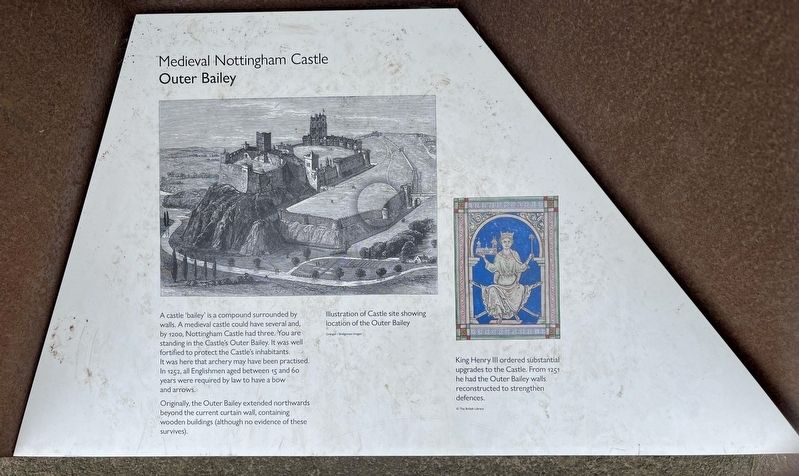
1. Outer Bailey
Outer Bailey
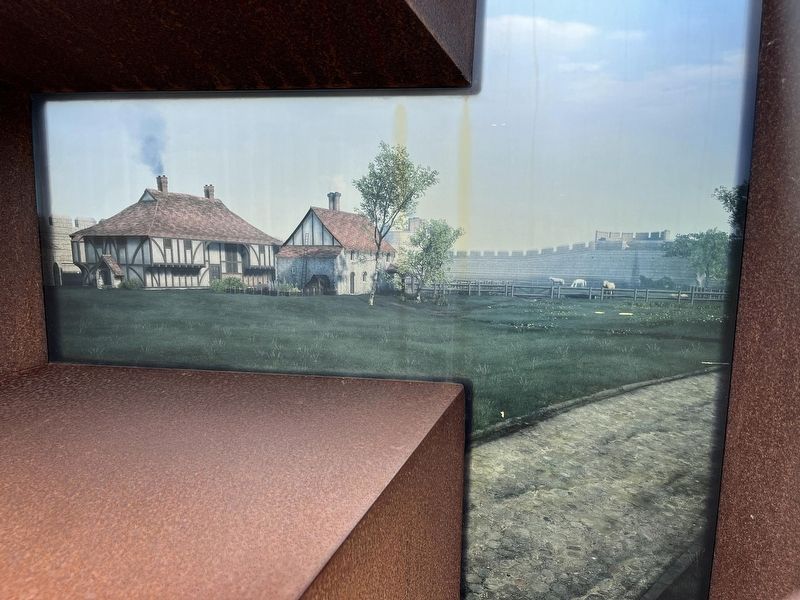
A castle "bailey" is a compound surrounded by walls. A medieval castle could have several and by 1200, Nottingham Castle had three. You are standing in the castle's Outer Bailey. It was well fortified to protect the castle's inhabitants. It was here that archery may have been practised. In 1252, all Englishmen aged between 15 and 60 years were required by law to have a bow and arrows.
Originally, the Outer Bailey extended northwards beyond the current curtain wall, containing wooden buildings (although no evidence of these survives).
King Henry III ordered substantial upgrades to the castle. From 1251 he had the Outer Bailey walls reconstructed to strengthen defences.
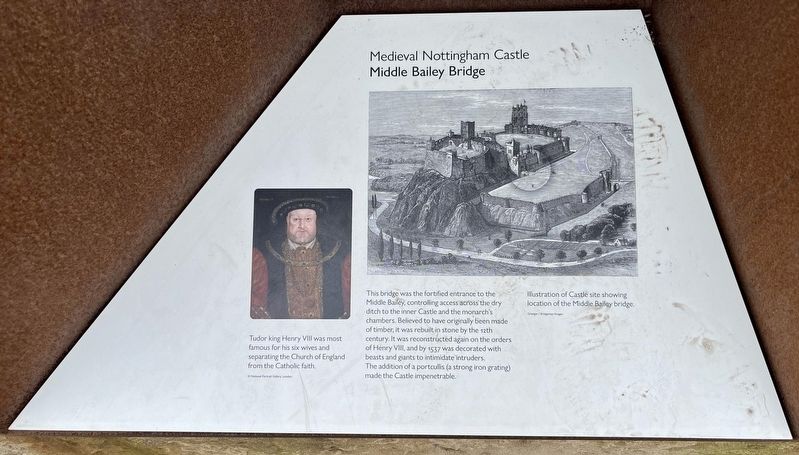
Middle Bailey Bridge
This bridge was the fortified entrance to the Middle Bailey, controlling access across the dry ditch to the inner castle and the monarch's chambers. Believed to have originally made of timber, it was rebuilt in stone by the 12th century. It was reconstructed again on the orders of Henry VIII, and by 1537 was decorated with beasts and giants to intimidate intruders. The addition of a portcullis (a strong iron grating)
this page online
Tudor King Henry VIII was most famous for his six wives and separating the Church of England from the Catholic faith.
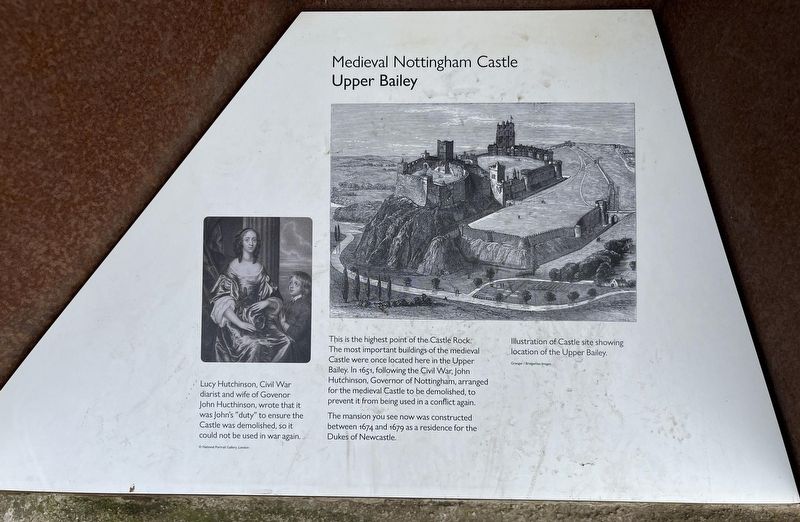
Upper Bailey
This is the highest point of the Castle Rock The most important buildings of the medieval Castle were once located here in the Upper Bailey. In 1651, following the Civil War, John Hutchinson, Governor of Nottingham, arranged for the medieval Castle to be demolished, to prevent it from being used in a conflict again. The mansion you see now was constructed between 1674 and 1679 as a residence for the Dukes of Newcastle.
Lucy Hutchinson, Civil War diarist and wife of Governor John Hucthinson, wrote that it was John's "duty" to ensure the Castle was demolished, so it could not be used in war again.
Topics. This historical marker is listed in this topic list: Forts and Castles. A significant historical year for this entry is 1251.
Location. 52° 56.952′ N, 1° 9.281′ W. Marker is in Nottingham, England. It is in Nottingham city centre. It can be reached from Peveril Drive. Touch for map. Marker is at or near this postal address: 2 Peveril Dr, Nottingham, England NG7 1DE,
Photographed by Ray Gurganus, April 13, 2024
2. Middle Bailey Bridge

Regionally, this marker is in England’s Midlands. Globally, it is on the Atlantic Ocean, in the North Atlantic Region, in Europe, in Atlantic Europe, on one of the British Isles, in the Western World, and in the Anglosphere. Historically, it finds itself in what was once the Roman Empire.
Other nearby markers. At least 8 other markers are within walking distance of this marker: Robin Hood Rifles (about 90 meters away, measured in a direct line); Medieval Nottingham Castle (about 90 meters away); Castle Ditch (about 90 meters away); Great Hall (about 120 meters away); English Civil War (about 120 meters away); Middle Bailey Medieval Curtain Wall (about 120 meters away); a different marker also named Medieval Nottingham Castle (about 150 meters away); A rebel. A revolutionary. An icon. (about 180 meters away). Touch for a list and map of all markers in Nottingham.
Photographed by Ray Gurganus, April 13, 2024
3. Upper Bailey
Photographed by Ray Gurganus, April 13, 2024
4. Outer Bailey View
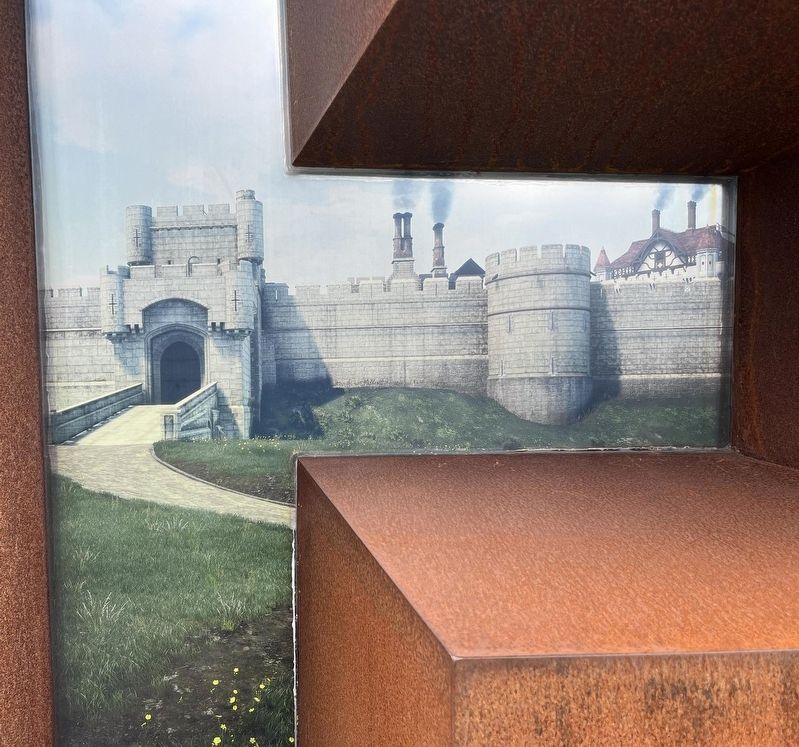
Photographed by Ray Gurganus, April 13, 2024
5. Middle Bailey Bridge View
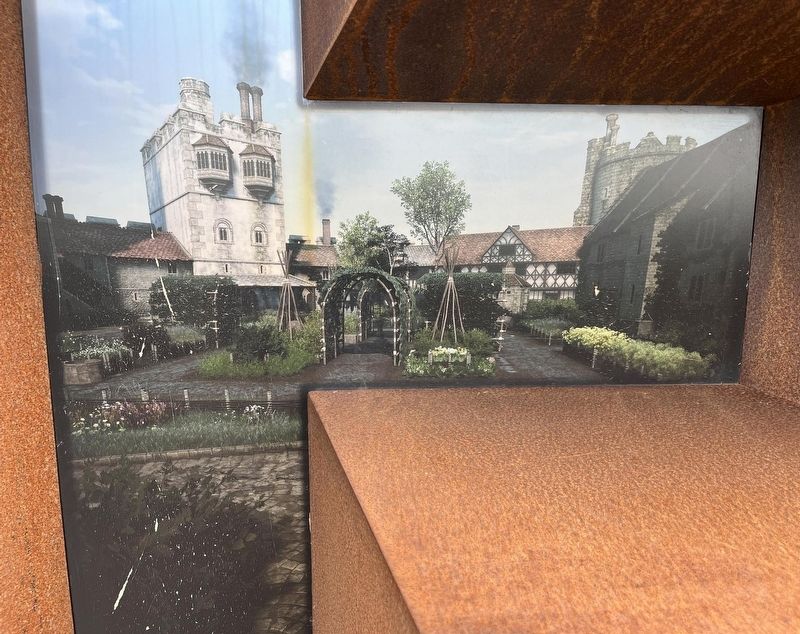
Photographed by Ray Gurganus, April 13, 2024
6. Upper Bailey View
Credits. This page was last revised on July 1, 2024. It was originally submitted on June 28, 2024, by Ray Gurganus of Washington, District of Columbia. This page has been viewed 242 times since then and 61 times this year. Photos: 1, 2, 3, 4, 5, 6. submitted on June 28, 2024, by Ray Gurganus of Washington, District of Columbia. • Andrew Ruppenstein was the editor who published this page.
Editor’s want-list for this marker. photo of marker within its surroundings • Can you help?
