Kasbah in Essaouira, Marrakesh-Safi, Morocco — Africa (Northern Africa)
La Cité Heureuse
⎯⎯⎯
The Happy City
Photographed by J. Makali Bruton, May 25, 2024
1. La Cité Heureuse / The Happy City Marker

Français
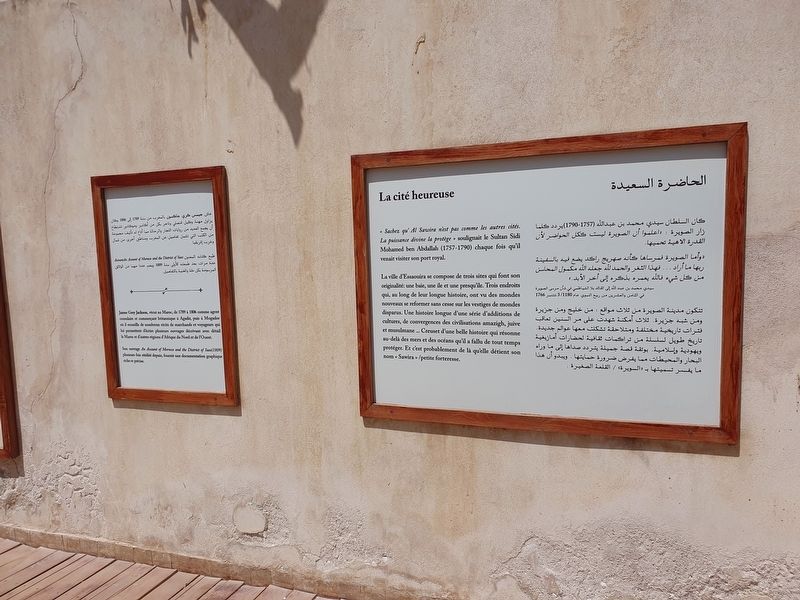
La cité heureuse
« Sachez qu' Al Sawira n'est pas comme les autres cités. La puissance divine la protège » soulignait le Sultan Sidi Mohamed ben Abdallah (1757-1790) chaque fois qu'il venait visiter son port royal.
La ville d'Essaouira se compose de trois sites qui font son originalité: une baie, une ile et une presqu'ile. Trois endroits qui, au long de leur longue histoire, ont vu des mondes nouveaux se reformer sans cesse sur les vestiges de mondes disparus. Une histoire longue d'une série d'additions de cultures, de convergences des civilisations amazigh, juive et musulmane... Creuset d'une belle histoire qui résonne au-delà des mers et des océans qu'il a fallu de tout temps protéger. Et c'est probablement de là qu'elle détient son nom « Sawira » /petite forteresse.
James Grey Jackson, vécut au Maroc, de 1789 à 1806 comme agent consulaire et commerçant britannique à Agadir, puis à Mogador où il recueille de nombreux récits de marchands et voyageurs qui lui permettent d'écrire plusieurs ouvrages décrivant avec détail le Maroc et d'autres régions d'Afrique du Nord et de l'Ouest. Son
this page online
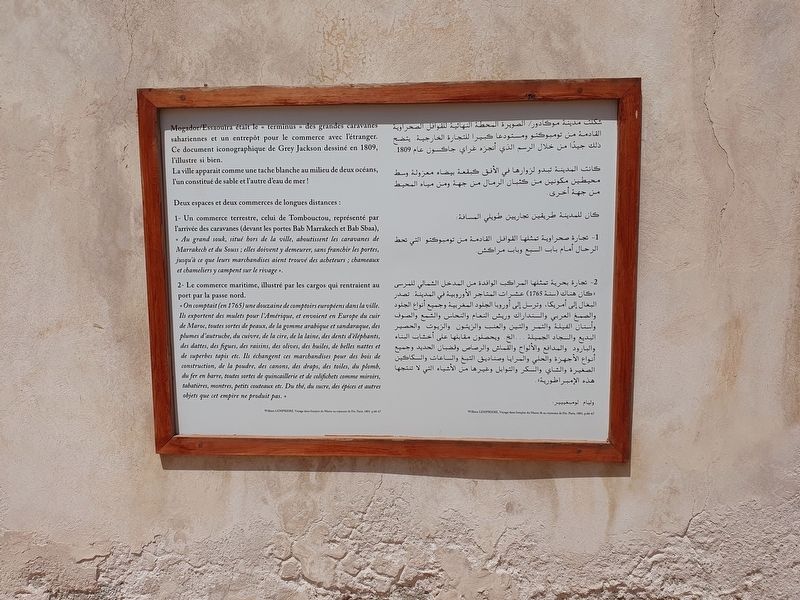
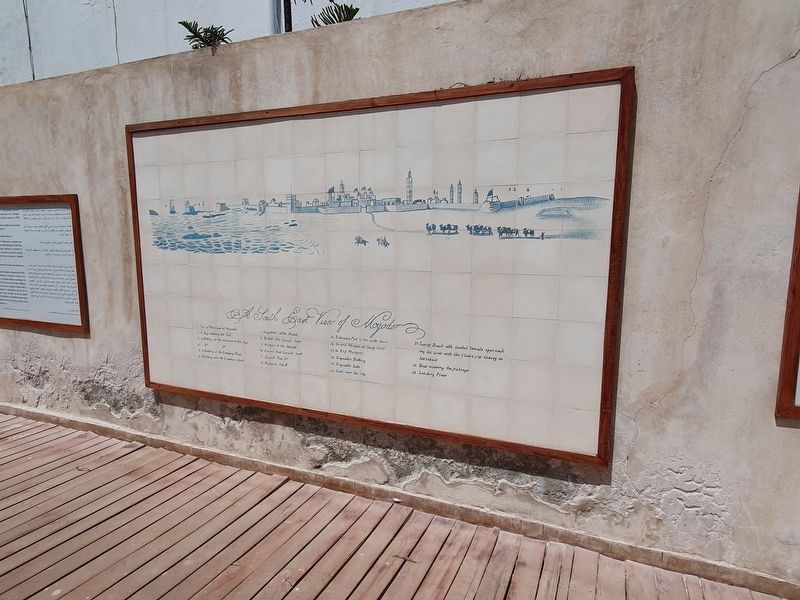
Mogador/Essaouira était le « terminus » des grandes caravanes sahariennes et un entrepôt pour le commerce avec l'étranger. Ce document iconographique de Grey Jackson dessiné en 1809, l'illustre si bien.
La ville apparait comme une tache blanche au milieu de deux océans, l'un constitué de sable et l'autre d'eau de mer!
Deux espaces et deux commerces de longues distances:
1- Un commerce terrestre, celui de Tombouctou, représenté par l'arrivée des caravanes (devant les portes Bab Marrakech et Bab Sbaa), Au grand souk, situé hors de la ville, aboutissent les caravanes de Marrakech et du Souss; elles doivent y demeurer, sans franchir les portes, jusqu'à ce que leurs marchandises aient trouvé des acheteurs; chameaux et chameliers y campent sur le rivage ».
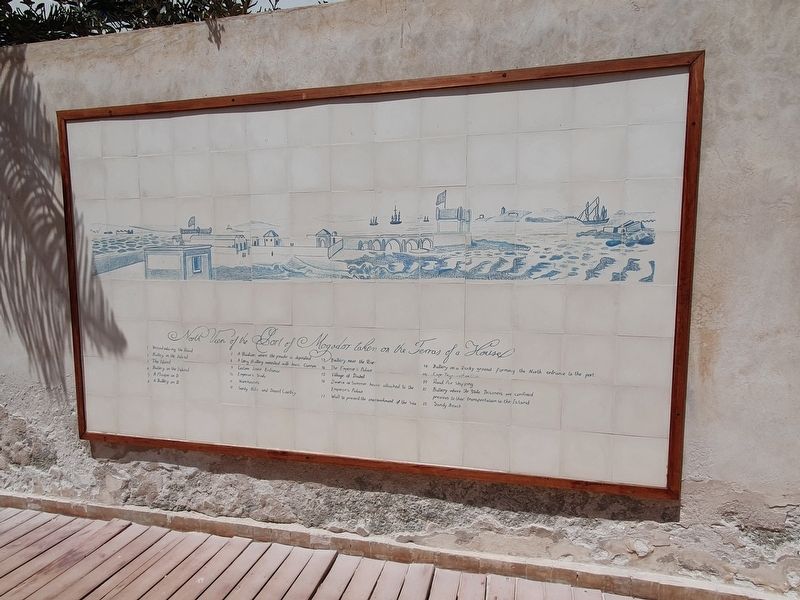
2- Le commerce maritime, illustré par les cargos qui rentraient au port par la passe nord.
-On comptait (en 1765) une douzaine de comptoirs européens dans la ville. Ils exportent des mulets pour l'Amérique, et envoient en Europe
Photographed by J. Makali Bruton, May 25, 2024
2. La Cité Heureuse / The Happy City Marker
William Lempriere, Voyage dans l’empire du Maroc au royaume de Fes. Paris, 1801. p. 66-67
الحاضرة السعيدة كان السلطان سيدي محمد بن عبدالله (1757-1790) يردد كلما زار الصويرة : اعلموا
Photographed by J. Makali Bruton, May 25, 2024
3. A South East View of Mogador
Photographed by J. Makali Bruton, May 25, 2024
4. North View of the Port of Mogador Taken on the Terras of a House
Photographed by J. Makali Bruton, May 25, 2024
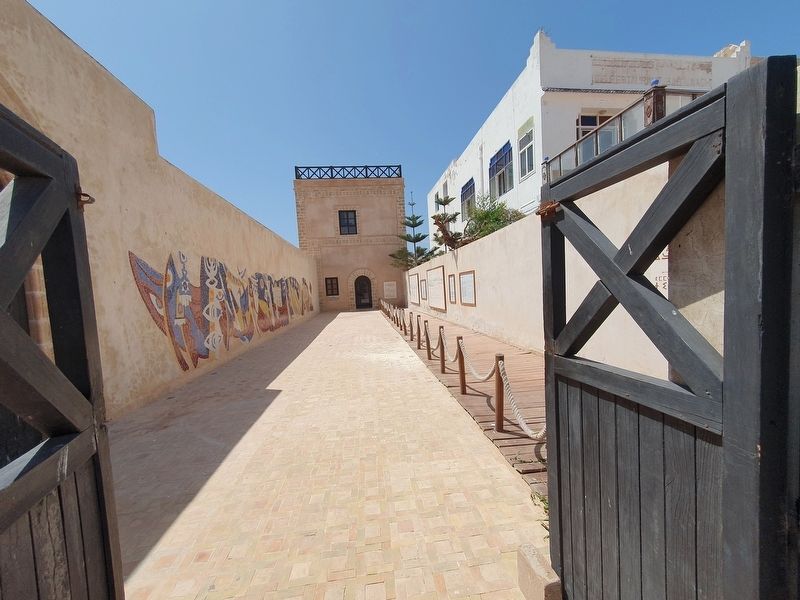
5. La Cité Heureuse / The Happy City Marker
This view shows all of the marker panels, including the two large tile murals.
Photographed by J. Makali Bruton, May 25, 2024
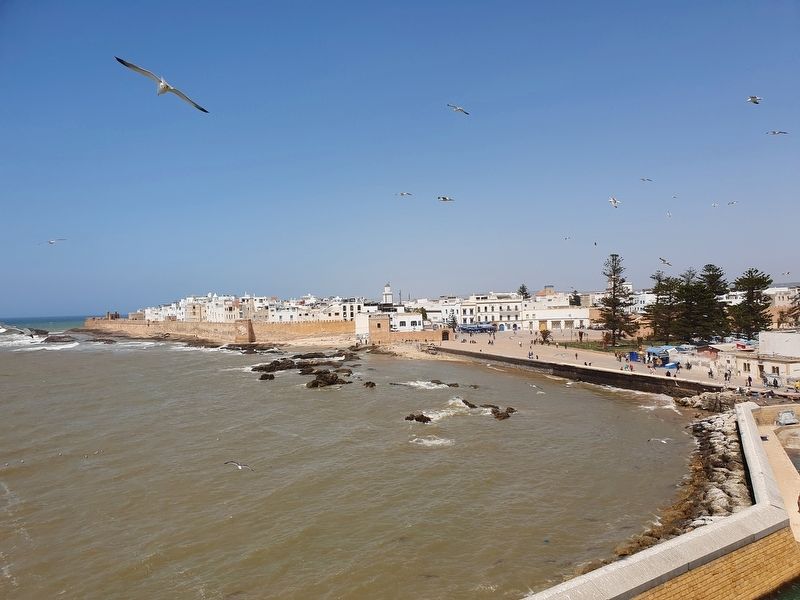
6. A view to the north of Essaouira
The location of the marker is near the building with the large black door near the center of the photo.
عاش جيمس كري جاكسون بالمغرب من سنة 1789 إلى 1806 وكان يزاول مهنة وكيل قنصلي وتاجر بكل من أكادير وموكادور فاستطاع أن يجمع العديد من روايات التجار والرحالة مما أتاح له تأليف مجموعة من الكتب التي تشمل تفاصيل عن المغرب ومناطق أخرى من شمال وغرب إفريقيا. طبع كتابه المعنون: An Account of Moroco and the District of Suse عدة مرات بعد طبعته الأولى سنة 1809 ويضم عددا مهما من الوثائق المرسومة بكل دقة والغنية بالتفاصيل
شكلت مدينة موكادور الصويرة المحطة النهائية للقوافل الصحراوية القادمة من تومبوكتو ومستودعا كبيرا للتجارة الخارجية. يتضح ذلك جيدا من خلال الرسم الذي أنجزه غراي جاكسون عام 1809 كانت المدينة تبدو لزوارها في الأفق كبقعة بيضاء معزولة وسط محيطين مكونين من كثبان الرمال من جهة ومن مياه المحيط من جهة أخرى.
كان للمدينة طريقين تجاريين طويلي المسافة:
1- تجارة صحراوية تمثلها القوافل القادمة من تومبوكتو التي تحط الرحال أمام باب السبع وباب مراكش.
-2- تجارة بحرية تمثلها المراكب الوافدة من المدخل الشمالي للمرسى كان هناك (سنة 1765 عشرات المتاجر الأوروبية في المدينة تصدر البغال إلى أمريكا، وترسل إلى أوروبا الجلود المغربية وجميع أنواع الجلود والصمغ العربي والسنداراك وريش النعام والنحاس والشمع والصوف وأسنان الفيلة والتمر والتين والعنب والزيتون والزيوت والحصير البديع والسجاد الجميلة ... الخ. ويحصلون مقابلها على أخشاب البناء والبارود والمدافع والألواح والقماش والرصاص وقضبان الحديد وجميع أنواع الأجهزة والحلي والمرايا وصناديق التبغ والساعات والسكاكين الصغيرة والشاي والسكر والتوابل وغيرها من الأشياء التي لا تنتجها هذه الإمبراطورية». وليام لومبغييير:
William Lempriere, Voyage dans l’empire du Maroc au royaume de Fes. Paris, 1801. p. 66-67
The Happy City
"You should know that Al Sawira is not like the other cities. Divine power protects it," stressed Sultan Sidi Muhammad ben Abdallah (1757-1790) whenever he came to visit its royal port.
The city of Essaouira consists originally of three sites: a bay, an island and a peninsula. Three locations who, throughout their long history, have seen worlds reforming themselves incessantly on the remains of other worlds. A long history of a series of additions of cultures, convergences of Amazigh, Jewish and Muslim civilizations... The crucible of a beautiful story that resonates beyond the seas and oceans that have always given the necessary protection. That's probably where she got her name "Sawira" / small fortress.
James Grey Jackson lived in Morocco from 1789 to 1806 as a British consular agent and merchant, first in Agadir, then in Mogador, where he collected many accounts of merchants and travellers which allowed him to write several works describing in detail Morocco and other parts of North and West Africa. His work “An Account of Morocco and the District of Susa” (1809), reprinted several times since, provides graphic documentation that is both rich and precise.
The city appears like a white spot in the middle of two oceans, one made of sand and the other of seawater!
Two spaces and two long-distance commerce routes:
1- A land trade, that of Timbuktu, represented by the arrival of the caravans (in front of the Bab Marrakech and Bab Sbaa gates). “At the large souk, located outside the city, the caravans of Marrakech and Souss; they must remain there, without passing through the gates, until their goods have found buyers; Camels and camel drivers camp there on the shore".
2- Maritime trade, illustrated by the cargo ships returning to the port by the northern pass.
“There were (in 1765) a dozen European trading posts in the city. They export mules to America, and send Moroccan leather to Europe, all kinds of skins, gum arabic and sandaraque, ostrich feathers, copper, wax, wool, elephant teeth, dates, figs, grapes, olives, oils, beautiful mats and superb carpets, etc. They exchange these goods for timber from construction, gunpowder, cannons, sheets, canvas, lead, iron bars, all kinds of hardware and trinkets such as mirrors, snuffboxes, watches, small knives etc. Tea, sugar, spices and more objects that this empire does not produce.”
William Lemprière, Voyage in the Empire of Morocco to the Kingdom of Fez. Paris, 1801. p. 66-67
Topics. This historical marker is listed in these topic lists: Exploration • Industry & Commerce. A significant historical year for this entry is 1789.
Location. 31° 30.712′ N, 9° 46.346′ W. Marker is in Essaouira, Marrakesh-Safi. It is in Kasbah. It can be reached from Place Moulay Hassan, on the left when traveling north. Touch for map. Touch for directions.

Regionally, it is in Africa, North Africa, The Maghreb, and in a coastal Mediterranean country. Historically, it finds itself in what was once Portuguese colonies, a Spanish colony, and specifically a French colony.
Other nearby markers. At least 3 other markers are within walking distance of this marker: First French Tribunal (approx. 0.3 kilometers away); Charles de Foucauld (approx. 0.3 kilometers away); Medina of Essaouira (approx. 0.3 kilometers away).
More about this marker. The marker is made up of three text panels and two large murals made of tiles. The murals are probably images taken from the different pre-colonial texts mentioned in the marker text.
Also see . . . An account of the empire of Marocco, and the district of Suse at Archive.org. (Submitted on June 29, 2024.)
Credits. This page was last revised on June 29, 2024. It was originally submitted on June 29, 2024, by J. Makali Bruton of Washington, District of Columbia. This page has been viewed 326 times since then and 91 times this year. Photos: 1, 2, 3, 4, 5, 6. submitted on June 29, 2024, by J. Makali Bruton of Washington, District of Columbia.
