Notre Dame in St. Joseph County, Indiana — The American Midwest (Great Lakes)
The Grotto of Our Lady of Lourdes
Photographed by Sean Flynn, July 27, 2024
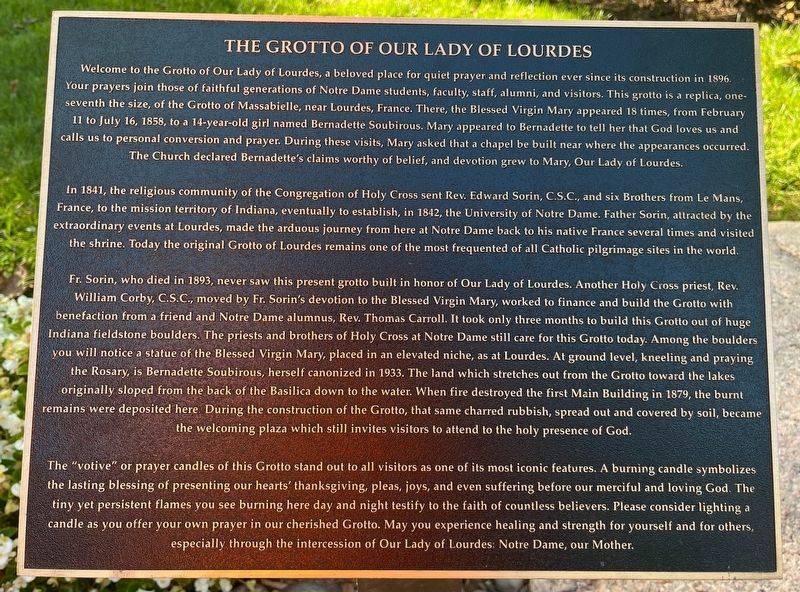
1. The Grotto of Our Lady of Lourdes Marker
this page online
In 1841, the religious community of the Congregation of Holy Cross sent Rev. Edward Sorin, C.S.C., and six Brothers from Le Mans, France, to the mission territory of Indiana, eventually to establish, in 1842, the University of Notre Dame. Father Sorin, attracted by the extraordinary events at Lourdes, made the arduous journey from here at Notre Dame back to his native France several times and visited the shrine. Today the original Grotto of Lourdes remains one of the most frequented of all Catholic pilgrimage sites in the world.
Fr. Sorin, who died in 1893, never saw this present grotto built in honor of Our
Photographed by Sean Flynn, July 27, 2024
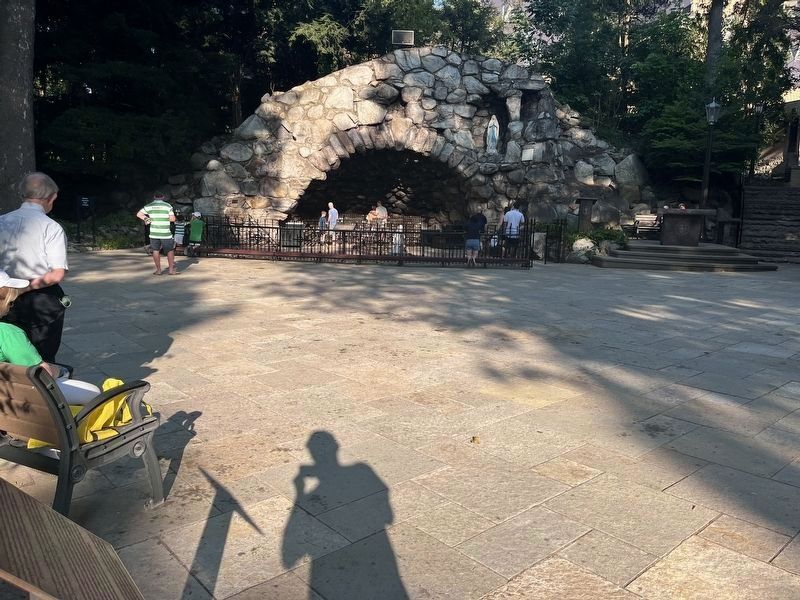
2. The Grotto of Our Lady of Lourdes
The marker is in the bottom left of the photo, facing the Grotto.
Photographed by Sean Flynn, July 27, 2024
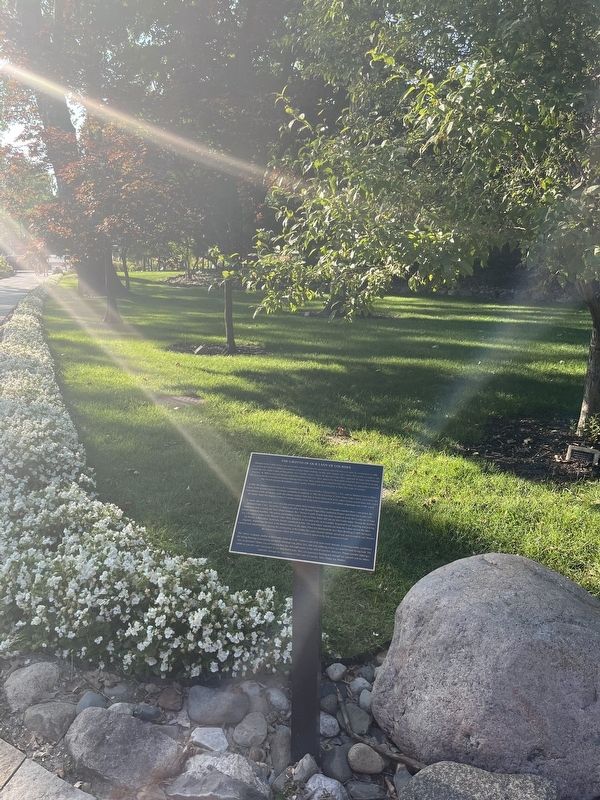
3. The Grotto of Our Lady of Lourdes Marker
The photo is taken with the Grotto itself to the rear.
The "votive" or prayer candles of this Grotto stand out to all visitors as one of its most iconic features. A burning candle symbolizes the lasting blessing of presenting our hearts' thanksgiving, pleas, joys, and even suffering before our merciful and loving God. The tiny yet persistent flames you see burning here day and night testify to the faith of countless
Photographed by Sean Flynn, July 27, 2024
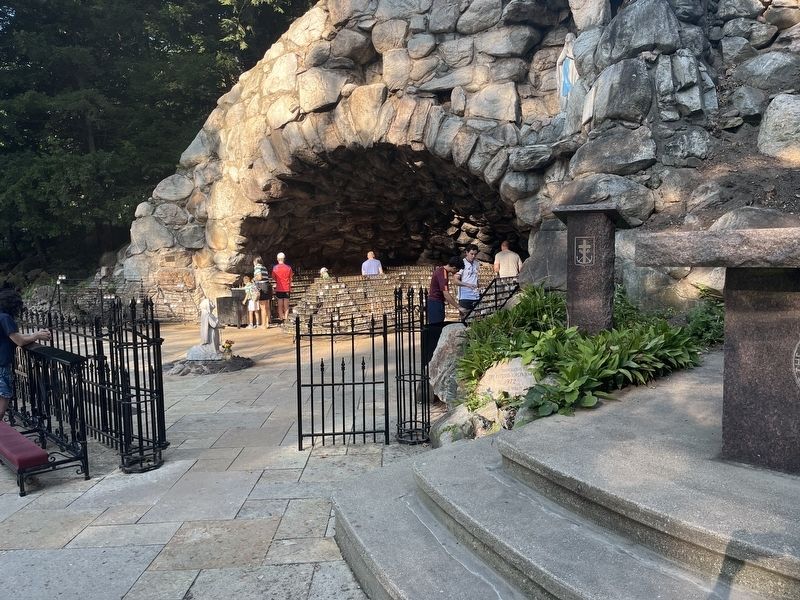
4. The Grotto of Our Lady of Lourdes
Topics. This historical marker is listed in these topic lists: Education • Religion & Religious Structures. A significant historical year for this entry is 1896.
Location. 41° 42.183′ N, 86° 14.437′ W. Marker is in Notre Dame, Indiana, in St. Joseph County. It can be reached from Holy Cross Drive east of St. Mary's Road, on the right when traveling north. The marker is a short walk from the Grotto on the campus of the University of Notre Dame. Touch for map.
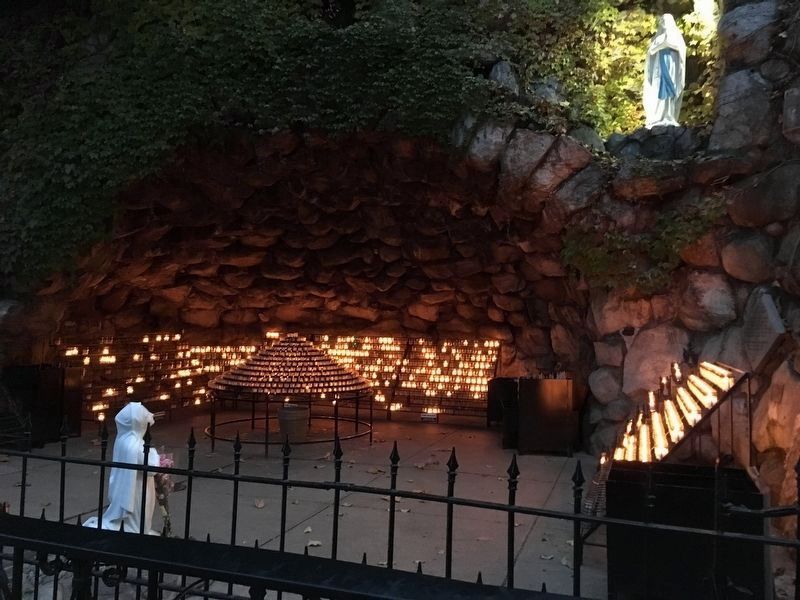
Photographed by Sean Flynn, November 14, 2017
5. Evening view of the Grotto
In this evening view from 2017, the kneeling Bernadette Soubirous to the left prays to the Virgin Mary, whose statue has a light shined on it in a niche in the upper right.

Regionally, this marker is in Northern Indiana and in Greater South Bend. It is also in the American Midwest and in the Corn Belt. Globally, it is in North America, the Western Hemisphere, the Western World, and the Anglosphere. Historically, it finds itself in what was once the territory of the Mississippian Culture and also the Northwest Territory.
Other nearby markers. At least 8 other markers are within walking distance of this marker: Thomas A. Dooley, M.D. '48 (a few steps from this marker); Chaplain Corby of Gettysburg (about 300 feet away, measured in a direct line); World War I Memorial (about 300 feet away); St. Mary's Island (about 500 feet away); From a Letter of The Rev. Edward Sorin, CSC (about 600 feet away); Old College (about 600 feet away); Edward Sorin (approx. 0.2 miles away); Notre Dame Fieldhouse (approx. 0.2 miles away). Touch for a list and map of all markers in Notre Dame.
Also see . . .
1. Grotto of Our Lady of Lourdes. From the Notre Dame website (Submitted on July 29, 2024, by Sean P. Flynn of Oak Park, Illinois.)
2. Spiritual Roots of Notre Dame’s Grotto. A look at the history and spiritual meaning of the Grotto on Notre Dame's campus. (Submitted on July 29, 2024, by Sean P. Flynn of Oak Park, Illinois.)
Credits. This page was last revised on July 30, 2024. It was originally submitted on July 29, 2024, by Sean P. Flynn of Oak Park, Illinois. This page has been viewed 526 times since then and 123 times this year. Photos: 1, 2, 3, 4, 5. submitted on July 29, 2024, by Sean P. Flynn of Oak Park, Illinois.
