
Near Washburn in McLean County, North Dakota — The American Midwest (Upper Plains)
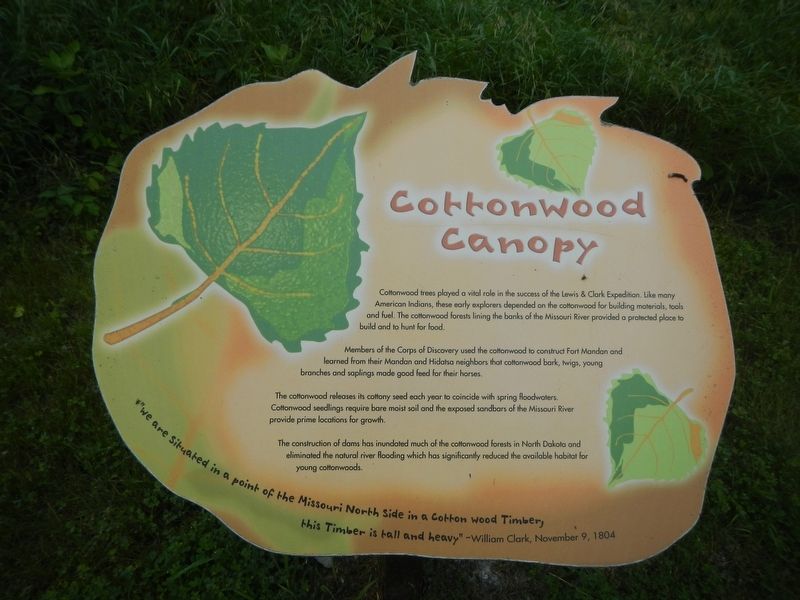
Cottonwood Canopy
Photographed by Barry Swackhamer, February 4, 2011
1. Cottonwood Canopy Marker
"We are situated in a point of the Missouri North side in a Cotton wood Timbery this Timber is tall and heavy" William Clark, November 9, 1804
Cottonwood trees played a vital role in the success of the Lewis & Clark Expedition. Like many American Indians, these early explorers depended on the cottonwood for building materials, tools and fuel. The cottonwood forest lining the banks of the Missouri River provided a protected place to build and to hunt for food.
Members of the Corps of Discovery used the cottonwood to construct Fort Mandan and learned from their Mandan and Hidatsa neighbors that cottonwood bark, twigs, and young branches and saplings made good feed for theirs horses.
The cottonwood released its cottony seed each year to coincide with spring floodwaters. Cottonwood seedlings require bare moist soil and the exposed sandbars of the Missouri River provided prime locations for growth.
The construction of dams have inundated much of the cottonwood forests in North Dakota and eliminate the natural flooding which has significantly reduced the available habitat for young cottonwoods.
Topics and series.
this page online
Location. 47° 17.93′ N, 101° 5.33′ W. Marker is near Washburn, North Dakota, in McLean County. It can be reached from 28th Avenue Southwest near 8th Street Southwest. The marker is located in Fahlgren Park State Recreation Area, across from Fort Mandan State Historic Site. Touch for map. Marker is at or near this postal address: 838 28th Avenue Southwest, Washburn ND 58577, United States of America. Touch for directions.

Regionally, this marker is in North Dakota’s Standing Rock Sioux Tribe, in the Drift Prairie, and on the Missouri Plateau. It is also in the American Lewis & Clark Corridor, on the prairies, and on the Northern Plains. Globally, it is in North America, the Western Hemisphere, the Western World, and the Anglosphere. Historically, it finds itself in what was once Rupert’s Land and also the Louisiana Purchase.
Other nearby markers. At least 8 other markers are within walking distance

Photographed by Barry Swackhamer, February 4, 2011
2. Cottonwood Canopy Marker
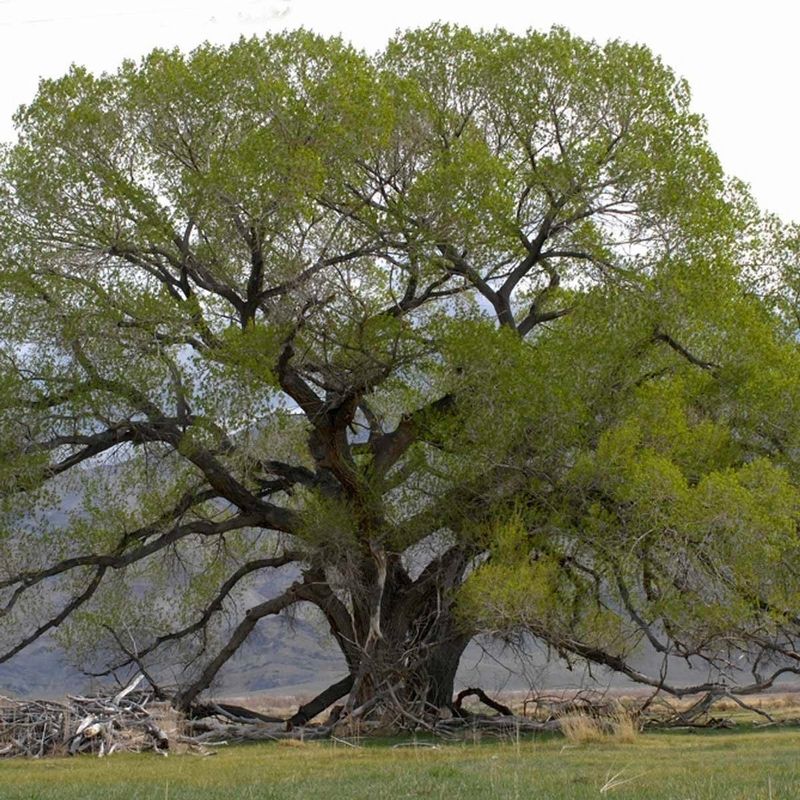
Also see . . . Cottonwood Tree - Forestry.com. Throughout history, Cottonwood trees have held significance for many Native American tribes. The wood from Cottonwood trees was used in construction and for crafting various tools and items. The bark had traditional uses in indigenous cultures, including basketry and medicinal purposes. These trees have not only been admired for their beauty but have played a practical role in the daily lives of many people. (Submitted on August 3, 2024, by Barry Swackhamer of Brentwood, California.)
Photographed by Familyhandtman.com
3. Cottonwood Tree
Credits. This page was last revised on August 3, 2024. It was originally submitted on August 3, 2024, by Barry Swackhamer of Brentwood, California. This page has been viewed 132 times since then and 22 times this year. Photos: 1, 2, 3. submitted on August 3, 2024, by Barry Swackhamer of Brentwood, California.
