
Barrio de las Letras in Madrid, Spain — Southwestern Europe (Iberian Peninsula)
Benito Pérez Galdós
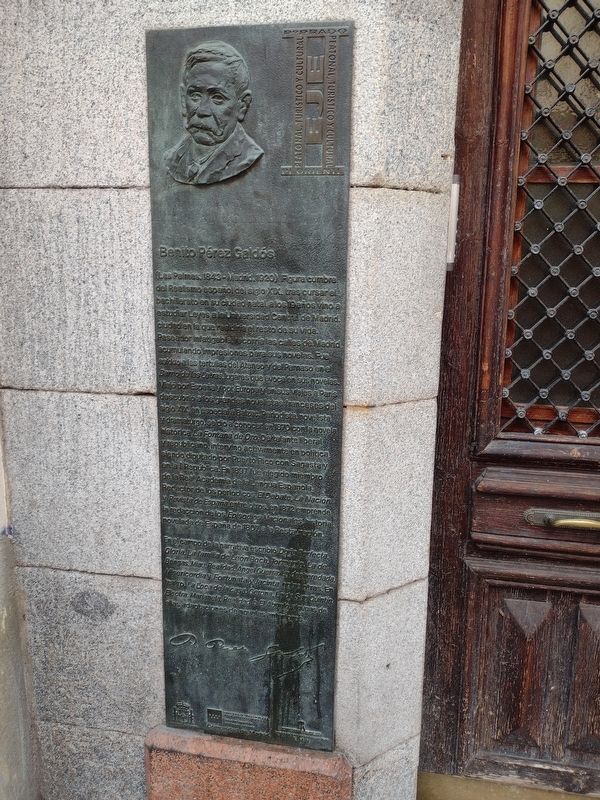
Photographed by Charles Berman, December 1, 2023
1. Benito Pérez Galdós Marker

(Las Palmas 1843 - Madrid 1920) Figura cumbre del Realismo español del siglo XIX, tras cursar el bachillerato en su ciudad natal a los 19 años vino a estudiar Leyes a la Universidad Central de Madrid, ciudad en la que residiria el resto de su vida. Paseador infatigable recorria las calles de Madrid acumulando impresiones para sus novelas. Fue asiduo a las tertulias del Ateneo y del Parnaso en el Barrio de las Letras, lugares que evoca en sus novelas. Viajó por España y por Europa y en sus viajes a París descubrió a los grandes novelistas franceses del siglo XIX, en especial a Balzac. Periodista, novelista y dramaturgo, se dio a conocer en 1870 con la novela histórica La Fontana de Oro. De talante liberal y republicano, intervino activamente en política, siendo diputado por Puerto Rico con Sagasta y en la I República. En 1897 fue elegido miembro de la Real Academia de la Lengua Española. Redactor de los periódicos El Debate, La Nación, y La Revista de España entre otros, en 1872 emprende la redacción de los Episodios Nacionales, historia novelada de España de 1807 a la Restauración.
En el campo de la narrativa escribió Doña Perfecta, Gloria, La familia de León Roch, Tormento, La de Bringas, Miau, Realidad, Ángel Guerra, La desheredada, Misericordia y Fortunda y Jacinta entre otras. En
this page online
(Las Palmas 1843 - Madrid 1920) Peak figure of Spanish realism of the 19th century, after finishing high school in his native city, he went at the age of 19 to study law at the Central University of Madrid, the city in which he resided for the rest of his life. An indefatigable walker, he covered the streets of Madrid, accumulating impressions for his novels. He was a regular at the literary gatherings of Ateneo and of Parnaso in the Barrio de las Letras, places which he evokes in his novels. He traveled around Spain and around Europe, and in his travels to Paris he discovered the great French novelists of the 19th century, especially Balzac. Journalist, novelist, and playwright, he became known in 1870 with the historical novel La Fontana de Oro (“The Fountain of Gold”). Of a liberal and republican nature, he was actively involved in politics, being a deputy for Puerto Rico with Sagasta and in the First Republic. In 1897, he was chosen as a member of the Royal Academy of the Spanish Language. Editor of the newspapers The Debate, The Nation, and The Review of Spain, among others. In 1872, he began writing Episodios Nacionales (“National
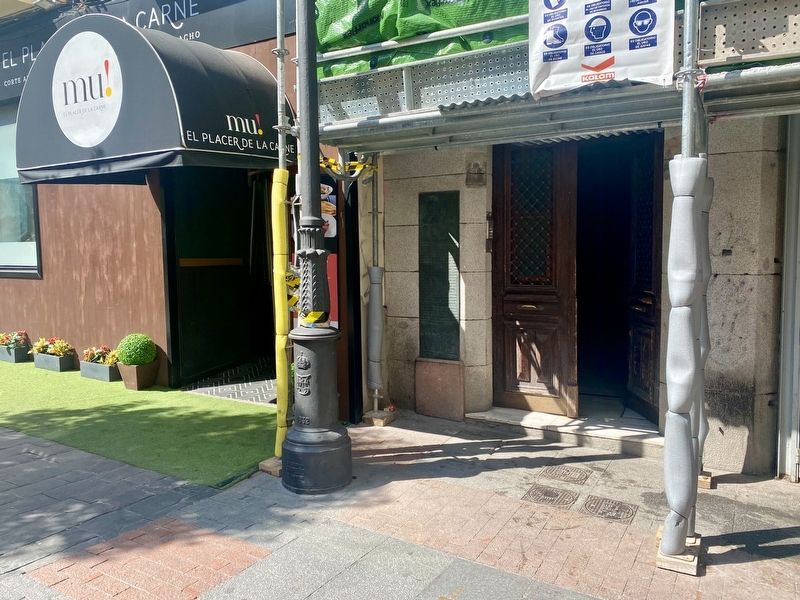
April 18, 2022
2. Benito Pérez Galdós Marker
In the field of narrative, he wrote Doña Perfecta, Gloria, The Family of Leon Roch, Torment, That Bringas Woman, Miau, Reality, Ángel Guerra, The Disinherited, Misericordia, and Fortunada and Jacinta, among others. In theater, The Madwoman of the House of Gerona, The Duchess of San Quintín, Electra, Marianela, Reality, or the Grandfather, some of them adaptations of earlier novels.
Erected by Communidad de Madrid.
Topics. This historical marker is listed in these topic lists: Arts, Letters, Music • Entertainment. A significant historical year for this entry is 1843.
Location. 40° 24.847′ N, 3° 42.076′ W. Marker is in Madrid. It is in Barrio de las Letras. It is on Calle de las Huertas. Touch for map. Marker is at or near this postal address: C de las Huertas 1, Madrid 28012, Spain. Touch for directions.

Regionally, it is in the North Atlantic Region, in Europe, in the European Union, in Atlantic Europe, on the Iberian Peninsula, in the Schengen Area, in a coastal Mediterranean country, and in the Western World. Historically, it finds itself in what was once the Roman Empire.
Other nearby markers. At least 8 other markers are within walking distance of this marker: Francisco de Rojas Zorilla (here, next to this marker);
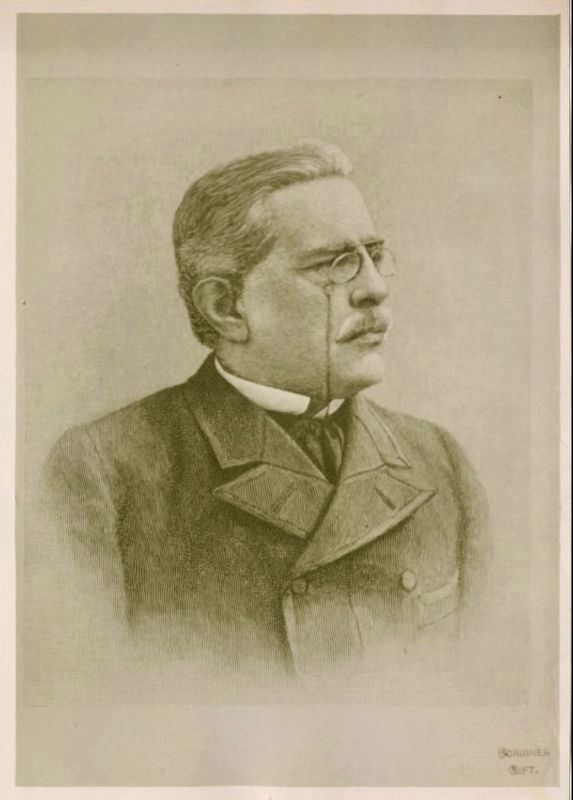
courtesy New York Public Library
3. Benito Pérez Galdós
Related markers. Click here for a list of markers that are related to this marker.
Also see . . . Benito Pérez Galdós (Wikipedia).
Overview: Benito Pérez Galdós (10 May 1843 – 4 January 1920) was a Spanish realist novelist. He was a leading literary figure in 19th-century Spain, and some scholars consider him second only to Miguel de Cervantes in stature as a Spanish novelist.(Submitted on August 6, 2024.)
Credits. This page was last revised on November 4, 2025. It was originally submitted on August 6, 2024, by Charles Berman of Binghamton, New York. This page has been viewed 190 times since then and 26 times this year. Photos: 1. submitted on August 6, 2024, by Charles Berman of Binghamton, New York. 2. submitted on August 6, 2024, by Andrew Ruppenstein of Lamorinda, California. 3. submitted on August 6, 2024. • Andrew Ruppenstein was the editor who published this page.
