Alamogordo in Otero County, New Mexico — The American Mountains (Southwest)
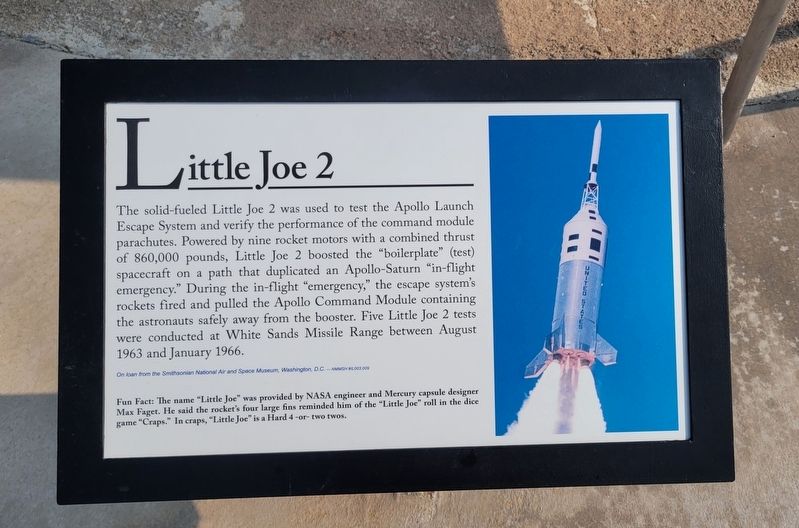
Little Joe 2
Photographed by James Hulse, July 24, 2024
1. Little Joe 2 Marker
Fun Fact: The name "Little Joe" was provided by NASA engineer and Mercury capsule designer Max Faget. He said the rocket's four large fins reminded him of the "Little Joe" roll in the dice game "Craps." In craps, "Little Joe" is a Hard 4-or- two twos.
Captions
On loan from the Smithsonian National Air and Space Museum, Washington, D.C. NMMSH #IL003.009.
Erected by New Mexico Museum of Space History.
Topics. This historical marker is listed in this topic list: Air & Space. A significant historical month for this entry is January 1966.
Location. 32° 55.284′ N,
this page online

Regionally, this marker is in New Mexico’s Pecos Valley. It is also in the American Borderlands and in the Southwest. Globally, it is in North America, the Western Hemisphere, the Western World, and the Anglosphere. Historically, it finds itself in what was once New Spain, the Comanchería, and the Republic of Texas.
Other nearby markers. At least 8 other markers are within walking distance of this marker: Crawler Transporter Shoe (here, next to this marker); PTV Parachute Test Vehicle (a few steps from this marker); X-37B Orbital Test Vehicle Mockup (a few steps from this marker); IGOR Intercept Ground Optical Recorder (a few steps from this marker); V-2 Rocket Engine (within shouting distance of this marker); Lance Missile (within shouting distance
Photographed by James Hulse, July 24, 2024
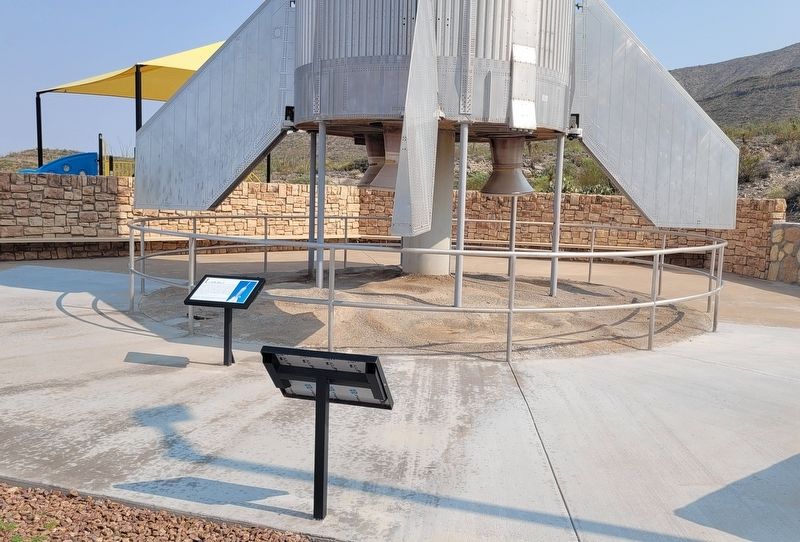
2. The base of the Little Joe 2 rocket and Marker
Also see . . . Little Joe II. Wikipedia
Little Joe II was an American rocket used from 1963 to 1966 for five uncrewed tests of the Apollo spacecraft launch escape system (LES), and to verify the performance of the command module parachute recovery system in abort mode. It was named after a similar rocket designed for the same function in Project Mercury. Launched from White Sands Missile Range in New Mexico, it was the smallest of four launch rockets used in the Apollo program.(Submitted on August 10, 2024, by James Hulse of Medina, Texas.)
Photographed by James Hulse, July 24, 2024
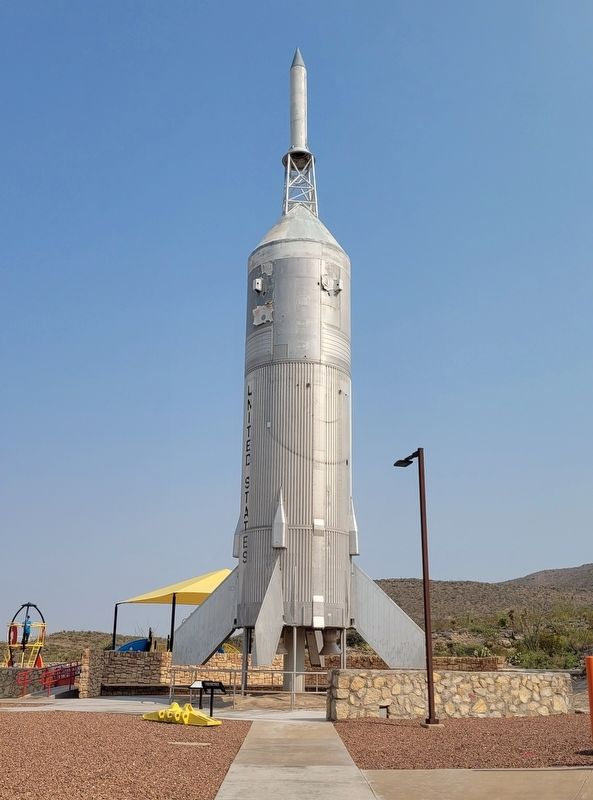
3. The Little Joe 2 and Marker
Public Domain - NASA photo, December 8, 1964
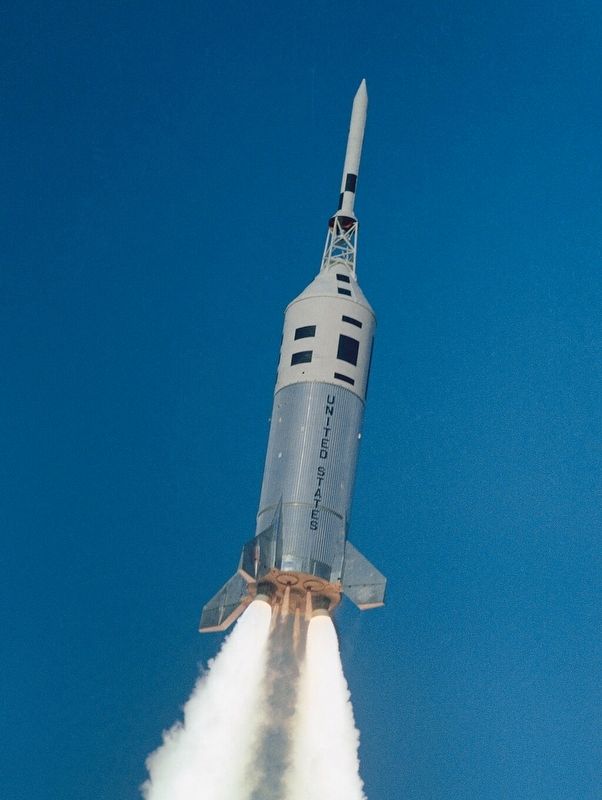
4. Little Joe II launch
View following the liftoff of Apollo Command Module Boilerplate 23 and Launch Escape System atop the Little Joe II launch vehicle at Complex 36, WSMR. Image ID: S64-40370
Credits. This page was last revised on August 11, 2024. It was originally submitted on August 9, 2024, by James Hulse of Medina, Texas. This page has been viewed 222 times since then and 41 times this year. Photos: 1, 2, 3, 4. submitted on August 10, 2024, by James Hulse of Medina, Texas.
