
Skandia Township in Marquette County, Michigan — The American Midwest (Great Lakes)
William Bakewell

Photographed by J. J. Prats, August 3, 2024
1. William Bakewell Marker
Erected 2009 by Michigan Historical Commission - Michigan Historical Center. Registered State Site. (Marker Number 721.)
Topics and series. This historical marker is listed in this topic list: Exploration. In addition, it is included in the Michigan Historical Commission series list. A significant historical month for this entry is August 1916.
Location. 46° 21.166′ N,
this page online

Regionally, this marker is on Michigan’s Upper Peninsula. It is also in the American Midwest and on Lake Superior’s South Shore Region. Globally, it is in North America, in the Great North Woods, on the Great Lakes, in the Western Hemisphere, in the Western World, and in the Anglosphere. Historically, it finds itself in what was once the Viceroyalty of New France and also the Northwest Territory.
Other nearby markers. At least 8 other markers are within 16 miles of this marker, measured as the crow flies: A Trail to Adventure (approx. 12½ miles away); Migratory Birds of the Great Lakes Region/ Restoring Critical Coastal Habitat to Benefit Birds (approx. 12½ miles away); Pioneer John Burt (approx. 13.9 miles away); Carp River Furnace (approx.
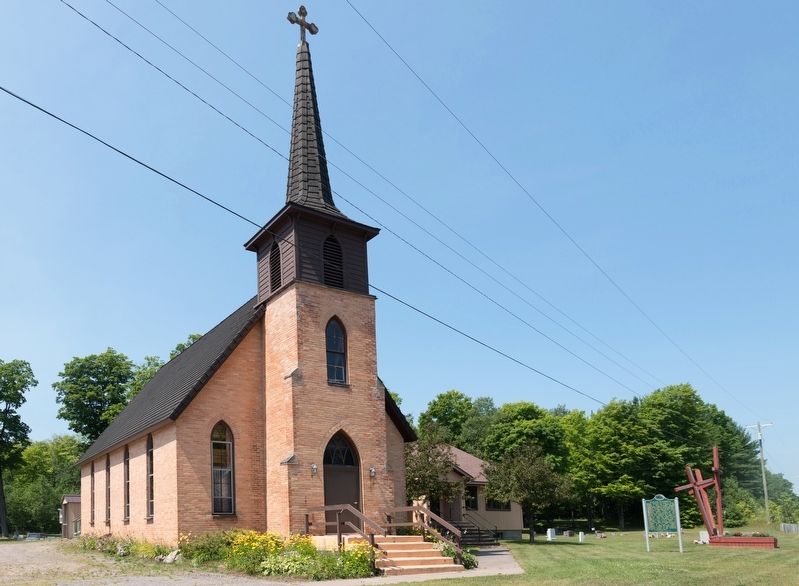
Photographed by J. J. Prats, August 3, 2024
2. Emanuel Lutheran Church and Marker
The graveyard is to the right of the church.
Also see . . . Wikipedia entry for the Imperial Trans-Antarctic Expedition. Excerpts:
The Imperial Trans-Antarctic Expedition of 1914–1917 is considered to be the last major expedition of the Heroic Age of Antarctic Exploration. Conceived by Sir Ernest Shackleton, the expedition was an attempt to make the first land crossing of the Antarctic continent. After Roald Amundsen’s South Pole expedition in 1911, this crossing remained, in Shackleton’s words, the “one great main object of Antarctic journeyings.” Shackleton's expedition failed to accomplish this objective but became recognized instead as an epic feat of endurance. ...(Submitted on August 11, 2024.)
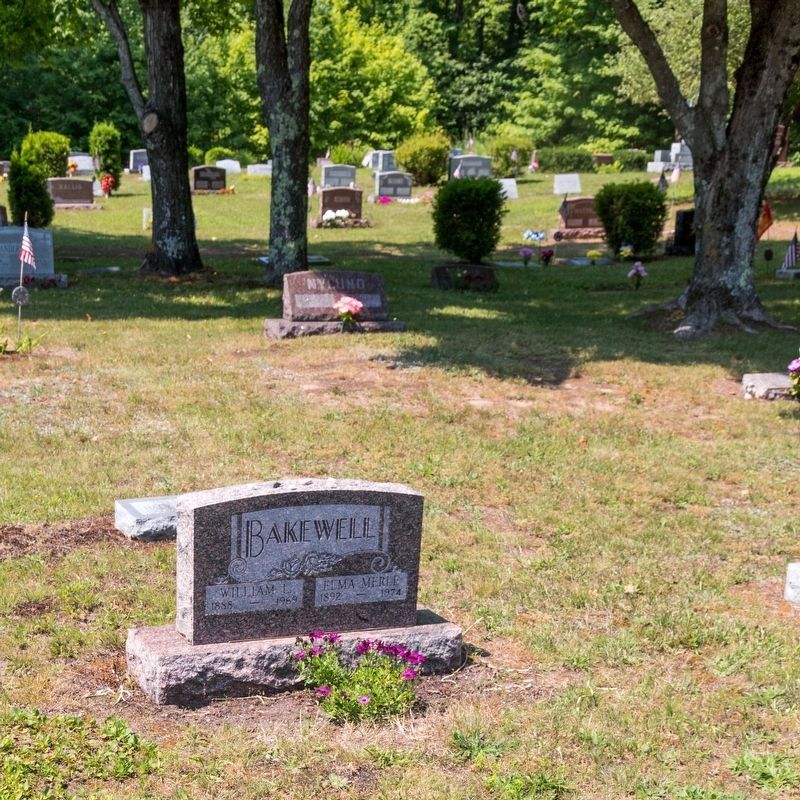
Endurance became beset—trapped in the ice of the Weddell Sea—before it was able to reach Vahsel Bay. It drifted northward, held in the pack ice, throughout the Antarctic winter of 1915. Eventually the ice crushed the ship, and it sank, stranding its complement of 28men on the ice. After months spent in makeshift camps as the ice continued its northwards drift, the party used lifeboats that had been salvaged from the ship to reach the inhospitable, uninhabited Elephant Island. Shackleton and five other members of the group then made an 800-mile (1,300 km) open-boat journey in the James Caird, and were able to reach South Georgia. From there, Shackleton was eventually able to arrange a rescue of the men who had remained on Elephant Island and to bring them home without loss of life. The remarkably preserved wreck of Endurance was found on the seafloor in 2022.Photographed by J. J. Prats, August 3, 20243. William Bakewell’s GravestoneIt reads, “Bakewell. William L., 1888—1969; Elma Merle, 1892—1974.”
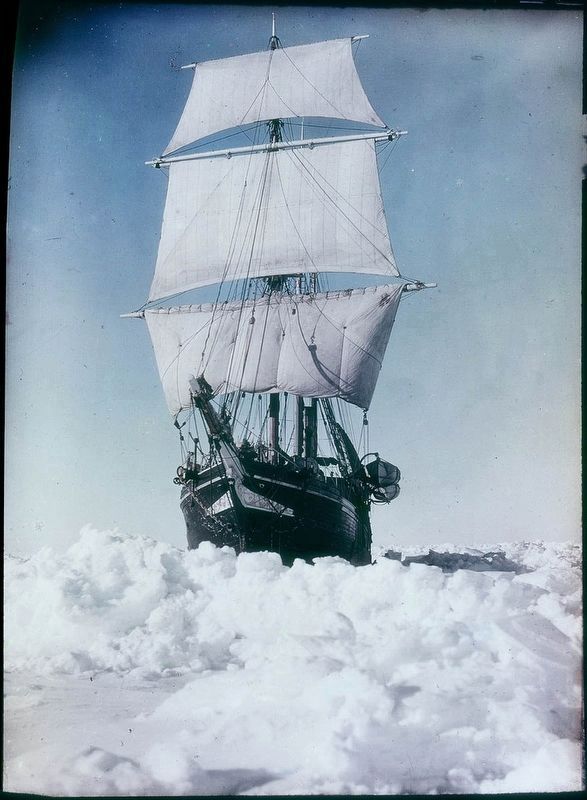
By Frank Hurley (Public Domain) in the collection of the Mitchell Library, State Library of New South Wales, 1915
4. Endurance under sail trying to break through pack ice, Weddell Sea, Antarctica, 1915
Frank Hurley was the official photographer on Sir Ernest Shackleton's British Imperial Trans-Antarctic Expedition. He prepared and later developed 4¾" x 6½" glass plates for his camera onboard the Endurance. He was able to retrieve 120 of the more than 500 glass plates from the slushy water inside the shipwreck. He later hand-colored a number of his black-and-white photographs, like this one.
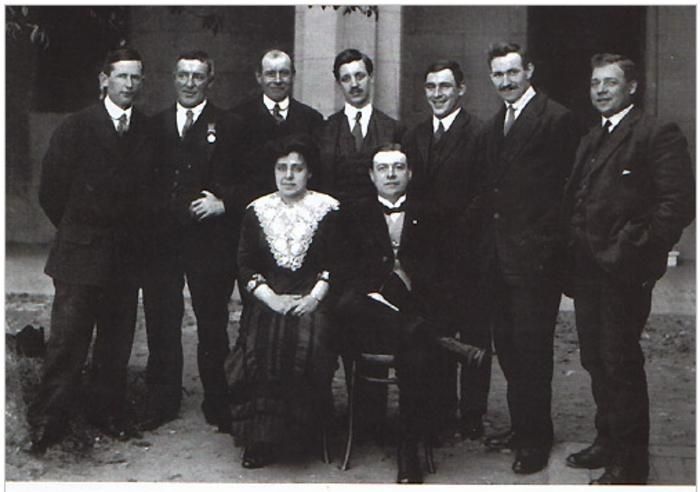
By Edgecombe & Curtis, 212 Reconquista, Buenos Aires. (Public Domain) Via FindAGrave.com, circa 1917
5. William Bakewell, Sir Ernest Shackleton and Others Photographed in Buenos Aires, Argentina
Left to right, back row: William Bakewell, Thomas McLeod, Bill Stephenson, unknown man, Ernest Holness, Charles Green and Wally Howe. Sitting: an unknown woman and Sir Ernest Shackleton. Photograph was likely taken in 1917 in Buenos Aires, Argentina.
Credits. This page was last revised on August 11, 2024. It was originally submitted on August 11, 2024, by J. J. Prats of Powell, Ohio. This page has been viewed 717 times since then and 88 times this year. Photos: 1, 2, 3, 4, 5. submitted on August 11, 2024, by J. J. Prats of Powell, Ohio.
