Elmendorf Air Force Base in Anchorage, Alaska — Northwest (North America)
3rd Wing History
Photographed by William Fischer, Jr., August 12, 2024
1. 3rd Wing History Marker
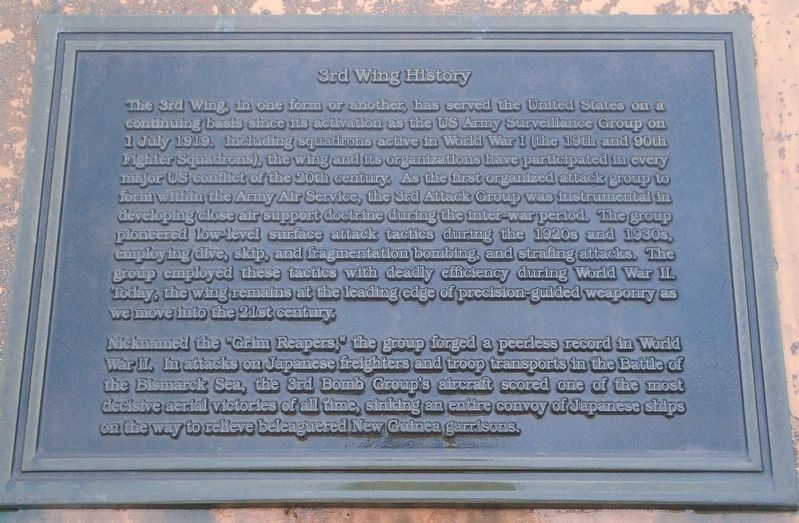
The 3rd Wing, in one form or another, has served the United States on a continuing basis since its activation as the US Army Surveillance Group on 1 July 1919. Including squadrons active in World War I (the 19th and 90th Fighter Squadrons), the wing and its organizations have participated in every major US conflict of the 20th century. As the first organized attack group to form within the Army Air Service, the 3rd Attack Group was instrumental in developing close air support doctrine during the inter-war period. The group pioneered low-level surface attack tactics during the 1920s and 1930s, employing dive, skip, and fragmentation bombing, and strafing attacks. The group employed these tactics with deadly efficiency during World War II. Today, the wing remains at the leading edge of precision-guided weaponry as we move into the 21st century.
Nicknamed the "Grim Reapers," the group forged a peerless record in World War II. In attacks on Japanese freighters and troop transports in the Battle of the Bismarck Sea, the 3rd Bomb Group's aircraft scored one of the most decisive aerial victories of all time, sinking
this page online
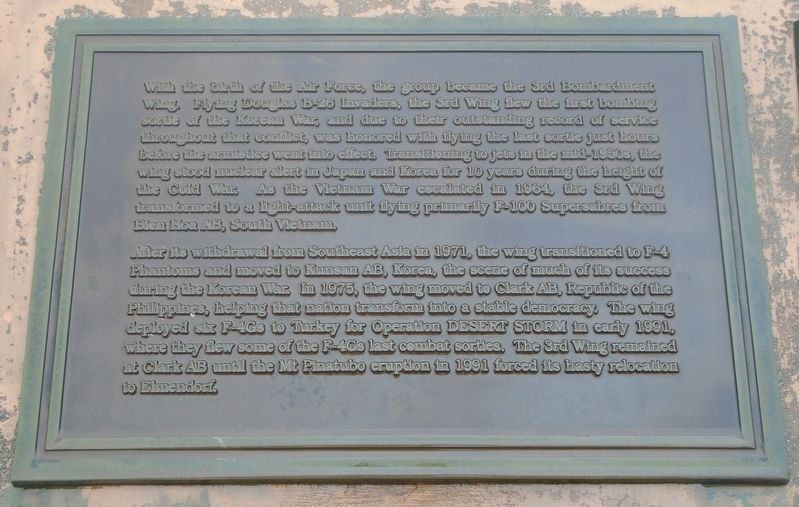
With the birth of the Air Force, the group became the 3rd Bombardment Wing. Flying Douglas B-26 Invaders, the 3rd Wing flew the first bombing sortie of the Korean War, and due to their outstanding record of service throughout that conflict, was honored with flying the last sortie just hours before the armistice went into effect. Transitioning to jets in the mild-1950s, the wing stood nuclear alert in Japan and Korea for 10 years during the height of the Cold War. As the Vietnam War escalated in 1964, the 3rd Wing transformed to a light-attack unit flying primarily F-100 Supersabres from Ben Hoa AB, South Vietnam.
After its withdrawal from Southeast Asia in 1971, the wing transitioned to F-4 Phantoms and moved to Kunsan AB, Korea, the scene of much of its success during the Korean War. In 1975, the wing moved to Clark AB, Republic of the Philippines, helping that nation transform into a stable democracy. The wing deployed six-4GS to Turkey for Operation DESERT STORM in early 1991, where they flew some of the F-4Gs last combat sorties.
Photographed by William Fischer, Jr., August 12, 2024
2. 3rd Wing History Marker
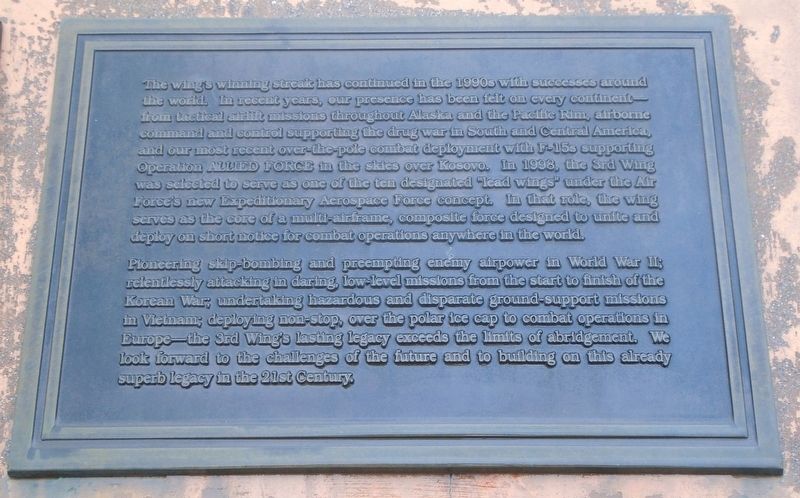
The wing's winning streak has continued in the 1990s with successes around the world. In recent years, our presence has been felt on every continent — from tactical airlift missions throughout Alaska and the Pacific Rim, airborne command and control supporting the drug war in South and Central America, and our most recent over-the-pole combat deployment with F-15s supporting Operation ALLIED FORCE in the skies over Kosovo. In 1998, the 3rd Wing was selected to serve as one of the ten designated "lead wings" under the Air Force's new Expeditionary Aerospace Force concept. In that role, the wing serves as the core of a multi-airframe, composite force designed to unite and deploy on short notice for combat operations anywhere in the world.
Pioneering skip-bombing and preempting enemy airpower in World War II; relentlessly attacking in daring, low-level missions from the start to finish of the Korean War, undertaking hazardous and disparate ground-support missions in Vietnam; deploying non-stop, over the polar
Photographed by William Fischer, Jr., August 12, 2024
3. 3rd Wing History Marker
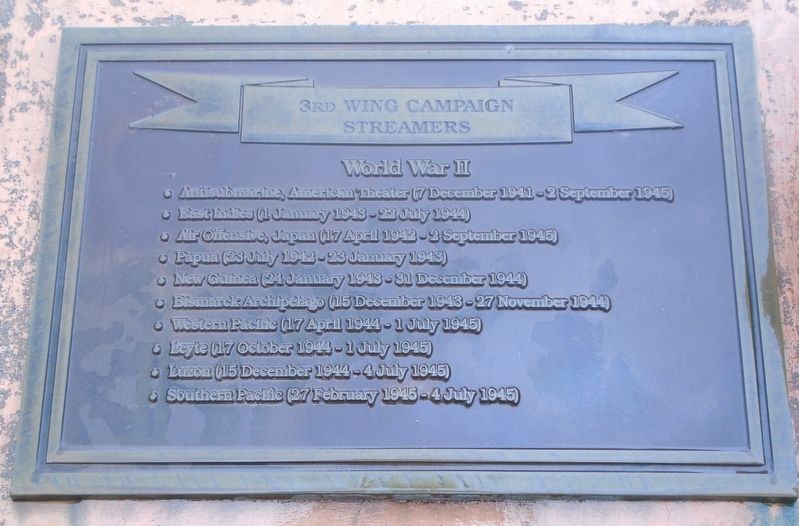
World War II
• Antisubmarine, American Theater (7 December 1941-2 September 1945)
• East Indies (1 January 1943-22 July 1944)
• Air Offensive, Japan (17 April 1942-2 September 1945)
• Papua (28 July 1942-23 January 1943)
• New Guinea (24 January 1943-31 December 1944)
• Bismarck Archipelago (15 December 1943-27 November 1944)
• Western Pacific (17 April 1944-1 July 1945)
• Leyte (17 October 1944-1 July 1945)
• Luzon (15 December 1944-4 July 1945)
• Southern Pacific (27 February 1945-4 July 1945)
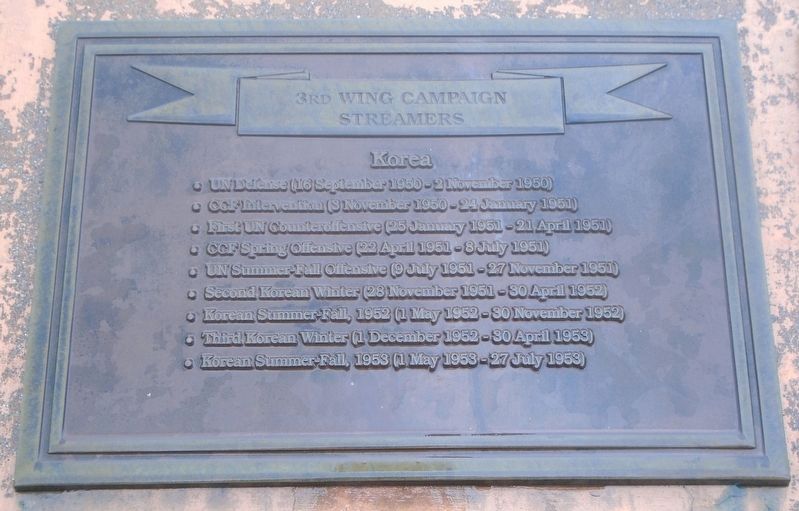
Korea
• UN Defense (16 September 1950-2 November 1950)
• CCF Intervention (3 November 1950-24 January 1951)
• First UN Counteroffensive (25 January 1951-21 April 1951)
• CCF Spring Offensive (22 April 1951-8 July 1951)
• UN Summer-Fall Offensive (9 July 1951-27 November 1951)
• Second Korean Winter (28 November 1951-30 April 1952)
• Korean Summer-Fall, 1952
Photographed by William Fischer, Jr., August 12, 2024
4. 3rd Wing Campaign Streamers - World War II Marker
• Third Korean Winter (1 December 1952-30 April 1053)
• Korean Summer-Fall, 1953 (1 May 1953-27 July 1953)
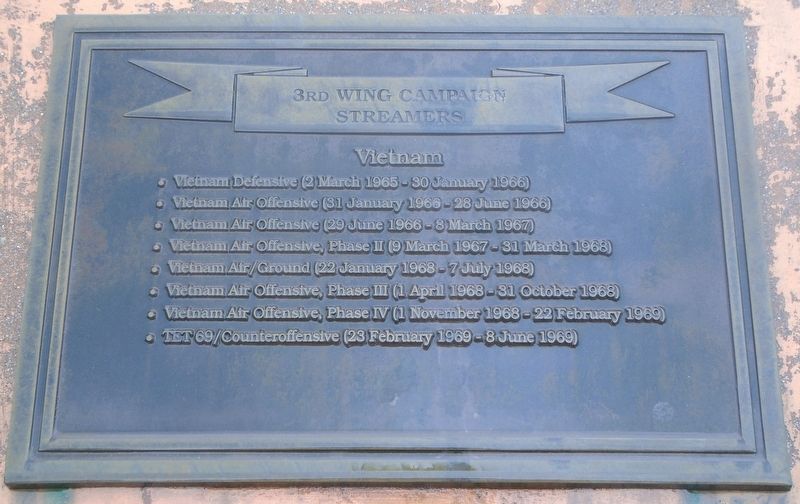
Vietnam
• Vietnam Defensive (2 March 1965-30 January 1966)
• Vietnam Air Offensive (31 January 1966-28 June 1966)
• Vietnam Air Offensive (29 June 1966-8 March 1967)
• Vietnam Air Offensive, Phase II (9 March 1967-31 March 1968)
• Vietnam Air/Ground (22 January 1968-7 July 1968)
• Vietnam Air Offensive, Phase III (1 April 1968-31 October 1968)
• Vietnam Air Offensive, Phase IV (1 November 1968-22 February 1969)
• TET 69/Counteroffensive (23 February 1969-8 June 1969)
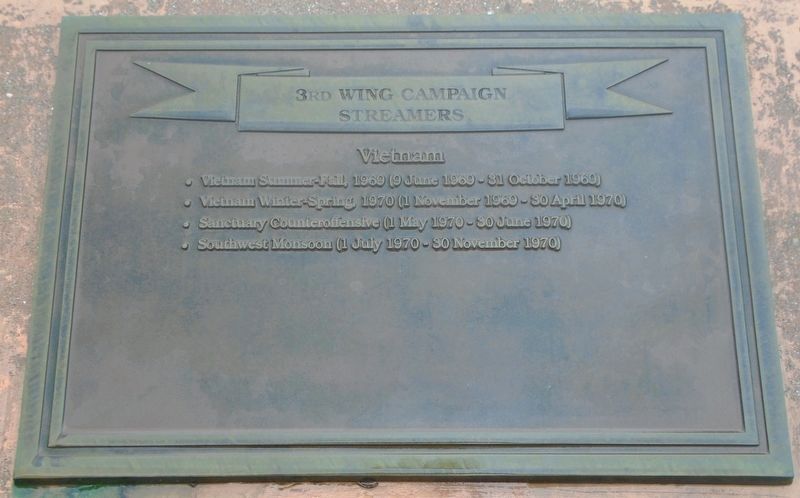
• Vietnam Summer-Fall, 1969 (9 June 1969-31 October 1969)
• Vietnam Winter-Spring 1970 (1 November 1969-30 April 1970)
• Sanctuary Counteroffensive (1 May 1970-30 June 1970)
• Southwest Monsoon (1 July 1970-30 November 1970)
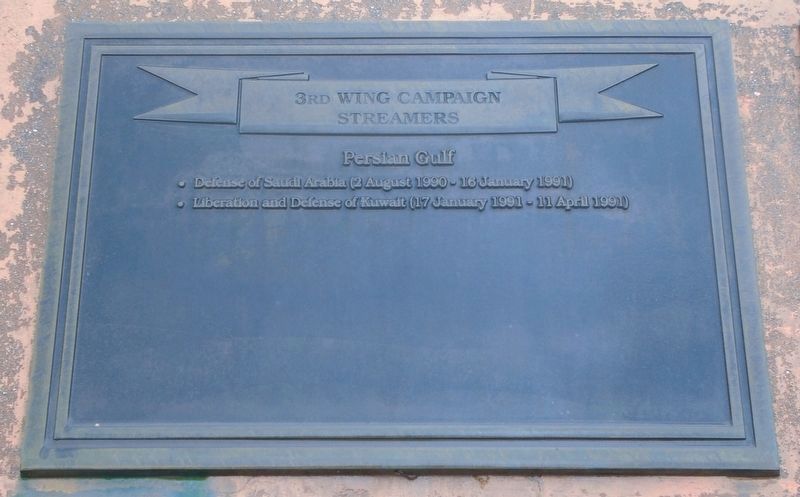
Persian Gulf
• Defense of Saudi Arabia (2 August 1990-16 January 1991)
• Liberation and Defense of Kuwait (17 January 1991-11 April 1991)
Erected by Joint Base Elmendorf-Richardson.
Topics. This memorial is listed in these topic lists: Air & Space • Military. A significant historical date for this entry is July 1, 1919.
Location. 61° 14.906′ N,
Photographed by William Fischer, Jr., August 12, 2024
5. 3rd Wing Campaign Streamers - Korea Marker

Regionally, this memorial is in the Alaska Railroad Corridor, in the Athabascan Region, in the Prince William Sound, and in Southcentral Alaska. It is also on the American Pacific Coast. Globally, it is in North America, on the Ring of Fire, on the Pacific Rim, in the Western Hemisphere, in the Western World, and in the Anglosphere. Historically, it finds itself in what was once the Russian Empire.
Other nearby markers. At least 8 other markers are within walking distance of this marker: Prisoners of War ★ Missing in Action (here, next to this marker); Gen Hoyt Vandenberg (here, next to this marker); Lt Col Horace Hickam (here, next to this marker); Maj Paul "Pappy" Gunn (here, next to this marker); Gen Nathan Twining (here, next to this marker); Capt John Walmsley
Photographed by William Fischer, Jr., August 12, 2024
6. 3rd Wing Campaign Streamers - Vietnam Marker
Photographed by William Fischer, Jr., August 12, 2024
7. 3rd Wing Campaign Streamers - Vietnam Marker
Photographed by William Fischer, Jr., August 12, 2024
8. 3rd Wing Campaign Streamers - Persian Gulf Marker
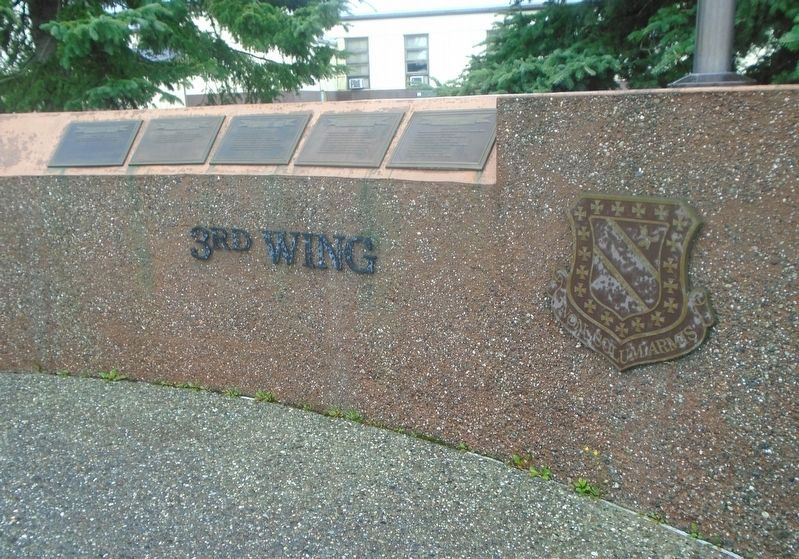
Photographed by William Fischer, Jr., August 12, 2024
9. 3rd Wing Emblem and Campaign Streamers Markers
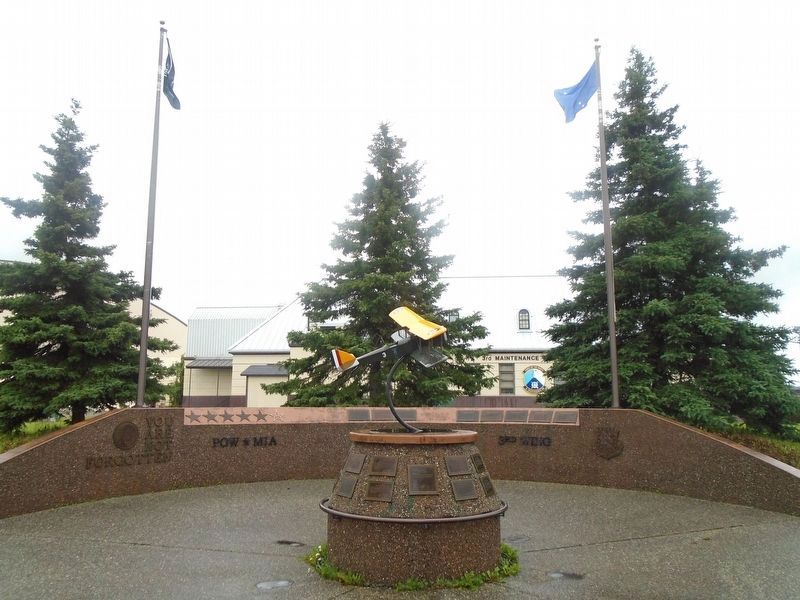
Photographed by William Fischer, Jr., August 12, 2024
10. Prisoners of War ★ Missing in Action and 3rd Wing Memorials
Credits. This page was last revised on August 18, 2024. It was originally submitted on August 18, 2024, by William Fischer, Jr. of Reynoldsburg, Ohio. This page has been viewed 384 times since then and 79 times this year. Photos: 1, 2, 3, 4, 5, 6, 7, 8, 9. submitted on August 18, 2024, by William Fischer, Jr. of Reynoldsburg, Ohio. 10. submitted on August 17, 2024, by William Fischer, Jr. of Reynoldsburg, Ohio.
