Jones in Milwaukee in Milwaukee County, Wisconsin — The American Midwest (Great Lakes)
Jones Island Community Site
Photographed by J.T. Lambrou, August 3, 2024
1. Jones Island Community Site Marker
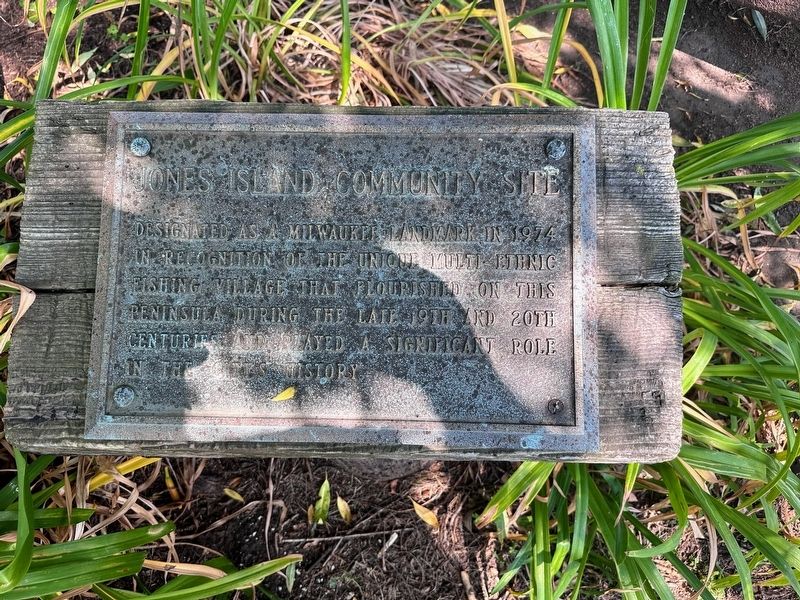
Designated as a Milwaukee landmark in 1974 in recognition of the unique multi-ethnic fishing village that flourished on this peninsula during the late 19th and 20th Centuries and played a significant role in the city's history.
Topics. This historical marker is listed in these topic lists: Industry & Commerce • Settlements & Settlers. A significant historical year for this entry is 1974.
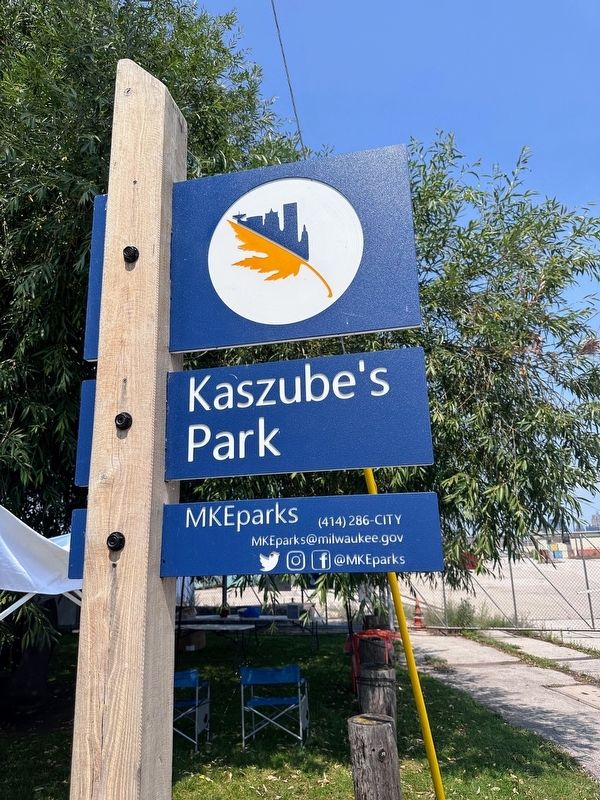
Location. 43° 1.028′ N, 87° 54.011′ W. Marker is in Milwaukee, Wisconsin, in Milwaukee County. It is in Jones. It is on South Carferry Drive near South Harbor Drive, on the left when traveling north. Marker is in Kaszube's Park. Touch for map. Marker is at or near this postal address: 1225 South Carferry Drive, Milwaukee WI 53207, United States of America. Touch for directions.

Regionally, this marker is in Southeast Wisconsin. It is also in the American Midwest and in the Corn Belt. Globally, it is in North America, on the Great Lakes, in the Western Hemisphere, in the Western World, and in the Anglosphere. Historically, it finds itself in what was once the territory of the Mississippian Culture and also the Northwest Territory.
this page online
Other nearby markers. At least 8 other markers are within one mile of this marker, measured as the crow flies: Saint Stephen Lutheran Church (approx. 0.8 miles away); Bay View’s Immigrants (approx. 0.9 miles away); Hansen Storage Co. Warehouse #2 (approx. 0.9 miles away); Holy Trinity - Our Lady of Guadalupe Church (approx. one mile away); Marine Terminal Building (approx. one mile away); Johanna Brotch: Female Ship Owner (approx. one mile away); Henry David Thoreau (approx. one mile away); Milwaukee Terminal Building (approx. one mile away). Touch for a list and map of all markers in Milwaukee.
Also see . . . Jones Island. Excerpt:
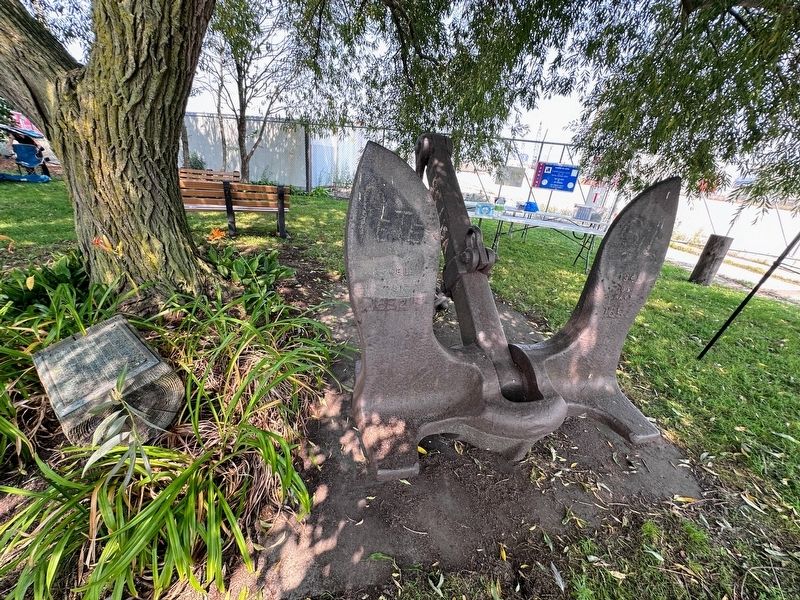
Jones Island is a peninsula formed at the mouth of the Milwaukee River, shaped as much by the city’s development as the lake and river that surround it. With easy access to fish, wild rice, and mainland resources, the marshy strip became an important Potawatomi summer village prior to white settlement. As the frontier community grew, schooners and steamships found the winding natural inlet difficult to navigate. The Army Corps of Engineers opened a new harbor channel through the northern part(Submitted on August 18, 2024, by J.T. Lambrou of New Boston, Michigan.)of the peninsula in 1857. This “straight cut” temporarily separated the peninsula from the mainland. The resulting island became known as Jones Island after James Monroe Jones, who had opened a shipyard there in 1854. Currents and waves gradually sealed the old river inlet with sand and restored the peninsula. Yet it remains known as Jones Island to this day.Photographed by J.T. Lambrou, August 3, 20242. Jones Island Community Site MarkerThe marker is to the left of the anchor.
Photographed by J.T. Lambrou, August 3, 2024
3. Location
Credits. This page was last revised on January 6, 2025. It was originally submitted on August 18, 2024, by J.T. Lambrou of New Boston, Michigan. This page has been viewed 322 times since then and 54 times this year. Photos: 1, 2, 3. submitted on August 18, 2024, by J.T. Lambrou of New Boston, Michigan. • J. Makali Bruton was the editor who published this page.
