Lynchburg, Virginia — The American South (Mid-Atlantic)
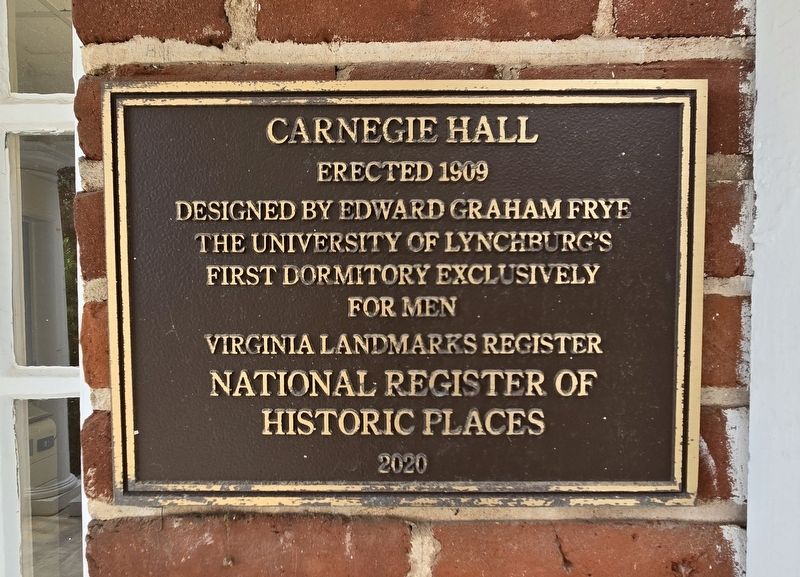
Carnegie Hall
Erected 1909
Photographed by Bradley Owen, August 13, 2024
1. Carnegie Hall Marker
The University of Lynchburg's first dormitory exclusively for men
Virginia Landmarks Register
National Register of
Historic Places
2020
Topics and series. This historical marker is listed in these topic lists: Architecture • Education. In addition, it is included in the National Register of Historic Places (NRHP) series list. A significant historical year for this entry is 2020.
Location. 37° 23.929′ N, 79° 10.955′ W. Marker is in Lynchburg, Virginia. It can be reached from Hopwood Drive 0.2 miles south of Lakeside Drive (U.S. 221), on the left when traveling south. Marker is located at the entrance to Carnegie Hall on the campus of the University of Lynchburg. Touch for map. Marker is in this post office area: Lynchburg VA 24501, United States of America. Touch for directions.

Regionally, this marker is in Central Virginia. It is also in the American South and specifically in the Upper South. Globally, it is in North America, the Western Hemisphere, the Western World, and the Anglosphere. Historically, it finds itself in what was once the territory of the Mississippian
this page online
Other nearby markers. At least 8 other markers are within walking distance of this marker: Coach William Shellenberger (within shouting distance of this marker); In Honor of Private John W. Mostoller Sr. (within shouting distance of this marker); Hopwood Hall (within shouting distance of this marker); Hundley Hall (about 400 feet away, measured in a direct line); Virginia Center for Inclusive Communities (about 500 feet away); Walker Alumni House (about 500 feet away); The Hive (about 600 feet away); Montgomery Hall (about 800 feet away). Touch for a list and map of all markers in Lynchburg.
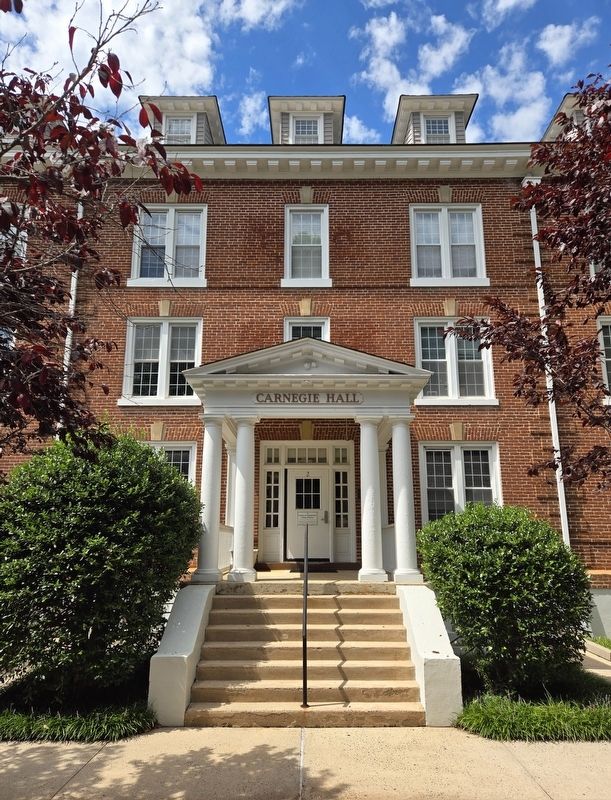
Regarding Carnegie Hall. Carnegie Hall is the second-oldest building on the University of Lynchburg campus. The three-story, Colonial Revival structure was designed by well-known local architect Edward Graham Frye. It was completed in 1909, shortly after the campus’s oldest building, Hopwood Hall, which was placed on the National Register in 2018. As its name suggests, the construction of Carnegie was funded in part by a
Photographed by Bradley Owen, August 13, 2024
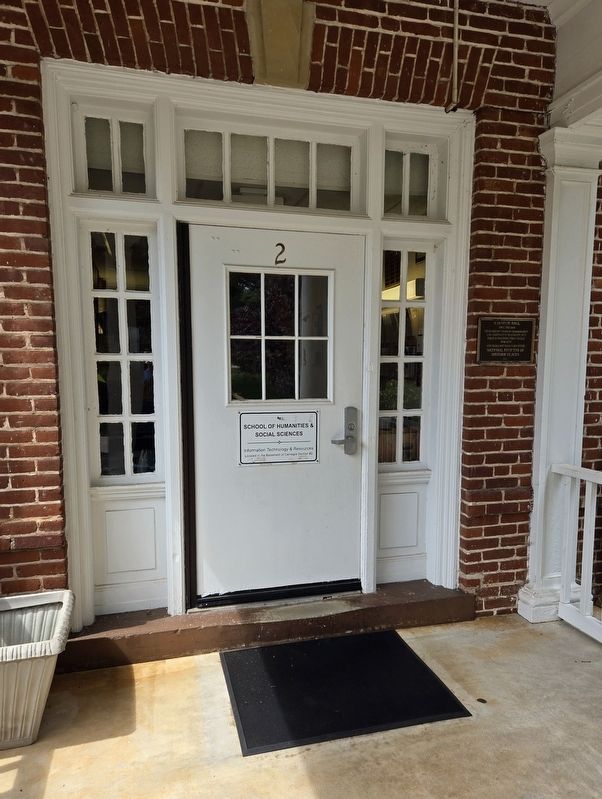
2. Carnegie Hall Marker
Photographed by Bradley Owen, August 13, 2024
3. Carnegie Hall
Credits. This page was last revised on August 18, 2024. It was originally submitted on August 18, 2024, by Bradley Owen of Morgantown, West Virginia. This page has been viewed 252 times since then and 58 times this year. Photos: 1, 2, 3. submitted on August 18, 2024, by Bradley Owen of Morgantown, West Virginia.
