Sutton-Alpine in Matanuska-Susitna Borough, Alaska — Northwest (North America)
Chickaloon Bunkhouse

Photographed by William Fischer, Jr., August 13, 2024
1. Chickaloon Bunkhouse Marker
In 1899 the U.S. Army documented coal along the Chickaloon River and in 1916 the area was set aside by the United States Secretary of the Interior as a designated coal-mining area. The town of Chickaloon sprang up peopled with miners, Navy personnel, and Ahtna Hwt'aene' (Peoples) including Nay'dini'aa Na' (Chickaloon Native Village). By 1918, construction completed at the Chickaloon town site included 28 frame and log buildings. One of the buildings was the Chickaloon Bunkhouse. In 1921, Chickaloon had a power plant, a mess hall, dorms for 100 men, cottages, a large school house, two roadhouses and stores. Katie Wade, a Nay'dini'aa Na' Tribal citizen born in Chickaloon in 1922, recalled her mother's description of the Chickaloon town site: "Mama said there was a hospital there, [a] school, all kinds of buildings. They had a town site where Navy personnel lived... they said the government owned the ones on top of the hill and that's where this little one [the bunkhouse] was."
Then in 1922 mining operations at Chickaloon ended abruptly. The Navy had turned to oil to power its ships. People moved away and in 1928
this page online
This bunkhouse was used by both the railroad section crews and road construction crews while at the Moose Creek town site. From 8 to 14 men would live in it at any one time. In the winter it was heated with a coal pot-bellied stove. Katie Wade's father, husband, brother-in-law, brother and uncle had all lived in the bunkhouse while it was at Moose Creek. About 1954, Katie and Richard "Tiny" Wade purchased the building from the railroad and dragged it with a hand winch and small bulldozer to their property, about one mile from Moose Creek. Katie's Aunt Mary Nickolai Goodlataw Shaginoff and her sons lived in the house for many years on Katie and Tiny's
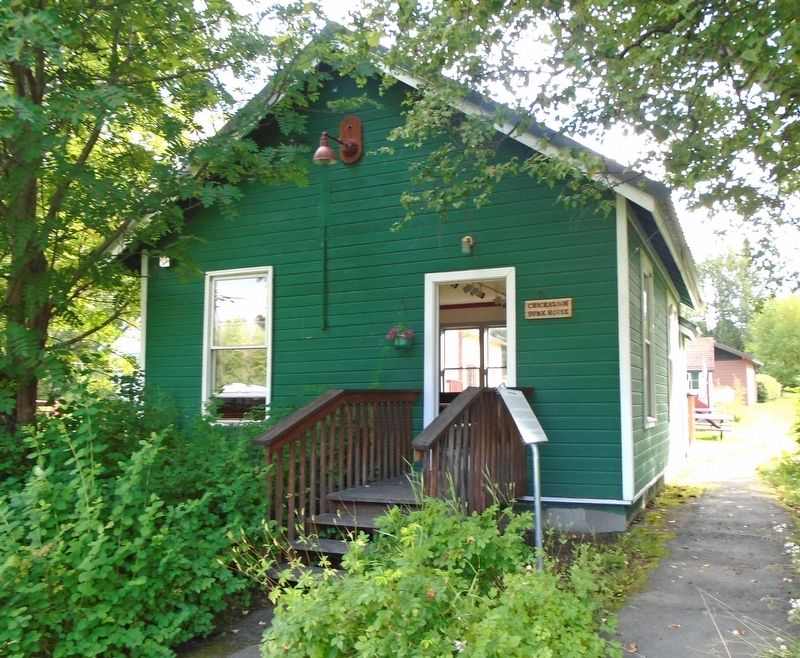
Photographed by William Fischer, Jr., August 13, 2024
2. Chickaloon Bunkhouse and Marker
In the early 1990's the bunkhouse was sold to Eileen Haines of Sutton and Eileen donated the bunkhouse to the Alpine Historical Society. It was moved to its final resting place on the grounds of the Alpine Historical Park where it was renovated.
Erected by Alpine Historical Park.
Topics. This historical marker is listed in this topic list: Notable Buildings. A significant historical year for this entry is 1899.
Location. 61° 42.609′ N, 148° 52.572′ W. Marker is in Sutton-Alpine, Alaska, in Matanuska-Susitna Borough. It is on Glenn Highway (State Highway 1 at milepost 61.6) east of Chickaloon Way, on the left when traveling east. Marker is in Alpine Historical Park. Touch for map. Marker is at or near this postal address: 11266 Chickaloon Way, Sutton AK 99674, United States of America. Touch for directions.

Regionally, this marker is in the Alaska Railroad Corridor, in the Athabascan Region, in the Mat-Su Valley, and in Southcentral Alaska. It is also on the American Pacific Coast. Globally, it is in North America, on the Pacific Rim, in the Western Hemisphere, in the Western World, and in the Anglosphere.
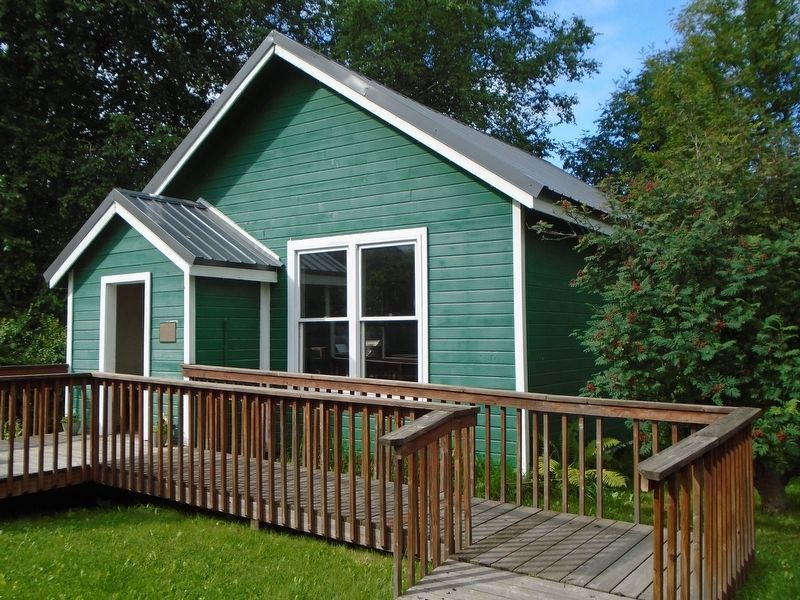
Photographed by William Fischer, Jr., August 13, 2024
3. Chickaloon Bunkhouse (front)
Other nearby markers. At least 8 other markers are within walking distance of this marker: A different marker also named Chickaloon Bunkhouse (here, next to this marker); Rita Pfauth Memorial Garden (a few steps from this marker); Sutton (a few steps from this marker); Sutton Post Office (a few steps from this marker); Gasoline Engine (a few steps from this marker); Eska Dryer (a few steps from this marker); Boilers (a few steps from this marker); Geology (a few steps from this marker). Touch for a list and map of all markers in Sutton-Alpine.
Also see . . . Alpine Historical Park. (Submitted on August 23, 2024, by William Fischer, Jr. of Reynoldsburg, Ohio.)
Credits. This page was last revised on August 23, 2024. It was originally submitted on August 23, 2024, by William Fischer, Jr. of Reynoldsburg, Ohio. This page has been viewed 170 times since then and 28 times this year. Photos: 1, 2, 3. submitted on August 23, 2024, by William Fischer, Jr. of Reynoldsburg, Ohio.
