Sparta in Elgin County, Ontario — Central Canada (North America)
The Sparta Settlement
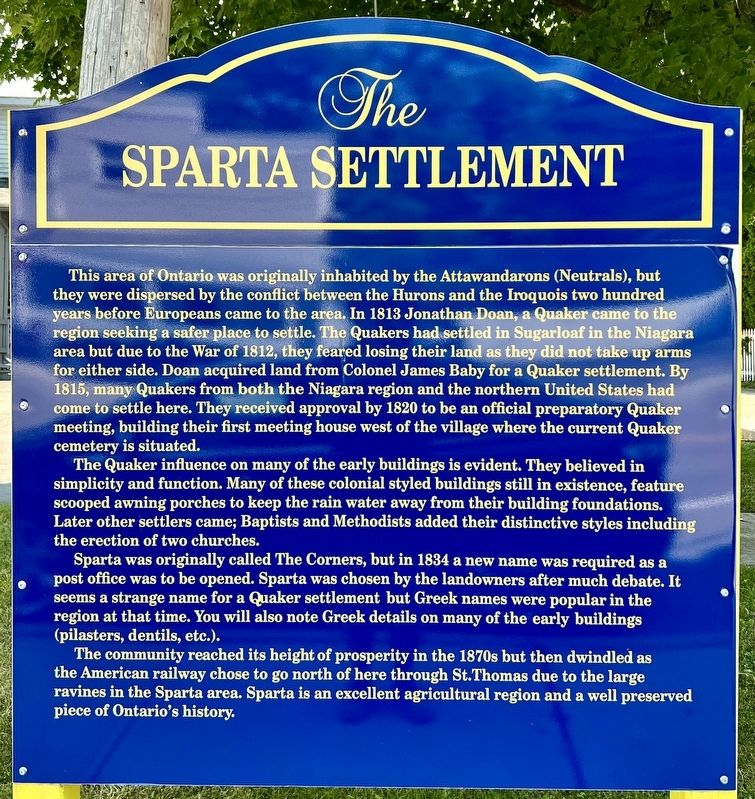
Photographed by Tim Boyd, July 27, 2024
1. The Sparta Settlement Marker
This area of Ontario was originally inhabited by the Attawandarons (Neutrals), but they were dispersed by the conflict between the Hurons and the Iroquois two hundred years before Europeans came to the area. In 1813 Jonathan Doan, a Quaker came to the region seeking a safer place to settle. The Quakers had settled in Sugarloaf in the Niagara area but due to the War of 1812, they feared losing their land as they did not take up arms for either side. Doan acquired land from Colonel James Baby for a Quaker settlement. By 1815, many Quakers from both the Niagara region and the northern United States had come to settle here. They received approval by 1820 to be an official preparatory Quaker meeting, building their first meeting house west of the village where the current Quaker cemetery is situated.
The Quaker influence on many of the early buildings is evident. They believed in simplicity and function. Many of these colonial styled buildings still in existence, feature scooped awning porches to keep the rain water away from their building foundations. Later other settlers came; Baptists and Methodists added their distinctive
this page online
Sparta was originally called The Corners, but in 1834 a new name was required as a post office was to be opened. Sparta was chosen by the landowners after much debate. It seems a strange name for a Quaker settlement but Greek names were popular in the region at that time. You will also note Greek details on many of the early buildings (pilasters, dentils, etc.).
The community reached its height of prosperity in the 1870s but then dwindled as the American railway chose to go north of here through St.Thomas due to the large ravines in the Sparta area. Sparta is an excellent agricultural region and a well preserved piece of Ontario's history.
Topics and series. This historical marker is listed in these topic lists: Architecture • Religion & Religious Structures • Settlements & Settlers • War of 1812. In addition, it is included in the Quakerism series list. A significant historical year for this entry is 1813.
Location. 42° 42.145′ N, 81° 4.758′ W. Marker is in Sparta, Ontario, in Elgin County. It is on Sparta Line (County Road 27) 0.1 kilometers west of Quaker Road (County
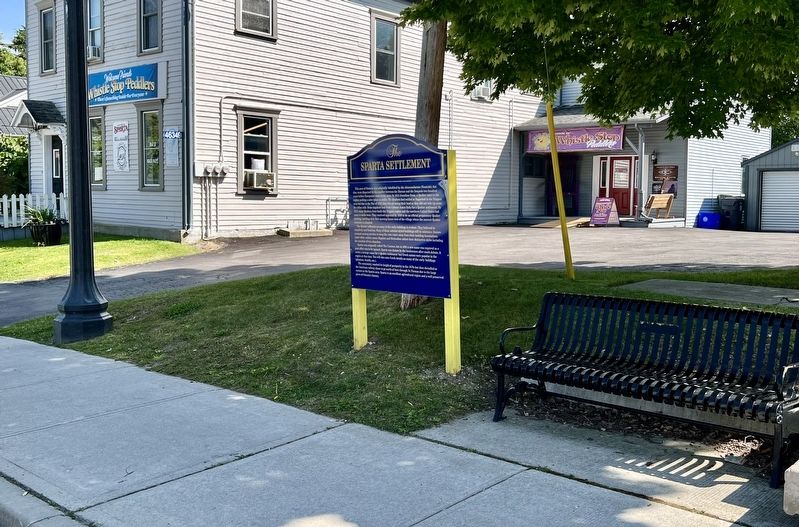
Photographed by Tim Boyd, August 23, 2024
2. The Sparta Settlement Marker

Regionally, this marker is in the Southwest Ontario Area and in Southwestern Ontario. It is also in Central Canada. Globally, it is in North America, on the Great Lakes, in the Western Hemisphere, in the Western World, and in the Anglosphere. Historically, it finds itself in what was once a British colony, the Viceroyalty of New France, the Haudenosaunee (Iroquois) Confederacy, and Rupert’s Land.
Other nearby markers. At least 8 other markers are within walking distance of this marker: The Temperance House (a few steps from this marker); The Sparta House (a few steps from this marker); Israel Doan House (a few steps from this marker); The Abbey (within shouting distance of this marker); Ye Olde Forge & Anvil (within shouting distance of this marker); The Eakins Store (within shouting distance of this marker); Quilt Block: Drunkard’s Path (about 90 meters away, measured in a direct line); Hiram Burley Smith Early Home and Store (about 90 meters away).
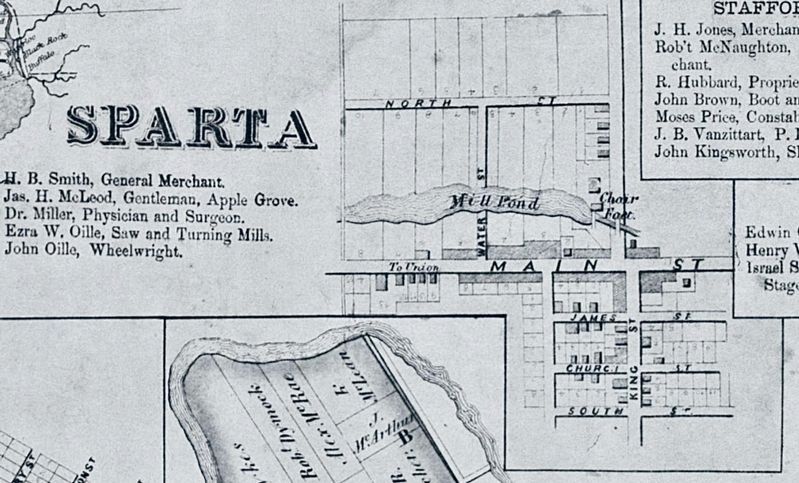
3. The Village of Sparta, 1863
From Tremaine’s Map of the County of Elgin
Also see . . . Sparta, Ontario (smalltowncanada.ca).
Sparta grew to its peak in the 1870s with close to 1,500 residents. A steady stream of immigrants, some with special talents, migrated to the area and helped grow the local economy. Several stores and businesses excelled during this time period, including a blacksmith shop, hardware store, tailor, multiple hotels, a glove making shop, three cabinet shops and more.(Submitted on August 27, 2024, by Tim Boyd of Hamilton, Ontario.)
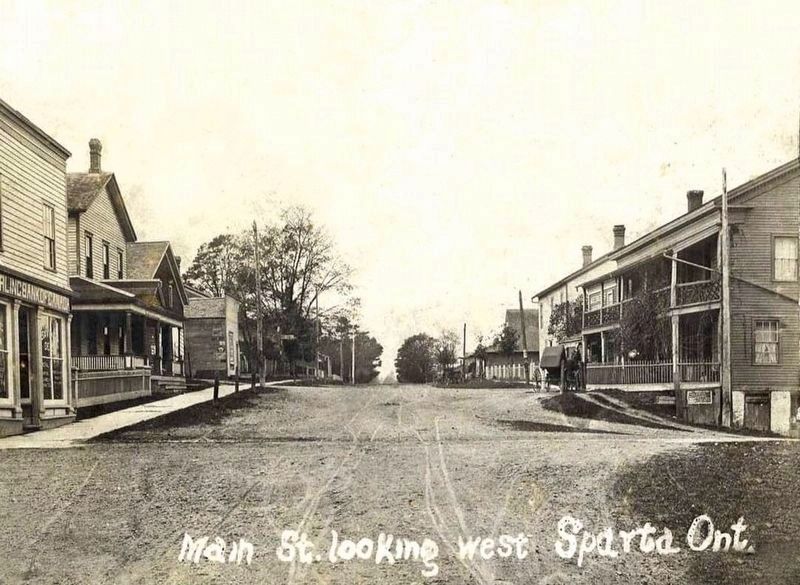
circa 1910
4. Main Street in Sparta, ca 1910
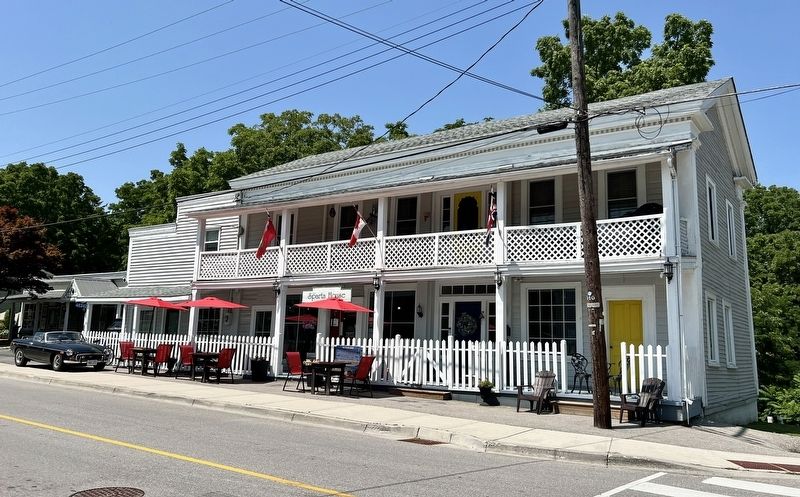
Photographed by Tim Boyd, July 27, 2024
5. Sparta House, 2024
Credits. This page was last revised on October 8, 2024. It was originally submitted on August 27, 2024, by Tim Boyd of Hamilton, Ontario. This page has been viewed 327 times since then and 56 times this year. Photos: 1, 2, 3, 4, 5. submitted on August 27, 2024, by Tim Boyd of Hamilton, Ontario. • Andrew Ruppenstein was the editor who published this page.
