Highland in Denver in Denver County, Colorado — The American Mountains (Southwest)
Denver Tramway Power Plant
Photographed by Craig Baker
1. Denver Tramway Power Plant Marker
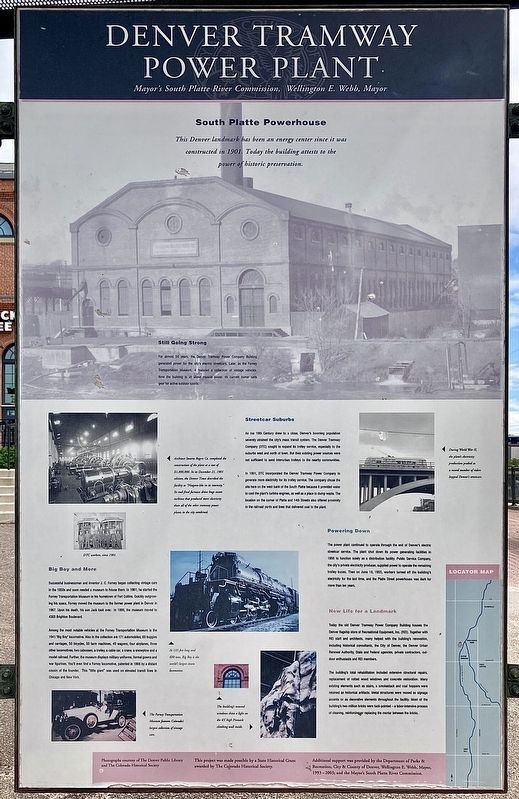
This Denver landmark has been an energy center since it was constructed in 1901. Today the building attests to the power of historic preservation.
Still Going Strong
For almost 50 years, the Denver Tramway Power Company Building generated power for the city’s electric street cars. Later, as the Forney Transportation Museum, it featured a collection of vintage vehicles. Now the building is all about muscle power. Its current owner sells gear for active outdoor sports.
Streetcar Suburbs
As the 19th century drew to a close, Denver’s booming population severely strained the city’s mass transit system. The Denver Tramway Company (DTC) sought to expand its trolley service, especially to the suburbs west and north of town. But their existing power sources were not sufficient to send interurban trolleys to the nearby communities.
In 1901, DTC incorporated the Denver Tramway Power Company to generate more electricity for its trolley service. The company chose the site here on the west bank of the South Platte because it provided water to cool the plant’s turbine engines, as well as a place to dump waste. The location on the corner of Platte and 14th Streets also offered proximity to the railroad yards and lines that delivered coal to the plant.
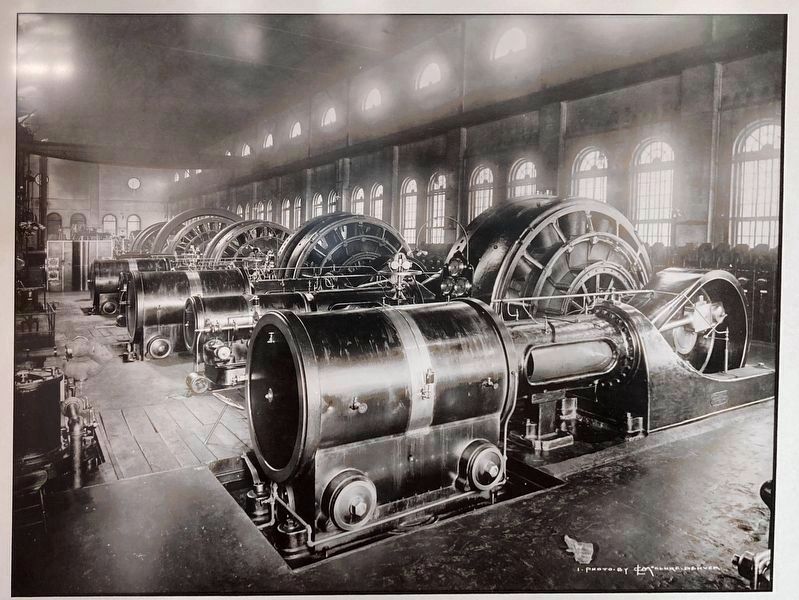
Architect Stearns Rogers Co. completed the construction of the plant at a cost of $1,000,000. In it’s December 21, 1901 edition, the Denver Times described the facility as “Niagara-like in its intensity.” It’s coal-fired furnaces drove huge steam turbines that produced more electricity than all of the other tramway power plants in the city combined.
Powering Down
The power plant continued to operate through the end of Denver’s electric streetcar service. The plant shut down its power and generating facilities in 1950 to function
this page online
Big Boy and More
Successful businessman and inventor J.C. Forney began collecting vintage cars in the 1950s and soon needed a museum to house them. In 1961, he started the Forney Transportation Museum in his hometown of Fort Collins. Quickly outgrowing his space, Forney moved the museum to the former power plant in Denver in 1967. Upon his death, his son Jack took over. In 1999, the museum moved to 4303 Brighton Boulevard.
Among the most notable vehicles at the Forney Transportation Museum is the 1941 Big Boy locomotive. Also in the collection are 171 automobiles, 60 buggies and carriages, 50 bicycles, 50 farm machines, 40 wagons, four airplanes, three other locomotives, to cabooses, a trolley, a cable car, a crane, a snow plow and a model railroad. Further, the museum displays military uniforms, formal gowns and
Photographed by Craig Baker, August 25, 2024
2. Denver Tramway Power Plant Marker
New Life for a Landmark
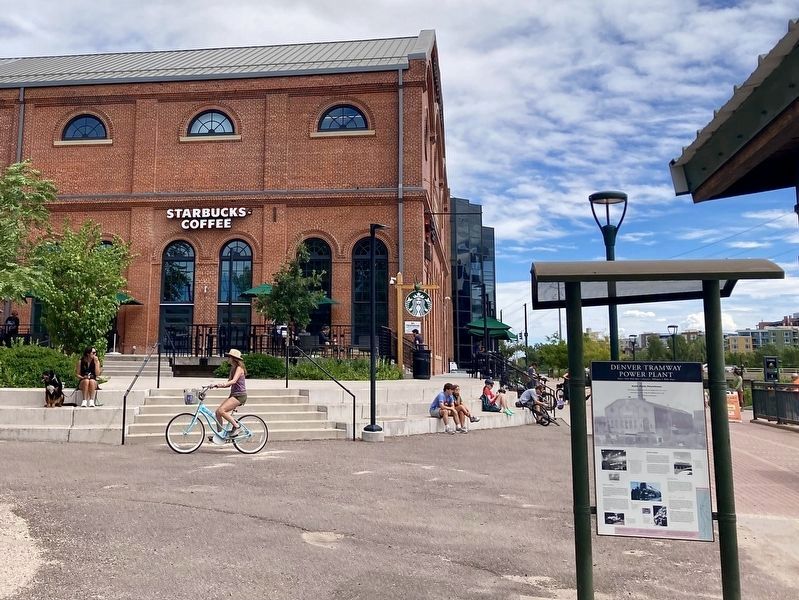
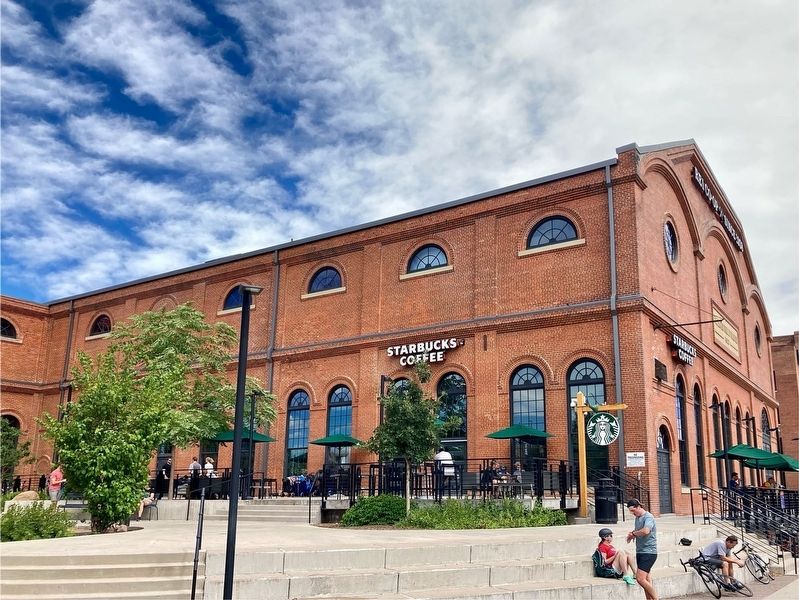
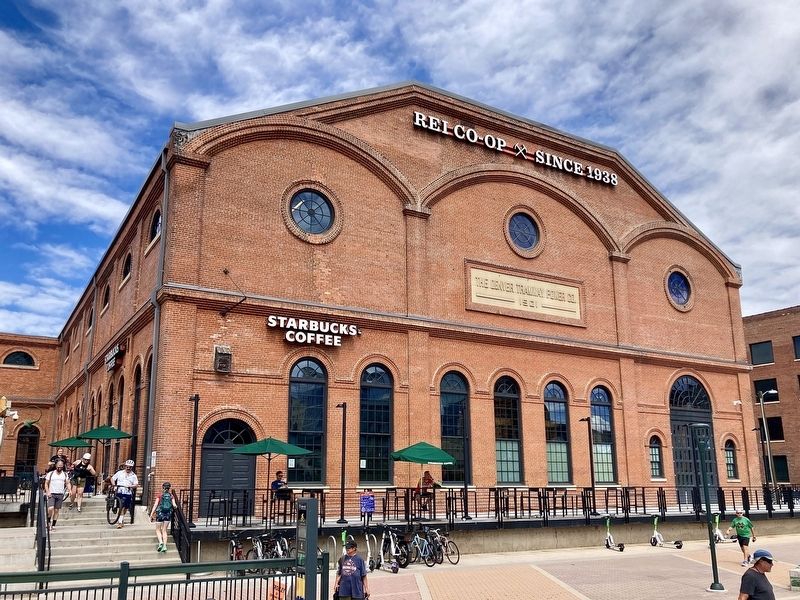
Today the old Denver Tramway Power Company Building houses the Denver flagship store of Recreational Equipment, Inc. (REI). Together with REI staff and architects, many helped with the building’s renovation, including historical consultants, the City of Denver, the Denver Urban Renewal Authority, State and Federal agencies, private contractors, outdoor enthusiasts and REI members.
The building’s total rehabilitation included extensive structural repairs, replacement of rotted wood windows and concrete restoration. Many existing elements such as stairs, a smokestack and coal hoppers were retained as historical artifacts. Metal structures were used as signage accents or as decorative elements throughout the facility. Most of the building’s two million bricks were tuck-pointed — a labor-intensive process of cleaning, reinforcing, or replacing the mortar between the bricks.
Topics and series. This historical
Photographed by Craig Baker
3. Denver Tramway Power Plant
Today it houses REI and Starbucks.
Location. 39° 45.276′ N, 105° 0.555′ W. Marker is in Denver, Colorado, in Denver County. It is in Highland. It can be reached from the intersection of Water Street and Platte Street. Located at the Denver Trolley, behind REI, along the South Platte River. Touch for map. Marker is at or near this postal address: 1400 Water Street, Denver CO 80202, United States of America. Touch for directions.

Regionally, this marker is in the Front Range. It is also in the American Mountain West. Globally, it is in North America, the Rocky Mountains, the Western Hemisphere, the Western World, and the Anglosphere. Historically, it finds itself in what was once the Louisiana Purchase.
Other nearby markers. At least 8 other markers are within walking distance of this marker: Trolley Town (here, next to this marker); Confluence Park: Reclaiming Denver's Birthplace (within shouting distance of this marker); Commons Park (approx.
Photographed by Craig Baker
4. Denver Tramway Power Plant
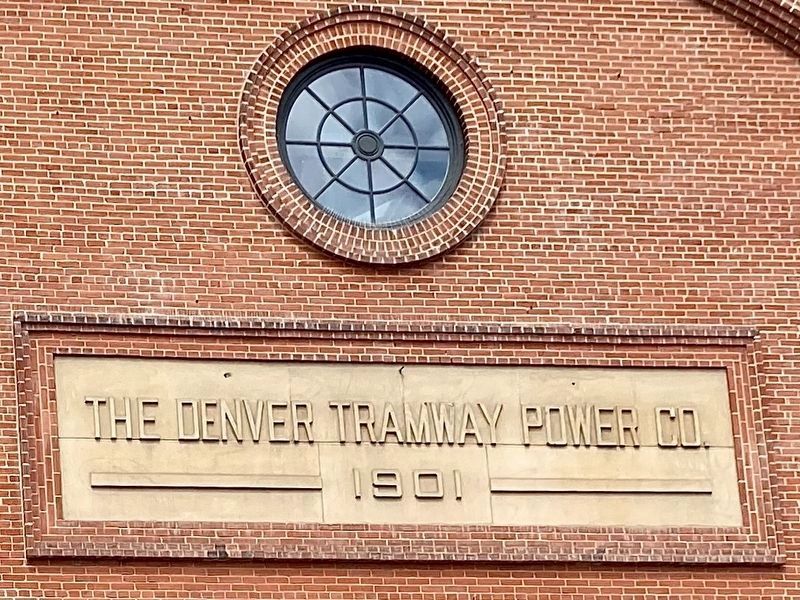
Photographed by Craig Baker
5. The Denver Tramway Power Co. - 1901

Photographed by Craig Baker
6. National Register of Historic Places
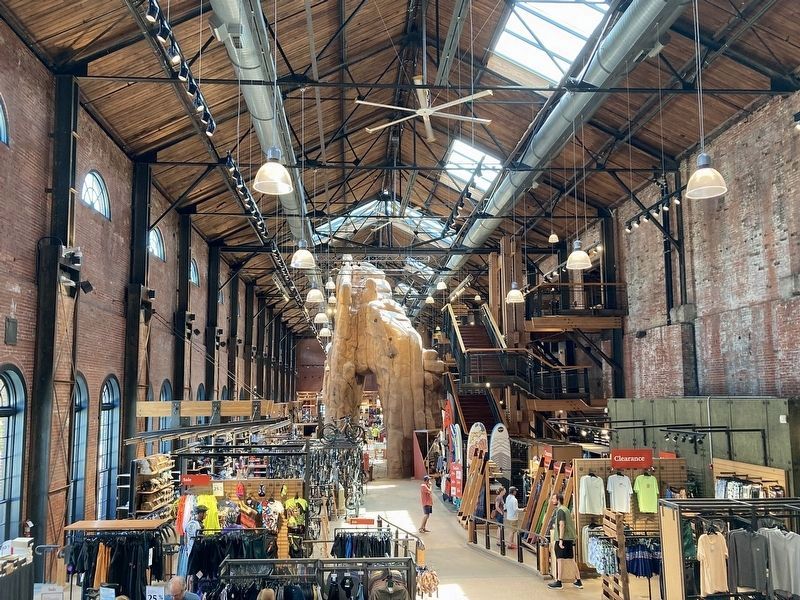
Photographed by Craig Baker
7. Denver Tramway Power Plant
Inside the building, now an REI store.
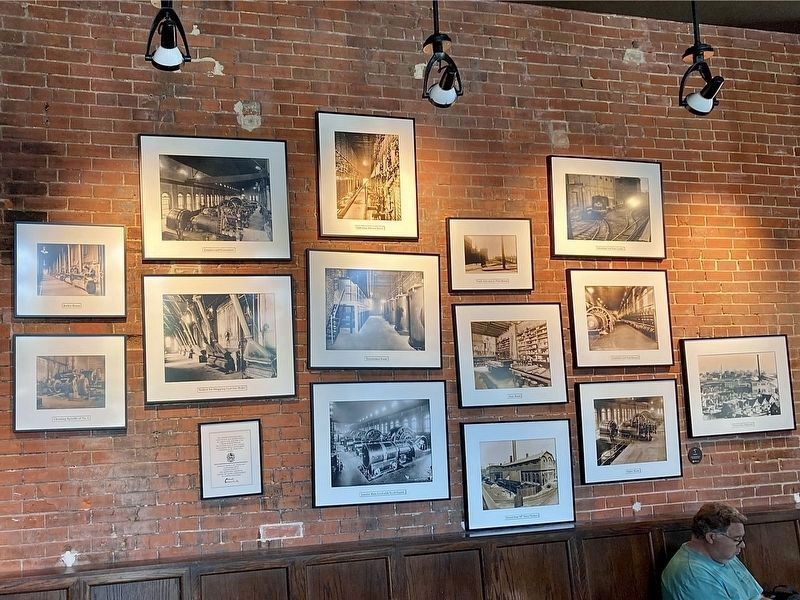
Photographed by Craig Baker
8. Denver Tramway Power Plant
Inside Starbucks — Historical photos.
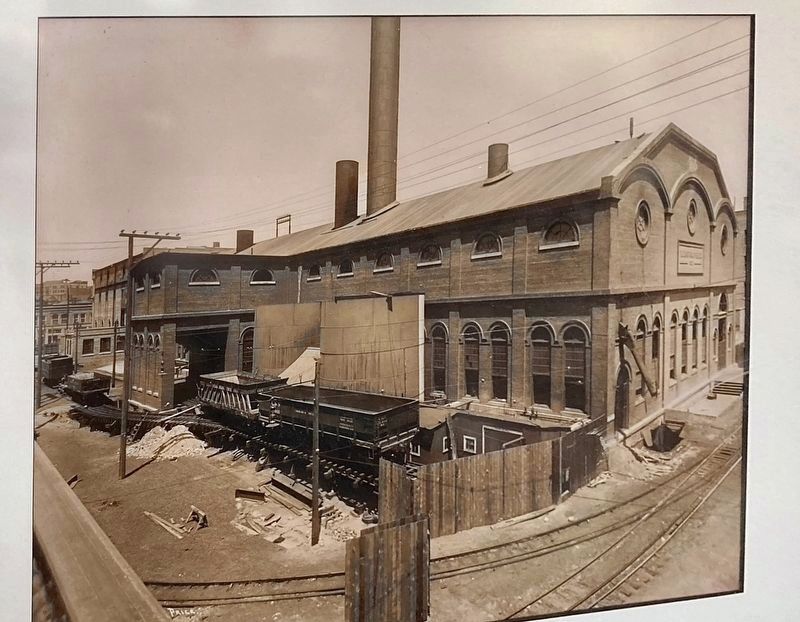
Photographed by Craig Baker
9. Denver Tramway Power Plant
This photo is on display inside Starbucks.
Photographed by Craig Baker
10. Denver Tramway Power Plant
This photo is on display inside, and on the marker.
Credits. This page was last revised on August 29, 2024. It was originally submitted on August 29, 2024, by Craig Baker of Sylmar, California. This page has been viewed 1,645 times since then and 168 times this year. Photos: 1, 2, 3, 4, 5, 6, 7, 8, 9, 10. submitted on August 29, 2024, by Craig Baker of Sylmar, California.
