Pipestone in Pipestone County, Minnesota — The American Midwest (Upper Plains)
Moore Block
Pipestone Historic District
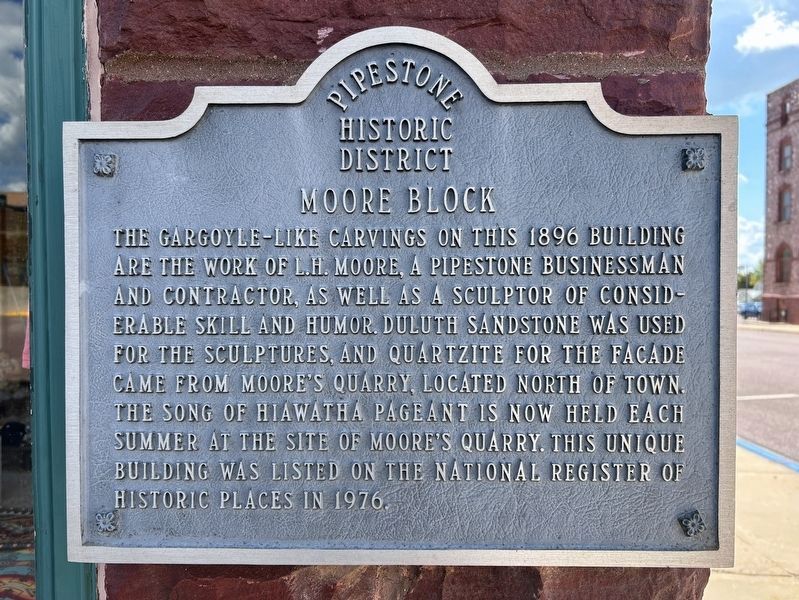
September 6, 2024
1. Moore Block Marker
Topics and series. This historical marker is listed in this topic list: Architecture. In addition, it is included in the National Register of Historic Places (NRHP) series list. A significant historical year for this entry is 1896.
Location. 44° 0.024′ N, 96° 19.049′ W. Marker is in Pipestone, Minnesota, in Pipestone County. It is at the intersection of East Main Street and South Hiawatha Avenue, on the right when traveling east on East Main Street. Touch for map. Marker is at or near this postal address: 102 E Main St, Pipestone MN 56164, United States of America. Touch for directions.

Regionally, this marker is in Southwest Minnesota. It is also in the American Midwest,
this page online
Other nearby markers. At least 8 other markers are within walking distance of this marker: Ferris Block (a few steps from this marker); The Old City Hall (within shouting distance of this marker); Calumet Hotel (within shouting distance of this marker); Carnegie Library (about 700 feet away, measured in a direct line); CDR William Forman Freedom Tree (approx. 0.2 miles away); L. H. Moore Soldier Memorial Monument (approx. 0.2 miles away); Pipestone County Soldiers Memorial Monument (approx. 0.2 miles away); Pipestone County Courthouse (approx. 0.2 miles away). Touch for a list and map of all markers in Pipestone.
Also see . . . Minnesota MPS Pipestone Commercial Historic District - National Archives NextGen Catalog. From the National Register of Historic Places Inventory--Nomination Form (1977):
"The [Moore Block], built in 1896 of Sioux quartzite(Submitted on September 12, 2024.)stone, is unique among buildings in the district because of the large number of relief sculptures that adorn the facade. The sculpture was carved by L. H. Moore, a local businessman who operated a Sioux quartzite quarry. Most of the original sculptures survive although the statue of Eve is missing from the niche on the second floor. The flat keystone arches of the two window openings facing main street have sculpture heads as a keystone. Two cast iron bay windows have been removed from the second story facade facing North Hiawatha Street.September 6, 20242. Moore Block & Marker
Formerly a bank, the building is occupied by a commercial enterprise on the first floor and apartments on the second floor. The first floor facade facing Main Street has been altered with a glass storefront display."
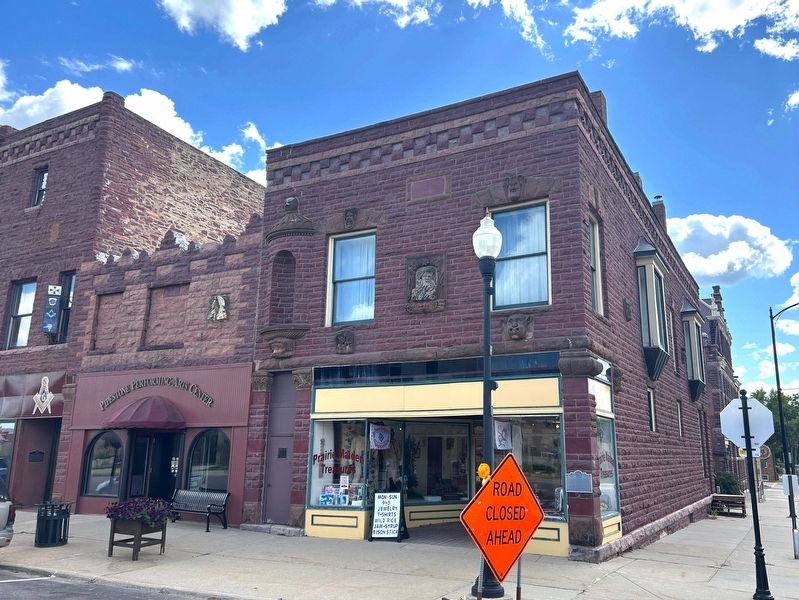
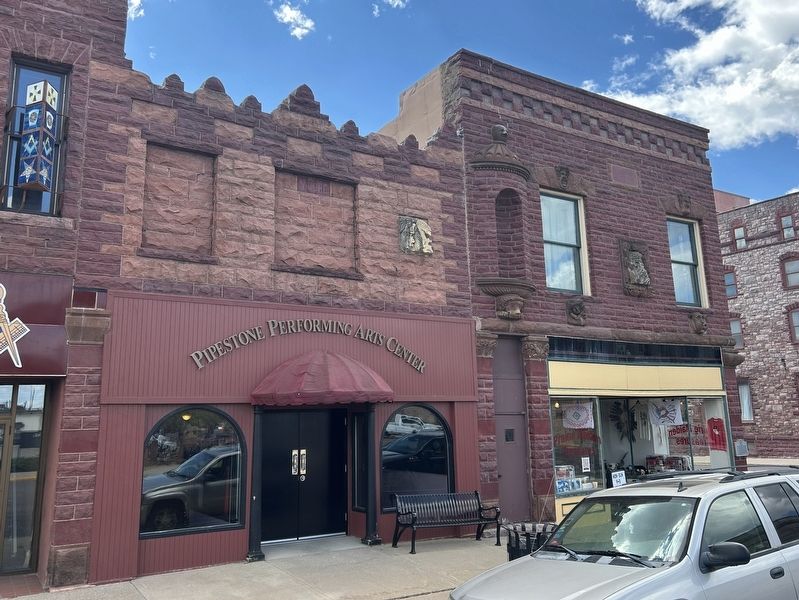
September 6, 2024
3. Moore Block
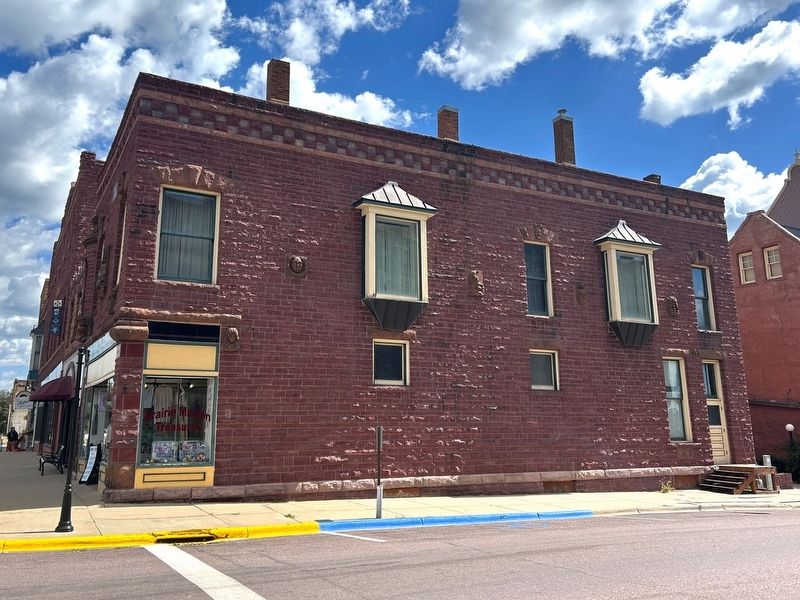
September 6, 2024
4. Moore Block, from the west
Credits. This page was last revised on September 12, 2024. It was originally submitted on September 12, 2024. This page has been viewed 269 times since then and 48 times this year. Photos: 1, 2, 3, 4. submitted on September 12, 2024.
