Downtown in Morganton in Burke County, North Carolina — The American South (South Atlantic)
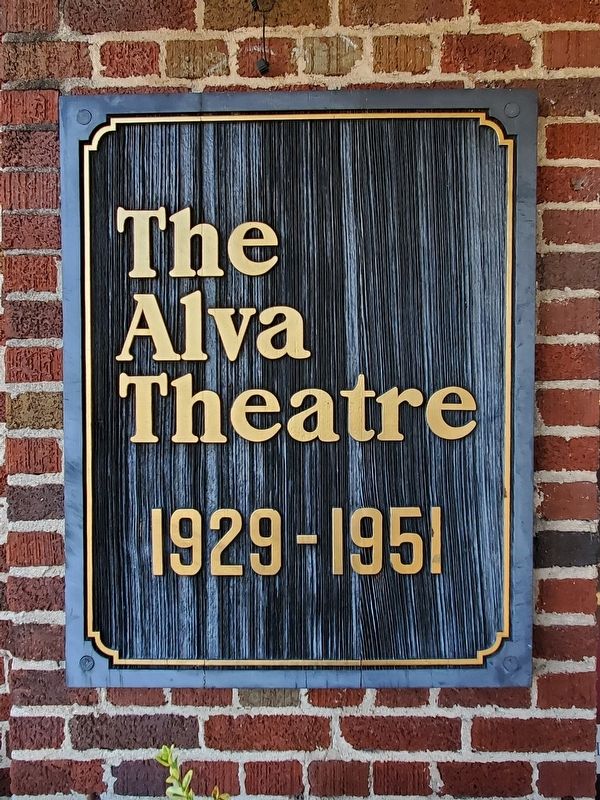
Alva Theater
1929
Photographed by Mark Parker, September 30, 2023
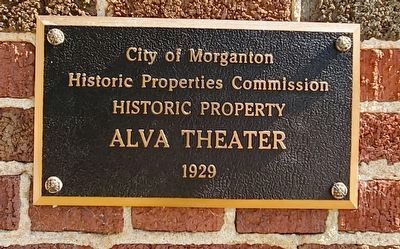
1. Alva Theater Marker
Historic Properties Commission
Historic Property
Alva Theater
1929
Erected by City of Morganton Historic Properties Commission.
Topics. This historical marker is listed in these topic lists: Architecture • Arts, Letters, Music. A significant historical year for this entry is 1929.
Location. 35° 44.795′ N, 81° 41.351′ W. Marker is in Morganton, North Carolina, in Burke County. It is in Downtown. It can be reached from the intersection of North Sterling Street (North Carolina Route 181) and Avery Avenue (U.S. 64), on the left when traveling south. Touch for map. Marker is at or near this postal address: 200 N Sterling St, Morganton NC 28655, United States of America. Touch for directions.

Regionally, this marker is in the Mountains. It is also in the American South, specifically in the Upper South, in Appalachia, and specifically in Southern Appalachia. Globally, it is in North America, the Western Hemisphere, the Western World, and the Anglosphere. Historically, it finds itself in what was once the territory of the Mississippian Culture, one of the original Thirteen Colonies, one
this page online
Other nearby markers. At least 8 other markers are within walking distance of this marker: Morganton (about 600 feet away, measured in a direct line); Burke Courthouse (about 600 feet away); Our Confederate Soldiers (about 600 feet away); Burke County Veterans K.I.A. Memorial (about 600 feet away); The Charters of Freedom (about 600 feet away); Tod R. Caldwell (about 600 feet away); Sam J. Ervin, Jr. (about 700 feet away); Tate House (approx. 0.2 miles away). Touch for a list and map of all markers in Morganton.
Regarding Alva Theater.
Excerpts from the Historic and Architectural Resources of Morganton nomination form:
The Alva Theater (MDHD, 1929) was designed by Benton and Benton of Wilson, N.C., and is an extremely intact example of small movie theater design. Described as "Spanish", a favorite catch-all phrase for the romantic motifs favored by theater goers, the building features a central, shed, tile roof and elaborate window surrounds. The theater had a "manufactured weather" system of cooling and heating and the elaborate and fanciful interior ornamentationis loosely based on the "atmospheric theory" of theater design in which the illusion of the outdoors is created. The Alva featured blank windows inside which were backlighted and monumental pilasters in red, gold, and green framed the stage. Giles Motor Company and the Alva Theater reflect the success of two relatively new industries, automobiles and movies, and their success in turn reflects the growth and progressive development of Morganton.Photographed by Mark Parker, September 30, 20232. Full view of Alva TheaterThe marker is to the far southwest corner of the building, hidden by the tree
Also see . . .
1. Historic and Architectural Resources of Morganton Nomination Form (pdf). Prepared by Suzanne Pickens Wylie, Preservation Consultant, 1986 (Submitted on September 13, 2024, by Mark Parker of Hickory, North Carolina.)
2. Davis Theatre. A brief synopsis of the building from Alva Theater to its present day use as a photography studioThe Alva Theatre is remarkably intact and a wonderful example of Spanish Colonial style architecture both inside and out. The marquee still hangs over the entrance and is being used to advertise the current retail tenant. The auditorium has been adapted for a photography studio and store. The seats have been removed but(Submitted on September 13, 2024, by Mark Parker of Hickory, North Carolina.)the decorative ceiling and walls are in great shape. Even the small balcony remains. The sign outside says the Alva Theatre was open as a theatre from 1929 to 1951. In 1955 it was renamed Davis Theatre.Photographed by Mark Parker, September 30, 20233. Alva Theater signPhotographed by Mark Parker, September 30, 20234. Underside of the Alva Theatre marqueePhotographed by Mark Parker, September 30, 20235. Alva Theater marqueePhotographed by Mark Parker, September 30, 20236. Piano which sits to the right of the entrance
Credits. This page was last revised on September 14, 2024. It was originally submitted on September 13, 2024, by Mark Parker of Hickory, North Carolina. This page has been viewed 249 times since then and 35 times this year. Photos: 1, 2, 3, 4, 5, 6. submitted on September 13, 2024, by Mark Parker of Hickory, North Carolina. • Bernard Fisher was the editor who published this page.