
Naperville in DuPage County, Illinois — The American Midwest (Great Lakes)
Pre-Emption House
Photographed by Sean P. Flynn, September 15, 2024
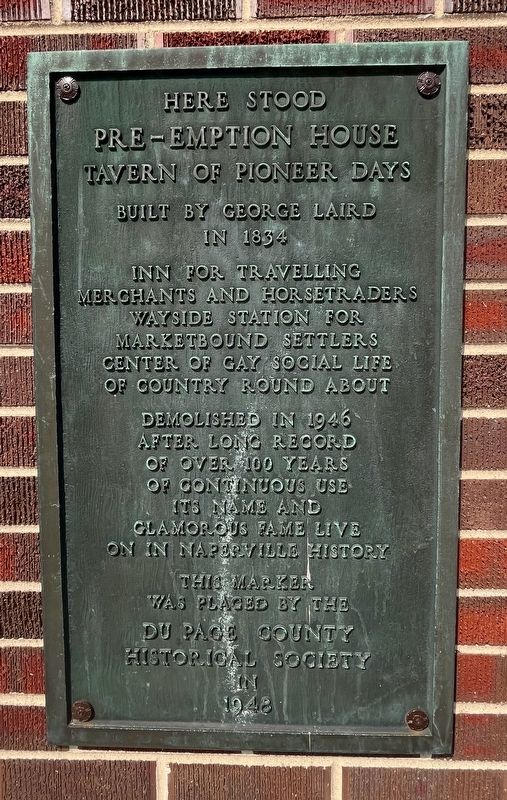
1. Pre-Emption House Marker
Pre-Emption House
Tavern of pioneer days
Built by George Laird in 1834
Inn for travelling merchants and horsetraders
Wayside station for marketbound settlers
Center of gay social life of country round about
Demolished in 1946 after long record of over 100 years of continuous use
Its name and glamorous fame live on in Naperville history
Erected 1948 by DuPage County Historical Society.
Topics. This historical marker is listed in these topic lists: Architecture • Industry & Commerce • Settlements & Settlers. A significant historical year for this entry is 1834.
Location. 41° 46.296′ N, 88° 8.942′ W. Marker is in Naperville, Illinois, in DuPage County. It is on Chicago Avenue east of Main Street, on the right when traveling west. The marker is just to the left of the Chicago Avenune entrance into Einstein Bros. Bagels. Touch for map. Marker is in this post office area: Naperville IL 60540, United States of America. Touch for directions.

Regionally, this marker is in Greater Chicago. It is also in the American Midwest. Globally, it is in North America, on the Great Lakes, in the Western Hemisphere, in the Western World, and in the Anglosphere. Historically, it finds itself in what was once the territory of the Mississippian Culture and also the Northwest Territory.
Other nearby markers. At least 8 other markers are within walking distance of this marker: Pillars of the Community East Mural (a few steps from this marker); Pillars of the Community Center Mural (a few steps from this marker); Naperville Sports Notables (within shouting distance of this marker); Pillars of the Community: West Mural (within shouting distance of this marker); a different marker also named Naperville Sports Notables (within shouting distance of this marker); Third and Fourth Main Street Bridges over the West Branch of the DuPage River
this page online
Regarding Pre-Emption House. The word "Pre-Emption" refers to land laws during western U.S. settlement that, somewhat like squatters' rights, allowed settlers to claim land that they had settled on. This Pre-Emption House served as a hotel to those western settlers, offering overnight accommodations as well as a tavern and a place to keep their horses. The tavern also was a hot spot for local residents, and in 1839 the building served as the center of government business in DuPage County before its first courthouse was built. The building was torn down in 1946. A replica can be found about a quarter-mile away at the entrance to the Naper Settlement outdoor historical museum.
Also see . . .
1. Naper Settlement: History of the Pre-Emption House. (Submitted on September 20, 2024, by Sean P. Flynn of Oak Park, Illinois.)
2. Naperville's first builder.
Photographed by Sean P. Flynn, September 15, 2024
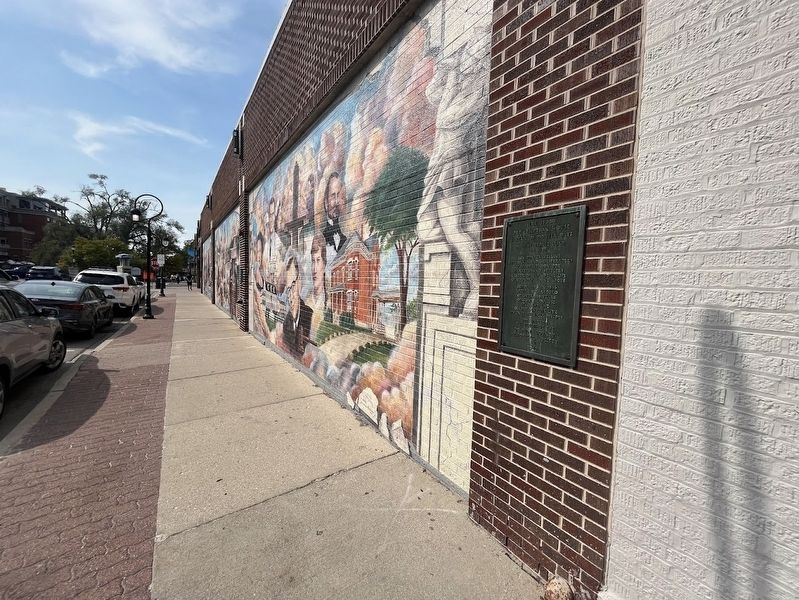
2. Pre-Emption House Marker
The marker is to the right of a series of three murals on the wall of the building at the site of the old Pre-Emption House.
Excerpt: "The Pre-Emption House was the first hotel in DuPage County and [John] Stevens its first proprietor. To celebrate the occasion, he hosted a gala grand opening party on the 4th of July, 1836. The patriotic ceremonies featured a Grand March of civic organizations and dignitaries, which paraded from the Pre-Emption House to a nearby church. The assembled crowd listened to a reading of the Declaration of Independence and heard Captain Naper's announcement of his plans to run for the state legislature. Stevens took the floor and invited everyone to an outdoor dinner served under an arbor next to the Inn."(Submitted on September 20, 2024, by Sean P. Flynn of Oak Park, Illinois.)
Photographed by Sean P. Flynn, September 15, 2024
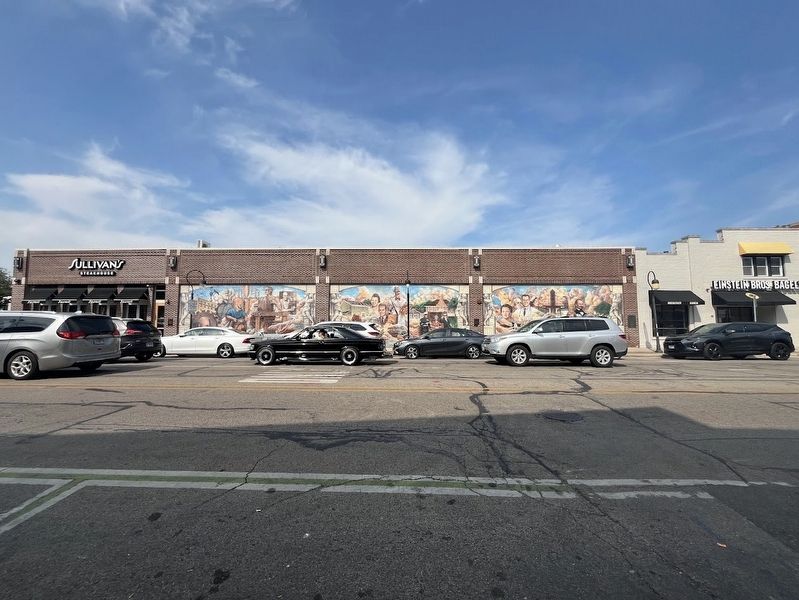
3. Site of the Pre-Emption House
Four historical markers are affixed to the wall near the three murals related to Naperville's history. The one on the far right is the oldest, erected soon after the Pre-Emption House was torn down in 1946.
Historic American Buildings Survey (Library of Congress), circa 1933
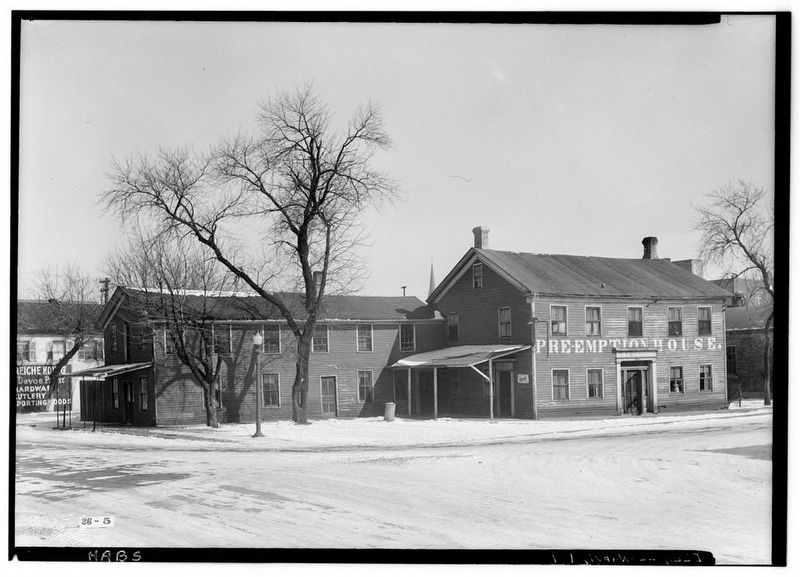
4. Pre-Emption House historical photo
This photo shows the Pre-Emption House about 100 years after it was built in Naperville.
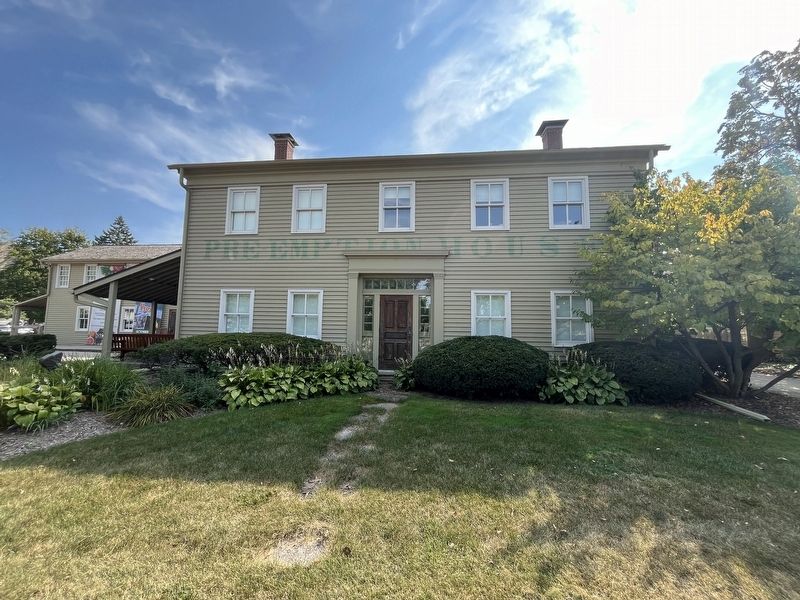
Photographed by Sean P. Flynn, September 15, 2024
5. Recreated Pre-Emption House at Naper Settlement
A replica of the Pre-Emption House sits at the entrance of the Naper Settlement, an outdoor history museum about a quarter-mile southwest of here.
Credits. This page was last revised on September 24, 2024. It was originally submitted on September 20, 2024, by Sean P. Flynn of Oak Park, Illinois. This page has been viewed 318 times since then and 72 times this year. Photos: 1, 2, 3, 4, 5. submitted on September 20, 2024, by Sean P. Flynn of Oak Park, Illinois.
