Bainbridge in Decatur County, Georgia — The American South (South Atlantic)
Winecoff Memorial
Winecoff Hotel Fire — December 7, 1946

Photographed by Cosmos Mariner, September 21, 2024
1. Winecoff Memorial Marker
The Winecoff Hotel fire of December 7, 1946, was the deadliest hotel fire in United States history, killing 119 hotel occupants, including seven Bainbridge High School students along with their teacher Miss Mary Davis. They were in Atlanta attending the annual Youth Assembly at the Georgia State Capital which was being sponsored by the YMCA. Located at 176 Peachtree Street in downtown Atlanta, the Winecoff Hotel was built utilizing the 1911 building codes, and classified as “fireproof” at that time, the steel frame was protected, and the roof and floors were concrete with protected steel beams and girders. Although there was considerable attention given to making the buildings structural members fire resistive, there was no automatic sprinkler system, no fire doors, and no exterior fire escapes.
While the steel structure was indeed protected against the effects of fire, the hotel's interior finishes were combustible, and the building's exit arrangements consisted of a single stairway serving all fifteen floors. All of the hotel's occupants above the fire's origin on the third floor were trapped, and survivors were either
this page online
Bainbridge High students, Maxine Willis, Ruth Powell, Sue Broome, Patsy Griffin, Mary Louise Murphy, Miss Mary Davis, Earl Carr Gragg, and Clarence Bates, Jr. were all located on the ninth floor. Because of a hotel mix-up, a few older boys from Bainbridge High were sent to the Piedmont Hotel just down the street.
Although firefighters did all they could, their ladders only reached the seventh floor. In all, 119 people had been killed, and over 100 others injured. Thirty-two engines, five aerial-ladders, six city service ladder trucks, and other support vehicles totaling forty-nine pieces of fire service apparatus responded to the Winecoff Hotel fire. The cause of this tragic event remains a mystery even today. The gruesome task of identifying their classmates' bodies would fall upon the shoulders of the older boys who stayed at the Piedmont. School was cancelled the following week due to the funerals, and the students now rest at Oak City Cemetery with their families. Miss Davis, the teacher, was returned to her home in Alabama.
The Winecoff Hotel fire spurred significant
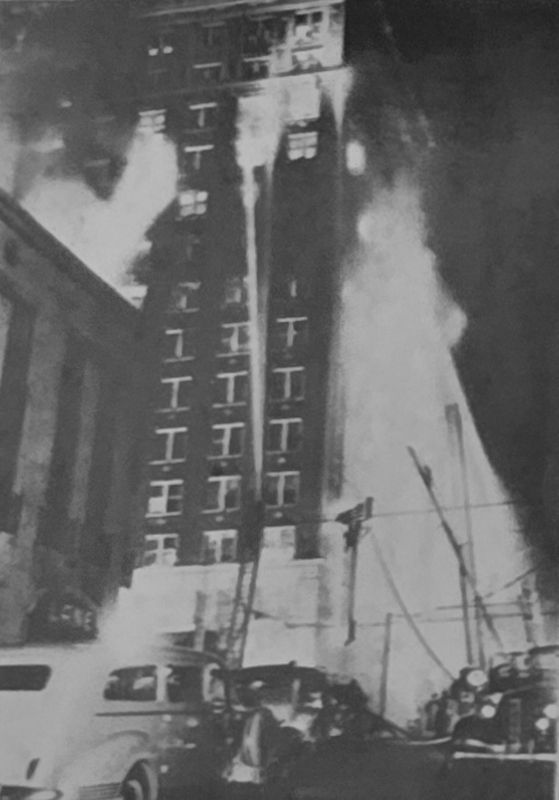
2. Marker detail: Hotel Fire
Topics. This historical marker and memorial is listed in these topic lists: Architecture • Disasters • Industry & Commerce. A significant historical date for this entry is December 7, 1946.
Location. 30° 54.365′ N, 84° 34.563′ W. Marker is in Bainbridge, Georgia, in Decatur County. It is on East Broughton Street just east of North West Street, on the left when traveling east. The marker is located near the center of Willis Park. Touch for map. Marker is at or near this postal address: 105 East Water Street, Bainbridge GA 39817, United States of America. Touch for directions.

Regionally, this marker and memorial is on the Coastal Plain. It is also in the American South and specifically in the Deep South. Globally, it is in North America, the Western Hemisphere, the Western World, and the Anglosphere. Historically, it finds itself in what was once the territory of the Mississippian Culture, one of the original Thirteen Colonies, one of the Confederate States of
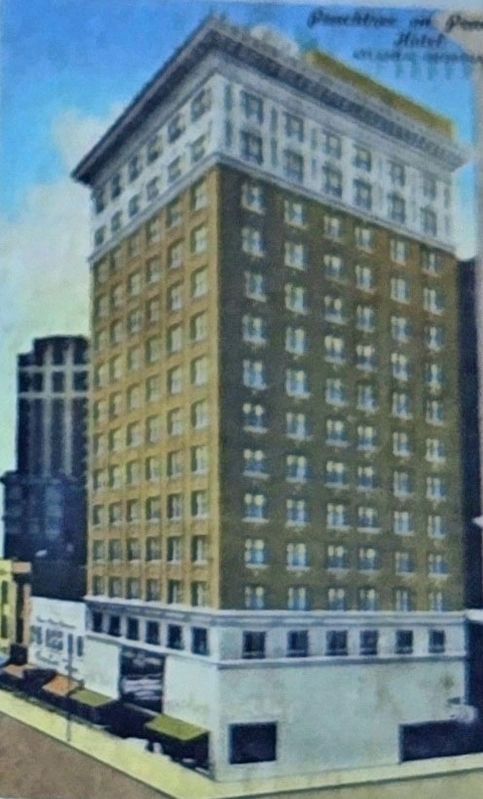
3. Marker detail: Winecoff Hotel
Other nearby markers. At least 8 other markers are within walking distance of this marker: The Bainbridge Volunteers (a few steps from this marker); Decatur County War Memorial (a few steps from this marker); Samuel Marvin Griffin (a few steps from this marker); Civil War Cannon (within shouting distance of this marker); El Camino Real (within shouting distance of this marker); In Memory of Revolutionary Soldiers (within shouting distance of this marker); De Soto Trail (within shouting distance of this marker); Decatur County (within shouting distance of this marker). Touch for a list and map of all markers in Bainbridge.
Related markers. Click here for a list of markers that are related to this marker. The Winecoff Hotel Fire
Also see . . .
1. Winecoff Hotel Fire (Wikipedia).
Excerpt: The Winecoff Hotel fire, of December 7, 1946, was the deadliest hotel fire in American history, killing 119 hotel occupants, including the hotel's original owners. The Winecoff Hotel (now the Ellis Hotel) opened in 1913 as one of the tallest buildings in Atlanta, Georgia. Guest rooms extended from the third to the fifteenth floors, with fifteen rooms on a typical floor. Interior partitions, including the walls between corridors and guest rooms, were hollow clay tile covered with plaster. Room doors were 1.5-inch wood. The corridor walls were finished with painted burlap fabric extending up to wainscot height. Guest rooms were finished with as many as seven layers of wallpaper. Open transoms between the rooms and the corridors admitted fresh air for combustion, eventually creating a flue-like effect with the fire climbing to all but the two top floors. Once established in the corridors, the fire fed on the burlap wallcoverings and ignited room doors and transoms.(Submitted on October 5, 2024, by Cosmos Mariner of Cape Canaveral, Florida.)The Atlanta Fire
Department mustered 385 firefighters, 22 engine companies and 11 ladder trucks, including aerial ladder units, at the scene. Of the 304 guests in the hotel that night, 119 died, about 65 were injured and about 120 were rescued uninjured. Thirty-two deaths were among those who jumped, or who fell while trying to descend ropes made of sheets tied together to reach the ground or too short fire ladders.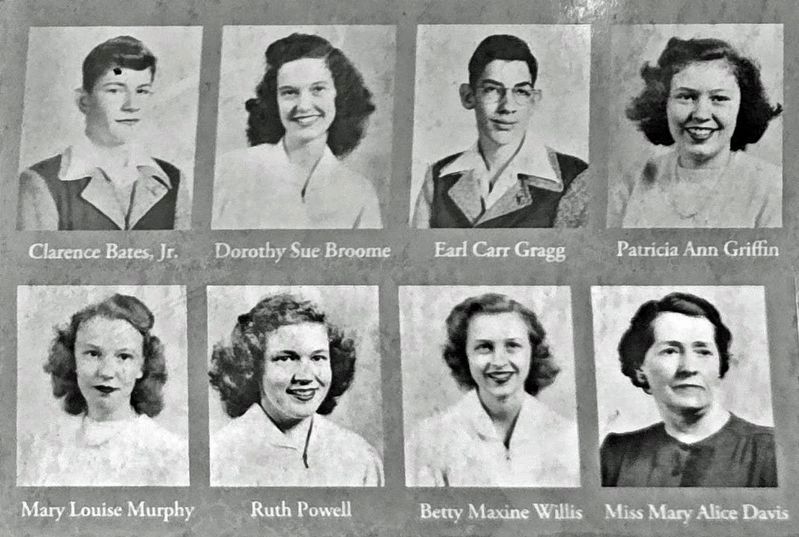 4. Marker detail: Bainbridge High Victims
Clarence Bates, Jr. • Dorothy Sue Broome • Earl Carr Gragg • Patricia Ann Griffin • Mary Louise Murphy • Ruth Powell • Betty Maxine Wallis • Miss Mary Alice Davis
2. Major American Fires: Winecoff Hotel Fire — 1946.
Excerpt: The fire was noticed around 3:15 a.m.; a bell boy had responded to a guest's room service call at 3:10, and, as he attempted to leave the guest's room five minutes later, he found the hallway was full of smoke, trapping him inside the room. The fire department was not called until 3:42. By this point, the single stairway was impassible. The first engine and ladder company arrived within 30 seconds.(Submitted on October 5, 2024, by Cosmos Mariner of Cape Canaveral, Florida.)(Includes professional video in which Sam Heys, author of the book The Winecoff Fire, describes the fire while standing in front of the hotel building.)
3. Shocked America Demanded Change After Atlanta Hotel Blaze Killed 119.
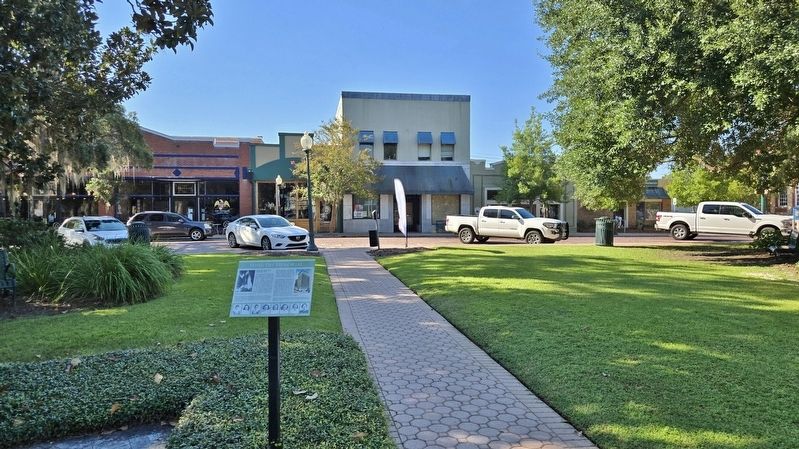
Photographed by Cosmos Mariner, September 21, 2024
5. Winecoff Memorial Marker
Looking south through Willis Park; East Broughton Street crosses in the background.
Excerpt: The Winecoff blaze—still ranked as the worst hotel fire in United States history—remains memorable for its influence in the development of nationwide fire safety codes. Less than a month after the Winecoff fire, President Harry S. Truman declared he would convene a National Conference on Fire Prevention. That three-day Washington parley drew around 2,000 delegates from across the country—a first-ever meeting on fire safety bringing together industry figures and personnel from federal, state, and local government agencies. Publicity surrounding the Truman conclave added impetus to safety concerns already vivid in the wake of the Winecoff disaster. Some states decided they no longer could leave fire safety to individual municipalities. Within months of the Atlanta fire, Indiana had passed its first statewide fire safety code. Georgia passed a building exit code, requiring new structures to have multiple means of egress.(Submitted on October 5, 2024, by Cosmos Mariner of Cape Canaveral, Florida.)
Credits. This page was last revised on July 1, 2025. It was originally submitted on October 1, 2024, by Cosmos Mariner of Cape Canaveral, Florida. This page has been viewed 624 times since then and 109 times this year. Photos: 1, 2, 3, 4, 5. submitted on October 5, 2024, by Cosmos Mariner of Cape Canaveral, Florida.
