Altstadt in Heidelberg, Baden-Württemberg, Germany — Central Europe
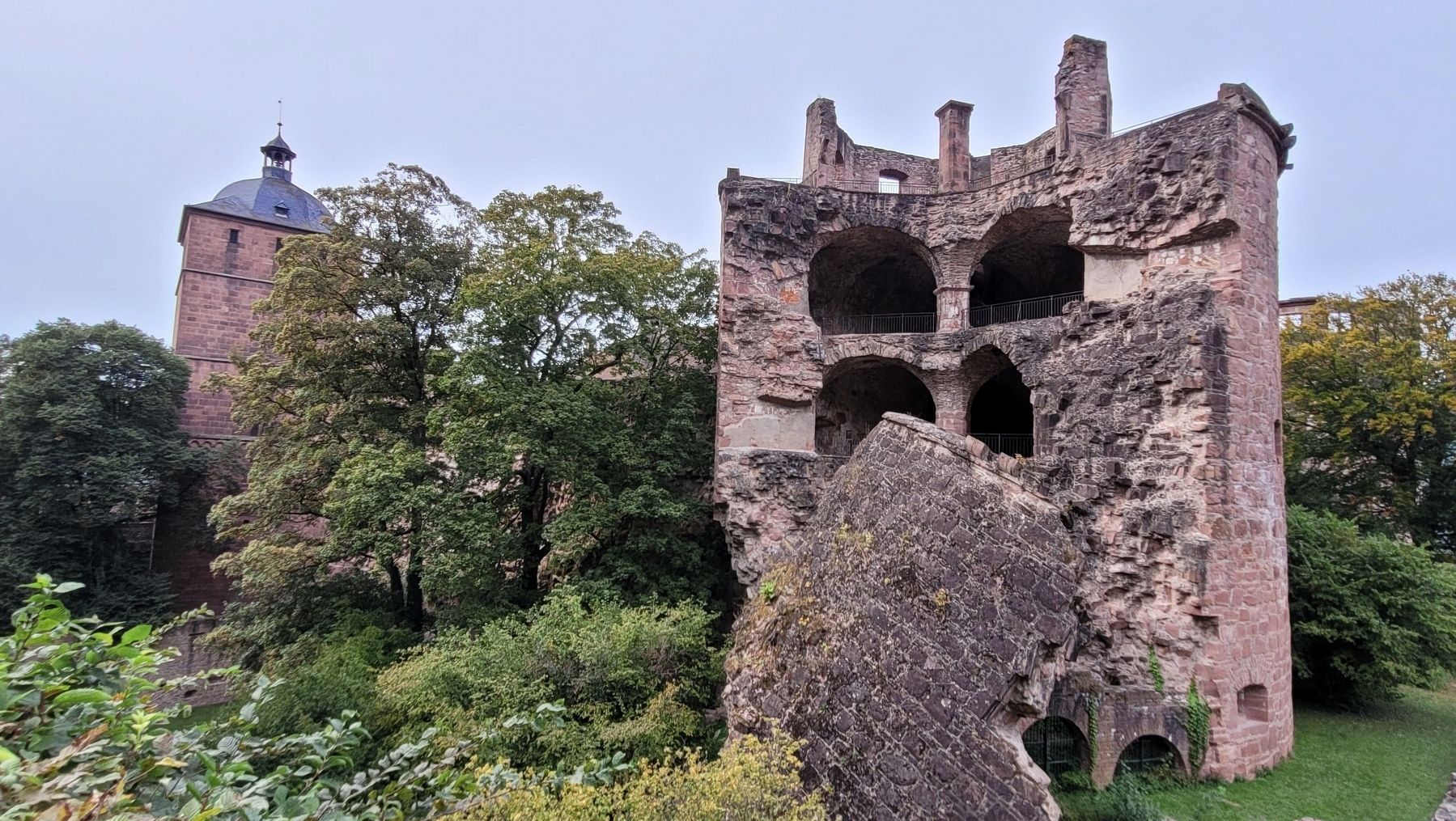
Gesprengter Turm/Krautturm
⎯⎯⎯
Blown up Tower/Gunpowder Tower
Photographed by James Hulse, September 22, 2024
1. Gesprengter Turm/Krautturm / Blown up Tower/Gunpowder Tower Marker

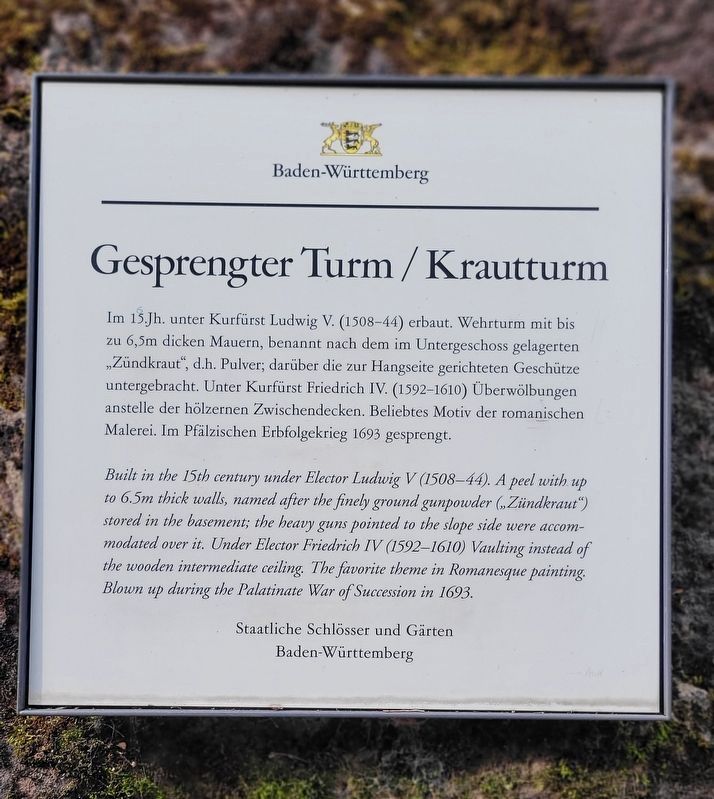
Im 15.Jh. unter Kurfürst Ludwig V. (1508-44) erbaut. Wehrturm mit bis zu 6,5m dicken Mauern, benannt nach dem im Untergeschoss gelagerten „Zündkraut", d.h. Pulver; darüber die zur Hangseite gerichteten Geschütze untergebracht. Unter Kurfürst Friedrich IV. (1592-1610) Überwölbungen anstelle der hölzernen Zwischendecken. Beliebtes Motiv der romanischen Malerei. Im Pfälzischen Erbfolgekrieg 1693 gesprengt.
Built in the 15th century under Elector Ludwig V (1508-44). A peel with up to 6.5m thick walls, named after the finely ground gunpowder („Zündkraut") stored in the basement; the heavy guns pointed to the slope side were accommodated over it. Under Elector Friedrich IV (1592–1610) Vaulting instead of the wooden intermediate ceiling. The favorite theme in Romanesque painting. Blown up during the Palatinate War of Succession in 1693.
Erected by Staatliche Schlösser und Gärten Baden-Württemberg.
Topics. This historical marker is listed in this topic list: Forts and Castles. A significant historical year for this entry is 1693.
Location. 49° 24.607′ N, 8° 42.977′ E. Marker is in Heidelberg, Baden-Württemberg.
this page online

Regionally, it is in Europe, the European Union, Atlantic Europe, Central Europe, the Schengen Area, Western Europe, and the Western World. Historically, it finds itself in what was once the Roman Empire and specifically also the Holy Roman Empire.
Other nearby markers. At least 8 other markers are within walking distance of this marker: Unterer Fürstenbrunnen / Lower Prince's Fountain (here, next to this marker); Oberer Fürstenbrunnen / Upper Prince's Fountain (a few steps from this marker); Zeugnis der Geschichte / Testimony of History (a few steps from this marker); Wasserkasematte / Water Casemate (within shouting distance of this marker); Ökonomiebau Soldatenbau / Economic Building, Soldier Building (within shouting distance of this marker); Torturm / Gate Tower (within shouting distance of this marker); Brunnenhalle / Fountain Hall (within shouting distance of this marker);
Photographed by James Hulse, September 22, 2024
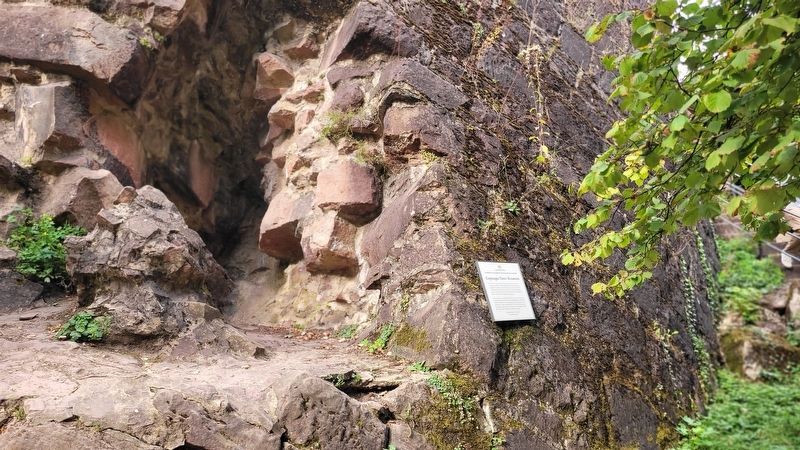
2. The view of the base of the Blown up Tower and Marker
More about this marker. The marker is located on the grounds of the Heidelberg Castle. There is a small fee to access the castle grounds and markers.
Also see . . .
1. Heidelberg Castle. Staatliche Schlösser und Gärten Baden-Württemberg
In the late 17th century, the castle was repeatedly attacked and ultimately destroyed by the French in the War of the Grand Alliance. These catastrophic events are commemorated in a spectacular fireworks display, held several times each year. In 1764, after some makeshift repairs, the battered castle was heavily damaged again: this time by the forces of Nature, in the form of two devastating lightning strikes. The once-proud residence caught fire – and was left in ruins.(Submitted on October 5, 2024, by James Hulse of Medina, Texas.)
2. The Nine Years' War. Baden-Württemberg
Destruction of the Castle(Submitted on October 6, 2024, by James Hulse of Medina, Texas.)
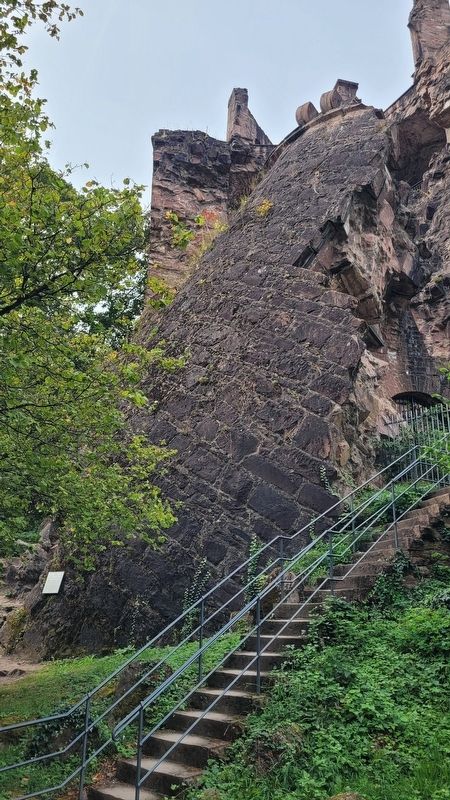
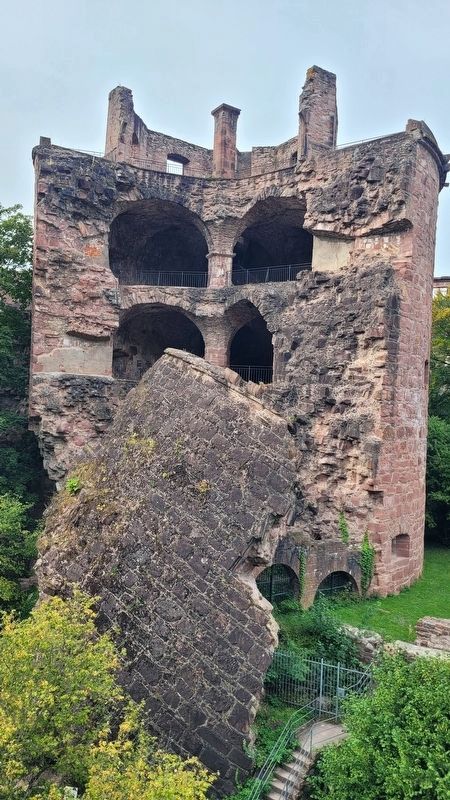
Upon their first decampment from Heidelberg in the spring of 1689, the French set Heidelberg Castle and the town on fire. In 1693,Louis XIV once again set his sights on Heidelberg, with the aim of permanently destroying the castle. On September 6, soldiers blasted 38 mines loaded with 27,000 pounds of powder. A commander reported on the situations at the "exploded tower": "Half of the tower and the crossbeam have plummeted into the moat. The vaults are destroyed." A striking state that visitors can still experience today.Photographed by James Hulse, September 22, 20243. The lower view of the Blown up Tower and Marker
Photographed by James Hulse, September 22, 2024
4. The Blown up Tower/Gunpowder Tower
Photographed by James Hulse, September 22, 2024
5. The topside view of the Blown up Tower
Credits. This page was last revised on October 6, 2024. It was originally submitted on October 5, 2024, by James Hulse of Medina, Texas. This page has been viewed 417 times since then and 117 times this year. Photos: 1, 2, 3, 4, 5. submitted on October 6, 2024, by James Hulse of Medina, Texas.
