Bristol, Virginia — The American South (Mid-Atlantic)
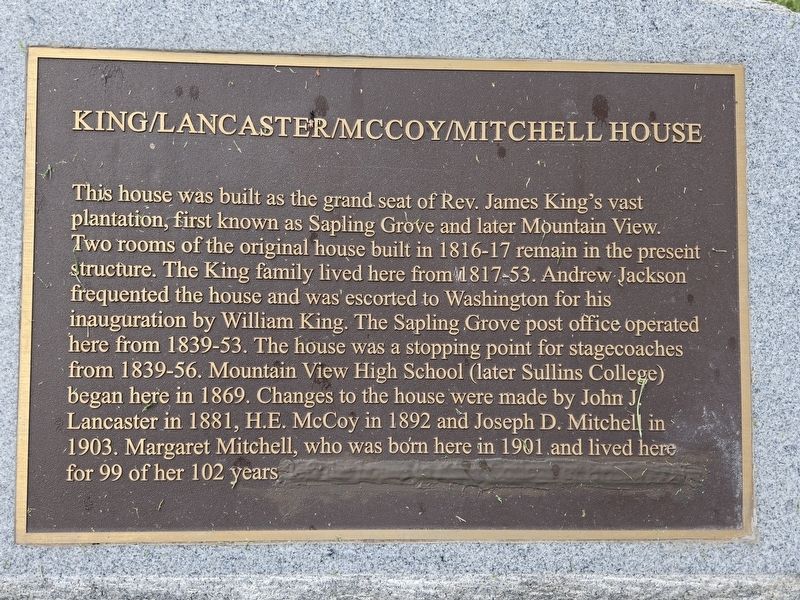
King/Lancaster/McCoy/Mitchell House
Photographed by Mark Parker, October 4, 2024
1. King/ Lancaster/ McCoy/ Mitchell House Marker
Topics. This historical marker is listed in this topic list: Notable Buildings. A significant historical year for this entry is 1816.
Location. 36° 35.814′ N, 82° 11.16′ W. Marker is in Bristol, Virginia. It is on King Street south of Cumberland Street, on the right when traveling south. The marker is ground level atop the retaining wall above the adjacent sidewalk. Touch for map. Marker is
this page online

Regionally, this marker is in the Tri-Cities Area, in Southwest Virginia, and in the Blue Ridge Highlands. It is also in the American South, specifically in the Upper South, in Appalachia, and specifically in Southern Appalachia. Globally, it is in North America, the Western Hemisphere, the Western World, and the Anglosphere. Historically, it finds itself in what was once the territory of the Mississippian Culture, one of the original Thirteen Colonies, one of the Confederate States of America, and the Antebellum South.
Other nearby markers. At least 8 other markers are within walking distance of this marker: Emmanuel Episcopal Church (within shouting distance of this marker); Solar Hill (about 300 feet away, measured in a direct line); Solar Observatory (about 500 feet away); WCYB's "Farm and Fun Time" (about 600 feet away); Solar Street (about 600 feet away); King's Alley/Sycamore Street (about 600 feet away); Ernest V. "Pop" Stoneman (about 600 feet away); 629 State Street (about 800 feet away). Touch for a list and map
Photographed by Mark Parker, October 4, 2024
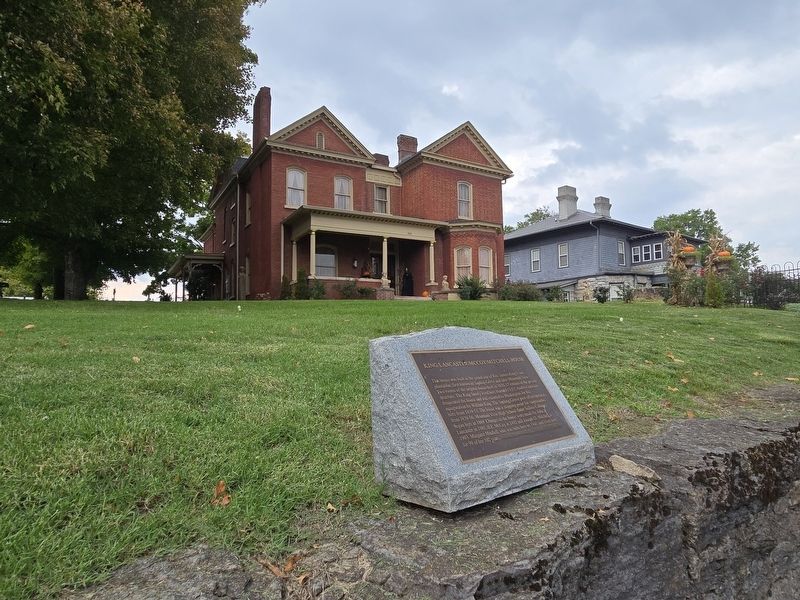
2. King/ Lancaster/ McCoy/ Mitchell House Marker. House is in the background
Another marker is no longer nearby. Birthplace of Country Music (was about 800 feet away in Tennessee but has been permanently removed).
Also see . . . King–Lancaster–McCoy–Mitchell House. Wikipedia
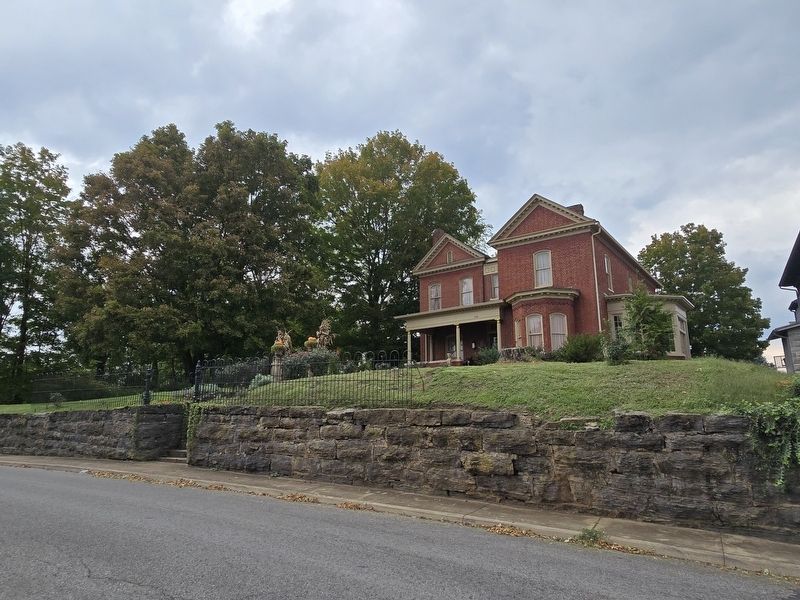
The large brick home is the most historic house in Bristol, Virginia. The handmade brick residence was built 1816-1820 by Colonel James King on the highest point of his property overlooking his meadows where he raised cattle. The settlement was once known as “King’s Meadows” before it took the name of Bristol nearly half a century later.(Submitted on October 5, 2024, by Mark Parker of Hickory, North Carolina.)
Colonel James King and his son, the Reverend James King, were key figures in the founding and development of Bristol. They contributed to the business world through the iron business and the commerce of buying and selling. The Reverend James King gifted the land needed to create Bristol's King University and served as pastor for two early Presbyterian churches. The King family occupied the house until 1853.

Photographed by Mark Parker, October 4, 2024
3. Virginia Historic Landmark Sign located at the left post of the front gate
Photographed by Mark Parker, October 4, 2024
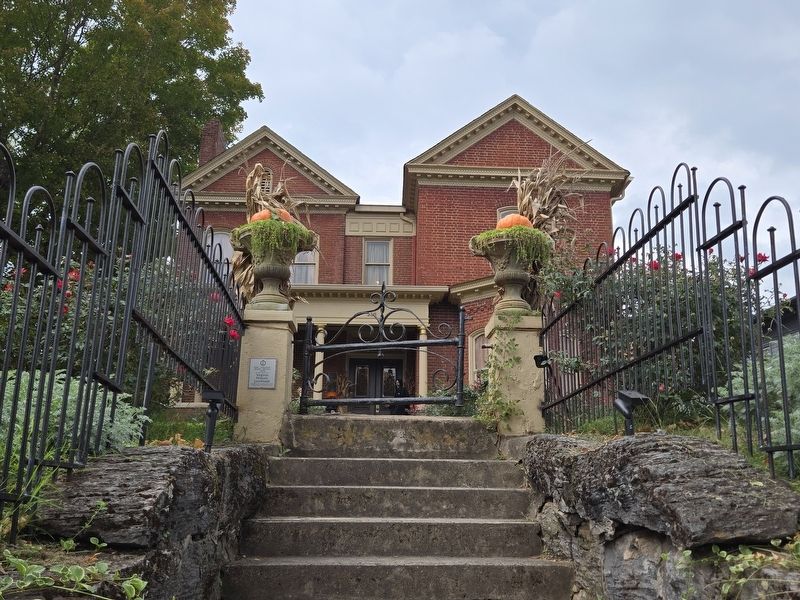
4. Steps to the front gate of the property. House is in the background
Photographed by Mark Parker, October 4, 2024
5. Full view of King/ Lancaster/ McCoy/ Mitchell House
Credits. This page was last revised on October 6, 2024. It was originally submitted on October 5, 2024, by Mark Parker of Hickory, North Carolina. This page has been viewed 307 times since then and 44 times this year. Photos: 1, 2, 3, 4, 5. submitted on October 5, 2024, by Mark Parker of Hickory, North Carolina. • Bernard Fisher was the editor who published this page.
