Vittoria in Norfolk County, Ontario — Central Canada (North America)
United Empire Loyalists and the Long Point Settlement

Photographed by Tim Boyd, September 15, 2024
1. United Empire Loyalists and the Long Point Settlement Marker
Loyalists flooded into British territory in what is now known as the provinces of Nova Scotia, New Brunswick, Prince Edward Island, Quebec and Ontario. In the 1770's and 1780's thousands of Loyalists made this journey either by boat up the eastern coast or overland.
John Graves Simcoe, was the Lieutenant Governor of Upper Canada, which was established in 1791, in order to settle and govern
this page online
Loyalists and their children could petition the Crown for a parcel of land. Some of those who settled in the Long Point Settlement had previously been granted land in Nova Scotia or New Brunswick. They found the land and the harsh climate difficult and so they uprooted a second time to find a new home on the north shore of Lake Erie.
The Loyalists who came to this area had a wide range of backgrounds prior to the upheaval of the American Revolution. Some of them had been farmers, but others were clergy, soldiers, business people, landowners and skilled tradesmen who quickly established a life that resembled the more established communities from which they had come. The land they were allotted was mostly old growth Carolinian forest and before they could establish farms they needed to clear and plough
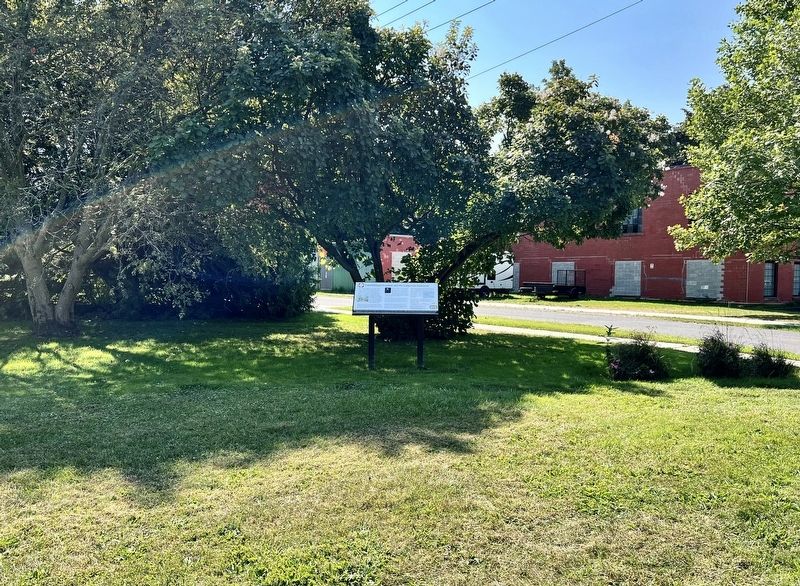
Photographed by Tim Boyd, September 15, 2024
2. United Empire Loyalists and the Long Point Settlement Marker
Many people in present day Norfolk County can trace their lineage to those original Loyalist families. The attitudes and values of these loyal and adventurous people is essential to understanding part of what defines Canadians to this day.
Erected by The Grand River Branch of the United Empire Loyalist Association of Canada.
Topics. This historical marker is listed in these topic lists: Settlements & Settlers • War, US Revolutionary. A significant historical year for this entry is 1791.
Location. 42° 45.741′ N, 80° 19.366′ W. Marker is in Vittoria, Ontario, in Norfolk County. It is at the intersection of Old Brock Street and Lamport Street on Old Brock Street. Touch for map. Marker is at or near this postal address: 1537 Old Brock St, Vittoria ON N0E 1W0, Canada. Touch for directions.

Regionally, this marker is in the Southwest
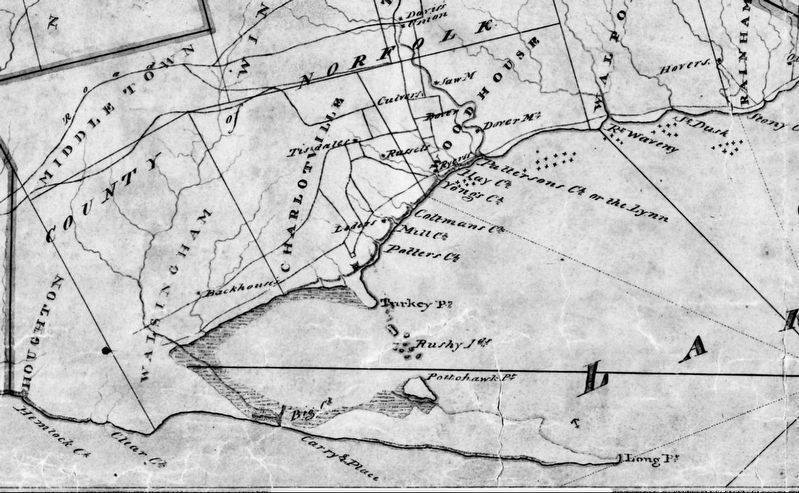
3. The Long Point Settlement in 1819
Other nearby markers. At least 8 other markers are within 6 kilometers of this marker, measured as the crow flies: The District Capital (within shouting distance of this marker); Christ Church, Anglican- 1844 (within shouting distance of this marker); William Pope (approx. 4.4 kilometers away); M. W. Bro. William Mercer Wilson / Très Vénérable Frère William Mercer Wilson (approx. 4.8 kilometers away); To Honour the Pioneers (approx. 5.4 kilometers away); Lieut.-Col. Samuel Ryerse (approx. 5.4 kilometers away); Port Ryerse 1794-1994 (approx. 5.4 kilometers away); Normandale Blast Furnace/ Le Haut Fourneau de Normandale (approx. 5.9 kilometers away). Touch for a list and map of all markers in Vittoria.
Credits. This page was last revised on October 8, 2024. It was originally submitted on October 6, 2024, by Tim Boyd of Hamilton, Ontario. This page has been viewed 298 times since then and 84 times this year. Photos: 1, 2, 3. submitted on October 6, 2024, by Tim Boyd of Hamilton, Ontario. • Andrew Ruppenstein was the editor who published this page.
