Bristol in Sullivan County, Tennessee — The American South (East South Central)
Paramount Theatre
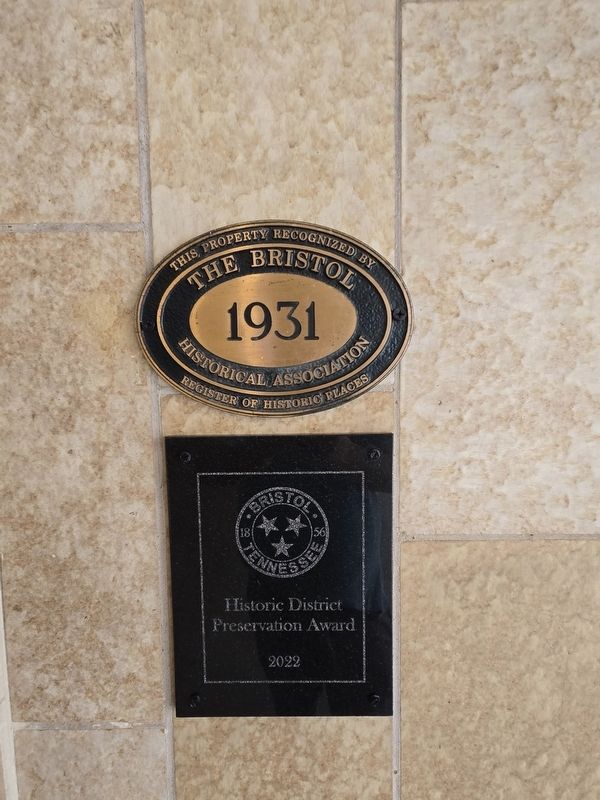
The Bristol Historical Association
| — | 1931 | — |
Photographed by Mark Parker, October 4, 2024
1. Paramount Theatre Marker
Register of Historic Places
The Bristol Historical Association
1931
Topics. This historical marker is listed in these topic lists: Architecture • Arts, Letters, Music • Entertainment. A significant historical year for this entry is 1931.
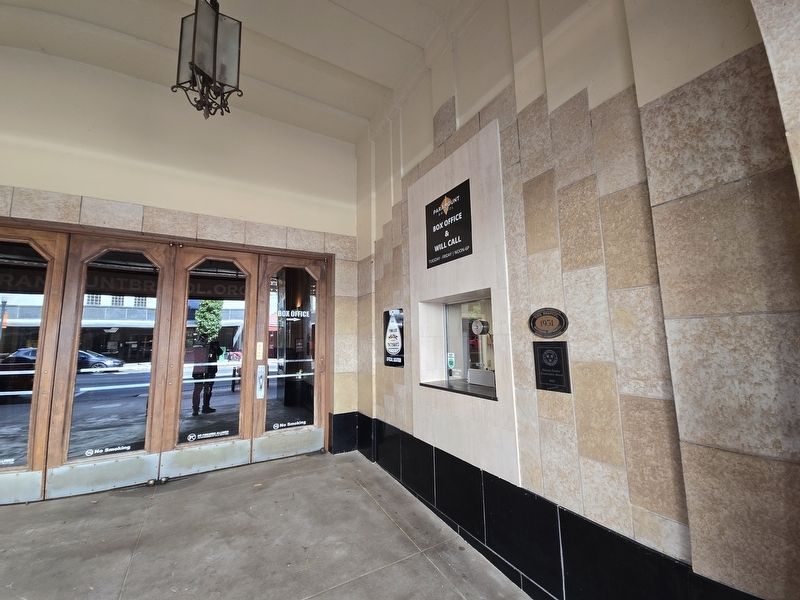
Location. 36° 35.692′ N, 82° 10.958′ W. Marker is in Bristol, Tennessee, in Sullivan County. It is on State Street east of 6th Street, on the right when traveling east. The marker is under the awning on the right side near the box office. Touch for map. Marker is at or near this postal address: 518 State St, Bristol TN 37620, United States of America. Touch for directions.

Regionally, this marker is in East Tennessee and in the Tri-Cities Area. It is also in the American South, specifically in the Upper South, in Appalachia, and specifically in Southern Appalachia. Globally, it is in North America, the Western Hemisphere, the Western World, and the Anglosphere. Historically, it finds itself in what was once the original Cherokee Nation, the territory of the Mississippian Culture, one of the Confederate States of America, the State
this page online
Other nearby markers. At least 8 other markers are within walking distance of this marker: Cathy DeCaterina (here, next to this marker); Bank Street (a few steps from this marker); Baseball History (within shouting distance of this marker); Jimmie Rodgers (about 300 feet away, measured in a direct line); Mississippi Country: The Bristol Sessions (about 400 feet away); Bristol Sessions (about 400 feet away); First Country and Western Recording (about 400 feet away); 614-618 State Street (about 400 feet away). Touch for a list and map of all markers in Bristol.
Another marker is no longer nearby. Historic Bristol (was within shouting distance of this marker in Virginia but has been replaced with another marker now near it).
Regarding Paramount Theatre. Excerpts from the Paramount Theatre and Office Building Nomination Form:
Designed by McDonald and Company, architects and engineers from Atlanta, Georgia and originally owned by the Bristol Theatre Corporation, the Paramount Theatre opened in February 1931, when the country was in the midst of the Great Depression. Before World War
Photographed by Mark Parker, October 17, 2024
2. Paramount Theatre Marker near the box office window to the right of the front entrance
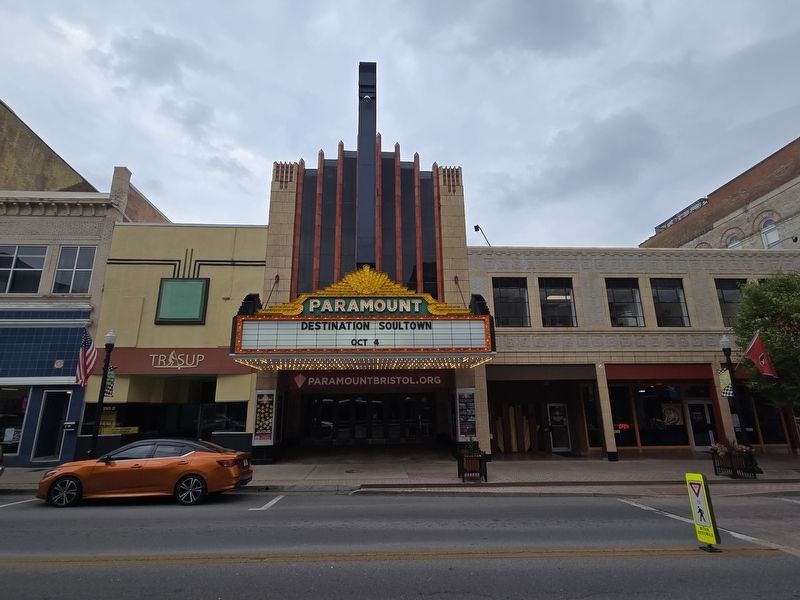
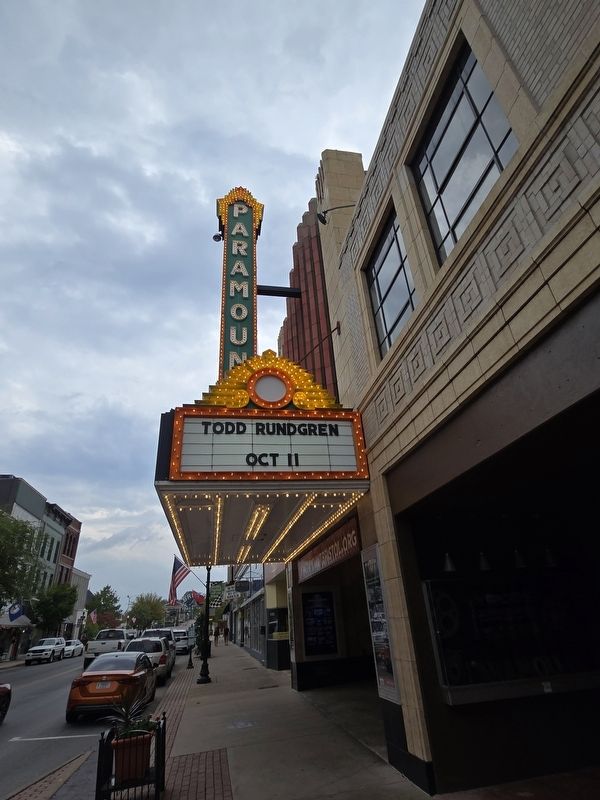
The Paramount Theatre is a fine example of an Art Deco theatre from the late-1920s-early- 1930s period. Exterior decorative elements employed include the use of structural terra cotta in ivory, vermillion and green with black carrera glass vertical panels on the upper stories of the north (front) elevation. The large marquee with a vertical neon sign is also displayed on this elevation. The interior retains many of its original features including lighting fixtures, large wood framed glass front doors, wallpaper, frescoes, and drinking fountains. The exuberance of color and pattern used on the outside and interior of this theatre make it the finest example of an Art Deco style theatre in this city if not the region.
Also see . . .
1. Paramount Theatre and Office Building Nomination Form (PDF).
Photographed by Mark Parker, October 4, 2024
3. Full view Paramount Theatre front
2. Paramount Bristol. (Submitted on October 18, 2024, by Mark Parker of Hickory, North Carolina.)
Photographed by Mark Parker, October 4, 2024
4. Paramount Theatre sign and marquee west view
Credits. This page was last revised on October 21, 2024. It was originally submitted on October 18, 2024, by Mark Parker of Hickory, North Carolina. This page has been viewed 174 times since then and 20 times this year. Photos: 1, 2, 3, 4. submitted on October 18, 2024, by Mark Parker of Hickory, North Carolina. • James Hulse was the editor who published this page.
