Shanty Bay in Simcoe County, Ontario — Central Canada (North America)
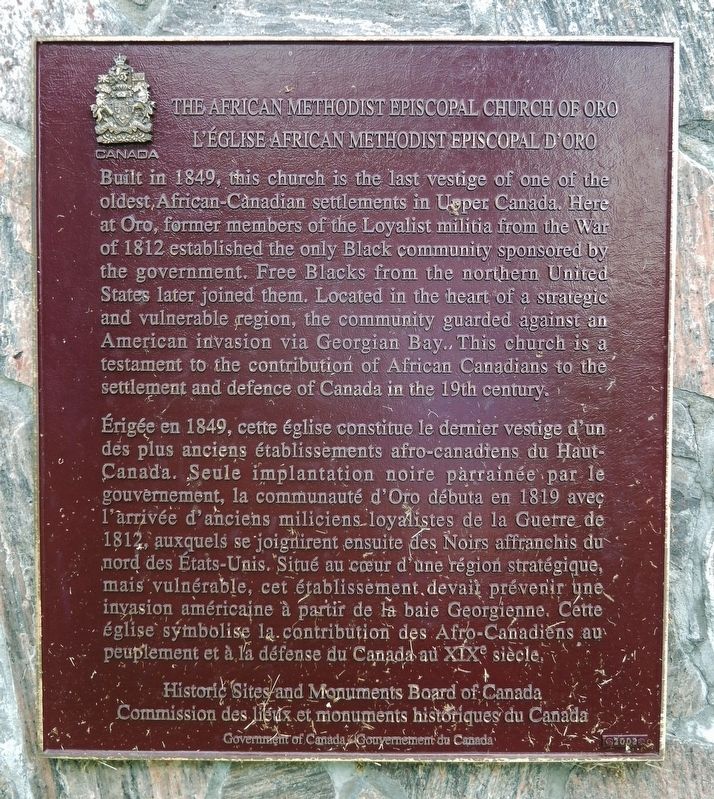
The African Methodist Episcopal Church of Oro
⎯⎯⎯
L'Église African Methodist Episcopal d'Oro
Photographed by Cosmos Mariner, June 6, 2024
1. The African Methodist Episcopal Church of Oro Marker

this page online
Erected 2002 by Historic Sites and Monuments Board of Canada/Commission des lieux et monuments historiques du Canada.
Topics and series. This historical marker is listed in these topic lists: African Americans • Religion & Religious Structures • Settlements & Settlers • War of 1812. In addition, it is included in the Canada, Historic Sites and Monuments Board series list. A significant historical year for this entry is 1849.
Location. 44° 30.158′ N, 79° 38.183′ W. Marker is in Shanty Bay, Ontario, in Simcoe County. It is at the intersection of Line 3 North and Old Barrie Road West (County Road 11), on the right when traveling north on Line 3 North. The marker is mounted on the east [back] side of the tall stone monument on the south side of the subject church. Touch for map. Marker is at or near this postal address: 1645 Line 3 North, Shanty Bay ON L0L 2L0, Canada. Touch for directions.

Regionally, this marker is in Central Ontario Cottage Country and specifically in Georgian Bay Country. It is also in Central Canada. Globally, it
Photographed by Cosmos Mariner, June 6, 2024
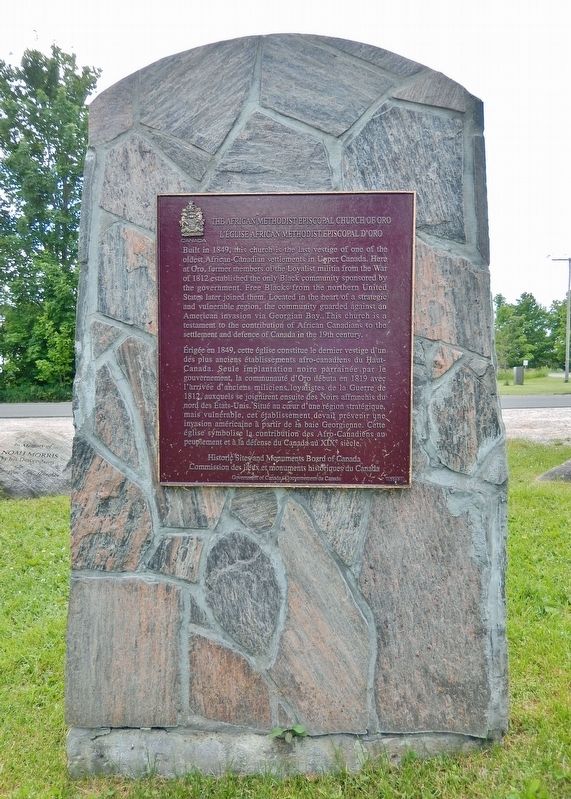
2. African Methodist Episcopal Church of Oro Marker
Looking west; Line 3 North crosses in the background.
Other nearby markers. At least 8 other markers are within 13 kilometers of this marker, measured as the crow flies: Black Pioneers Memorial (here, next to this marker); Between 1830 & 1850 some 24 Negro Families Settled in Oro (here, next to this marker); War of 1812 Veteran / Vétéran de la guerre de 1812 (here, next to this marker); Hon. Ernest Charles Drury (approx. 7.1 kilometers away); St. Thomas' Church 1838 (approx. 11.1 kilometers away); Early Settlement (approx. 11.6 kilometers away); The Ice Industry (approx. 11.6 kilometers away); Black Settlement in Oro Township / La Colonie Noire du Canton d'Oro (approx. 11.6 kilometers away). Touch for a list and map of all markers in Shanty Bay.
Regarding The African Methodist Episcopal Church of Oro / L'Église African Methodist Episcopal d'Oro. Canadian Register of Historic Places (2000/11/15).
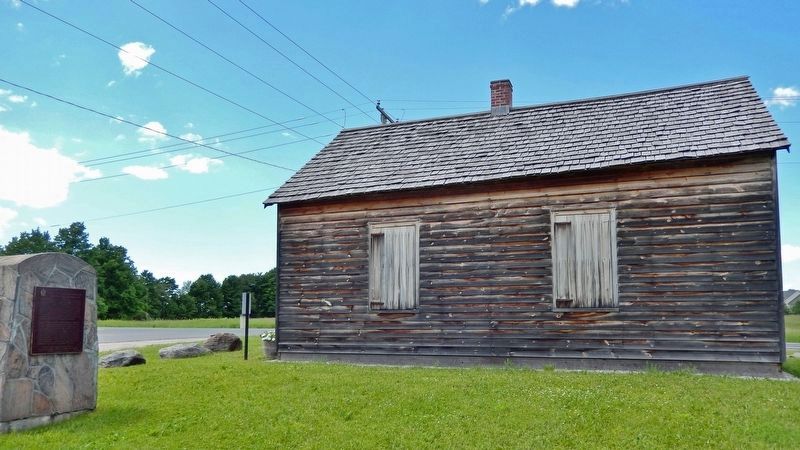
From the Canadian Register Statement of Significance:The heritage value of Oro African Methodist Episcopal Church National Historic Site of Canada resides in its associated history as illustrated by the form and composition of the building, the integrity of the remnant cemetery, and in their site and setting. Key elements contributing to the heritage value of this site include:Photographed by Cosmos Mariner, June 6, 20243. African Methodist Episcopal Church of Oro MarkerLooking northwest; the church is on the right; Line 3 North and Old Barrie Road intersection is in the left background.• the location just east of the old Penetanguishene Road;
• the pastoral nature of the site with the church as focal point in the grassed landscape of the unmarked burial ground;
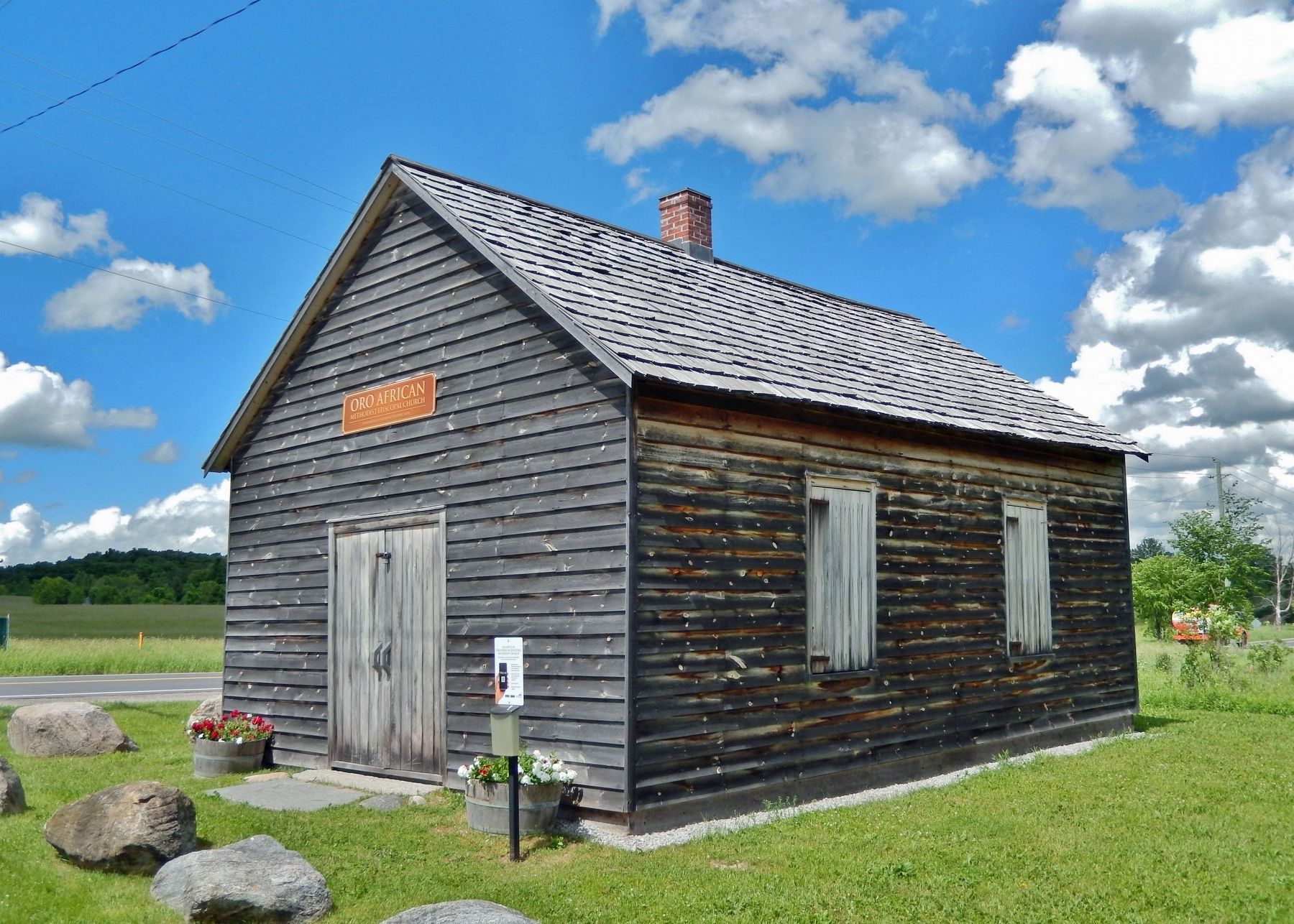
• the church with its rectangular footprint and single-storey massing under a gable roof;
• its minimalist detailing, including the single door centred on a gable end and two evenly spaced, relatively large multi-pane windows on each side elevation
Related markers. Click here for a list of markers that are related to this marker. The African Methodist Episcopal Church of Oro
Also see . . .
1. Oro African Methodist Episcopal Church National Historic Site of Canada.
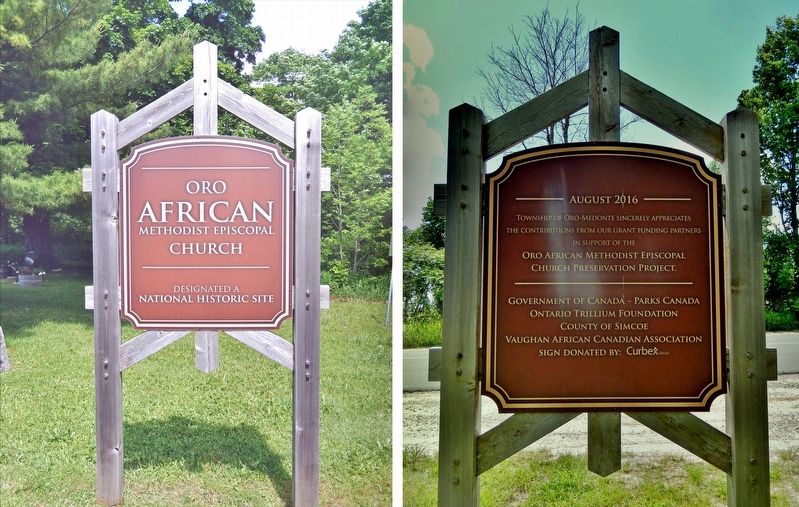
Excerpt: Oro African Methodist Episcopal Church was built by African Canadians. The Oro Black settlement was a unique approach to integrating African Canadians(Submitted on November 2, 2024, by Cosmos Mariner of Cape Canaveral, Florida.)into a farming community. During the American Revolution, Sir Guy Carleton, Commander-in-Chief of British forces in North America, had promised that the slaves of non-Loyalists who joined the British Army would have their freedom and protection from re-enslavement. Black soldiers not only fought with the British during the American Revolution, but also as the “Coloured Corps”, a trusted unit of the Upper Canadian militia during the War of 1812.Photographed by Cosmos Mariner, June 6, 20244. Oro African Methodist Episcopal Church(sign located on the church grounds)
Designated a National Historic Site
August 2016
———
Township of Oro-Medonte sincerely appreciates
the contributions from our grant funding partners
in support of the
Oro African Methodist Episcopal
Church Preservation Project.
———
Government of Canada — Parks Canada
Ontario Trillium Foundation
County of Simcoe
Vaughan African Canadian Association
sign donated by Curbex Media
Between 1819 and 1826, the British granted 25 plots of land in Oro County to Black settlers, eleven of them former soldiers who received their grants in acknowledgement of military service. Although the area had strategic value, the land was both remote and agriculturally poor. Only nine of the original grant recipients took up their plots, settling along an area of the Penatanguishine Road known as Wilberforce Street. In 1829-1831, the settlement was augmented by thirty more families. They built Oro Church in 1847, and it remained active until around 1900 when the community itself faded away.
2. Oro African Methodist Episcopal Church.
Photographed by Cosmos Mariner, June 6, 2024
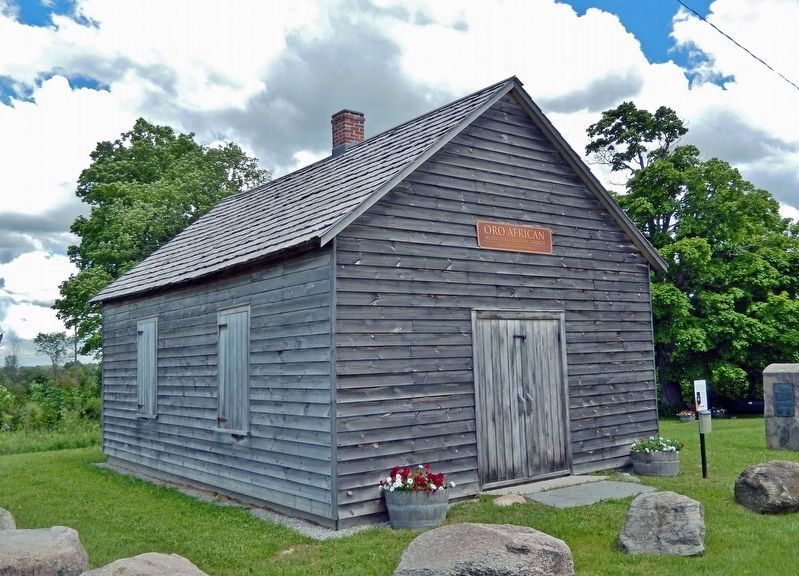
5. Oro African Methodist Episcopal Church
(northwest elevation)
(northwest elevation)
Excerpt: The Oro African Methodist Episcopal Church, built between 1846 and 1849, is a designated National Historic Site. It is one of the last extant buildings erected by a community of African Canadians whose roots were uniquely anchored in the history of United Empire Loyalists and represents the important role that Black militiamen played in the defense of Upper Canada during the War of 1812, and also represents early Upper Canada land policy.(Submitted on November 2, 2024, by Cosmos Mariner of Cape Canaveral, Florida.)
The Oro African Methodist Episcopal Church is one of, if not, the oldest African log church still standing in North America. This Church stands as a testament to both the Black Settlers who carefully crafted and cared for it for nearly 75 years and passionate community volunteers who have worked diligently to preserve it since its abandonment in the 1920's.
Photographed by Cosmos Mariner, June 6, 2024
6. Oro African Methodist Episcopal Church (southwest elevation)
Credits. This page was last revised on November 3, 2024. It was originally submitted on November 1, 2024, by Cosmos Mariner of Cape Canaveral, Florida. This page has been viewed 164 times since then and 28 times this year. Photos: 1, 2, 3, 4, 5, 6. submitted on November 2, 2024, by Cosmos Mariner of Cape Canaveral, Florida.
