
Downtown in Charlottetown in Queens County, Prince Edward Island — The Atlantic Provinces (North America)
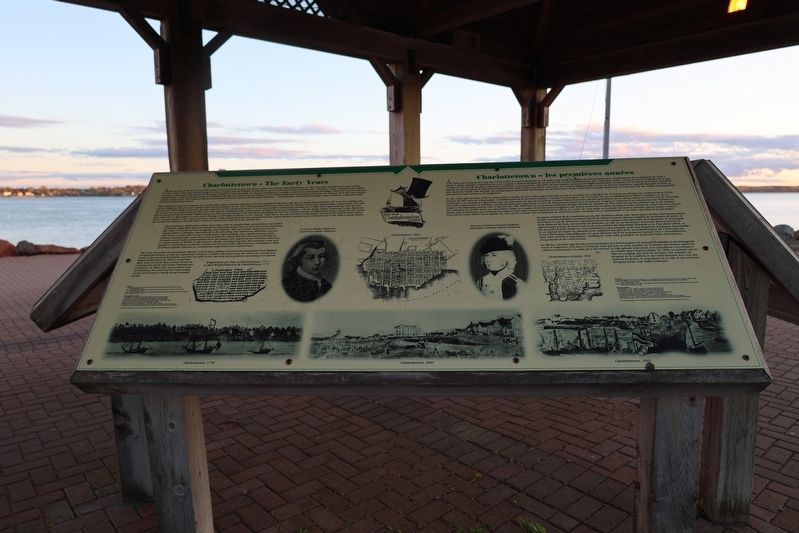
Charlottetown - The Early Years
Photographed by Sandra Hughes Tidwell, October 13, 2024
1. Charlottetown - The Early Years Marker
With ample-level land, situated on a gentle slope with a southern exposure, and well-supplied with water, the site occupied approximately 270 acres for building lots and an additional 565 acres for common land.
Early settlement in the new Capital progressed slowly with very
this page online
Charlottetown's eighteenth-century town plan, with its straight lines, perspectives, and centers of interest, might have deserved
Photographed by Sandra Hughes Tidwell, October 13, 2024
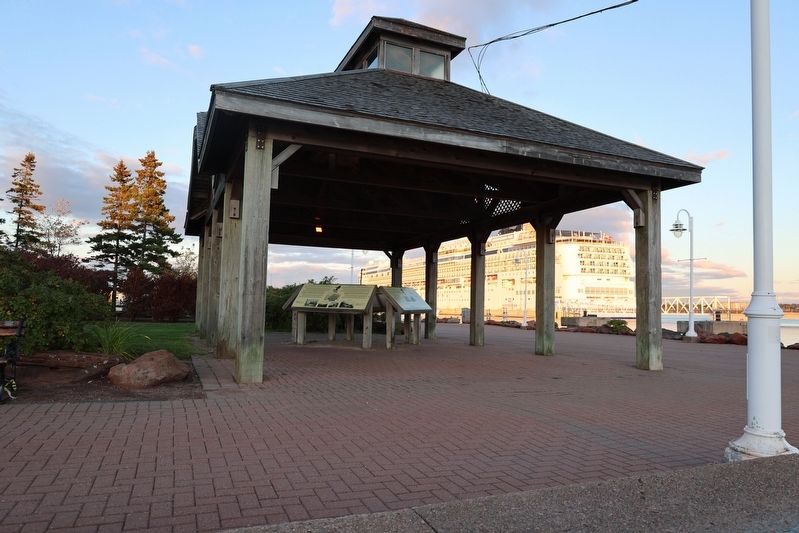
2. Charlottetown - The Early Years Marker
The town was settled by government officials, civil servants, military personnel, and immigrants from England, Scotland, and Ireland, as well as a smattering of Empire Loyalists who came from the American colonies as a result of the American Revolution. Growth was slow in the city, with the population increasing at an almost imperceptible pace. By 1806, it is said that there were not more than seventy houses in Charlottetown. By the time of the Charlestown Conference in 1864, after one hundred years of settlement, the town and the surrounding royalty were home to barely seven thousand people.
Captions: Wright-Patterson Plans of Charlottetown, 1771 Le plan Wright-Patterson de Charlottetown, 1771 Governor Walter Patterson Gouverneur Walter Patterson Quai de la Confederation Landing Charlottetown 1863 Hillsborough or Eant River Surveyor General Samuel Holland Arpenteur Ge`ne`ral Samuel Holland Charlottetown, 1778 Charlottetown, 1849 Charlottetown, 1849 Charlottetown Royalty, 1843
Topics. This historical marker is listed in this topic list: Government & Politics. A significant historical year for this entry is 1756.
Location. 46° 13.873′ N, 63° 7.223′ W. Marker is in Charlottetown, Prince Edward Island, in Queens County. It is in Downtown. It is on Great George Street near Great George and Water Streets. This marker is located along the pier near the PEI Art tower. Touch for map. Marker is at or near this postal address: Great George St, Charlottetown PE C1A C1A, Canada. Touch for directions.

Regionally, this marker is in Central Coastal P. E. I. It is also in the Maritimes and in Atlantic Canada. Globally, it is in the North Atlantic Region, North America, the Western Hemisphere, the Western World, and the Anglosphere. Historically, it finds itself in what was once a British colony, the Viceroyalty of New France, and Acadia.
Other nearby markers. At least 8 other markers are within walking distance of this marker: The Charlottetown Conference 1861 (a few steps from this marker); Charlottetown - Fame, Flames, and Glory (a few steps from this marker); Prince Edward Island Delegates to the 1864 Charlottetown Conference (a few steps from this marker); Survey of the Gulf and River St. Lawrence (within shouting distance of this marker); Confederation Birthplace Memorial Park/Confederation Boulevard (within shouting distance of this marker); Canadian Merchant Navy / Marine Marchande Canadienne (about 90 meters away, measured in a direct line); Heralded Arrival… of the Circus (about 150 meters away); Shaw's Hotel- A National Historic Site of Canada (about 150 meters away). Touch for a list and map of all markers in Charlottetown.
Credits. This page was last revised on February 20, 2025. It was originally submitted on November 5, 2024, by Sandra Hughes Tidwell of Killen, Alabama, USA. This page has been viewed 134 times since then and 24 times this year. Photos: 1, 2. submitted on November 5, 2024, by Sandra Hughes Tidwell of Killen, Alabama, USA. • Bill Pfingsten was the editor who published this page.
