Thurmont in Frederick County, Maryland — The American Northeast (Mid-Atlantic)
Waste Management
Catoctin Furnace Iron Trail
Photographed by Allen C. Browne, October 30, 2024
1. Waste Management Marker
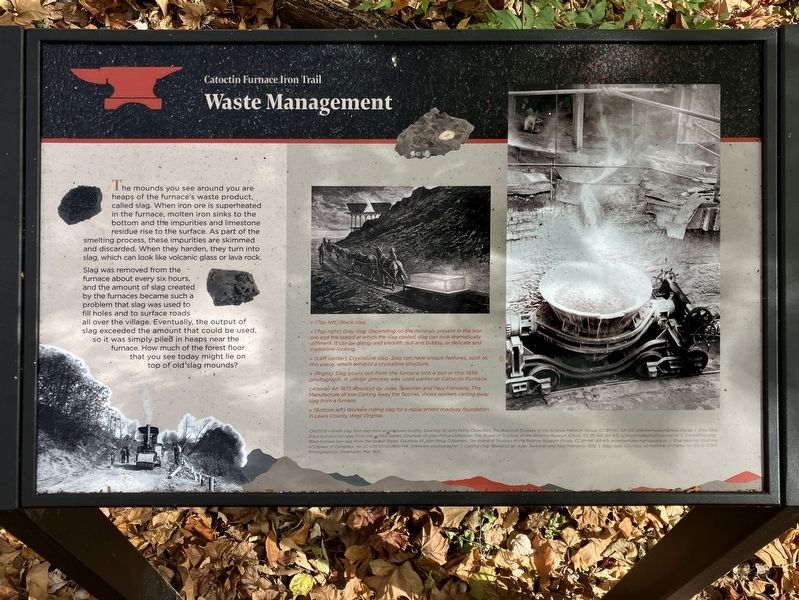
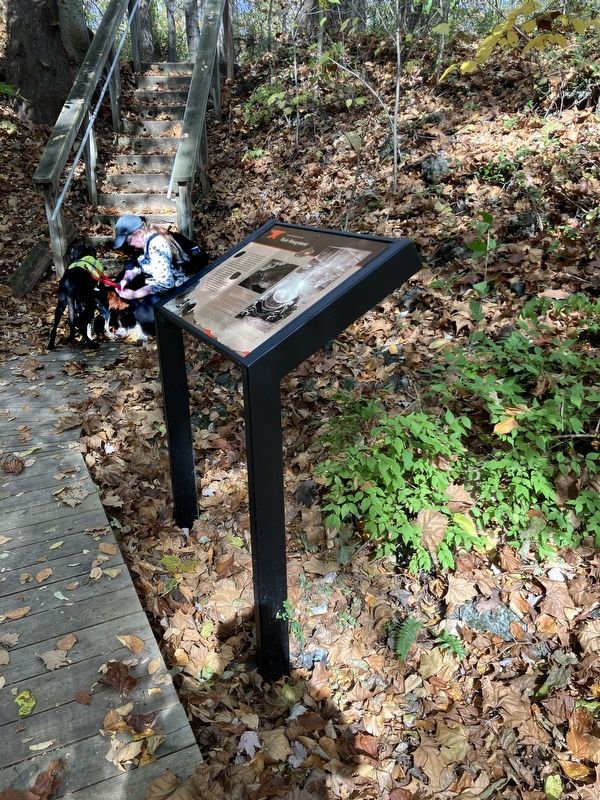
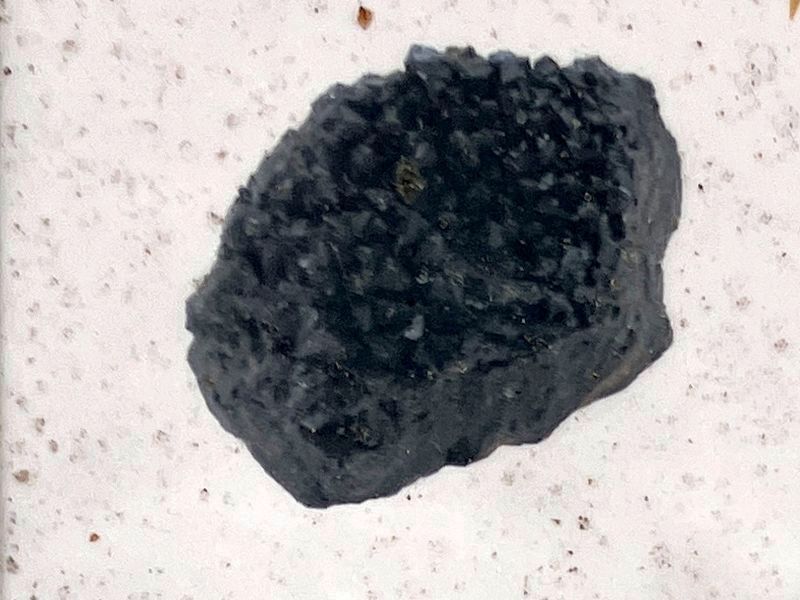
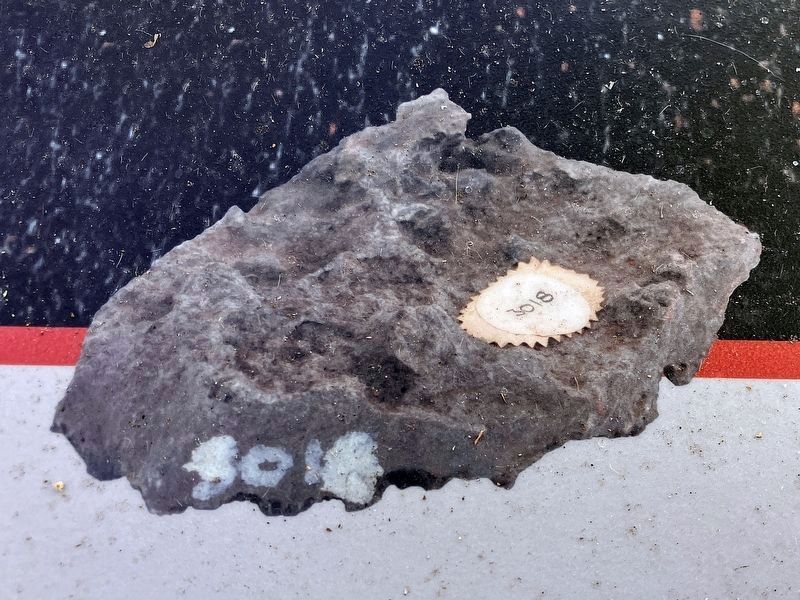
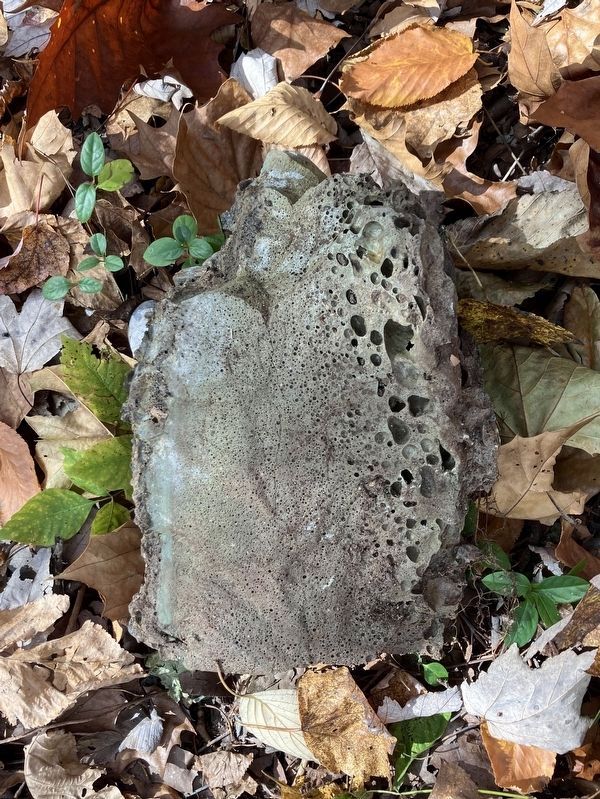
The mounds you see around you are heaps of the furnace's waste product, called slag. When iron ore is superheated in the furnace, molten iron sinks to the bottom and the impurities and limestone residue rise to the surface. As part of the smelting process, these impurities are skimmed and discarded. When they harden, they turn into slag, which can look like volcanic glass or lava rock.
Slag was removed from the furnace about every six hours, and the amount of slag created by the furnaces became such a problem that slag was used to fill holes and to surface roads all over the village. Eventually, the output of slag exceeded the amount that could be used, so it was simply piled in heaps near the furnace. How much of the forest floor that you see today might lie on top of old slag mounds?
[Captions:]
« (Top left) Black slag.
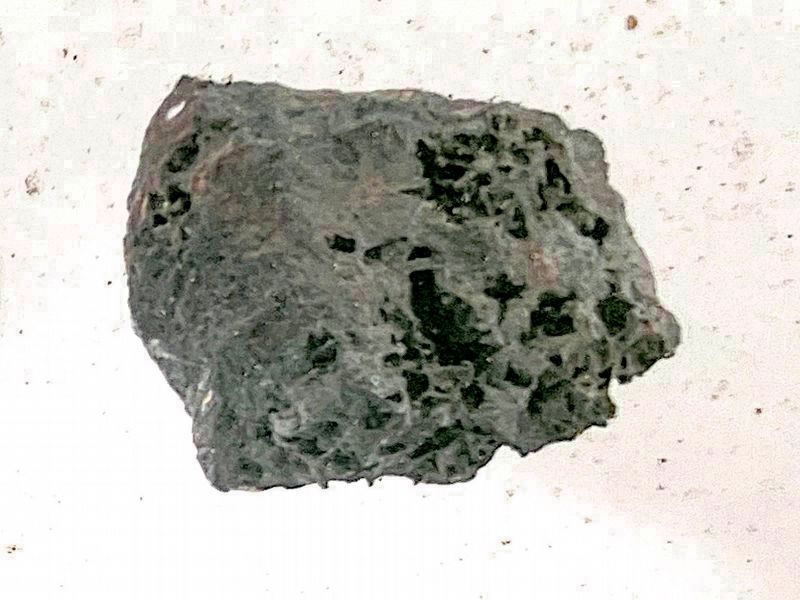
» (Top right) Gray slag. Depending on the minerals present in the iron ore and the speed at which the slag cooled, slag can look dramatically different. It can be glassy and smooth, dull and bubbly, or delicate and crystalline-looking>
« (Left center) Crystalline slag. Slag can have unique features, such as this piece, which exhibits a crystalline structure.
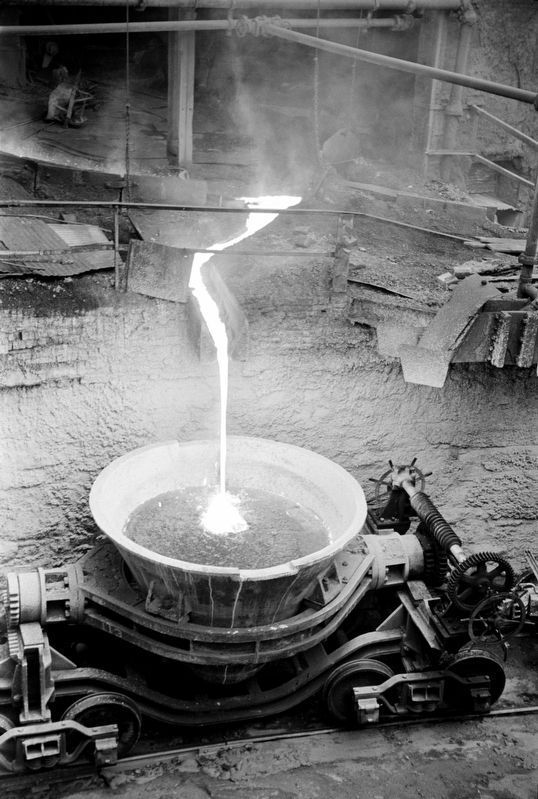
» (Right) Slag pours out from the furnace into a pot in this 1938 photograph. A similar process was used earlier at Catoctin Furnace.
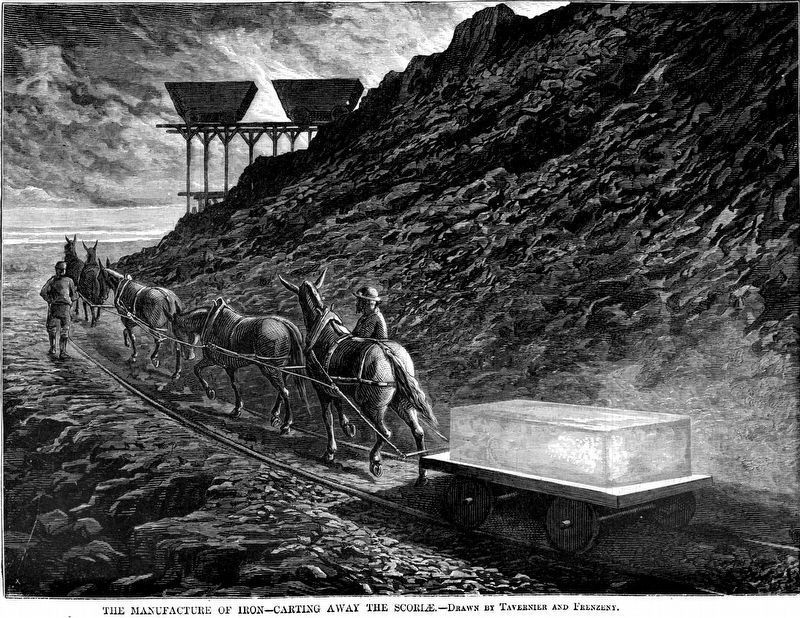
(Above) An 1873 woodcut by Jules Tavernier and Paul Frenzeny, The Manufacture of Iron Carting Away the Scoriae, shows workers carting away slag from a furnace.
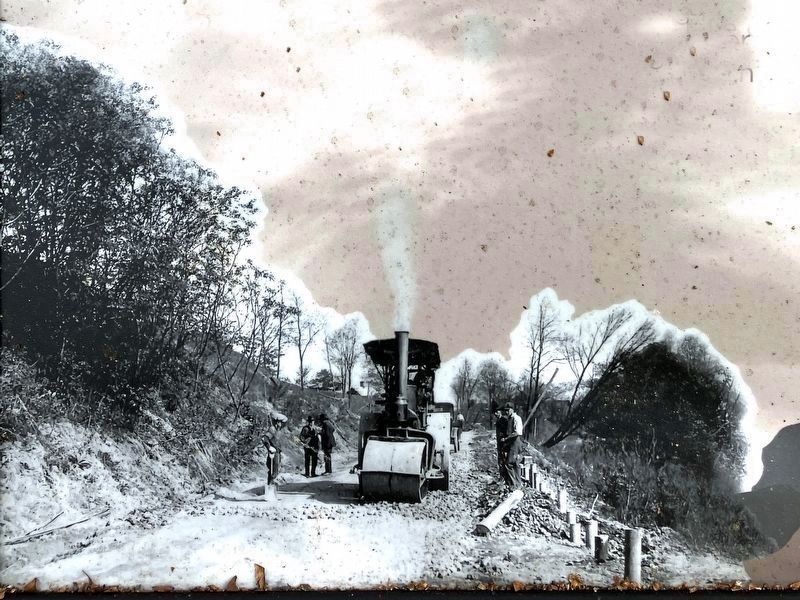
« (Bottom left) Workers rolling slag for a replacement roadway foundation in Lewis County, West Virginia.
Erected by Catoctin
this page online
Topics. This historical marker is listed in this topic list: Industry & Commerce. A significant historical year for this entry is 1938.
Location. 39° 35.02′ N, 77° 26.068′ W. Marker is in Thurmont, Maryland, in Frederick County. It is on Catoctin Furnace Road. Touch for map. Marker is at or near this postal address: 12731 Catoctin Furnace Rd, Thurmont MD 21788, United States of America. Touch for directions.

Regionally, this marker is in the Washington Metropolitan Area and in Central Maryland. It is also in the American Mid-Atlantic. Globally, it is in North America, the Western Hemisphere, the Western World, and the Anglosphere. Historically, it finds itself in what was once one of the original Thirteen Colonies and also the Antebellum South.
Other nearby markers. At least 8 other markers are within walking distance of this marker: A Lost Pond (a few steps from this marker); Recreation For All (within shouting distance of this marker); The Bridge that Moved (within shouting distance of this marker);
Photographed by Allen C. Browne, October 30, 2024
2. Waste Management Marker
Other markers no longer nearby. Slag Heaps (was a few steps from this marker but has been replaced with another marker now near it); Raceway and Dam (was within shouting distance of this marker but has been replaced with another marker now near it); Bowstring Arch Bridge (was about 400 feet away but has been replaced with another marker now near it); Second Growth Forest (was about 500 feet away but has been replaced with another marker now near it); Ruins of the Ironmaster’s House (was about 600 feet away but has been replaced with another marker now near it).
courtesy of National Archives No. 30N-31283, October 30, 2024
6. Rolling Slag
Digitized by Google
7. Carting Away the Scoriæ
An 1873 woodcut by Jules Jules Tavernier and Paul Frénzeny, The Manufacture of Iron Carting Away the Scoriae shows workers carting away slag from a furnace.
Harper's Weekly, November 1, 1873, Page 964.
Harper's Weekly, November 1, 1873, Page 964.
Library of Congress
8. Tapping Slag
Tapping the slag at a blast furnace, Pittsburgh, Pennsylvania by Arthur Rothstein, July 1938.
Photographed by Allen C. Browne, October 30, 2024
9. Furnace Slag
on the forest floor.
Credits. This page was last revised on May 18, 2026. It was originally submitted on November 8, 2024, by Allen C. Browne of Silver Spring, Maryland. This page has been viewed 148 times since then and 23 times this year. Photos: 1, 2, 3, 4, 5, 6, 7, 8, 9. submitted on November 8, 2024, by Allen C. Browne of Silver Spring, Maryland.
