Near Zonnebeke in West-Vlaanderen, Flanders, Belgium — Northwestern Europe
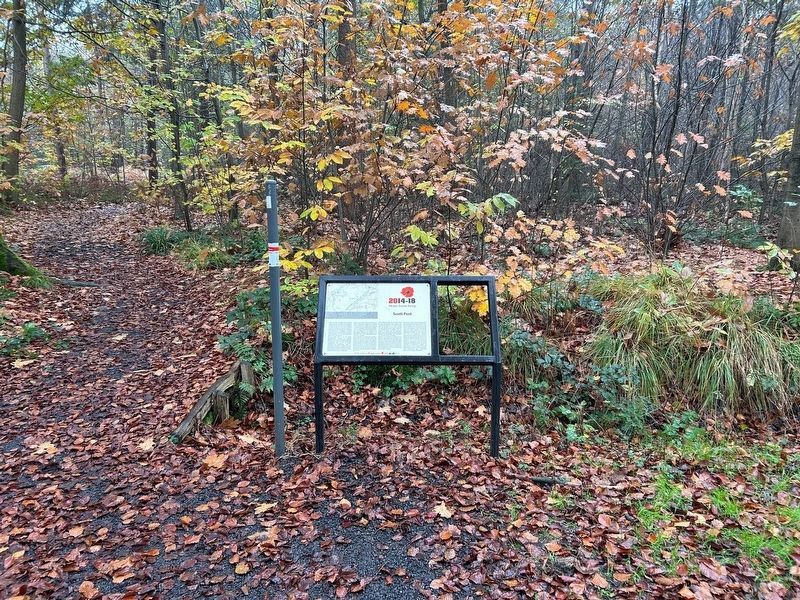
Scott Post
2014-18
| — | 100 years of the Great War/100 jaar Groote Oorlog | — |
Photographed by Mark, November 14, 2024
1. Scot Post Marker

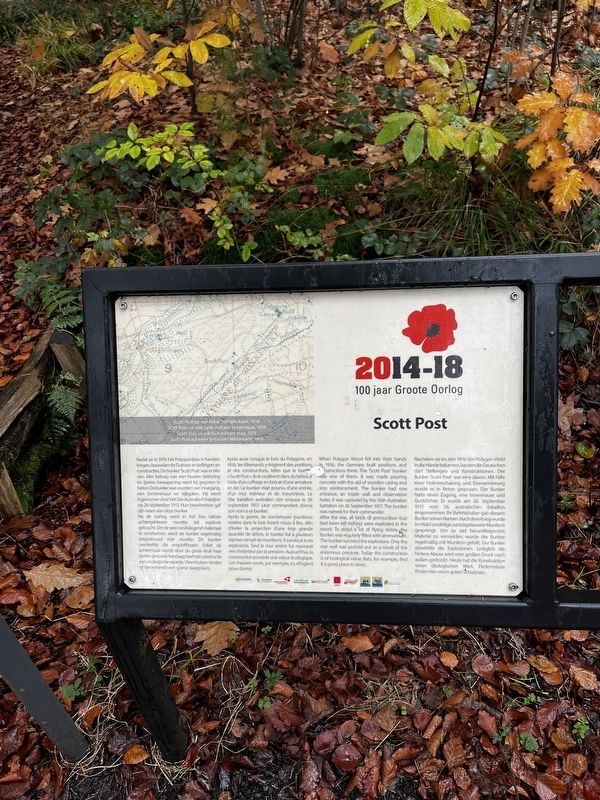
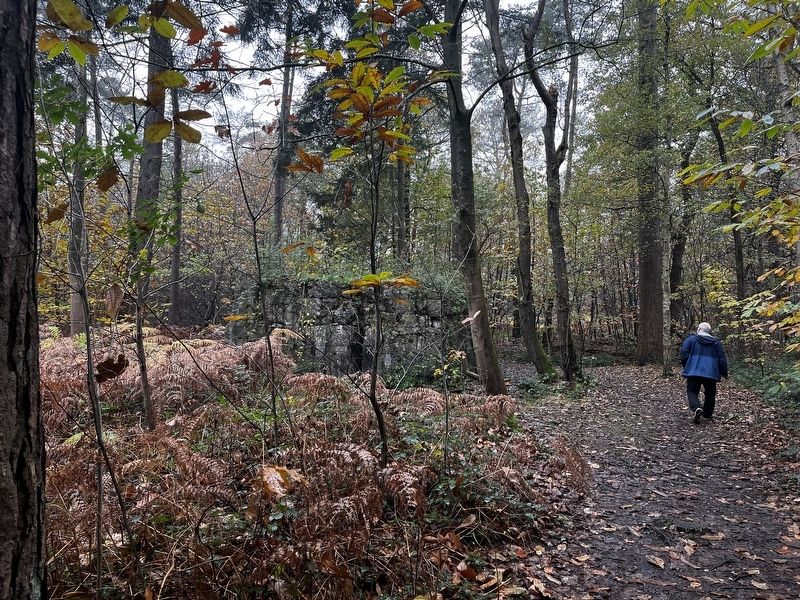
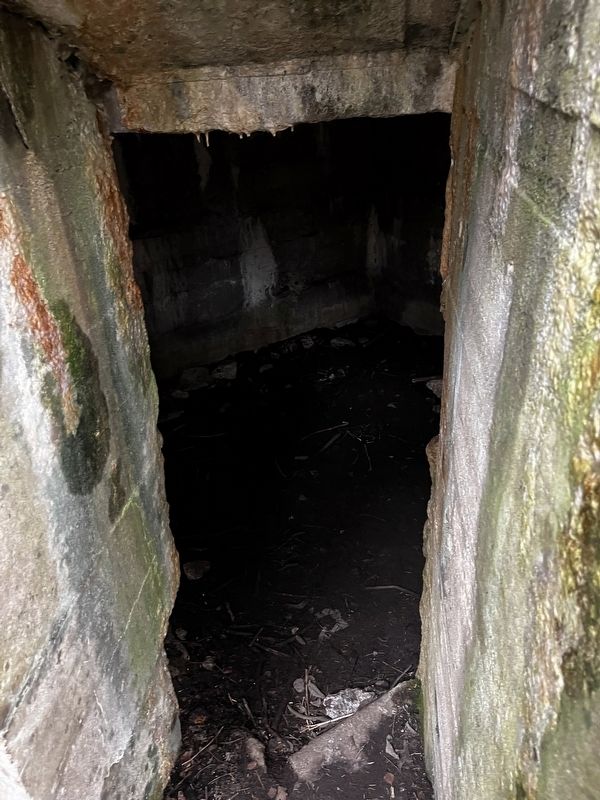
After the war, all kinds of ammunition that had been left behind were exploded in the wood. To avoid a lot of flying debris, the bunker was regularly filled the ammunition. The bunker survived the explosions. Only the rear wall was pushed out as a result of the enormous pressure. Today the construction is of ecological value. Bats, for example, find it a good place to sleep.
Nadat ze in 1916 het Polygoonbos in handen kregen, bowden de Duitsers er stellingen en constructies. De Dunker ‘Scott Post’ was er één van. Met behulp van een houten bekisting en ijzeren bewapeningen werd hij gegoten in beton. De bunker was voorzien van 1 toegang, een binnenmuur en kikgaten. Hij werd ingenomen door het 56e Australisch
this page online
Na de oorlog werd in het bos talloze achtergebleven munitie tot explosie gebracht. Om te veel rondvliegend materiaal te voorkomen, werd de bunker regelmatig volgestouwd met munitie. De bunker overleefde die ontploffingen. Enkel der achtermuur, wordt door der grote druk’naar buiten geduwd. Vandaag, heeft de constructie een ecologische waarde. Vleermuizen vinden er bijvoorbeeld een goeden slaapplaats.
Après avoir conquis le bois du Polygone, en 1916, les Allemands y érigèrent des positions, et des constructions, telles que le bunk «Scott Post » Ils le coulèrent dans du béton, a l'aide d'un coffrage en bois et d'une armature en fer. Le bunker était pourvu d'une entrée, dun mur intérieur et de meurtrières. Le 56e bataillon australien s'en empara le 26 septembre 1917. Leur commandant donna son nom à ce bunker.
Après la guerre, de nombreuses munitions restées dans le bois furent mises a feu. Afin d'éviter la projection d'une trop grande quantité de débris, le bunker fut à plusieurs reprises rempli de munitions. Il survécut à ces explosions.
Photographed by Mark, November 14, 2024
2. Scott Post Marker
Nachdem sie im Jahr 1916 den Polygon-Wald in die Hände bekamen, bauten die Deutschen dort Stellung und Konstruktionen. Der Bunker 'Scott Post' war eine davon. Mit Hilfe einer Holzverschalung und Eisenarmierung wurde er in Beton gegossen. Der Bunker hatte einen Zugang, eine Innenmauer und Gucklocher. Er wurde am 26. Septembe 1917 von die 56 australischen Bataillon eingenommen. Ihr Befehlshaber gab diesem Bunker seinen Namen.
Nach dem Krieg wurde im Wald unzählige zurückgelassene Munition gesprengt. Um zu viel herumfliegendes Material zu vermeiden, wurde der Bunker regelmäßig mit Munition gefüllt. Der Bunker überlebt die Explosion. Lediglich die hintere Mauer wird vom großen Druck nach außen gedrückt. Heute hat die Konstruktion ökologischen Wert. Fledermäuse finden hier einen guten Schlafplatz.
Topics. This historical marker is listed in these topic lists: Forts and Castles • War, World I. A significant historical date for this entry is September 26, 1917.
Location. 50° 51.204′ N,
Photographed by Mark, November 14, 2024
3. Scott Post Marker

Regionally, it is in Europe, the European Union, Atlantic Europe, the Benelux Low Countries, the Schengen Area, Western Europe, and the Western World. Historically, it finds itself in what was once the Roman Empire and specifically also the Holy Roman Empire.
Other nearby markers. At least 8 other markers are within walking distance of this marker: New Zealand Bunkers (about 180 meters away, measured in a direct line); Polygon Wood (approx. 0.3 kilometers away); Buttes New British Cemetery (approx. 0.3 kilometers away); Fifth Australian Division Monument (approx. 0.4 kilometers away); a different marker also named Polygon Wood (approx. 0.6 kilometers away); a different marker also named Polygon Wood (approx. 0.6 kilometers away); Polygons Ruiterpad (approx. 0.7 kilometers away); Australische Silhouet (approx. 0.7 kilometers away). Touch for a list and map of
Photographed by Mark, November 14, 2024
4. Scott Post Marker
More about this marker. Marker is located in Polygon Wood, related to the First World War battle of Third Ypres (Battle of Passendale).
Also see . . . Polygon Wood (Wikipedia). (Submitted on November 14, 2024, by Mark Stoessel of Rochester, New York.)
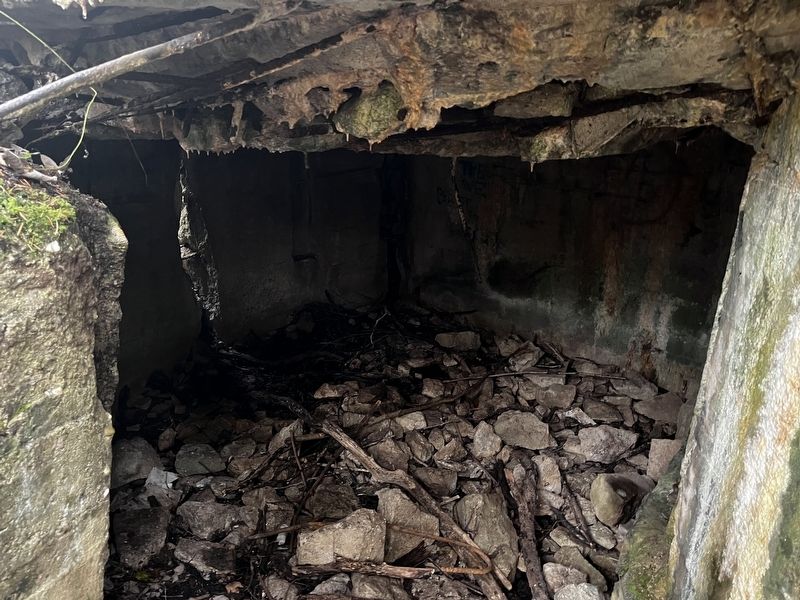
Photographed by Mark, November 14, 2024
5. Scott Post Marker
Credits. This page was last revised on November 18, 2024. It was originally submitted on November 14, 2024, by Mark Stoessel of Rochester, New York. This page has been viewed 150 times since then and 42 times this year. Photos: 1. submitted on November 14, 2024, by Mark Stoessel of Rochester, New York. 2, 3, 4, 5. submitted on November 16, 2024, by Mark Stoessel of Rochester, New York. • Andrew Ruppenstein was the editor who published this page.
