Central Hamilton , Ontario — Central Canada (North America)
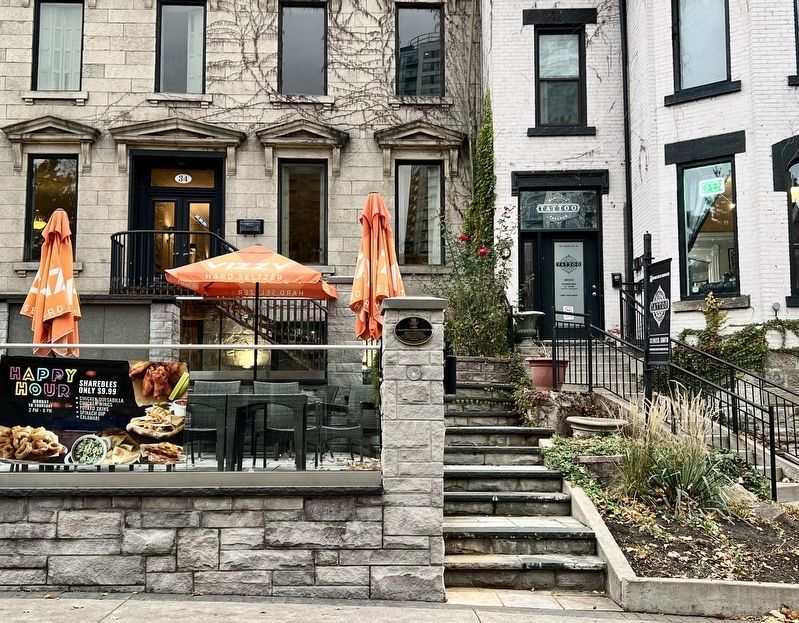
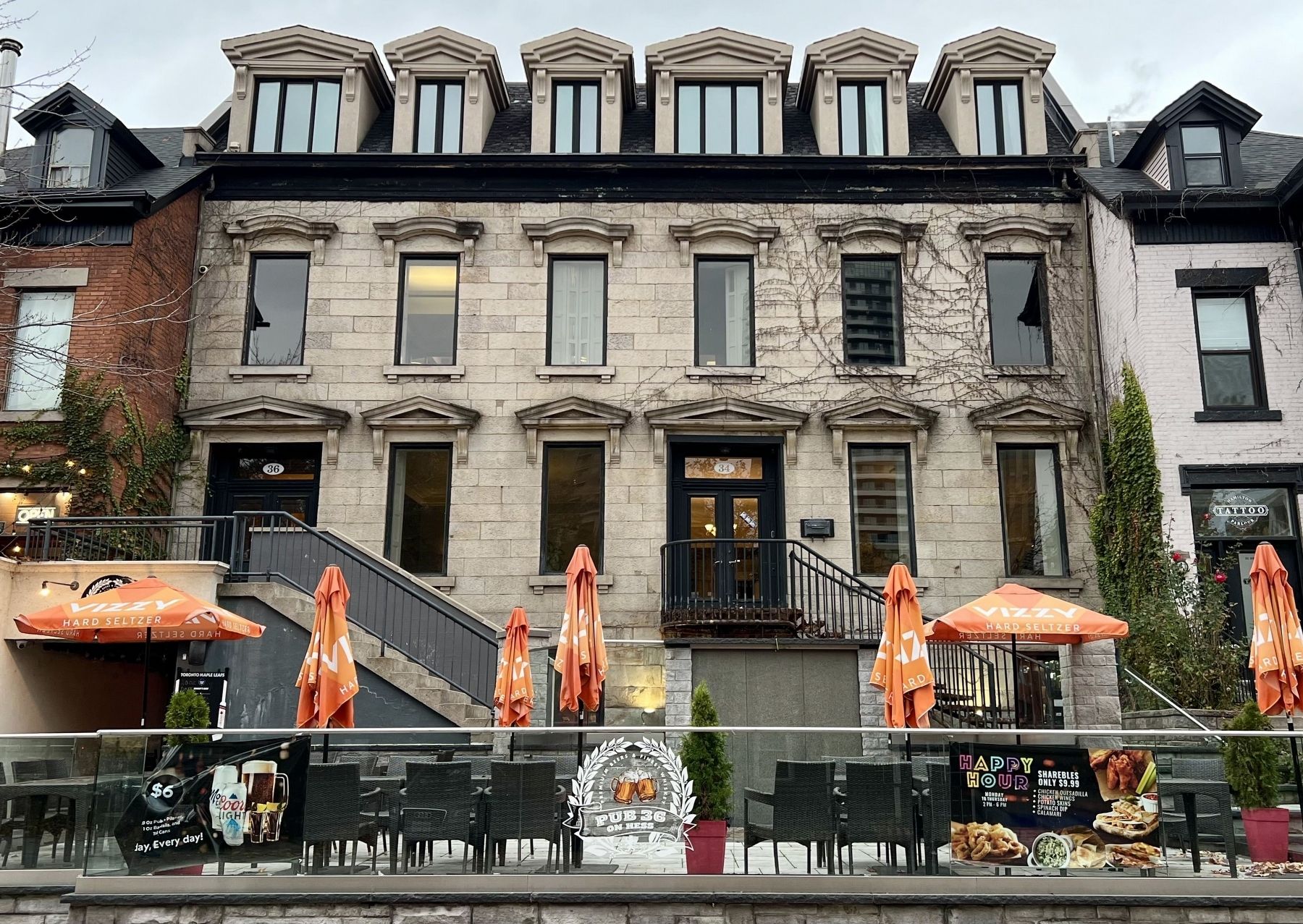
34-36 Hess Street South
c1853
Photographed by Tim Boyd, November 14, 2024
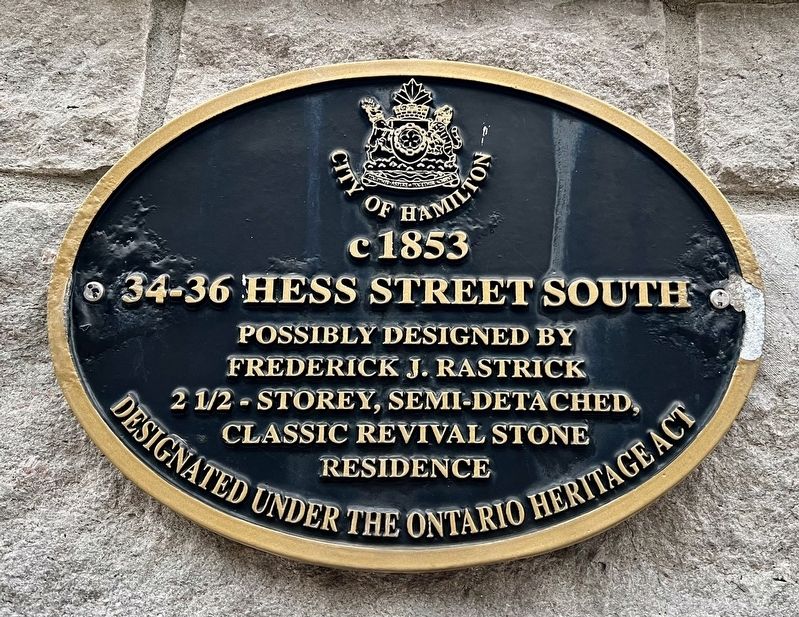
1. 34-36 Hess Street South Marker
Possibly designed by
Frederick J. Rastrick
2 1/2 storey, semi-detached,
classic revival stone residence
Designated under the Ontario Heritage Act
Erected by City of Hamilton.
Topics. This historical marker is listed in this topic list: Architecture. A significant historical year for this entry is 1853.
Location. 43° 15.481′ N, 79° 52.674′ W. Marker is in Hamilton, Ontario. It is in Central Hamilton. It is on Hess Street South 0.1 kilometers south of King Street West, on the left when traveling north. Touch for map. Marker is at or near this postal address: 34 Hess Street South, Hamilton ON L8P 3N1, Canada. Touch for directions.

Regionally, this marker is on the Golden Horseshoe, in the Hamilton-Halton-Brant Area, and specifically in the Toronto Metropolitan Area. It is also in Central Canada. Globally, it is in North America, on the Great Lakes, in the Western Hemisphere, in the Western World, and in the Anglosphere. Historically, it finds itself in what was once a British colony, the Viceroyalty of New France, the Haudenosaunee (Iroquois) Confederacy, and Rupert’s Land.
Other nearby markers. At
this page online
Also see . . . Rastrick, Frederick James (Dictionary of Canadian Biography).
In 1852 Rastrick emigrated to Brantford, Upper Canada, giving up a promising English career. Some months later he established a second office in nearby Hamilton, where he settled at the end of 1853. That city’s close-knit mercantile community soon gave him a large part of its patronage. Better trained than other local architects, he had the advantage(Submitted on November 14, 2024, by Tim Boyd of Hamilton, Ontario.)of home ground over Torontonians such as William Thomas* or Frederic William Cumberland who until then had enjoyed the lion’s share of important commissions in Hamilton.Photographed by Tim Boyd, November 14, 20242. 34-36 Hess Street South Marker
Photographed by Tim Boyd, November 14, 2024
3. 34-36 Hess Street South, 2024
Credits. This page was last revised on November 17, 2024. It was originally submitted on November 14, 2024, by Tim Boyd of Hamilton, Ontario. This page has been viewed 213 times since then and 44 times this year. Photos: 1, 2, 3. submitted on November 14, 2024, by Tim Boyd of Hamilton, Ontario. • Andrew Ruppenstein was the editor who published this page.
