Downtown Los Angeles in Los Angeles County, California — The American West (Pacific Coastal)
Los Angeles History
Photographed by Craig Baker, September 10, 2023
1. Los Angeles History
A Walk Through Los Angeles History
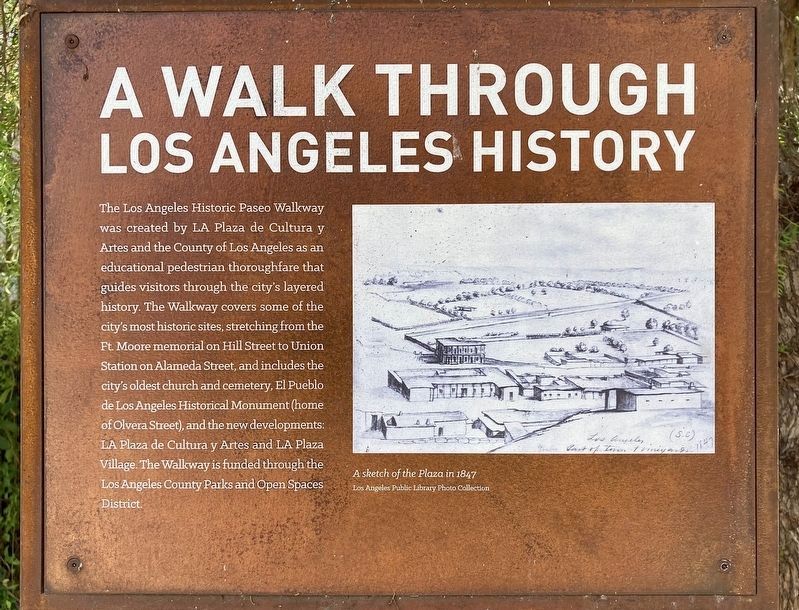
The Los Angeles Historic Paseo Walkway was created by LA Plaza de Cultura y Artes and the County of Los Angeles as an educational pedestrian thoroughfare that guides visitors through the city's layered history. The Walkway covers some of the city's most historic sites, stretching from the Ft. Moore memorial on Hill Street to Union Station on Alameda Street, and includes the city's oldest church and cemetery, El Pueblo de Los Angeles Historical Monument (home of Olvera Street), and the new developments: LA Plaza de Cultura y Artes and LA Plaza Village. The Walkway is funded through the Los Angeles County Parks and Open Spaces District.
A New City Arises
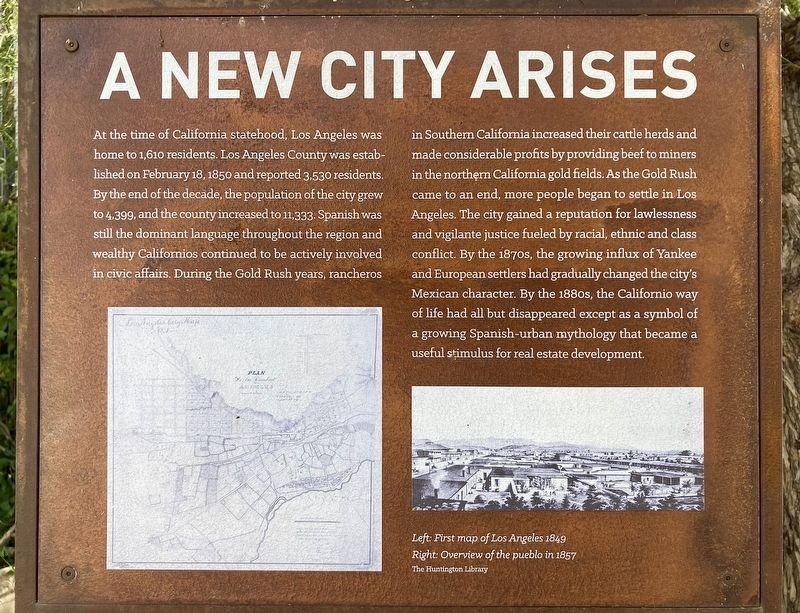
At the time of California statehood, Los Angeles was home to 1,610 residents. Los Angeles County was estab- lished on February 18, 1850 and reported 3.530 residents. By the end of the decade, the population of the city grew to 4.399, and the county increased to 11,333. Spanish was still the dominant language throughout the region and wealthy Californios continued to be actively involved in civic
this page online
The United States & Mexican War
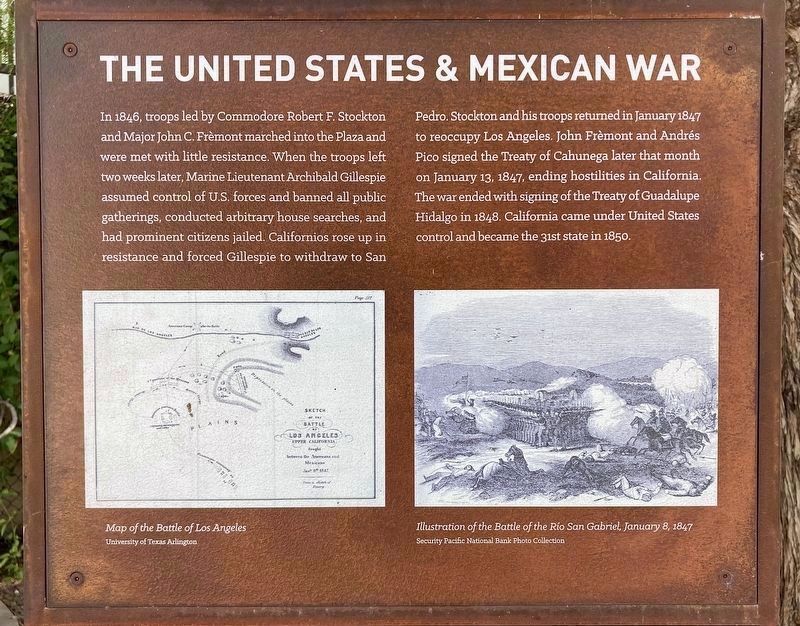
In 1846, troops led by Commodore Robert F. Stockton and Major John C. Frèmont marched into the Plaza and were met with little resistance. When the troops left two weeks later, Marine Lieutenant Archibald Gillespie assumed control of U.S. forces and banned all public gatherings, conducted arbitrary house searches, and had prominent citizens jailed. Californios rose up in resistance and forced Gillespie
Photographed by Craig Baker, September 10, 2023
2. A New City Arises
El Pueblo de Los Angeles Historical Monument
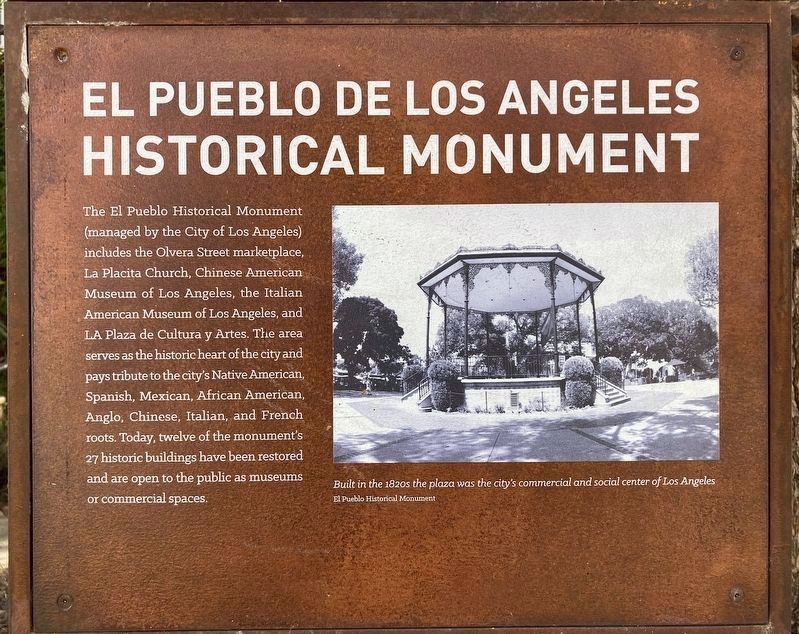
The El Pueblo Historical Monument (managed by the City of Los Angeles) includes the Olvera Street marketplace, La Placita Church, Chinese American Museum of Los Angeles, the Italian American Museum of Los Angeles, and LA Plaza de Cultura y Artes. The area serves as the historic heart of the city and pays tribute to the city's Native American, Spanish, Mexican, African American, Anglo, Chinese, Italian, and French roots. Today, twelve of the monument's 27 historic buildings have been restored and are open to the public as museums or commercial spaces.
Olvera Street
Olvera Street marketplace is the central feature of El Pueblo de Los Angeles Historical Monument and is one
Photographed by Craig Baker, September 10, 2023
3. U.S. & Mexican War
Erected by County of Los Angeles.
Topics. This historical marker is listed in this topic list: Settlements & Settlers.
Location. 34° 3.427′ N, 118° 14.398′ W. Marker is in Los Angeles, California, in Los Angeles County. It is in Downtown Los Angeles. It can be reached from Spring Street north of U.S. 101. Touch for map. Marker is at or near
Photographed by Craig Baker, September 10, 2023
4. El Pueblo de Los Angeles

Regionally, this marker is in California’s Transverse Ranges. It is also on the American Pacific Coast. Globally, it is in North America, on the Ring of Fire, on the Pacific Rim, in the Western Hemisphere, in the Western World, and in the Anglosphere. Historically, it finds itself in what was once New Spain and also Mexico’s Alta California.
Other nearby markers. At least 8 other markers are within walking distance of this marker: Pio Pico (here, next to this marker); Los Angeles Settlers (here, next to this marker); Forced Removal of Mexican Americans (a few steps from this marker); Land of the Tongva (within shouting distance of this marker); The Aliso Tree (within shouting distance of this marker); Settlement of a City (within shouting distance of this marker); Los Angeles Under Spanish Rule (within shouting distance of this marker); Nuestra Señora la Reina de Los Angeles (within shouting distance of this marker). Touch for a list and map of all markers in Los Angeles.
More about this marker. This marker
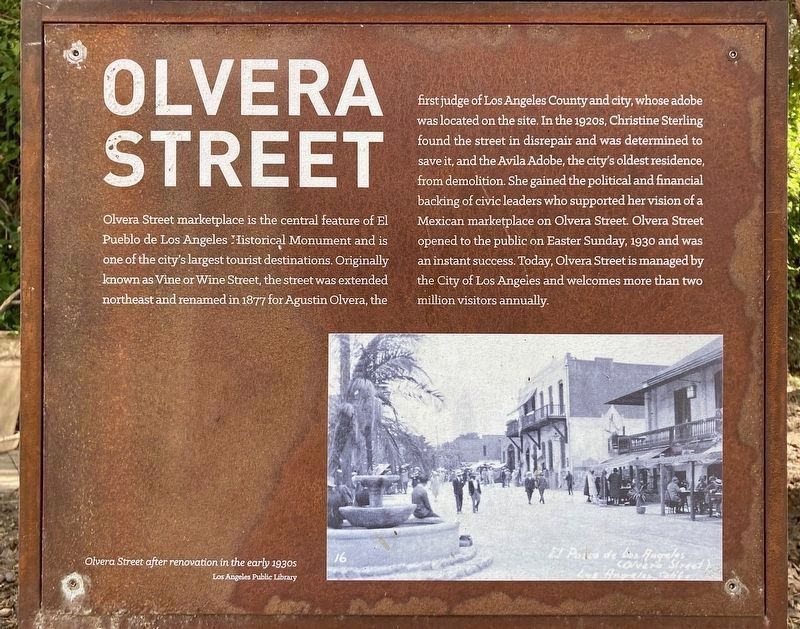
Photographed by Craig Baker, September 10, 2023
5. Olvera Street

Photographed by Craig Baker, September 10, 2023
6. Los Angeles History Marker
Credits. This page was last revised on November 26, 2024. It was originally submitted on November 26, 2024, by Craig Baker of Sylmar, California. This page has been viewed 268 times since then and 38 times this year. Photos: 1, 2, 3, 4, 5, 6. submitted on November 26, 2024, by Craig Baker of Sylmar, California.
