Lincolnton in Lincoln County, North Carolina — The American South (South Atlantic)
Salem Lutheran & United Church of Christ
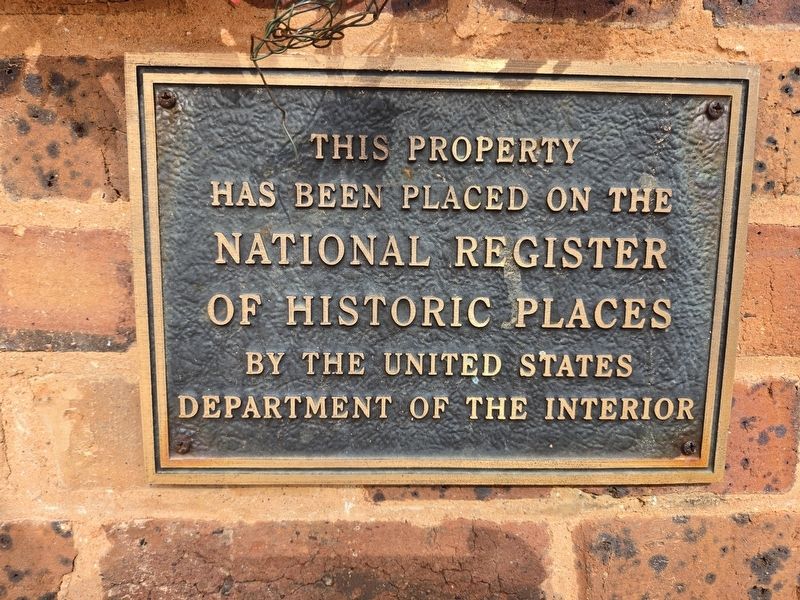
Photographed by Mark Parker, November 23, 2024
1. Salem Lutheran & United Church of Christ Marker
Has been placed on the
National Register
of Historic Places
by the United States
Department of the Interior
Erected by United States Department of the Interior.
Topics. This historical marker is listed in this topic list: Religion & Religious Structures.
Location. 35° 32.855′ N, 81° 15.896′ W. Marker is in Lincolnton, North Carolina, in Lincoln County. It can be reached from the intersection of Startown Road (State Road 1006) and Maiden Salem Road, on the left. The marker is to the right of the main sanctuary entrance. Touch for map. Marker is at or near this postal address: 3410 Startown Rd, Maiden NC 28650, United States of America. Touch for directions.

Regionally, this marker is in the Piedmont and in Greater Charlotte. It is also in the American South and specifically in the Upper South. Globally, it is in North America, the Western Hemisphere, the Western World, and the Anglosphere. Historically, it finds itself in what was once the territory of the Mississippian Culture, one of the original Thirteen Colonies, one of the Confederate
this page online
Other nearby markers. At least 8 other markers are within 5 miles of this marker, measured as the crow flies: Maiden Area Veterans Memorial (approx. 3½ miles away); Daniels Church (approx. 3.6 miles away); Andrew Loretz (approx. 3.6 miles away); Grace Union Church Reformed and Lutheran (approx. 4.6 miles away); Lieutenant John Hoyle (approx. 4.6 miles away); Ramsour-Reinhardt Cemetery (approx. 4.6 miles away); a different marker also named Battle of Ramsour's Mill (approx. 4.8 miles away); "Skip" Lawing Place (approx. 4.8 miles away). Touch for a list and map of all markers in Lincolnton.
Another marker is no longer nearby. Battle of Ramsour's Mill (was approx. 4.8 miles away but has been replaced with another marker now near it).
Regarding Salem Lutheran & United Church of Christ. Excerpts from the Salem Union Church and Cemetery Nomination Form:
In the eighteenth century the provision of a place for the burial of the Christian dead was considered one of the functions of a church and its congregation: the language of eighteenth and early-nineteenth century deeds conveying
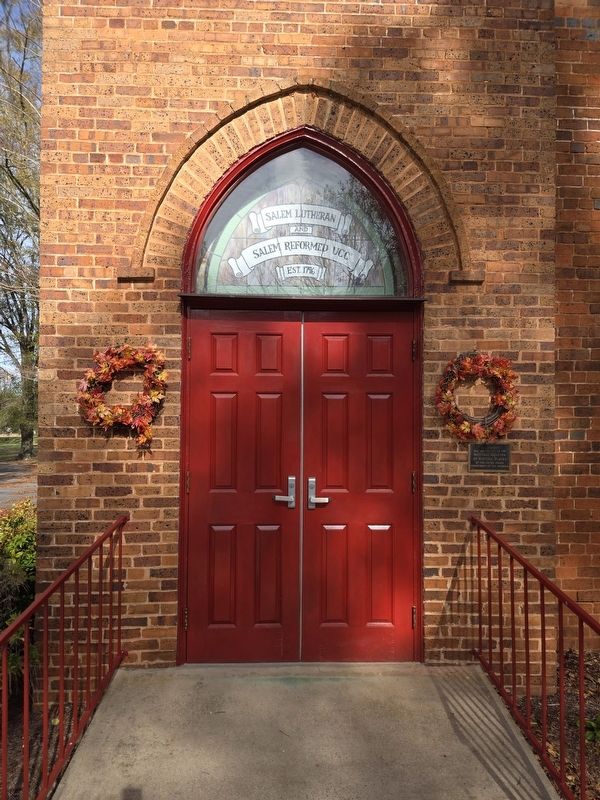
Photographed by Mark Parker, November 23, 2024
2. Salem Lutheran & United Church of Christ Marker to the right of the sanctuary entrance
Salem Union Church and Cemetery, comprising a brick church and its adjoining burying ground located in rural Lincoln County about a mile south of the Catawba/Lincoln County line, is a place holding statewide significance in the areas of religion and German ethnic heritage. Situated in an area of the Piedmont settled principally by German-speaking people in the mid eighteenth century, Salem Church has been the site of religious services and interments at least since the 1790s. As was the practice at other early communities, settlers of German background erected a "union Church" here on the east side of the South Fork of the Catawba River. That building was the site of separate
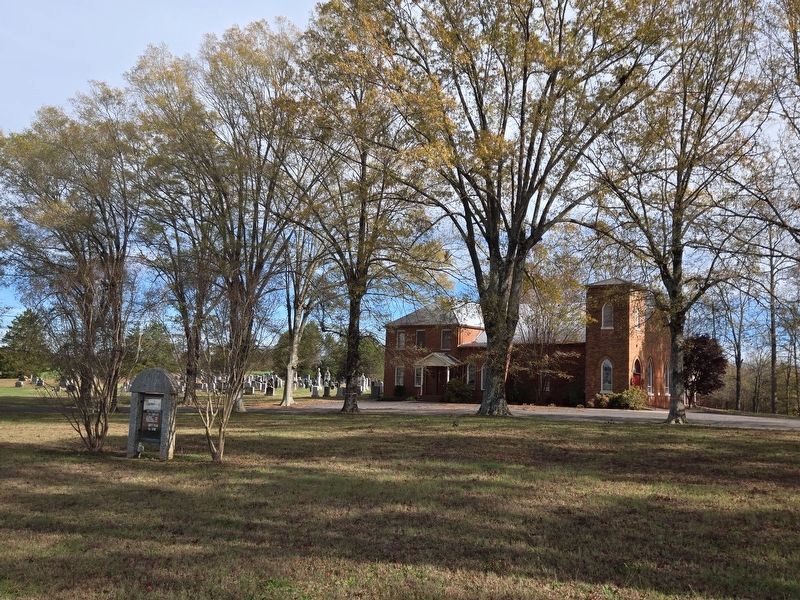
Photographed by Mark Parker, November 23, 2024
3. Full view of Salem Church and Cemetery
Also see . . . Salem Union Church and Cemetery Nomination Form (pdf). Prepared by David Foard Hood, 1995 (Submitted on November 26, 2024, by Mark Parker of Hickory, North Carolina.)
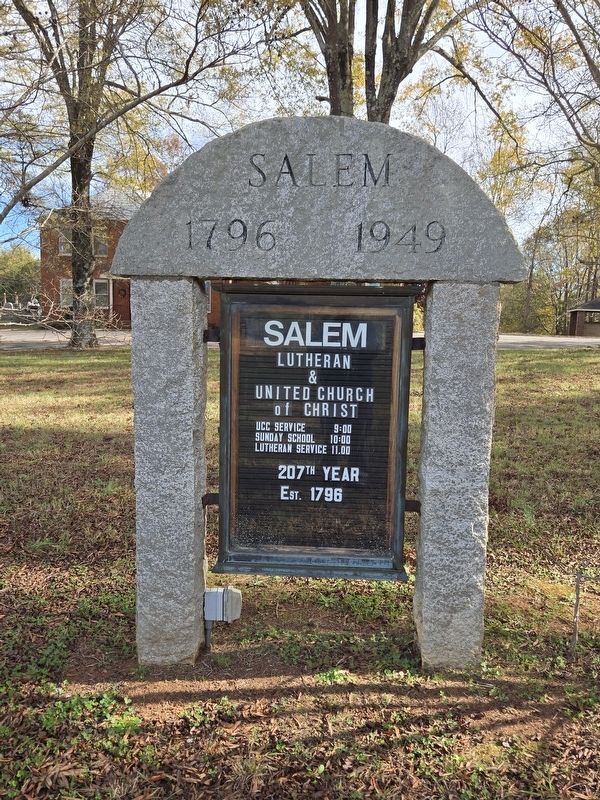
Photographed by Mark Parker, November 23, 2024
4. Salem Lutheran & United Church of Christ sign
Photographed by Mark Parker, November 23, 2024
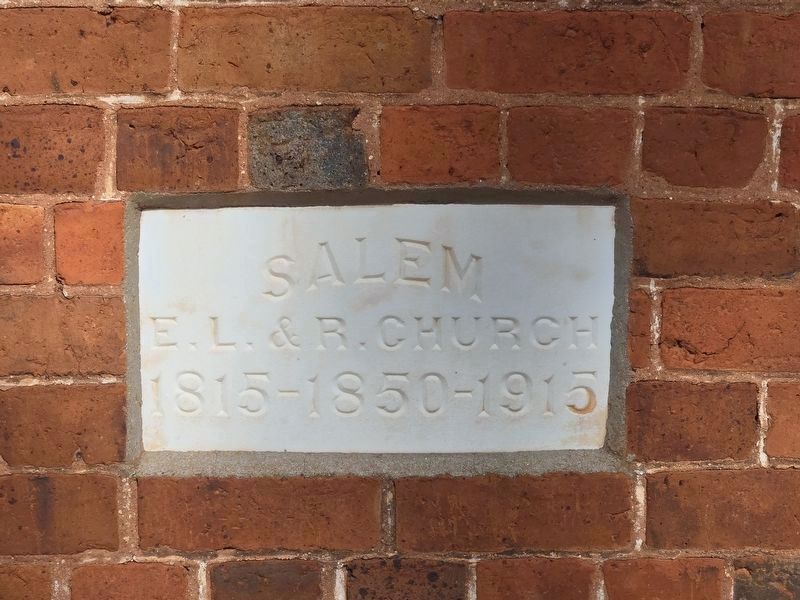
5. Salem Lutheran & United Church of Christ cornerstone
1815: Construction began on the second building on the current property.
1850: Current brick replaced the previous structure
1915: Church remodeled
1850: Current brick replaced the previous structure
1915: Church remodeled

Photographed by Mark Parker, August 31, 2023
6. Gravestone of Antoni Hes, the first known burial at Salem Cemetery in 1792
Credits. This page was last revised on December 19, 2024. It was originally submitted on November 26, 2024, by Mark Parker of Hickory, North Carolina. This page has been viewed 284 times since then and 56 times this year. Photos: 1, 2, 3, 4, 5, 6. submitted on November 26, 2024, by Mark Parker of Hickory, North Carolina. • Bill Pfingsten was the editor who published this page.
