West Helena in Phillips County, Arkansas — The American South (West South Central)
Wood Products Capital
Photographed by Cosmos Mariner, September 16, 2024
1. Wood Products Capital Marker
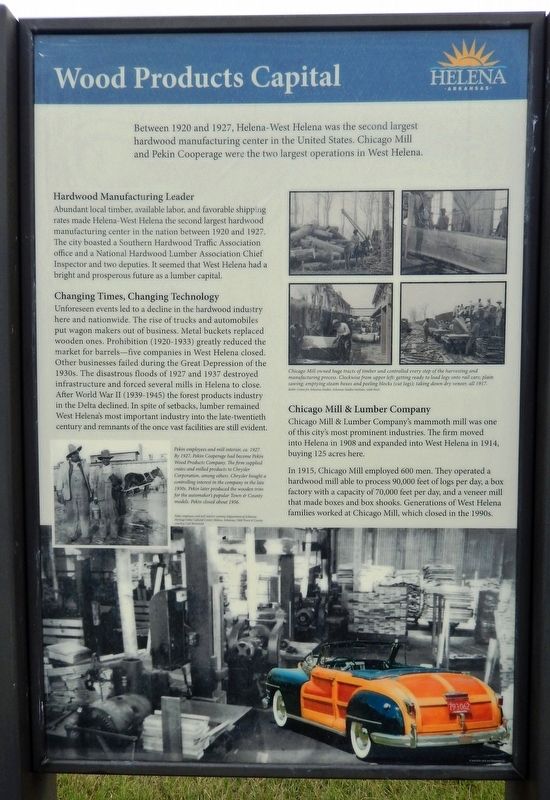
Between 1920 and 1927, Helena-West Helena was the second largest hardwood manufacturing center in the United States. Chicago Mill and Pekin Cooperage were the two largest operations in West Helena.
Hardwood Manufacturing Leader
Abundant local timber, available labor, and favorable shipping rates made Helena-West Helena the second largest hardwood manufacturing center in the nation between 1920 and 1927. The city boasted a Southern Hardwood Traffic Association office and a National Hardwood Lumber Association Chief Inspector and two deputies. It seemed that West Helena had a bright and prosperous future as a lumber capital.
Changing Times, Changing Technology
Unforeseen events led to a decline in the hardwood industry here and nationwide. The rise of trucks and automobiles put wagon makers out of business. Metal buckets replaced wooden ones. Prohibition (1920-1933) greatly reduced the market for barrels — five companies in West Helena closed. Other businesses failed during the Great Depression of the 1930s. The disastrous floods of 1927 and 1937 destroyed infrastructure and forced several mills in Helena to close. After World
this page online
Chicago Mill & Lumber Company
Chicago Mill & Lumber Company's mammoth mill was one of this city's most prominent industries. The firm moved into Helena in 1908 and expanded into West Helena in 1914, buying 125 acres here.
In 1915, Chicago Mill employed 600 men. They operated a hardwood mill able to process 90,000 feet of logs per day, a box factory with a capacity of 70,000 feet per day, and a veneer mill that made boxes and box shooks. Generations of West Helena families worked at Chicago Mill, which closed in the 1990s.
Topics. This historical marker is listed in this topic list: Industry & Commerce. A significant historical year for this entry is 1920.
Location. 34° 32.64′ N, 90° 38.817′ W. Marker is in West Helena, Arkansas, in Phillips County. It is on Plaza Avenue 0.1 miles east of U.S. 49, on the left when traveling east. This marker is one of six interpretive panels in the Plaza Avenue median at
Courtesy Butler Center for Arkansas Studies, Arkansas Studies Institute, Little Rock
2. Marker detail: Chicago Mill & Lumber Company
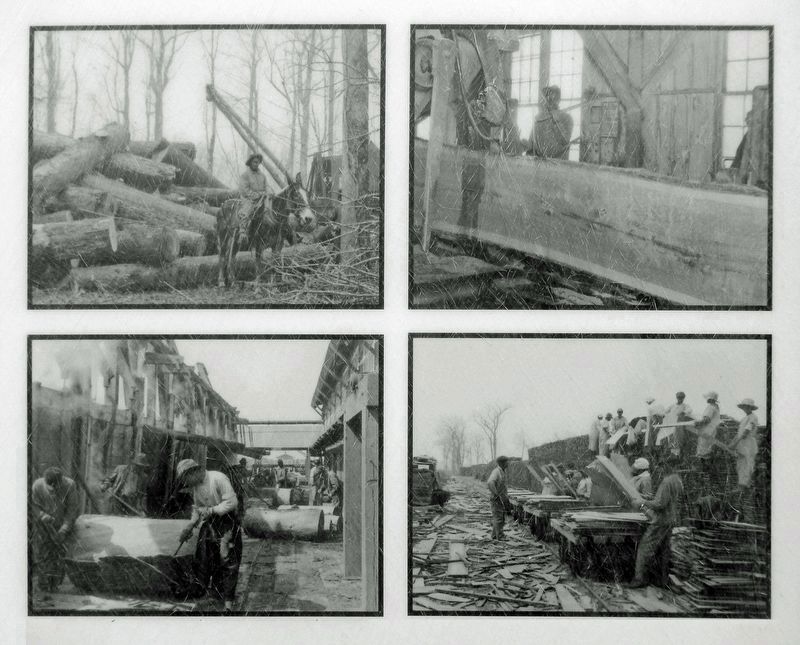
Chicago Mill owned huge tracts of timber and controlled every step of the harvesting and manufacturing process. Clockwise from upper left: getting ready to load logs onto rail cars; plain sawing; emptying steam boxes and peeling blocks (cut logs); taking down dry veneer, all 1917.

Regionally, this marker is in the Arkansas Delta, in Crowley’s Ridge, in the Mississippi Alluvial Plain, and in the Quapaw Homeland. It is also in the American South, specifically in the Upper South, in the Mississippi Delta, and in the Great River Road Region. Globally, it is in North America, the Western Hemisphere, the Western World, and the Anglosphere. Historically, it finds itself in what was once the territory of the Mississippian Culture, the Louisiana Purchase, one of the Confederate States of America, and the Antebellum South.
Other nearby markers. At least 8 other markers are within 3 miles of this marker, measured as the crow flies: Made in West Helena (here, next to this marker); Unbroken Forest (here, next to this marker); Early Railroads (here, next to this marker); A Web of Track (here, next to this marker); End of an Era (here, next to this marker); West Helena's POW Camp (approx. 0.2 miles away); Battery B (approx. 2.9 miles away); Patrick Ronayne Cleburne
Courtesy Department Arkansas, Heritage Delta Cultural Center, Helena, Arkansas
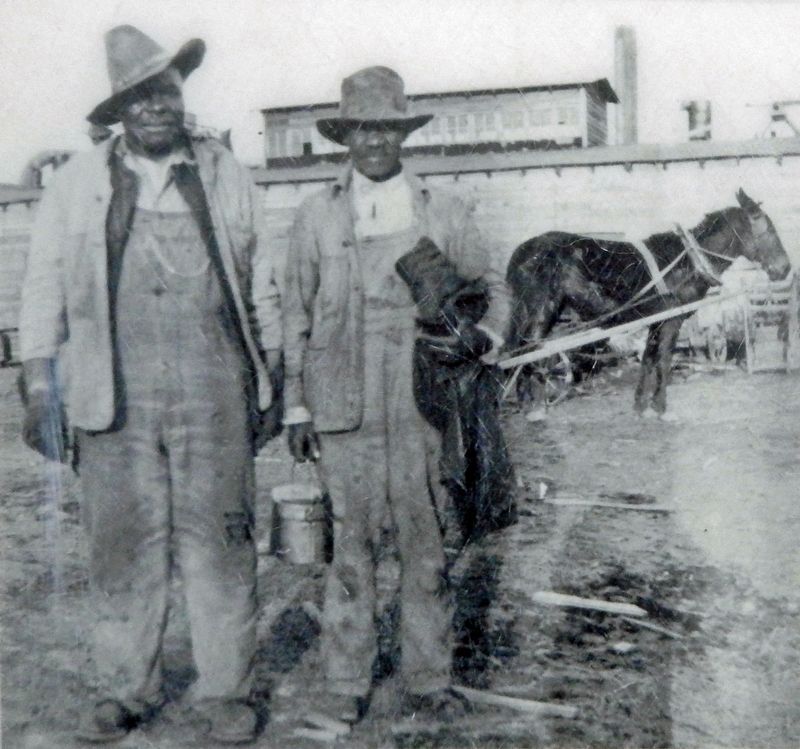
3. Pekin Cooperage Employees, ca. 1927
Related markers. Click here for a list of markers that are related to this marker. West Helena, Arkansas
Also see . . . Chicago Mill and Lumber Company (Encyclopedia of Arkansas). (photo) Working at a veneer lathe at the Chicago Mill and Lumber Company in West Helena (Phillips County); circa 1915-1920. (Submitted on December 14, 2024, by Cosmos Mariner of Cape Canaveral, Florida.)
Courtesy Department Arkansas, Heritage Delta Cultural Center, Helena, Arkansas, circa 1927
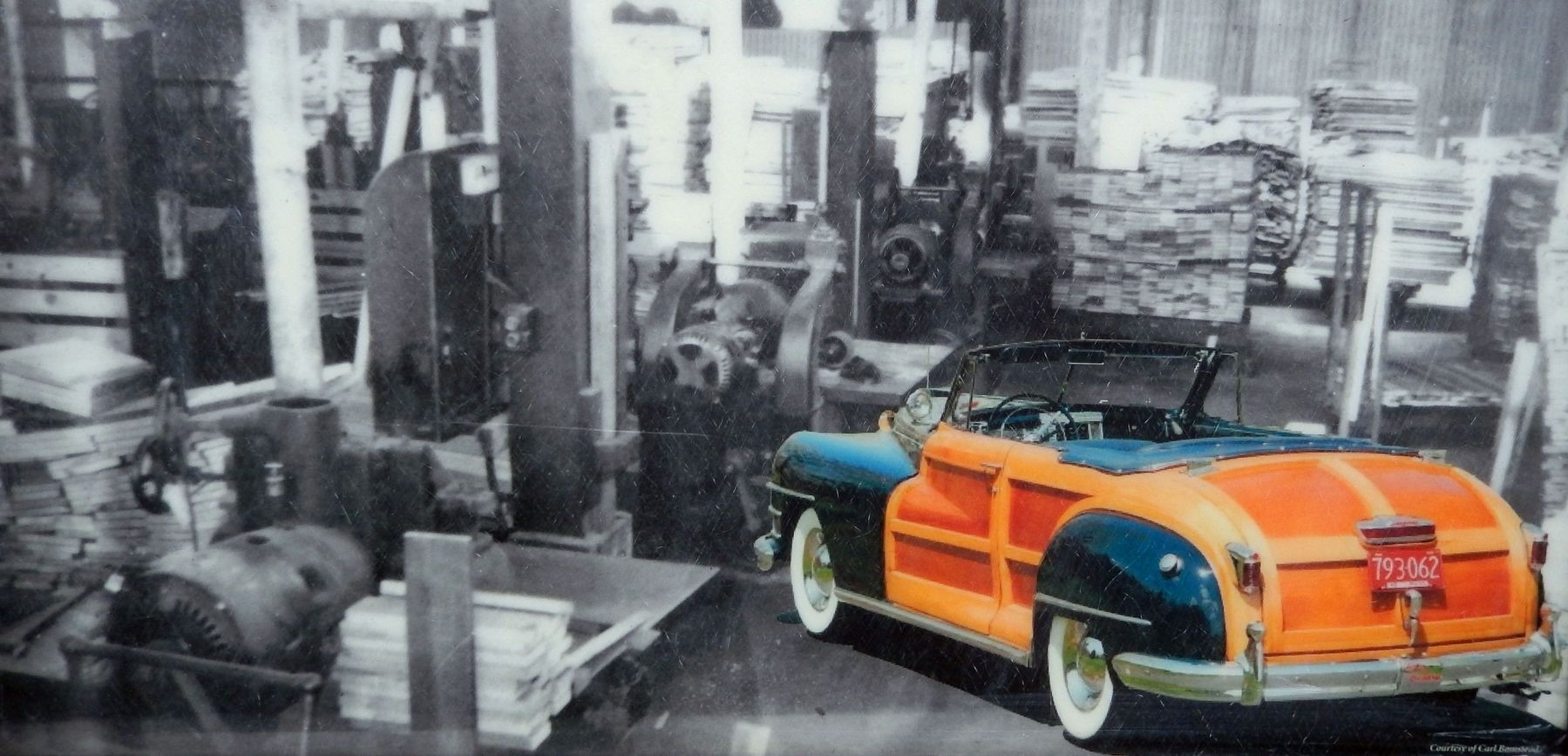
4. Marker detail: Pekin Mill Interior, ca. 1927
By 1927, Pekin Cooperage had become Pekin Wood Products Company. The firm supplied crates and milled products to Chrysler Corporation, among others. Chrysler bought a controlling interest in the company in the late 1930s. Pekin later produced the wooden trim for the automaker's popular Town & Country models. Pekin closed about 1956. (1948 Chrysler Town & Country courtesy Carl Bomstead)
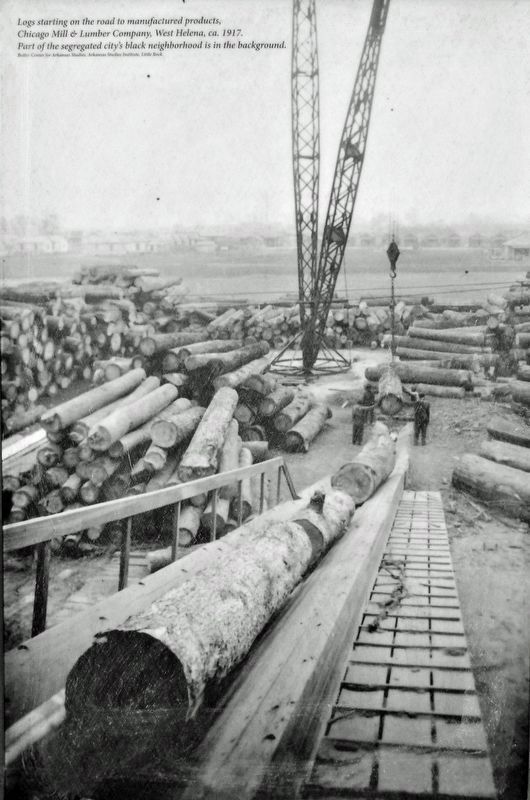
Courtesy Butler Center for Arkansas Studies, Arkansas Studies Institute, Little Rock
5. Marker detail: Chicago Mill & Lumber Company, ca. 1917
(photo covers backside of marker) Logs starting on the road to manufactured products. Part of the segregated city’s black neighborhood is in the background.
Photographed by Cosmos Mariner, September 16, 2024
6. Wood Products Capital Marker
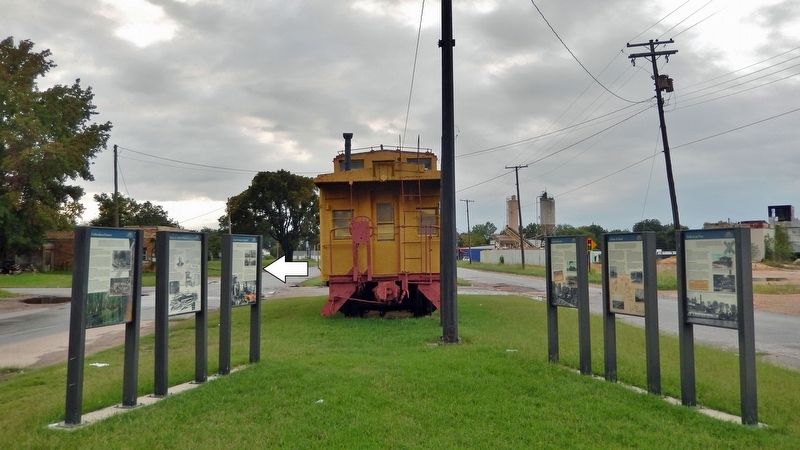
Looking west through the Plaza Avenue median; this marker is the third one from the front on the left. A restored and preserved Union Pacific caboose is on exhibit just to the west of this group of six interpretive panels.
Credits. This page was last revised on December 14, 2024. It was originally submitted on December 12, 2024, by Cosmos Mariner of Cape Canaveral, Florida. This page has been viewed 173 times since then and 39 times this year. Photos: 1, 2, 3, 4, 5, 6. submitted on December 14, 2024, by Cosmos Mariner of Cape Canaveral, Florida.
