West Helena in Phillips County, Arkansas — The American South (West South Central)
West Helena's POW Camp
Photographed by Cosmos Mariner, September 16, 2024
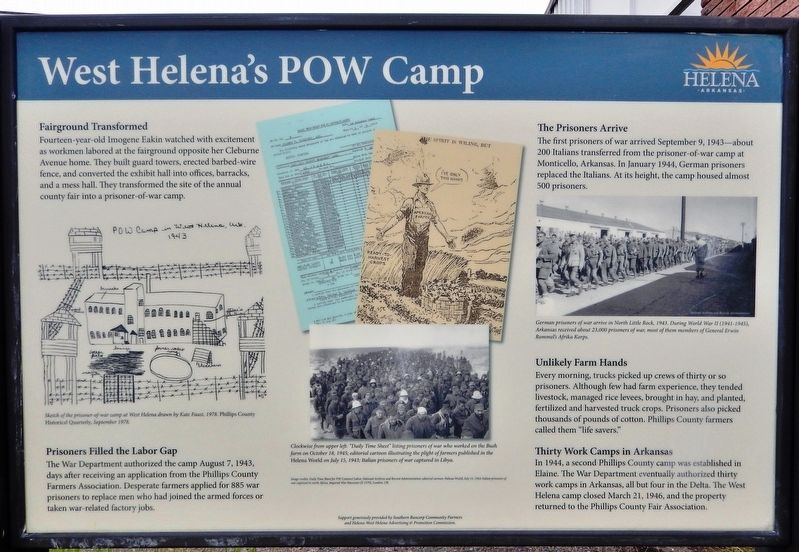
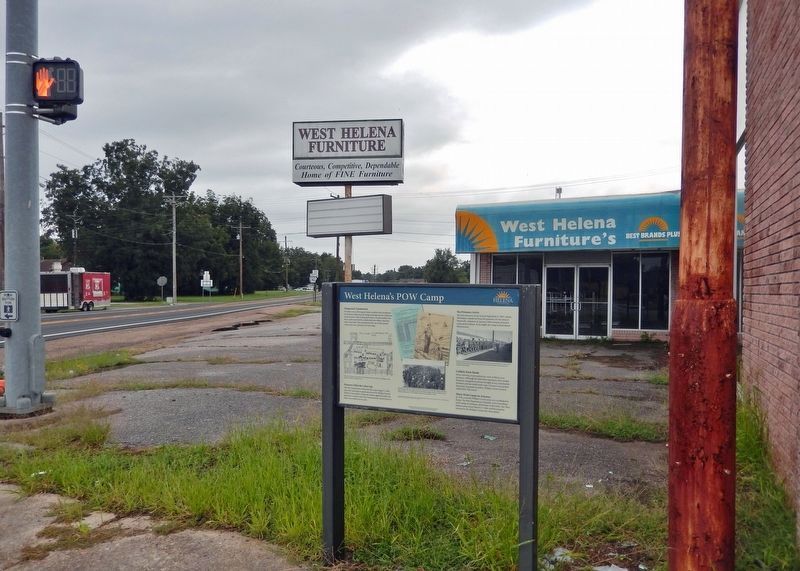
1. West Helena's POW Camp Marker
Fairground Transformed
Fourteen-year-old Imogene Eakin watched with excitement as workmen labored at the fairground opposite her Cleburne Avenue home. They built guard towers, erected barbed-wire fence, and converted the exhibit hall into offices, barracks, and a mess hall. They transformed the site of the annual county fair into a prisoner-of-war camp.
Prisoners Filled the Labor Gap
The War Department authorized the camp August 7, 1943, days after receiving an application from the Phillips County Farmers Association. Desperate farmers applied for 885 war prisoners to replace men who had joined the armed forces or taken war-related factory jobs.
The Prisoners Arrive
The first prisoners of war arrived September 9, 1943 — about 200 Italians transferred from the prisoner-of-war camp at Monticello, Arkansas. In January 1944, German prisoners replaced the Italians. At its height, the camp housed almost 500 prisoners.
Unlikely Farm Hands
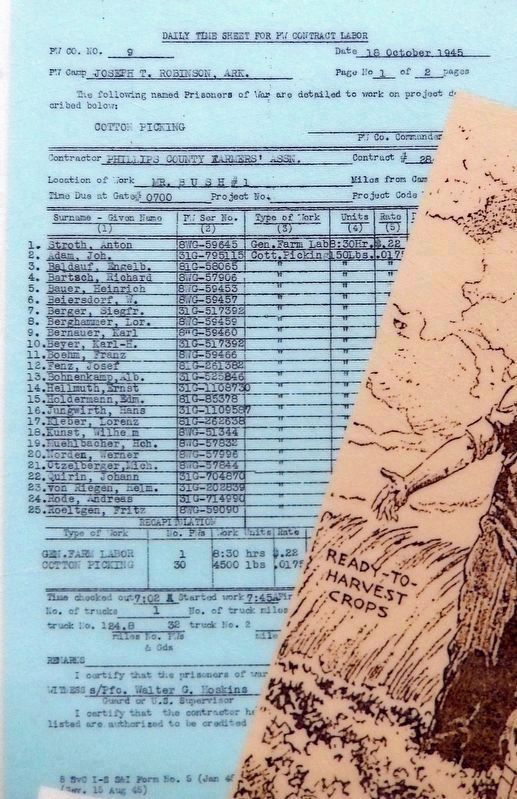
Every morning, trucks picked up crews of thirty or so prisoners. Although few had farm experience, they tended livestock, managed rice levees, brought in hay, and planted, fertilized and harvested
this page online
Thirty Work Camps in Arkansas
In 1944, a second Phillips County camp was established in Elaine. The War Department eventually authorized thirty work camps in Arkansas, all but four in the Delta. The West Helena camp closed March 21, 1946, and the property returned to the Phillips County Fair Association.
Support generously provided by Southern Bancorp Community Partners and Helena-West Helena Advertising & Promotion Commissions.
Topics. This historical marker is listed in this topic list: War, World II. A significant historical month for this entry is January 1944.
Location. 34° 32.631′ N, 90° 38.626′ W. Marker is in West Helena, Arkansas, in Phillips County. It is at the intersection of Plaza Avenue and Sebastian Street (Business U.S. 49), on the right when traveling east on Plaza Avenue. The marker is located beside the sidewalk at the southwest corner of the intersection. Touch for map. Marker is in this post office area: West Helena AR 72390, United States of America. Touch for directions.

Regionally, this marker is in the Arkansas
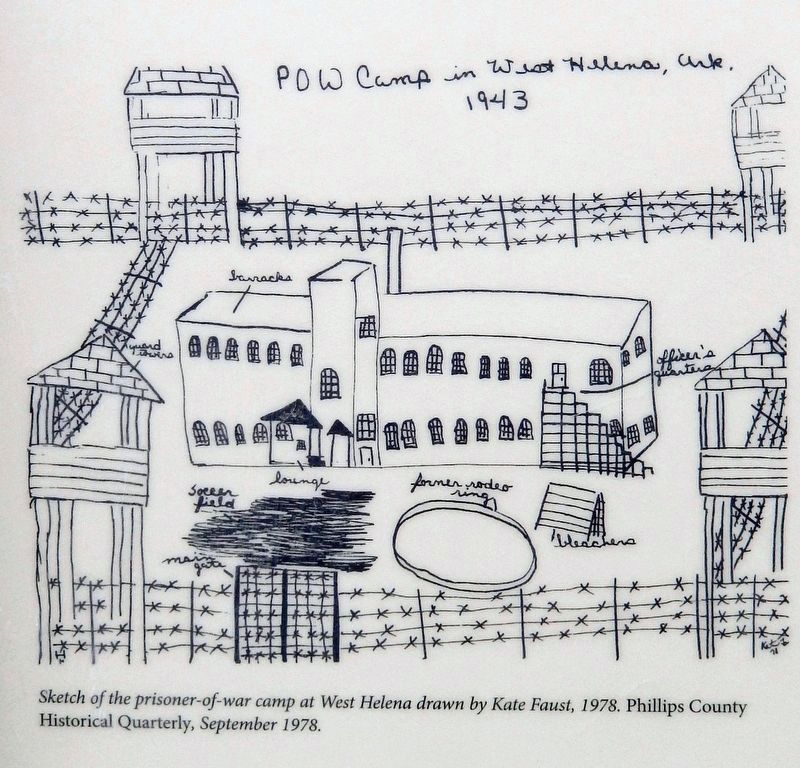
2. Marker detail: West Helena POW Camp, 1943
Sketch of the prisoner-of-war camp at West Helena drawn by Kate Faust, 1978. Phillips County Historical Quarterly, September 1978.
Other nearby markers. At least 8 other markers are within 3 miles of this marker, measured as the crow flies: Unbroken Forest (approx. 0.2 miles away); End of an Era (approx. 0.2 miles away); Made in West Helena (approx. 0.2 miles away); A Web of Track (approx. 0.2 miles away); Wood Products Capital (approx. 0.2 miles away); Early Railroads (approx. 0.2 miles away); Battery B (approx. 2.7 miles away); Patrick Ronayne Cleburne (approx. 2.9 miles away). Touch for a list and map of all markers in West Helena.
Also see . . . World War II Prisoner of War Camps (Encyclopedia of Arkansas).
Excerpt: During World War(Submitted on December 15, 2024, by Cosmos Mariner of Cape Canaveral, Florida.)II, the United States established many prisoner of war (POW) camps on its soil for the first time since the Civil War. About 425,000 captured Axis troops were sent to the United States for internment in more than 500 camps. Nearly 23,000 captured troops, mostly Germans and Italians from Erwin Rommel’s Afrika Korps, were sent to POW camps in Arkansas. There were few escape attempts because of the remote location of the state. Most POWs resigned themselves to a relatively comfortable existence in the camps. To ease the transition between the period of civilian labor shortage and the return of U.S. soldiers, several POW camps remained in operation for a year after the war. Eventually, the camps were dismantled around the summer of 1946, and the prisoners were allowed to return to Europe.National Archives and Record Administration3. Marker detail: Daily Timesheet for POW Contract Labor“Daily Time Sheet” listing prisoners of war who worked on the Bush farm on October 18, 1945.
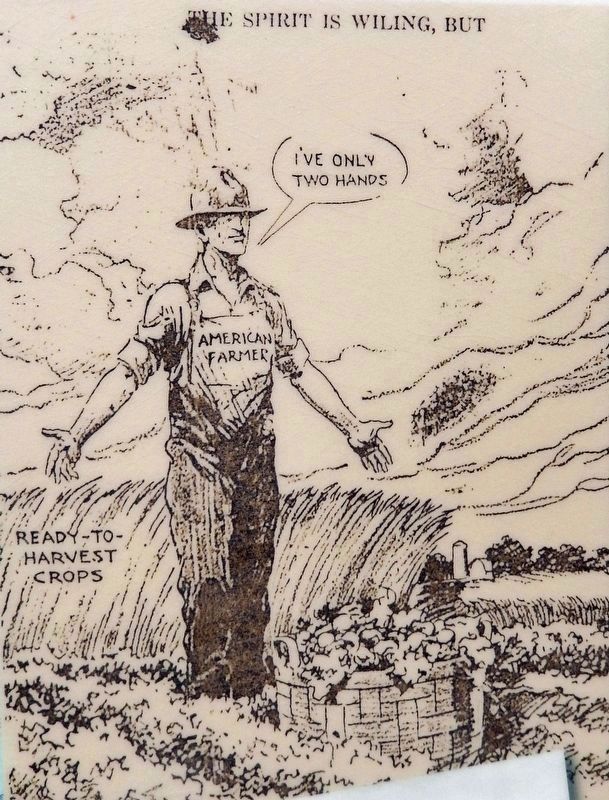
4. Marker detail: Editorial Cartoon
Editorial cartoon illustrating the plight of farmers published in the Helena World on July 15, 1943.
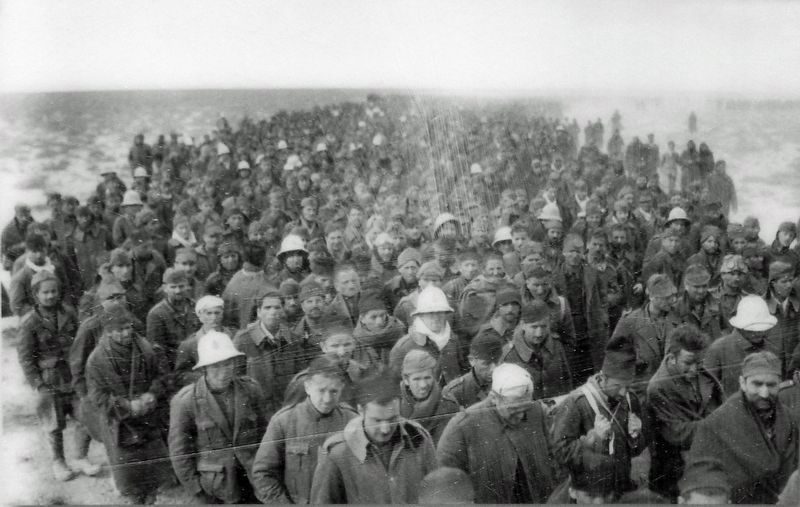
Courtesy Imperial War Museums (E 1579), London, UK
5. Marker detail: Italian prisoners of war captured in Libya
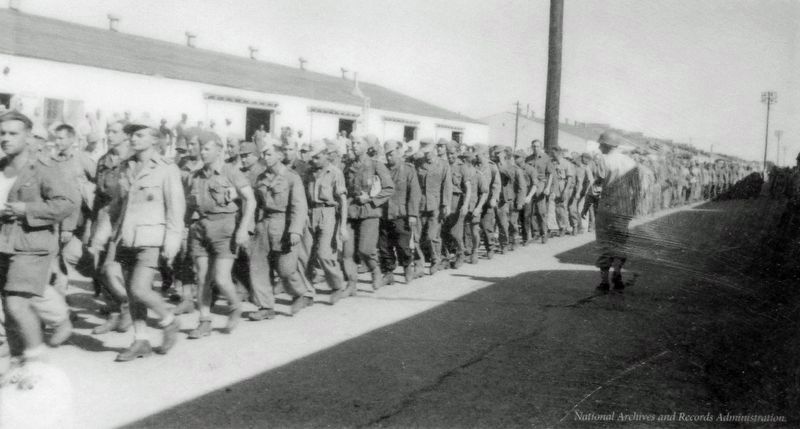
National Archives and Record Administration
6. Marker detail: German prisoners of war arrive in North Little Rock, 1943
During World War II (1941-1945), Arkansas received about 23,000 prisoners of war, most of them members of General Erwin Rommel's Afrika Korps.
Photographed by Cosmos Mariner, September 16, 2024
7. West Helena's POW Camp Marker
Looking south from Plaza Avenue; Sebastian Street is on the left.
Credits. This page was last revised on December 15, 2024. It was originally submitted on December 12, 2024, by Cosmos Mariner of Cape Canaveral, Florida. This page has been viewed 600 times since then and 173 times this year. Photos: 1, 2, 3. submitted on December 14, 2024, by Cosmos Mariner of Cape Canaveral, Florida. 4, 5, 6, 7. submitted on December 15, 2024, by Cosmos Mariner of Cape Canaveral, Florida.
