
Fort Bliss in El Paso County, Texas — The American South (West South Central)
Depression Era Group, 1927-1939
| — | Fort Bliss Main Post Historic District | — |
Photographed by Kevin W., April 12, 2016
1. Depression Era Group, 1927-1939 Marker
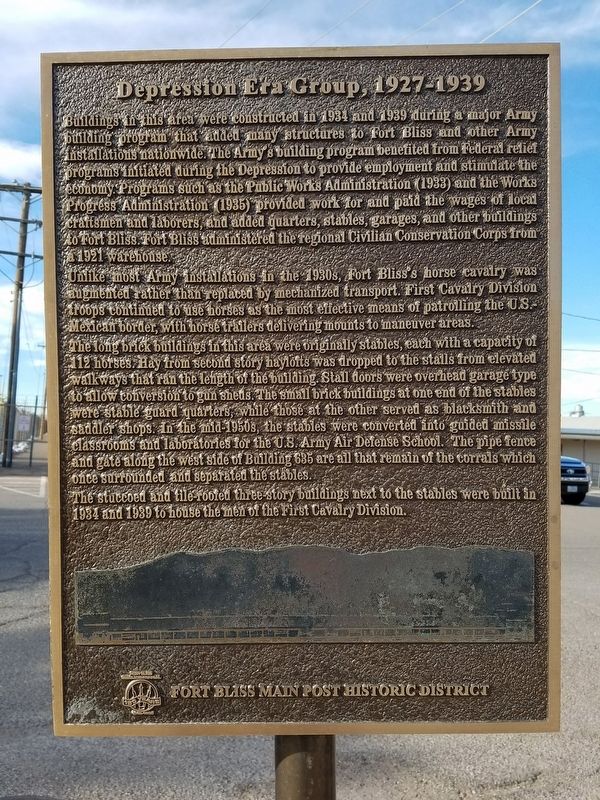
Unlike most Army installations in the 1930s, Fort Bliss's horse cavalry was augmented rather than replaced by mechanized transport. First Cavalry Division troops continued to use horses as the most effective means of patrolling the U.S. - Mexican border, with horse trailers delivering mounts to maneuver areas.
The long brick buildings in this area were originally stables, each with a capacity of 112 horses. Hay from second story haylofts was dropped to the stalls from elevated
this page online
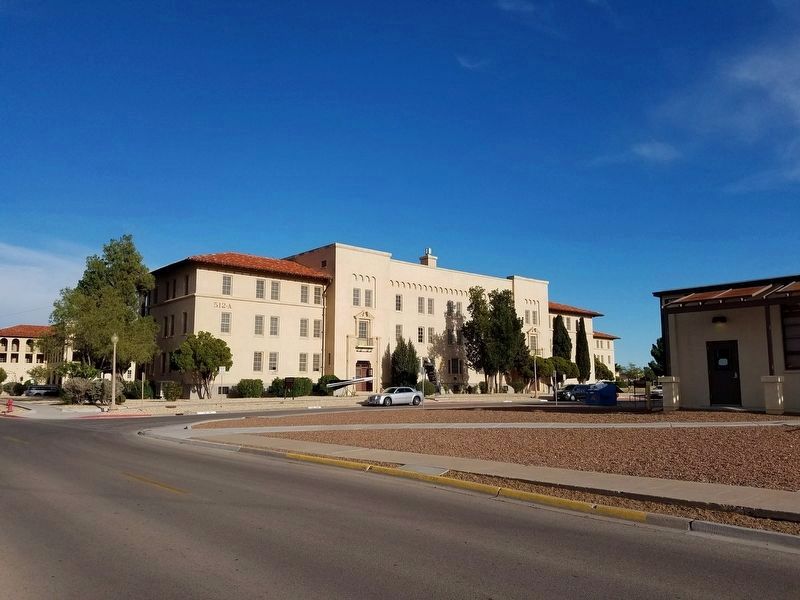
The stuccoed and tile roofed three-story buildings next to the stables were built in 1934 and 1939 to house the men of the First Cavalry Division.
Erected 1999 by Fort Bliss.
Topics. This historical marker is listed in these topic lists: Animals • Charity & Public Work • Education. A significant historical year for this entry is 1934.
Location. 31° 48.125′ N, 106° 25.788′ W. Marker is in Fort Bliss, Texas, in El Paso County. It is at the intersection of Doniphan Road and Willard Holbrook Road, on the right when traveling west on Doniphan Road. Touch for map. Marker is at or near this postal
Photographed by Kevin W., April 12, 2016
2. Depression Era Group, 1927-1939 Marker
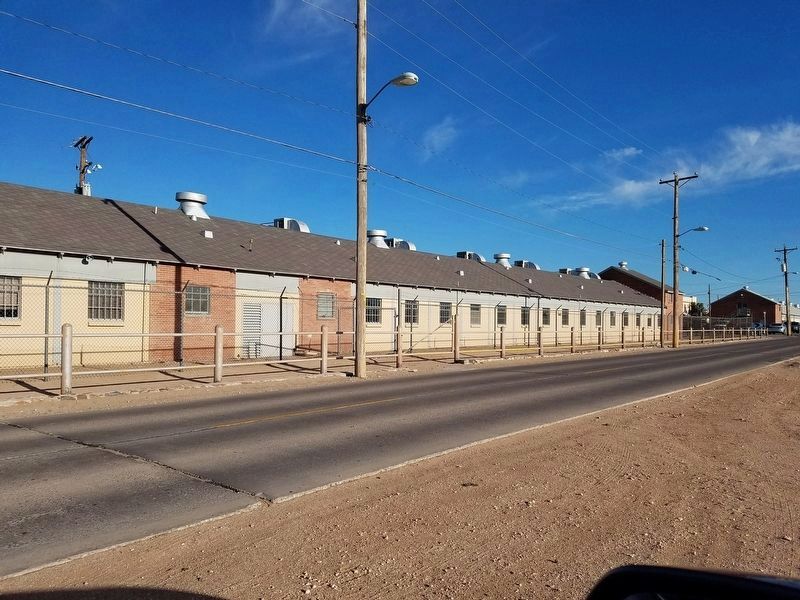
Marker is the far right in this photograph, out of view.

Regionally, this marker is in Texas’ Trans-Pecos & Big Bend Region. It is also in the American Southwest. Globally, it is in North America, a Gulf of Mexico state, the Western Hemisphere, the Western World, and the Anglosphere. Historically, it finds itself in what was once New Spain, the Republic of Texas, and one of the Confederate States of America.
Other nearby markers. At least 8 other markers are within walking distance of this marker: 1st Cavalry Division (about 400 feet away, measured in a direct line); Nike Classrooms (about 700 feet away); Noel Field (approx. 0.2 miles away); a different marker also named Noel Field (approx. 0.2 miles away); Fort Bliss, C.S.A. (approx. 0.2 miles away); Cooke House (approx. 0.2 miles away); Depression Era Group: 1927 - 1939 (approx. ¼ mile away); Wilson Park (approx. 0.3 miles away). Touch for a list and map of all markers in Fort Bliss.
Photographed by Kevin W., April 12, 2016
3. Depression Era Group, 1927-1939 Marker
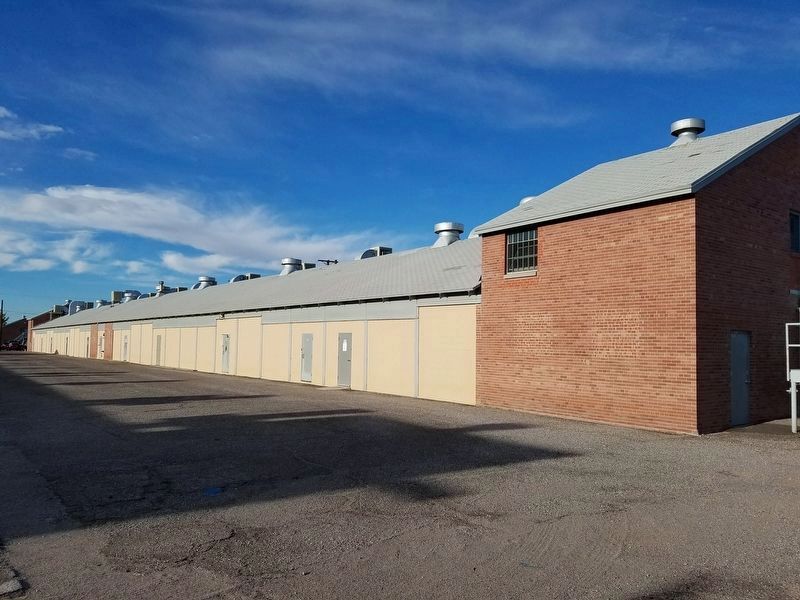
One of several long brick buildings in this area.
Photographed by Kevin W., April 12, 2016
4. Depression Era Group, 1927-1939 Marker
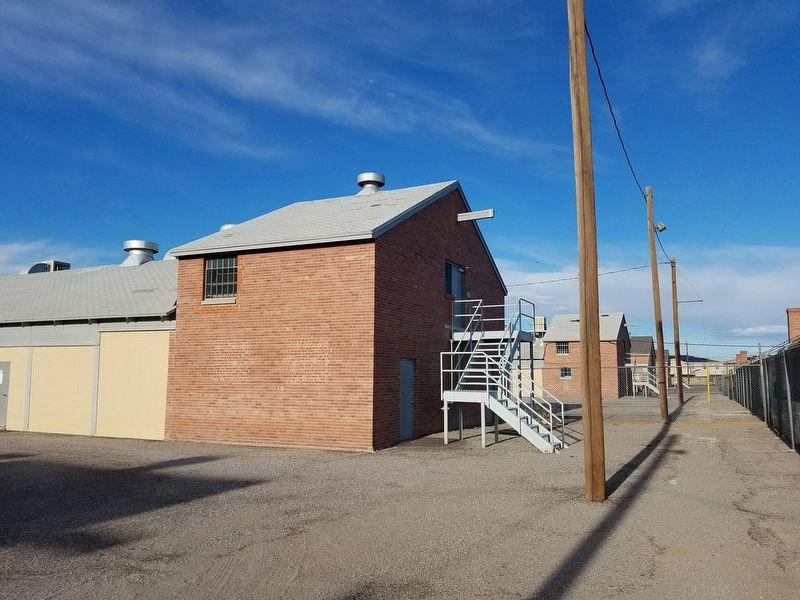
A good view of a second story hayloft.
Photographed by Kevin W., April 12, 2016
5. Depression Era Group, 1927-1939 Marker
One of the stuccoed and tile roofed three-story building next to the stables. This photo was taken from near the marker.
Credits. This page was last revised on December 22, 2024. It was originally submitted on December 22, 2024, by Kevin W. of Stafford, Virginia. This page has been viewed 176 times since then and 16 times this year. Photos: 1, 2, 3, 4, 5. submitted on December 22, 2024, by Kevin W. of Stafford, Virginia.
Editor’s want-list for this marker. Wide area photograph of the marker and its surroundings. • Can you help?
