
Downtown Harrisburg in Dauphin County, Pennsylvania — The American Northeast (Mid-Atlantic)
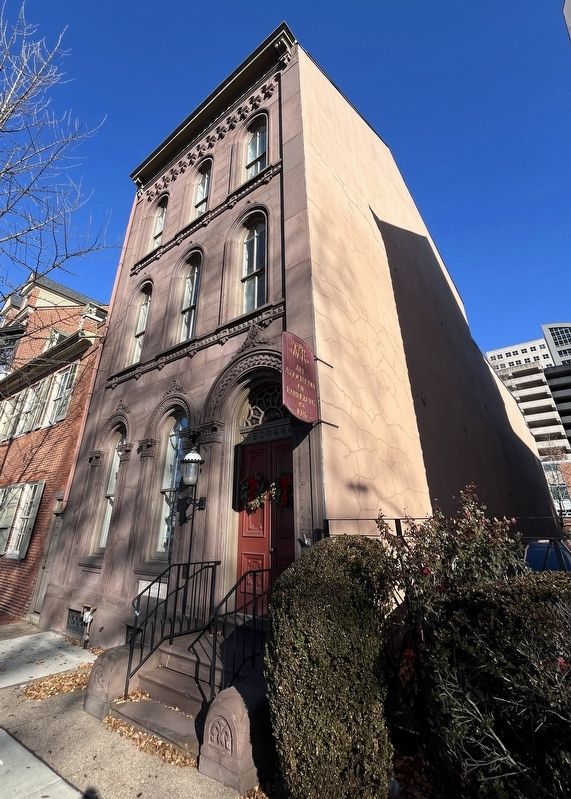
Findlay Executive Mansion
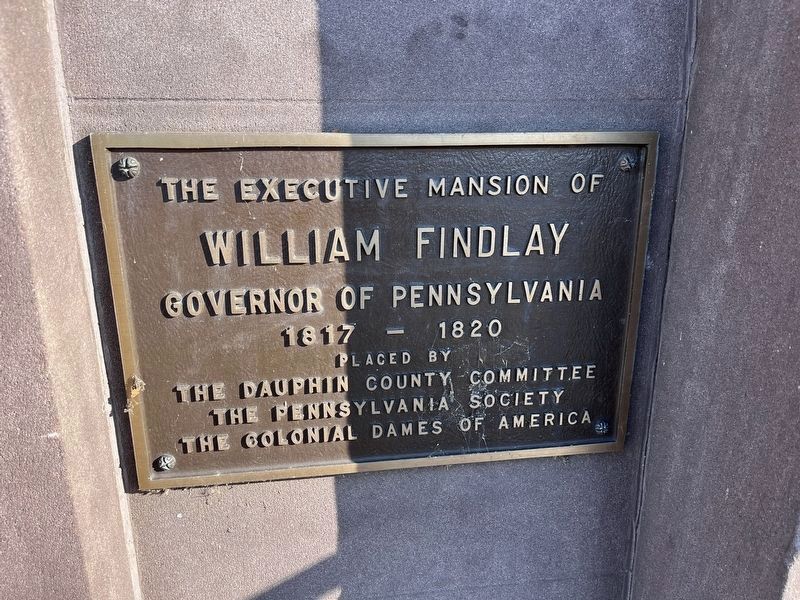
William Findlay
Governor of Pennsylvania
1817 - 1820
Erected by The Dauphin County Committee, The Pennsylvania Society [of] the Colonial Dames of America.
Topics and series. This historical marker is listed in this topic list: Government & Politics. In addition, it is included in the The Colonial Dames of America series list. A significant historical year for this entry is 1817.
Location. 40° 15.55′ N, 76° 53.025′ W. Marker is in Harrisburg, Pennsylvania, in Dauphin County. It is in Downtown Harrisburg. It is on North Front Street north of Strawberry Street, on the left when traveling south. Touch for map. Marker is at or near this postal address: 21 N Front St, Harrisburg PA 17113, United States of America. Touch for directions.

Regionally, this marker is in South-Central Pennsylvania, specifically in Pennsylvania Dutch Country, and in the Susquehanna Valley. It is also in the American Northeast and in the Mid-Atlantic. Globally, it is in North America, the Western Hemisphere, the Western World, and the Anglosphere. Historically, it finds itself in what was once the Haudenosaunee
this page online
Other nearby markers. At least 8 other markers are within walking distance of this marker: Shunk Executive Mansion (a few steps from this marker); Shulze Executive Mansion (within shouting distance of this marker); Governors’ Row (within shouting distance of this marker); Threatened Invasion of Harrisburg (within shouting distance of this marker); The First River School (within shouting distance of this marker); The People’s Bridge (within shouting distance of this marker); Walnut Street Bridge (within shouting distance of this marker); Explore the Capital Area Greenbelt (within shouting distance of this marker). Touch for a list and map of all markers in Harrisburg.
Also see . . . Wikipedia article about William Findlay.
In 1817, Findlay was nominated for the post of governor in the state's first open convention. He was elected governor and served until 1820. According to the Pennsylvania Historical and Museum Commission, in 1817 he emancipated the one slave he held and stated, "The principles of slavery are repugnant to those of justice." He also(Submitted on December 23, 2024, by Devry Becker Jones of Washington, District of Columbia.)asked state legislators to pass laws to severely punish slave catchers who attempted to capture Africans in Pennsylvania and enslave them.
He was the first governor to lead the state from Harrisburg, newly designated as the capital. He directed many of the functions of state government from his private home while the new capitol building was under construction.
He was defeated for re-election in 1820 by Joseph Hiester.
Credits. This page was last revised on December 23, 2024. It was originally submitted on December 23, 2024, by Bill Pfingsten of Bel Air, Maryland. This page has been viewed 194 times since then and 19 times this year. Photos: 1, 2. submitted on December 23, 2024, by Devry Becker Jones of Washington, District of Columbia. • Devry Becker Jones was the editor who published this page.
