Schwalheim in Bad Nauheim in Wetteraukreis, Hesse, Germany — Central Europe
”… Wes der Fürst, des der Glaub”
⎯⎯⎯
“…Whose Prince, Whose Faith”
| — | Lutherweg 1521 | — |
Photographed by Andrew Ruppenstein, May 22, 2024
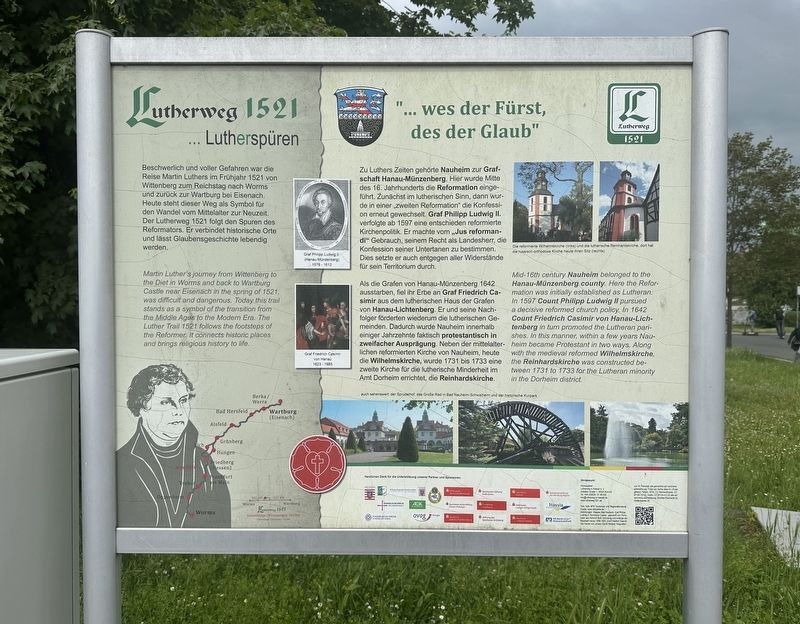
1. ”… Wes der Fürst, des der Glaub” / “…Whose Prince, Whose Faith Marker

Als die Grafen von Hanau-Münzenberg 1642 ausstarben, fiel ihr Erbe an Graf Friedrich Casimir aus dem lutherischen Haus der Grafen von Hanau-Lichtenberg. Er und seine Nachfolger förderten wiederum die lutherischen Gemeinden. Dadurch wurde Nauheim innerhalb einiger Jahrzehnte faktisch protestantisch in zweifacher Ausprägung. Neben der mittelalterlichen reformierten Kirche von Nauheim, heute die Wilhelmskirche, wurde 1731 bis 1733 eine zweite Kirche für die lutherische Minderheit im Amt Dorheim errichtet, die Reinhardskirche.
this page online
Topics. This historical marker is listed in this topic list: Religion & Religious Structures. A significant historical year for this entry is 1597.
Location. 50° 21.931′ N, 8° 44.63′ E. Marker is in Bad Nauheim, Hessen (Hesse), in Wetteraukreis. It is in Schwalheim. It is at the intersection of Parkstrasse and Zanderstraße, on the right when traveling west on Parkstrasse. Touch for map. Marker is in this
Photographed by Andrew Ruppenstein, May 22, 2024
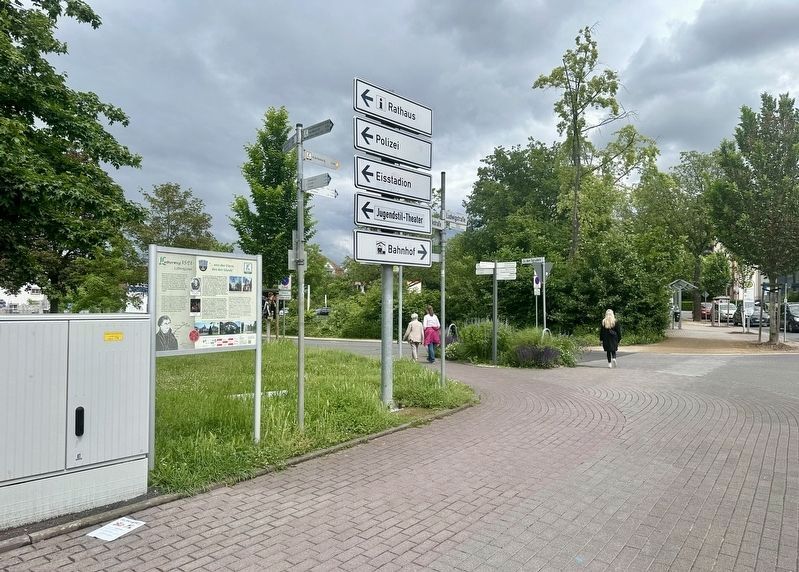
2. ”… Wes der Fürst, des der Glaub” / “…Whose Prince, Whose Faith” Marker - wide view

Regionally, it is in Europe, the European Union, Atlantic Europe, Central Europe, the Schengen Area, Western Europe, and the Western World. Historically, it finds itself in what was once the Roman Empire, the Holy Roman Empire, and the former West Germany.
Other nearby markers. At least 8 other markers are within walking distance of this marker: Ludwigstraße / “Ludwig Street” (within shouting distance of this marker); Die (Bad) Nauheimer Spielbank / The Bad Nauheim Casino (about 150 meters away, measured in a direct line); Parkstraße / “Park Street” (about 210 meters away); Gegen die Atombewaffnung / Against Nuclear Armament (approx. 0.4 kilometers away); Kurhaus / Spa Complex (approx. half a kilometer away); Reinhardstraße / “Reinhard Street” (approx. half a kilometer away); Berliner Meilenstein / Berlin Milestone (approx. half a kilometer away); Elvis Aaron Presley (approx. half a kilometer away). Touch for a list and map of all markers in Bad Nauheim.
Also see . . . Der Lutherweg1521 (Lutherweg1521.de, in German). Overview of the pilgrimage
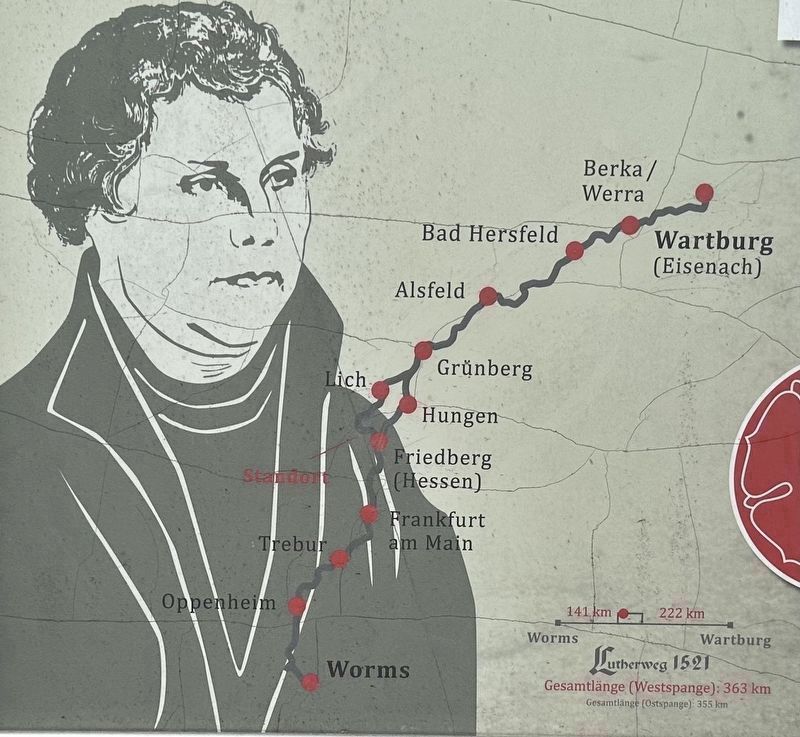
3. Marker detail: map of Luther’s 1521 Worms-to-Wartburg journey (ca. 360 km)
The word standort (in red) indicates Bad Nauheim’s location.
The Luther Route 1521 is a historic pilgrimage route that follows the footsteps of Martin Luther as he made his way to his appearance before the Reichstag in Worms. The route stretches for about 400 kilometers and leads through picturesque landscapes, charming towns and important sites of the Reformation.(Submitted on December 28, 2024.)
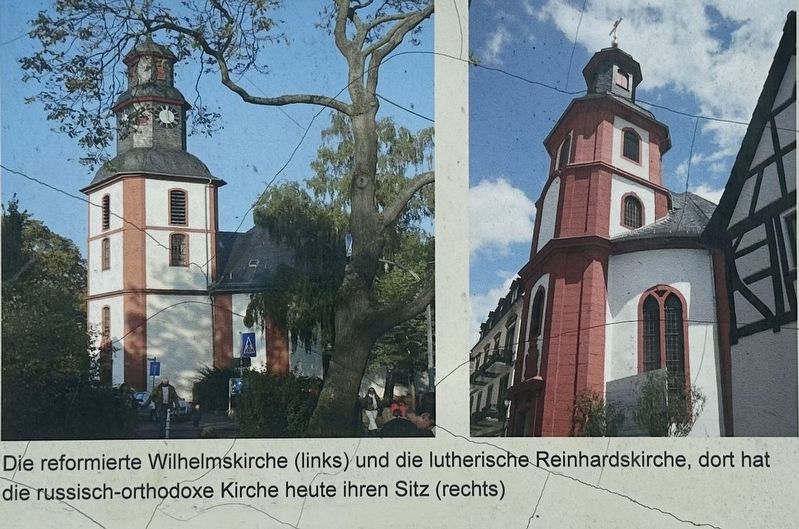
4. Marker detail: Wilhelmskirche (left) and Reinhardskirche (right)
Credits. This page was last revised on December 28, 2024. It was originally submitted on December 28, 2024, by Andrew Ruppenstein of Lamorinda, California. This page has been viewed 107 times since then and 16 times this year. Photos: 1, 2, 3, 4. submitted on December 28, 2024, by Andrew Ruppenstein of Lamorinda, California.
