Bad Homburg vor der Höhe in Hochtaunuskreis, Hesse, Germany — Central Europe
Ritter von Marx Bridge
⎯⎯⎯
Ritter-von-Marx-Brücke
Photographed by Andrew Ruppenstein, May 22, 2024
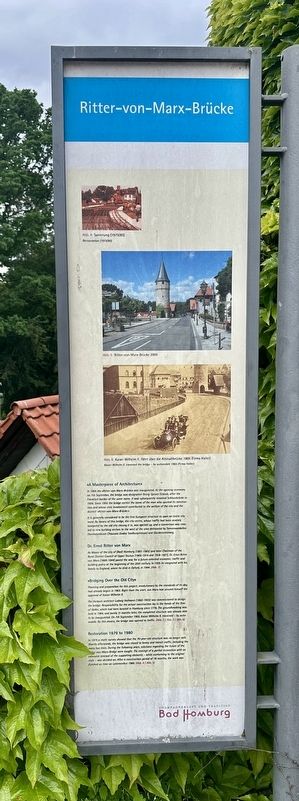
1. Ritter von Marx Bridge / Ritter-von-Marx-Brücke English panel

In 1905 the Ritter-von-Marx-Brücker was inaugurated. At the opening ceremony on 7th September, the bridge was designated Georg-Speyer-Strasse, after the Frankfurt banker of the same name. It was subsequently renamed Schlossbrücke in 1936. Since 1955 the bridge carries the name of the man who spurred its construction and whose civic involvement contributed to the welfare of the city and the district: »Ritter-von-Marx-Brücke.«
It is generally considered to be the first European structure to span an entire city ward. By means of this bridge, the city centre, whose traffic had been severely hampered by the old city closing it in, was opened up; and a connection was created to new building sectors to the west of the area delineated by Tannenwaldallee, Dornholzhäuser Chaussee (today Saalburgstrasse) and Gluckensteinweg.
Dr. Ernst Ritter von Marx
As Mayor of the city of (Bad) Homburg (1901-1905) and later Chairman of the Rural District Council of Upper Taunus (1905-1914 and 1918-1921), Dr. Ernst Ritter von Marx (1869-1944) paved the way for a future-oriented economic, traffic and building policy at the beginning of the 20th century. In 1935 he emigrated with his family to England, where he died in Oxford, in 1944. (Abb. 1)
»Bridging Over the Old City«
Planning
this page online
Restoration 1979 to 1980
In 1975 a static survey showed that the 70-year-old structure was no longer safe. Shortly afterwards, the bridge was closed to heavy and transit traffic, including the many bus lines. During the following years, solutions regarding the future of the Ritter-von-Marx-Bridge were sought. The concept of a partial restoration with an extensive renewal of the supporting elements - while conforming to the original style - was decided on. After a construction period of 18 months, the work was finished on time on Laternenfest 1980. (Abb. 4/Abb. 5)
Die Ritter-von-Marx-Brückes wurde 1905 ihrer Bestimmung
Photographed by Andrew Ruppenstein, May 22, 2024
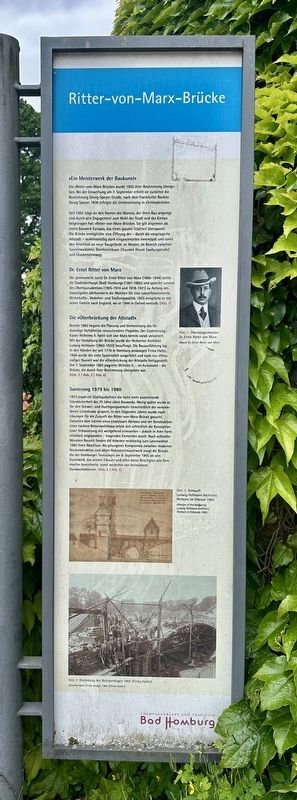
2. Ritter von Marx Bridge / Ritter-von-Marx-Brücke German panel
Dr. Ernst Ritter von Marx
Der promovierte Jurist Dr. Ernst Ritter von Marx (1869-1944) stellte als Stadtoberhaupt (Bad) Homburgs (1901-1905) und späterer Landrat des Obertaunuskreises (1905-1914 und 1918-1921) zu Anfang des zwanzigsten Jahrhunderts die Weichen für eine zukunftsorientierte Wirtschafts-, Verkehrs- und Siedlungspolitik. 1935 emigrierte er mit seiner Familie nach England, wo er 1944 in Oxford verstarb. (Abb. 1)
Die »Überbrückung der Altstadt«
Bereits 1903 begann die Planung und Vorbereitung des für damalige Verhältnisse revolutionären Projektes. Der Zustimmung Kaiser Wilhelms
Photographed by Andrew Ruppenstein, May 22, 2024
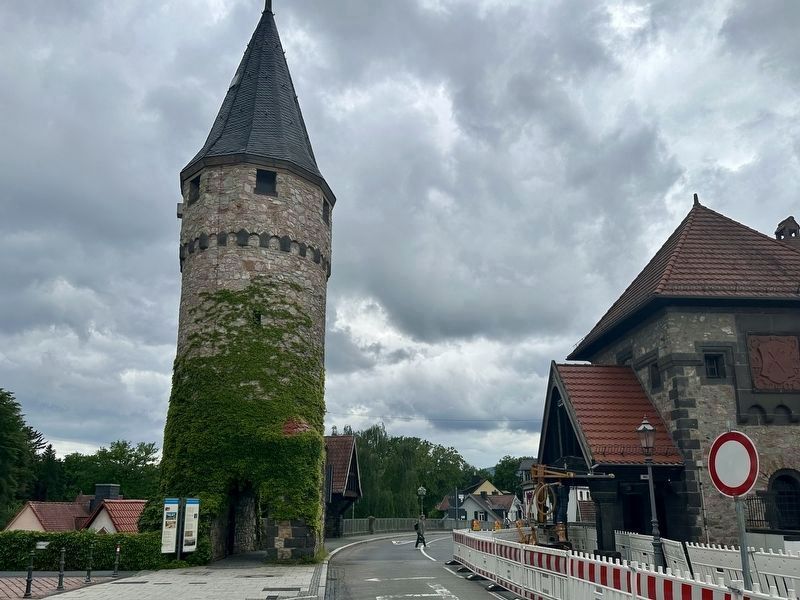
3. Ritter von Marx Bridge / Ritter-von-Marx-Brücke and Marker
The tower on the left side is not part of the bridge - it is the Hexenturm (“Witch’s Tower”), originally part of the city defenses from the 14th century that was later taken down, and then rebuilt again in 1905.
Sanierung 1979 bis 1980
1975 ergab ein Statikgutachten die nicht mehr ausreichende Standsicherheit des 70 Jahre alten Bauwerks. Wenig später wurde es für den Schwer- und Durchgangsverkehr einschließlich der verschiedenen Linienbusse gesperrt. In den folgenden Jahren wurde nach Lösungen für die Zukunft der Ritter-von-Marx-Brücke gesucht. Zwischen dem Extrem eines ersatzlosen Abrisses und der Konstruktion eines nackten Betonzweckbaus setzte sich schließlich die Konzeption einer Teilsanierung mit weitgehend erneuerten - jedoch in ihrer Form stilistisch angepassten - tragenden Elementen durch. Nach achtzehn Monaten Bauzeit fanden die Arbeiten rechtzeitig zum Laternenfest 1980 ihren Abschluss. Als gelungener Kompromiss zwischen moderner Neukonstruktion und altem Natursteinmauerwerk zeugt die Brücke, die der Homburger Taunusbote
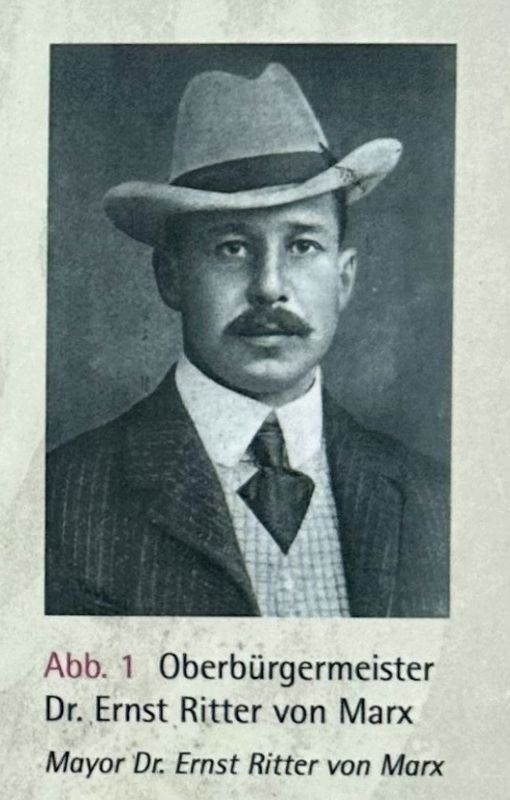
4. Mayor Dr. Ernst Ritter von Marx
Erected by Stadt Bad Homburg.
Topics. This historical marker is listed in this topic list: Bridges & Viaducts. A significant historical date for this entry is March 7, 1905.
Location. 50° 13.761′ N, 8° 36.608′ E. Marker is in Bad Homburg vor der Höhe, Hessen (Hesse), in Hochtaunuskreis. It is on Schulberg, on the left when traveling west. Touch for map. Marker is in this post office area: Bad Homburg vor der Höhe HE 61, Germany. Touch for directions.

Regionally, it is in Europe, the European Union, Atlantic Europe, Central Europe, the Schengen Area, Western Europe, and the Western World. Historically, it finds itself in what was once the Roman Empire, the Holy Roman Empire, and the former West Germany.
Other nearby markers. At least 8 other markers are within walking distance of this marker: Gerechtigkeit nach 400 Jahren / Justice After 400 Years (about 90 meters away, measured in a direct line); Engelapotheke / “Angel Apothecary” (about 90 meters away); Altes Haus / Old House (about 120 meters away); Bad Homburg vor der Höhe Holocaust Memorial (about 210 meters away); Bad Homburg Franco-Prussian War Memorial (approx. 0.4 kilometers away); Ehemaliges Armen- und Waisenhaus / Former Poorhouse and Orphanage (approx. 0.4 kilometers away); Hofapotheke / Court Apothecary (approx. 0.4 kilometers away); Hotel “Cafe du Parc” (approx. half a kilometer away). Touch for a list and map of all markers in Bad Homburg vor der Höhe.
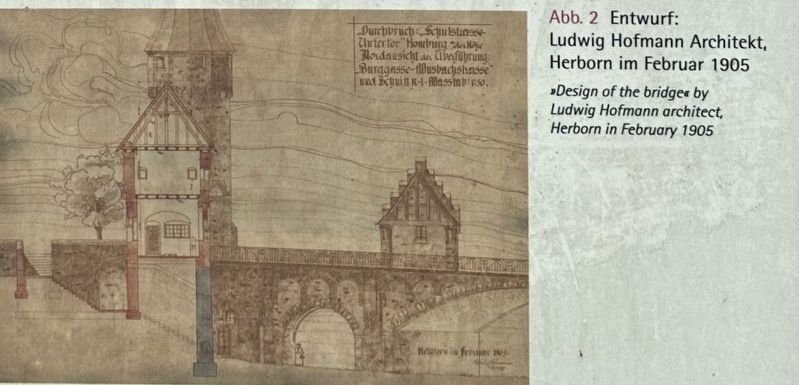
Photographed by Ludwig Hofmann, 1905
5. Marker detail: Design of Bridge
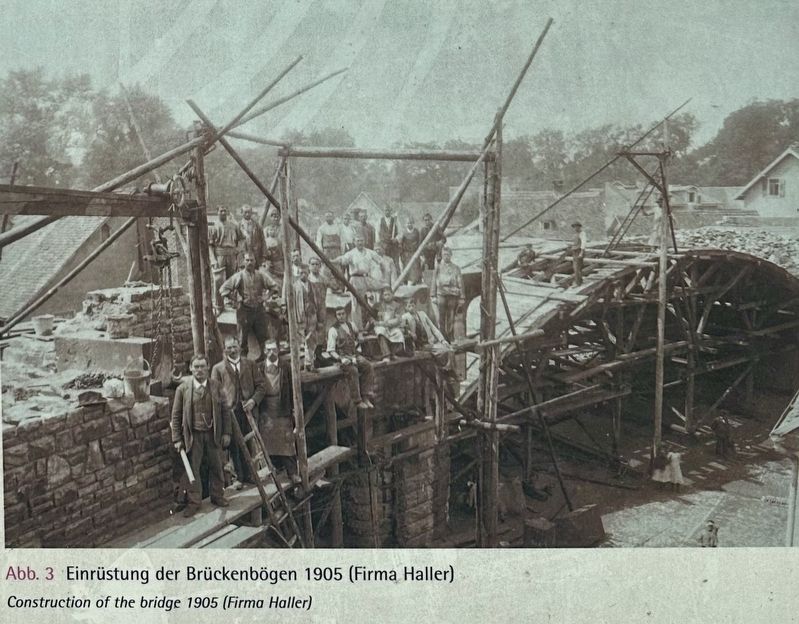
Photographed by Firma Heller, 1905
6. Marker photo: Construction of the bridge
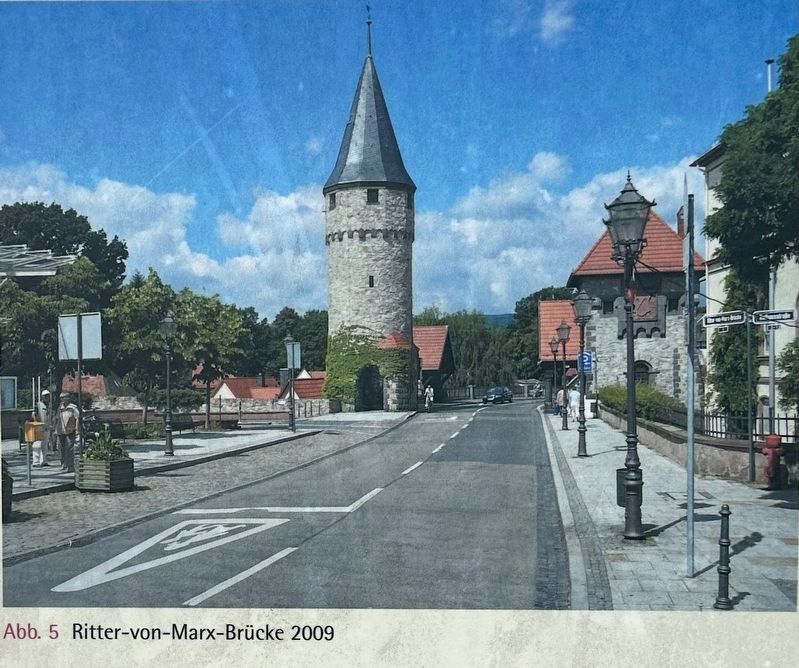
2009
7. Marker photo: Ritter von Marx Bridge in 2009
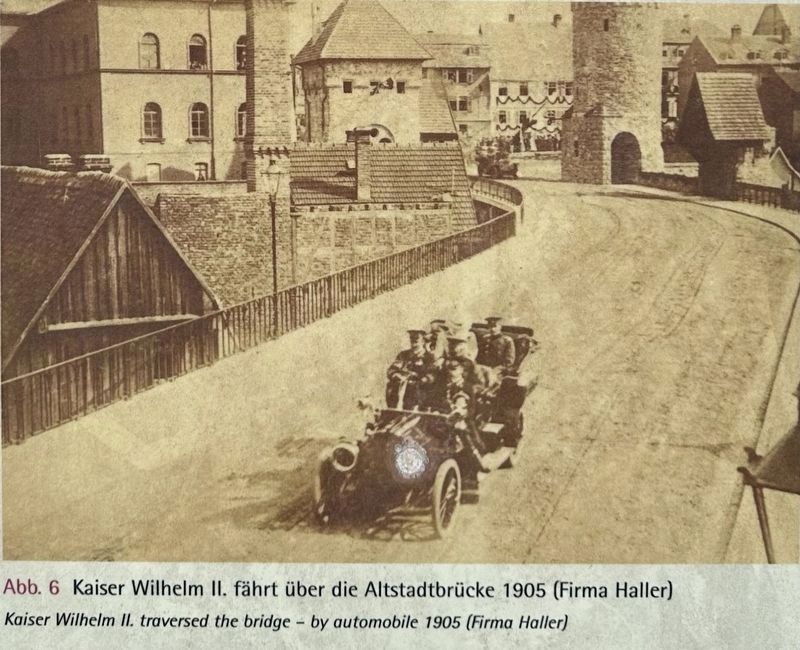
Photographed by Firma Haller, 1905
8. Kaiser Wilhelm crossing the bridge in 1905
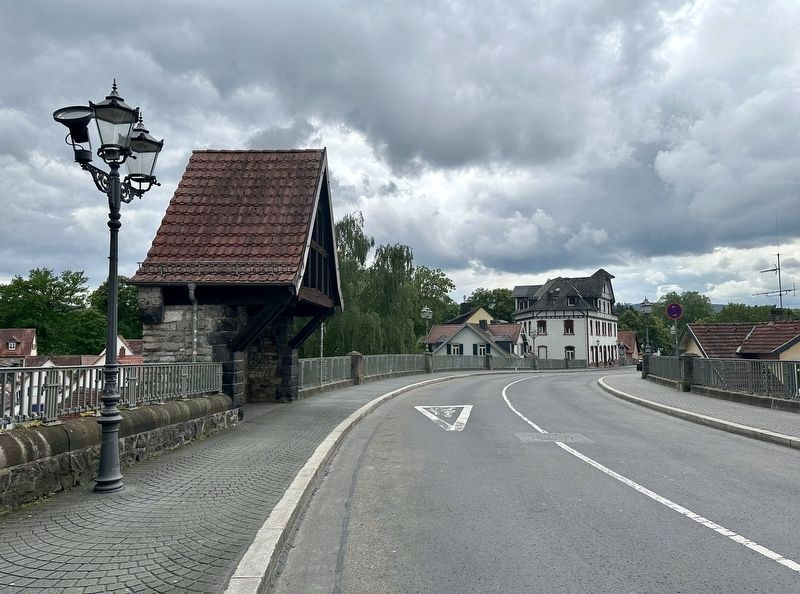
Photographed by Andrew Ruppenstein, May 22, 2024
9. Ritter von Marx Bridge in 2024, looking west
Credits. This page was last revised on December 28, 2024. It was originally submitted on December 28, 2024, by Andrew Ruppenstein of Lamorinda, California. This page has been viewed 194 times since then and 55 times this year. Photos: 1, 2, 3, 4, 5, 6, 7, 8, 9. submitted on December 28, 2024, by Andrew Ruppenstein of Lamorinda, California.
