Mount Airy in Surry County, North Carolina — The American South (South Atlantic)
First Presbyterian Church of Mount Airy
Photographed by Mark Parker, December 30, 2024
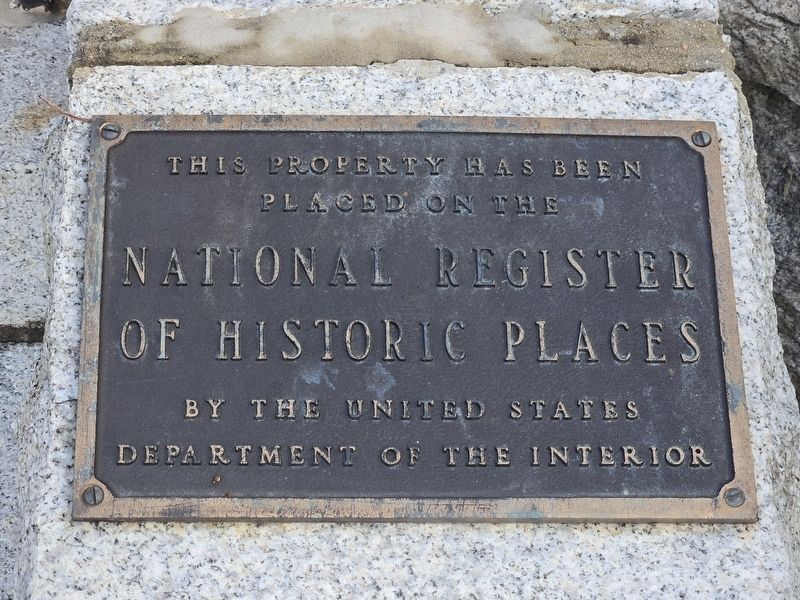
1. First Presbyterian Church of Mount Airy Marker
Placed on the
National Register
of Historic Places
by the United States
Department of the Interior
Erected by United States Department of the Interior.
Topics. This historical marker is listed in this topic list: Religion & Religious Structures.
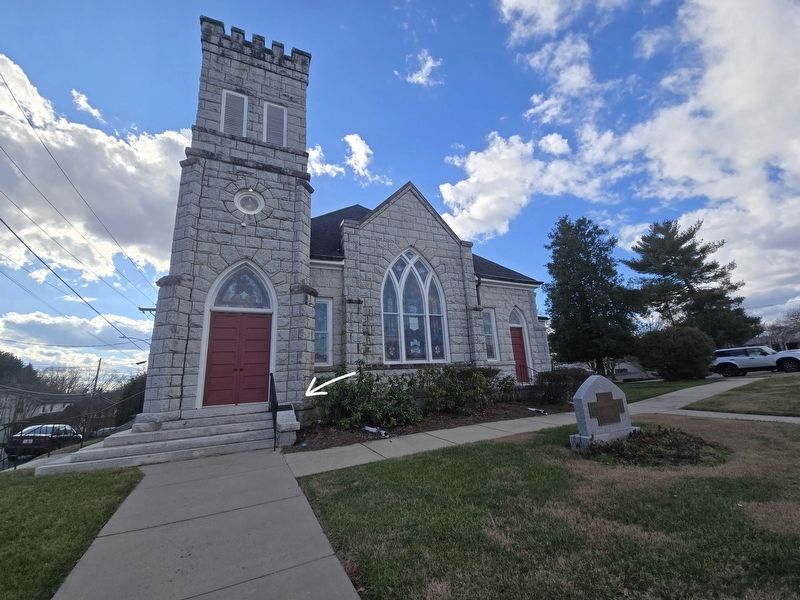
Location. 36° 29.836′ N, 80° 36.328′ W. Marker is in Mount Airy, North Carolina, in Surry County. It can be reached from the intersection of South Main Street and West Church Street, on the right when traveling south. The marker is at ground level, to the right of the granite steps on the South Main Street side of the sanctuary entrance. Touch for map. Marker is at or near this postal address: 326 S Main St, Mount Airy NC 27030, United States of America. Touch for directions.

Regionally, this marker is in North Carolina’s Piedmont. It is also in the American South, specifically in the Upper South, in Appalachia, and specifically in Southern Appalachia. Globally, it is in North America, the Western Hemisphere, the Western World, and the Anglosphere. Historically, it finds itself
this page online
Other nearby markers. At least 8 other markers are within walking distance of this marker: The J. C. Hollingsworth House (within shouting distance of this marker); W. F. Carter House (about 400 feet away, measured in a direct line); Thomas Benton Ashby House (about 500 feet away); Surry County Veterans Memorial (about 700 feet away); Mount Airy Friends Church (about 700 feet away); Large Granite Millstone (about 800 feet away); Stoneman’s Raid (approx. 0.2 miles away); Historic Earle Theater (approx. 0.2 miles away). Touch for a list and map of all markers in Mount Airy.
More about this marker. The church is a contributing building to the Mount Airy Historic District
Regarding First Presbyterian Church of Mount Airy. Excerpts from the Mount Airy Historic District Nomination Form:
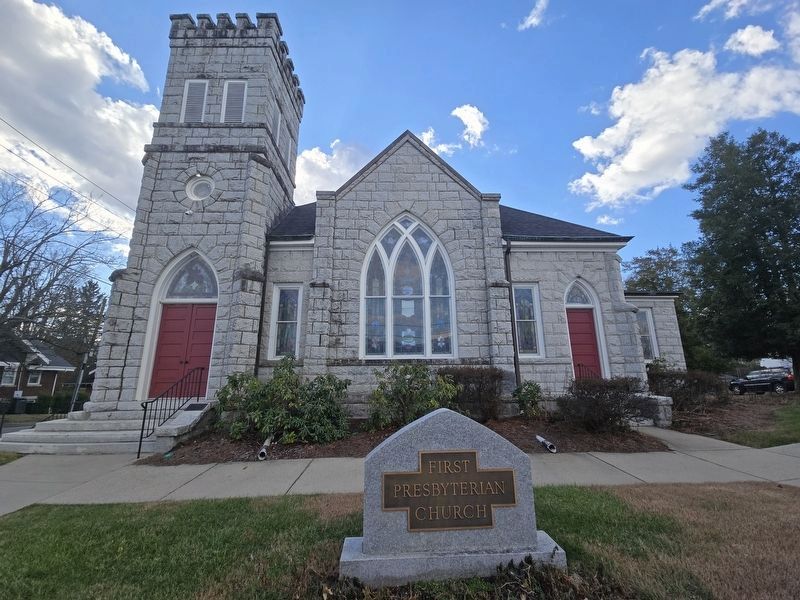
Handsome one-story Gothic Revival style granite church with steep pyramidal roof, corner crenellated tower, pointed arch doors and windows, and fine stained glass windows. Thegranite education building at the rear of the church was added in 1957. Attempts to organize a Presbyterian church in Mount Airy were begun as early as 1848; the first, frame church was constructed in 1858 and was the second organized church within the corporate limits (the first was Lebanon Methodist Church, no longer standing). In 1873 a new frame church was erected on the site of the present church on a lot donated by R. S. Gilmer. The church bell was first hung in the Gilmers' nearby stable, so that the congregation could be called to worship. In 1887, when the building was repaired from lightning damage, a bell tower was added to the front. This church appears on the Sanborn Maps from 1896-1905. In 1907 the present granite church was begun and was completed in 1914.Photographed by Mark Parker, December 30, 20242. First Presbyterian Church of Mount Airy. Marker location indicated by the arrow
Also see . . .
1. Mount Airy Historic District Nomination Form (pdf). Prepared by Patricia S. Dickinson, Consultant, Division of Archives and History, 1985 (Submitted on January 1, 2025, by Mark Parker of Hickory, North Carolina.)
2. A Brief History of FPCMA.
As early as 1848, a small number of Presbyterians living in Mount Airy made attempts(Submitted on January 1, 2025, by Mark Parker of Hickory, North Carolina.)to organize a church in this small foothills village. After several attempts to form a church, it was not until June 6, 1858 that First Presbyterian became the second church to be organized in Mount Airy...Photographed by Mark Parker, December 30, 20243. Full view of First Presbyterian Church of Mount Airy on the S. Main Street side
The original church building was a plain frame building. To early members, the church was a wonderful sight with its flowered carpets, pine ceiling, ruffled curtains and horsehair pulpit furniture. The pews were straight, uncomfortable and unattractive. A church bell was hung in the corner of the church in 1878 and a bell tower was added to the front of the church in 1887.
The granite church that stands today was started in 1907 and completed in 1914.
Photographed by Mark Parker, December 30, 2024
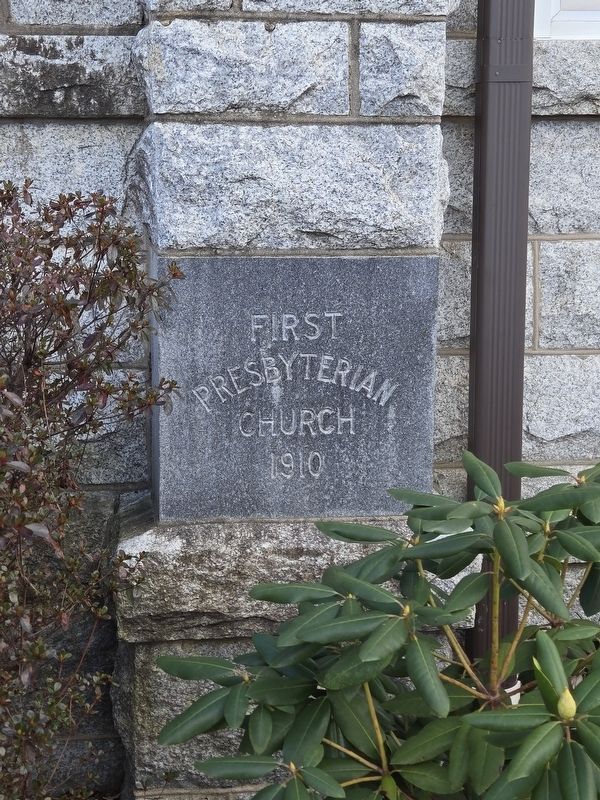
4. First Presbyterian Church cornerstone
Credits. This page was last revised on January 2, 2025. It was originally submitted on January 1, 2025, by Mark Parker of Hickory, North Carolina. This page has been viewed 178 times since then and 43 times this year. Photos: 1, 2, 3, 4. submitted on January 1, 2025, by Mark Parker of Hickory, North Carolina. • Bernard Fisher was the editor who published this page.
