New Haven in Huron County, Ohio — The American Midwest (Great Lakes)
Historic New Haven, Ohio
⎯⎯⎯
Residents of Early New Haven, Ohio

Photographed by Mike Wintermantel, January 14, 2025
1. Historic New Haven, Ohio Marker
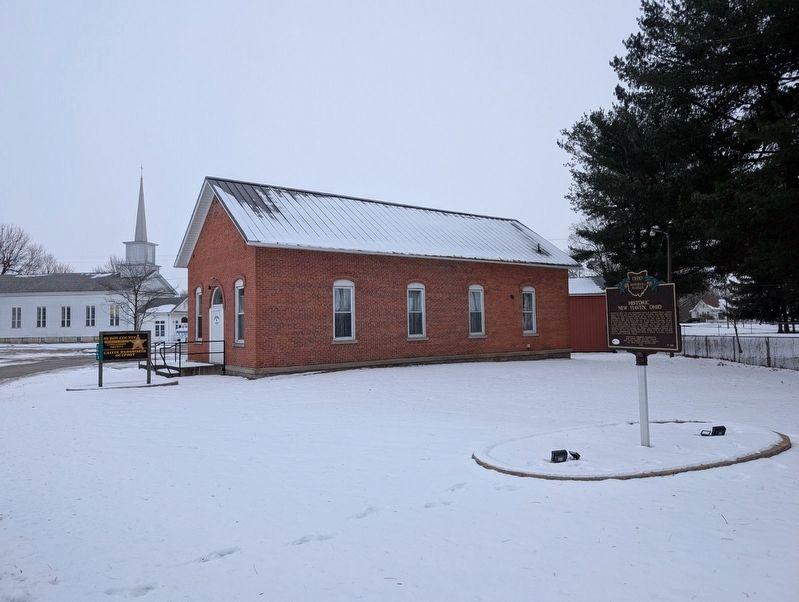
Historic New Haven, Ohio. New Haven, Ohio. was the mercantile center of southwest Huron County during the first half of the 19th century. Residents described immense wagons, or "land schooners," lined up for miles on the New Haven-Worthington Road traveling from Columbus to the Lake Erie ports. Organized in 1815, New Haven was one of the early townships formed in Huron County and the Firelands. The village was platted, with streets at right angles around a diamond-shaped town green, after the plan of New Haven, Connecticut. When, in the 1840s, New Haven rejected the railroad's direct route through the village, the Sandusky & Newark was routed to the west and through Plymouth taking with it the shipping business. Subsequently. New Haven began a steady economic decline into a small crossroads village.
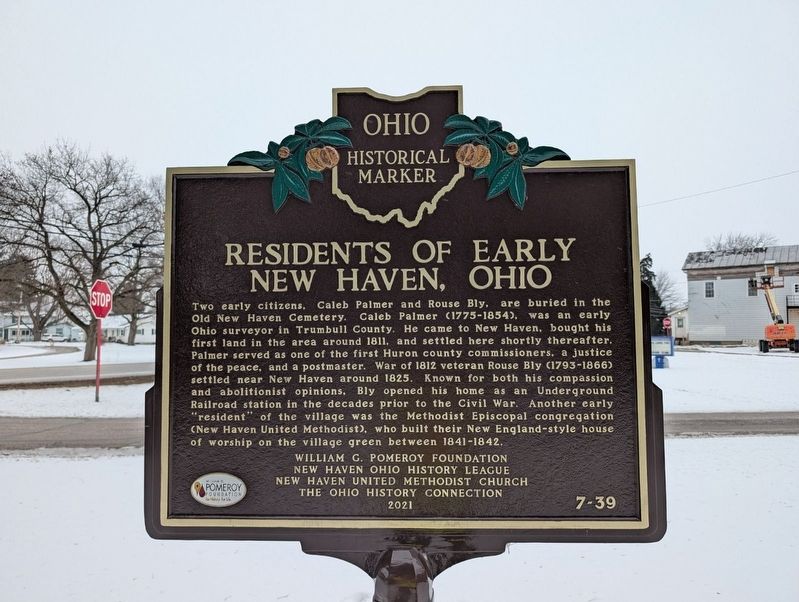
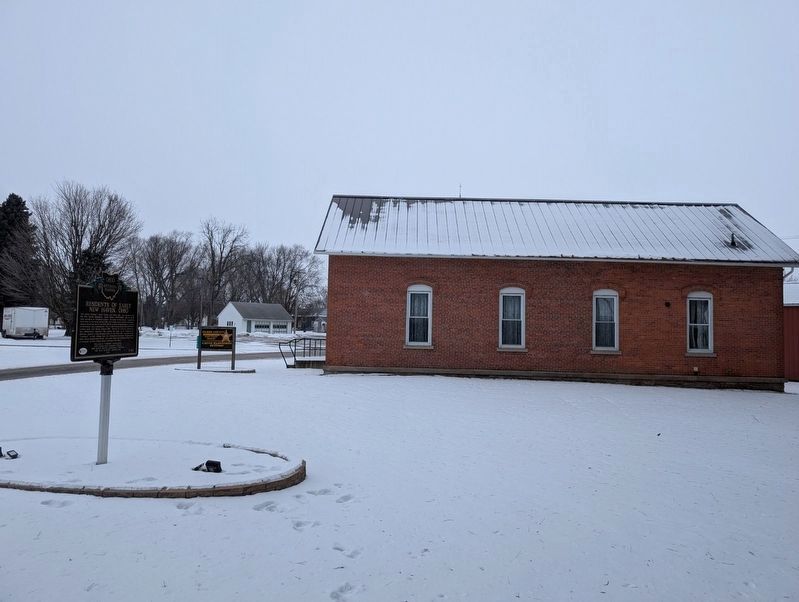
Residents of Early New Haven, Ohio. Two early citizens, Caleb Palmer and Rouse Bly, are buried in the Old New Haven Cemetery. Caleb Palmer (1775-1854), was an early Ohio surveyor in Trumbull County. He came to New Haven. bought his first land in the area around 1811, and settled here shortly thereafter. Palmer served as
this page online
Erected 2021 by William G. Pomeroy Foundation, New Haven Ohio History League, New Haven United Methodist Church and the Ohio History Connection. (Marker Number 7-39.)
Topics and series. This historical marker is listed in these topic lists: Industry & Commerce • Railroads & Streetcars • Religion & Religious Structures • Settlements & Settlers. In addition, it is included in the Ohio Historical Society / The Ohio History Connection, and the William G. Pomeroy Foundation series lists. A significant historical year for this entry is 1815.
Location. 41° 2.005′ N, 82° 40.861′ W. Marker is in New Haven, Ohio, in
Photographed by Mike Wintermantel, January 14, 2025
2. Residents of Early New Haven, Ohio Marker

Regionally, this marker is in Ohio’s Western Reserve. It is also in the American Midwest and in the Corn Belt. Globally, it is in North America, the Western Hemisphere, the Western World, and the Anglosphere. Historically, it finds itself in what was once the Haudenosaunee (Iroquois) Confederacy, the territory of the Mississippian Culture, and the Northwest Territory.
Other nearby markers. At least 8 other markers are within 9 miles of this marker, measured as the crow flies: The Western Reserve (approx. 5.3 miles away); North Fairfield, Ohio (approx. 6.1 miles away); North Fairfield Veterans Memoral (approx. 6.1 miles away); First White Woman To Settle In Fairfield Twp. (approx. 6.1 miles away); World Trade Center Steel (approx. 6.1 miles away); World War II Veterans Memorial (approx. 6.3 miles away); Boughton Road (approx. 8 miles away); Greenwich Veterans Memorial
Photographed by Mike Wintermantel, January 14, 2025
3. Historic New Haven, Ohio Marker
Photographed by Mike Wintermantel, January 14, 2025
4. Residents of Early New Haven, Ohio Marker
Credits. This page was last revised on August 27, 2026. It was originally submitted on January 15, 2025, by Mike Wintermantel of Pittsburgh, Pennsylvania. This page has been viewed 344 times since then and 91 times this year. Last updated on August 27, 2026, by Carl Gordon Moore Jr. of North East, Maryland. Photos: 1, 2, 3, 4. submitted on January 15, 2025, by Mike Wintermantel of Pittsburgh, Pennsylvania. • Devry Becker Jones was the editor who published this page.
