
Colonna in Roma in Città metropolitana di Roma Capitale, Latium, Rome, Italy — Central Italy (Tyrrhenian Coast)
Palazzo di Propaganda Fide
⎯⎯⎯
Palace of the Propaganda Fide

Photographed by James Hulse, February 26, 2024
1. Palazzo di Propaganda Fide / Palace of the Propaganda Fide Marker

Architetti: F. Borromini (1599-1667) G. De Vecchi (attivo dal 1628-m. 1643) Stucchi della Cappella: F. Borromini (1599-1667) Affreschi della Cappella: C. Cesi (1626-1686) G. Gimignani (1606-1681) L. Baldi (1624 са.-1703 ea.) L. Gimignani (1643-1697) A. Camassei (1602-1649)
Il palazzo di Propaganda Fide è sia la sede di un collegio che di una congregazione di cardinali. Nel 1622 Gregorio XV fondò la Congregazione di Propaganda Fide, per coordinare l'attività missionaria della Chiesa di Roma e per fare in un certo senso da contrappeso all'influenza dei Gesuiti, presenti ovunque in campo missionario. L'istituzione divenne ben presto una delle più importanti nell'ambito della chiesa, era infatti, assieme a quella del Sant'Uffizio (l'Inquisizione), la sola congregazione che avesse il permesso di avere un suo proprio edificio. Il primo benefattore fu monsignor G. B. Vives, che nel 1622 donò alla congregazione il palazzo Ferratini. L'edificio, tipico esempio di costruzione manierista, è posto sul lato sud di piazza di Spagna ed al suo nome si lega il toponimo della vicina via Frattina. L'istituzione missionaria -nota dal 1627 come Collegium Urbanum de Propaganda Fide - era destinata all'educazione dei sacerdoti per l'attività missionaria, e dei giovani studenti giunti a Roma dai paesi delle missioni. Come tale il collegio poteva rilasciare le lauree a cui si lega l'alloro che sovente compare nella decorazione, come quello posto al di sopra della porta della Sala delle Conclusioni, alla terminazione sud dell'ala lungo via dei Due Macelli (un tempo l'ambiente più vasto del fabbricato). Il maggior benefattore di Propaganda Fide fu tuttavia il cardinale Antonio Barberini -cappuccino, nonché fratello maggiore di papa Urbano VIII- la cui generosità è ricordata dalle api (stemma dei Barberini) che compaiono al di sopra delle botteghe del piano terreno. Nel 1634 il cardinale affidò a Bernini l'incarico di costruire una piccola cappella all'interno del palazzo, come luogo in cui i benefattori potessero trovare una solenne sepoltura, ed affidò la realizzazione delle ali funzionali dell'edificio a Gaspare de Vecchi, che progettò una nuova facciata ma morì prima di poterla terminare. Le paraste in mattoni sono ascrivibili al De Vecchi, mentre le parti in travertino furono progettate da Bernini nel 1644.
Il cardinale morì nel 1646 e, nel diffuso clima antiberniniano dei primi anni del pontificato di Innocenzo X, Francesco Borromini fu nominato architetto. Il ticinese e monsignor Ingoli, ambizioso segretario della congregazione, avevano intenzione di realizzare qualcosa di grandioso, e nell'arco di quindici anni la cappella di Bernini fu rimossa e rimpiazzata dalla cappella dei Re Magi, costruita da Borromini nel 1660-62. Nel progettare la cappella dei Re Magi Borromini mostrò una grande stima per l'architettura classica, ma anche la sua propensione per l'innovazione: usò l'incisione di palazzo Valmarana -capolavoro della tarda attività di Palladio a Vicenza- come modello per l'alzato, arricchendolo con il particolare della base rigonfiata della parasta, desunto da Villa Madama di Raffaello. La volta costolonata è invece una versione affinata e dinamica della volta dell'Oratorio dei Filippini, ma al posto del finto oculo al centro vi compare lo Spirito Santo, che sembra discendere attraverso un'aerea gabbia intessuta di alfa ed omega. La facciata borrominiana della cappella, su via di Propaganda, è più larga rispetto alla cappella stessa e, come nell'Oratorio, solo la metà sinistra copre l'ambiente sacro, la metà destra cela infatti ambienti domestici minori.
La facciata, dalle forti curve e con il cornicione e le finestre che sembrano quasi entrare nello spessore del muro, è sicuramente uno dei più alti esempi del barocco romano, anche se le sue caratteristiche portano a domandarsi se si tratti di una chiesa o di un palazzo; sul lato della facciata ci sono infatti botteghe e persino una stalla, appropriate ad un palazzo, ma vi compaiono altresì i serafini ed il labaro, consoni ad una chiesa.
Didascalie
(Foto #1) Da: Albertina di Vienna - Pianta del collegio
(Foto #2) A. Specchi, Parte del prospetto della facciata laterale del Collegio.
(Foto #3) Cappella dei Re Magi, Spaccato assonometrico
(Foto #4) Cappella dei Re Magi, Sezione trasversale
Architects: F. Borromini (1599-1667), G. De Vecchi (active from 1628 - died 1643) Stucco work of the Chapel: F. Borromini (1599-1667) Frescoes of the Chapel: C. Cesi (1626-1686), G. Gimignani (1606-1681), L. Baldi (around 1624-1703), L. Gimignani (1643-1697), A. Camassei (1602-1649)
The Palazzo Propaganda Fide was the seat of a college and of a Congregation of Cardinals. In 1622, Pope Gregory XVth founded the Congregation of Propaganda Fide, to coordinate the missionary activities of the Church of Rome and, in a way, to act as a counterweight to the influence of the Jesuits who were ever-present in the field of missionary work. This institution soon became one of the most important in the world of the church and was in fact the only congregation (apart from the Sant' Uffizio for the Inquisition) that was allowed to have its own building. Its first benefactor was Monsignor G. B. Vives who donated Palazzo Ferratini to the congregation in 1622. This building is a typical example of Mannerist architecture; it stands on the south side of Piazza di Spagna and its name is connected with the name of the nearby Via Frattina. The missionary institution known from 1627 onwards as the "Collegium Urbanum de Propaganda Fide-was intended for the education of priests wishing to become missionaries and of young students who had come to Rome from missionary countries. As such, the college could award degrees which gave origin to the use of the crowning laurel wreath that often appears in decorations, like the one above the door of the Sala delle Conclusioni at the end of the wing that runs along Via dei Due Macelli (once the largest part of the building). But the most important benefactor of the Propaganda Fide was Cardinal Antonio Barberini, who belonged to the Capuchin order and was the elder brother of Pope Urban VIII, whose generosity is recorded by the bees (symbol of the Barberini) that appear above the workshops on the ground floor. In 1634, the cardinal commissioned Bernini to build a small chapel inside the palace, as a memorial burial place for benefactors, while he assigned the job of constructing the functional wings of the building to Gaspare de Vecchi who designed a new façade but died before it was finished. The high relief pilasters made of brick are the work of De Vecchi, whereas the sections made of travertine were designed by Bernini in 1644.
The Cardinal died in 1646 and in the context of an anti-Bernini trend, during the early years of Pope Innocent X's rule, Francesco Borromini was appointed as architect. The Ticinese architect and Monsignor Ingoli, the ambitious secretary of the Congregation, had every intention of building something very grand and in the space of fifteen years, Bernini's chapel had been removed and replaced with the Chapel of the Three Wise Kings, built by Borromini from 1660 to 1662. Borromini's design for the Chapel of the Three Wise Kings revealed his enormous admiration for classical architecture, as well as his propensity for innovation: he used an engraving of Palazzo Valmarana, a masterpiece of the late works designed by Palladio in Vicenza, as a model for the elevation, enriching it with a detail comprising a bulge at the base of the high relief pilasters, taken from Raphael's Villa Madama. The rib vault is a refined, dynamic version of the vault in the Oratory of the Filippini, though in place of the artificial skylight in the centre, there is a rendering of the Holy Spirit that appears to be descending by means of an aerial cage studded with the rays of the Alpha and the Omega. Borromini's chapel façade, facing onto Via di Propaganda, is wider than the chapel itself and, as in the Oratory, only the left half actually covers the place of worship, while the right half conceals minor domestic rooms.
With its full curves and cornice and windows that seem almost to enter the depth of the wall, this chapel façade is without a doubt one of the greatest examples of Baroque style in Rome, even though its characteristics leave one wondering whether it is actually a church or a palace; at the side of the façade there are workshops and even a stable, that one would expect to see in a palace, but there are also seraphs and a banner that are wholly in keeping with a church.
Captions
(Photo #1) From: Albertina of Vienna - Plan of the College
(Photo #2) A. Specchi, Part of the elevation of the lateral façade of the College.
(Photo #3) Chapel of the Three Kings, Axonometric section
(Photo #4) Chapel of the Three Kings, Cross-section
Erected by Comune
this page online
Topics. This historical marker is listed in this topic list: Religion & Religious Structures. A significant historical year for this entry is 1622.
Location. 41° 54.263′ N, 12° 28.99′ E. Marker is in Roma, Lazio (Latium, Rome), in Città metropolitana di Roma Capitale. It is in Colonna. It is at the intersection of Via di Propaganda and Via della Vite, on the right when traveling north on Via di Propaganda. The marker is located along the building. Touch for map. Marker is at or near this postal address: Via di Propaganda 1a, Roma, Lazio 00187, Italy. Touch for directions.

Regionally, it is in Europe, the European Union, the Schengen Area, a coastal Mediterranean country, and the Western World. Historically, it finds itself in what was once the Byzantine Empire and specifically also the Roman Empire.
Other nearby markers. At least 8 other markers are within walking distance of this marker: Gian Lorenzo Bernini (within shouting distance of this marker);

Photographed by James Hulse, February 26, 2024
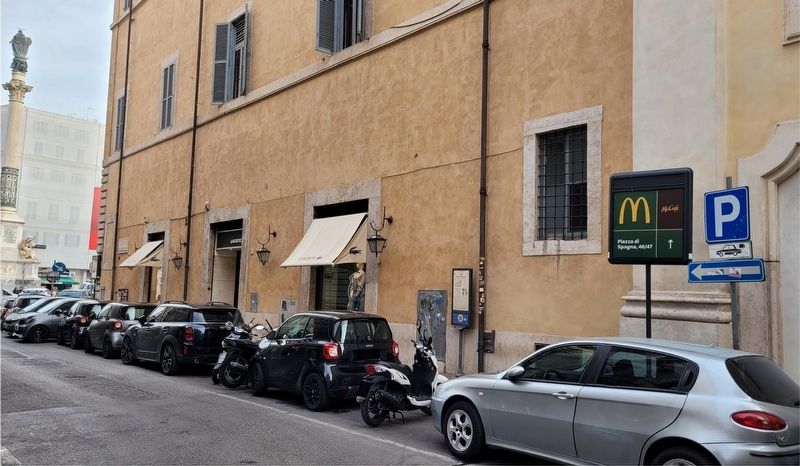
2. The view of the Palace of the Propaganda Fide Marker along the sidewalk
Also see . . . Palazzo di Propaganda Fide. Wikipedia
The Palazzo di Propaganda Fide (in English: Palace of the Propagation of the Faith) is a palace located in Rome, designed by Gian Lorenzo Bernini, then Francesco Borromini. Since 1626, it has housed the Congregation for the Evangelization of Peoples and since 1929 is an extraterritorial property of the Holy See. The complex includes a dormitory and chapel as well.(Submitted on January 20, 2025, by James Hulse of Medina, Texas.)
Photographed by James Hulse
3. The view of the side of the Palace of the Propaganda Fide and Marker along the street
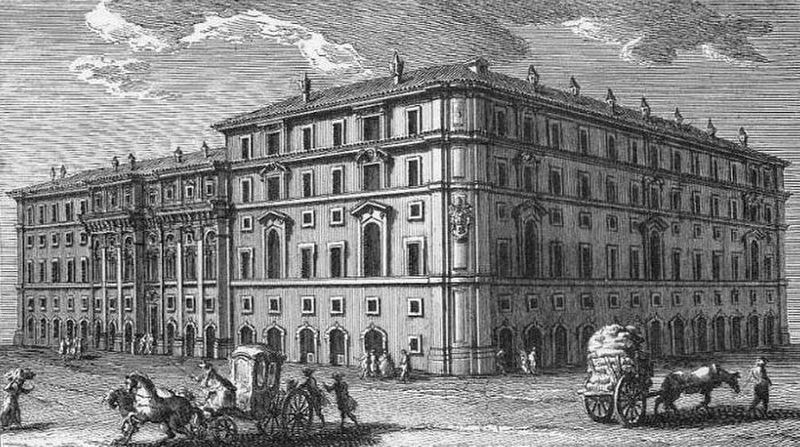
Public Domain - etching by Giuseppe Vasi - Wikipedia Commons
4. Palace of the Propaganda Fide
The headquarters of the Propaganda fide in Rome, (Palace of the Propagation of the Faith) commissioned by Antonio Barberini.
Credits. This page was last revised on January 20, 2025. It was originally submitted on January 19, 2025, by James Hulse of Medina, Texas. This page has been viewed 844 times since then and 199 times this year. Photos: 1, 2, 3, 4. submitted on January 20, 2025, by James Hulse of Medina, Texas.
