Rione X Campitelli in Roma in Città metropolitana di Roma Capitale, Latium, Rome, Italy — Central Italy (Tyrrhenian Coast)
Chiesa di Sant'Anastasia
⎯⎯⎯
Church of St. Anastasia
Photographed by James Hulse, March 5, 2024
1. Chiesa di Sant'Anastasia / Church of St. Anastasia Marker

Architetto: L. Arrigucci (1575-post 1643)
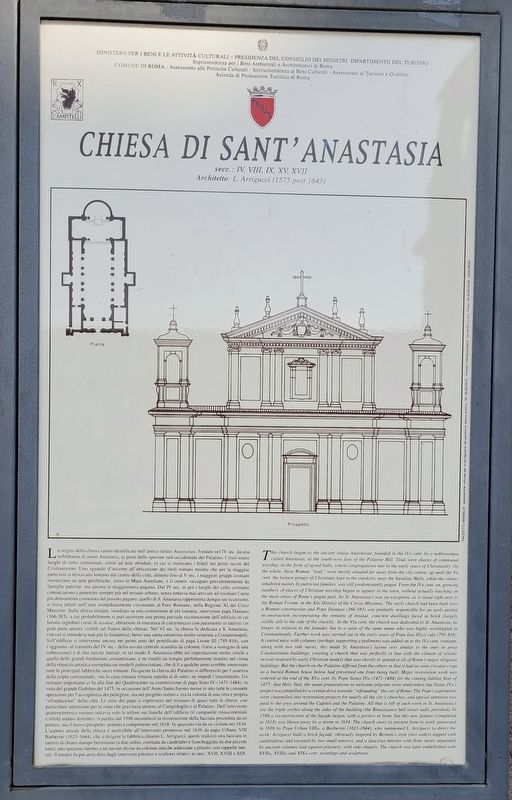
Le origini della chiesa vanno identificate nell'antico titulus Anastasiae, fondato nel IV sec. da una nobildonna di nome Anastasia, ai piedi dello sperone sud-occidentale del Palatino. I tituli erano luoghi di culto comunitari, simili ad aule absidate, in cui si riunivano i fedeli nei primi secoli del Cristianesimo. Uno sguardo d'insieme all'ubicazione dei titoli romani mostra che per la maggior parte essi si trovavano lontano dal centro della città; almeno fino al V sec. i maggiori gruppi cristiani insistevano su aree periferiche, verso le Mura Aureliane, e il centro -occupato prevalentemente da famiglie patrizie- era ancora in maggioranza pagano. Dal IV sec. in poi i luoghi del culto cristiano cominciarono a penetrare sempre più nel tessuto urbano, senza tuttavia mai arrivare ad insidiare l'area più densamente connotata dal passato pagano; quello di S. Anastasia rappresenta dunque un'eccezione, si trova infatti nell'area immediatamente circostante al Foro Romano, nella Regione XI del Circo Massimo. Sulla chiesa titolare, insediata su una costruzione di età romana, intervenne papa Damaso (366-383), a cui probabilmente si può ascrivere una prima parziale ricostruzione dell'edificio in cui furono inglobati i resti di insulae, abitazioni in muratura di calcestruzzo con paramento in laterizi (in gran parte ancora visibili sul fianco della chiesa). Nel VI sec. la chiesa fu dedicata a S. Anastasia, con cui si intendeva non più la fondatrice, bensì una santa omonima molto venerata a Costantinopoli. Sull'edificio si intervenne ancora nei primi anni del pontificato di papa Leone III (795-816), con l'aggiunta -al transetto del IV sec.- della navata centrale scandita da colonne (forse a sostegno di una trabeazione) e di due
this page online
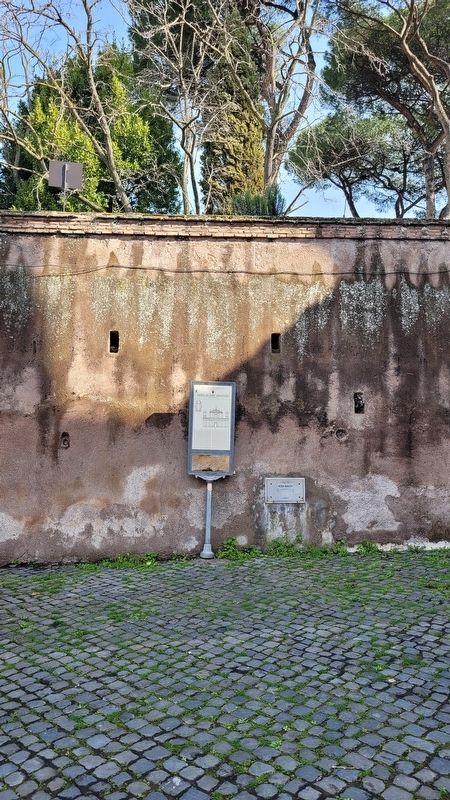
Photographed by James Hulse, March 5, 2024
2. Chiesa di Sant'Anastasia / Church of St. Anastasia Marker
Didascalie
(Foto #1) Pianta
(Foto #2) Prospetto
Architect: L. Arrigucci (1575-post 1643)
This church began as the ancient titulus Anastasiae, founded in the IVth cent. by a noblewoman called Anastasia, at the south-west foot of the Palatine Hill. Tituli were places of communal worship, in the form of apsed halls, where congregations met in the early years of Christianity. On the whole, these Roman "tituli" were mostly situated far away from the city centre; up until the Vth cent. the largest groups of Christians kept to the outskirts, near the Aurelian Walls, while the centre, inhabited mainly by patrician families, was still predominantly pagan. From the IVth cent. on, growing numbers of places of Christian worship began to appear in the town, without actually touching on the main areas of Rome's pagan past. So St. Anastasia's was an exception, as it stood right next to the Roman Forum, in the XIth District of the Circus Maximus. The early church had been built over a Roman construction and Pope Damaso (366-383) was probably responsible for an early partial reconstruction
Photographed by James Hulse
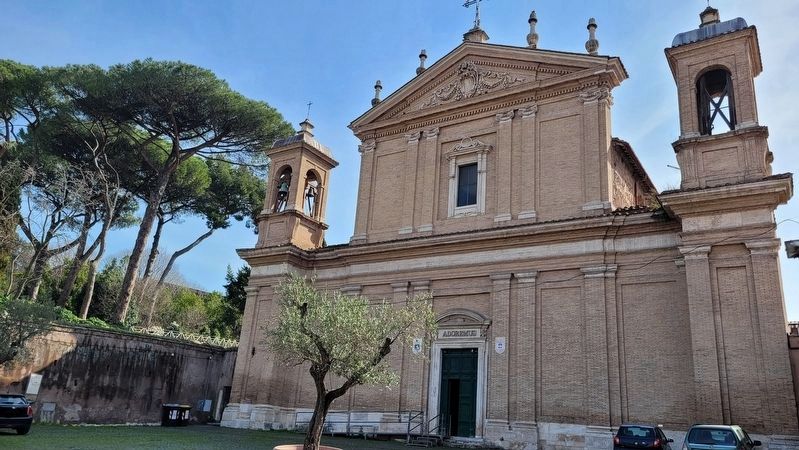
3. The front view of the Church of St. Anastasia and Marker (far left side)
Photographed by James Hulse, March 5, 2024
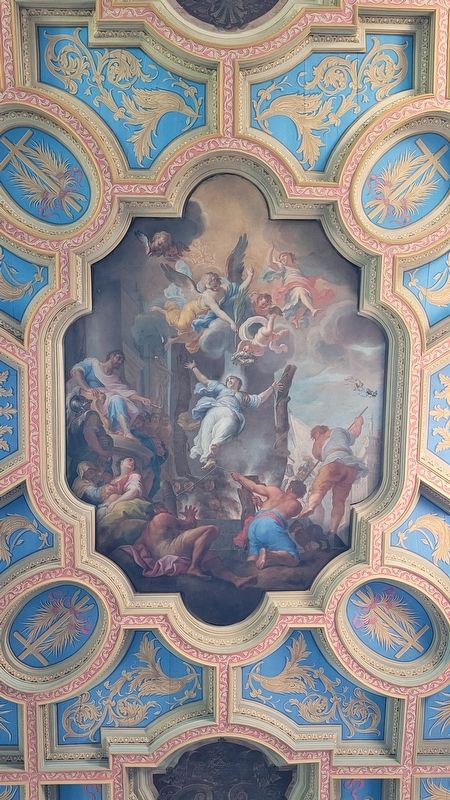
4. Church of St. Anastasia
The ceiling of the church with the 1722 “Martyrdom of Anastasia” fresco by Cerruti
Captions
(Photo #1) Floor Plan
(Photo #2) Elevation
Erected by Ministry for Cultural Heritage and Activities Presidency of the Council of Ministers Department of Tourism Superintendency for Environmental and Architectural Heritage of Rome Municipality of Rome - Department of Cultural Policies - Superintendency for Cultural Heritage - Department of Tourism and Jubilee Tourist Promotion Agency of Rome.
Topics. This historical marker is listed in this topic list: Religion & Religious Structures. A significant historical year for this entry is 1475.
Location. 41° 53.302′ N, 12° 29.044′ E. Marker is in Roma, Lazio (Latium, Rome), in Città metropolitana di Roma Capitale. It is in Rione X Campitelli. It is on Piazza di Sant'Anastasia just east of Via di S. Teodoro.
Photographed by James Hulse, March 5, 2024
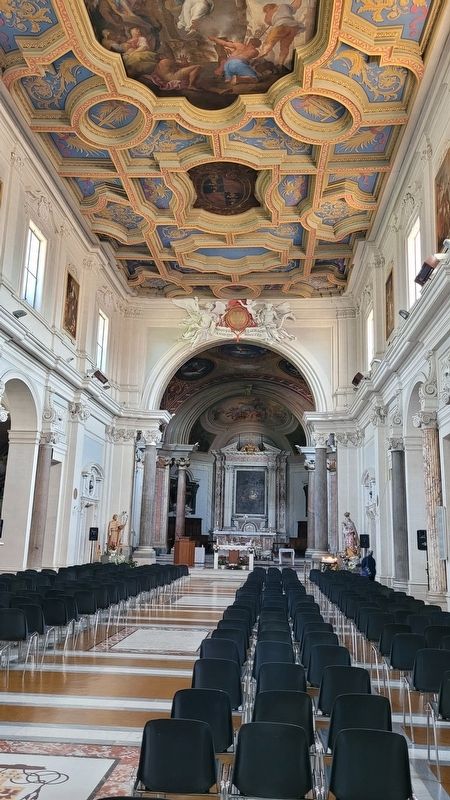
5. The inside view of the Church of St. Anastasia

Regionally, it is in Europe, the European Union, the Schengen Area, a coastal Mediterranean country, and the Western World. Historically, it finds itself in what was once the Roman Empire.
Other nearby markers. At least 8 other markers are within walking distance of this marker: Terme di età Imperiale / Imperial Period Baths (about 120 meters away, measured in a direct line); Clivus Victoriae e Fontana / Clivus Victoriae and Fountain (about 120 meters away); Villaggio di Capanne / Hut Village (about 120 meters away); Tempio della Magna Mater / Temple of Magna Mater (about 120 meters away); Chiesa di San Giorgio al Velabro / Church of Saint George at the Velabrum (about 150 meters away); Tempio di Victoria / Temple of Victoria (about 150 meters away); Tempietto / Small Temple (about 150 meters away); Complesso Santuariale e Domestico Augusteo / Augustan Sanctuary and Residential Complex (about 150 meters away). Touch for a list and map of all markers in Roma.
Also see . . . Sant'Anastasia al Palatino. Wikipedia (Submitted on February 1, 2025, by James Hulse of Medina, Texas.)
Photographed by James Hulse, March 5, 2024
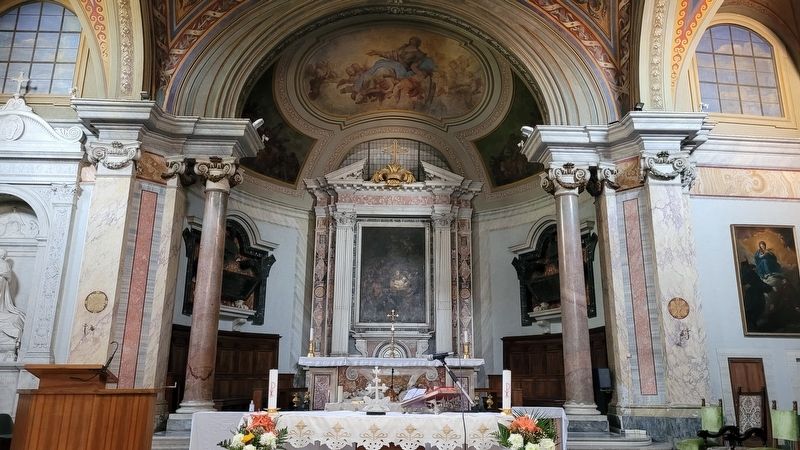
6. The alter and apse of the Church of St. Anastasia
Credits. This page was last revised on February 1, 2025. It was originally submitted on January 30, 2025, by James Hulse of Medina, Texas. This page has been viewed 110 times since then and 19 times this year. Photos: 1, 2, 3, 4, 5, 6. submitted on February 1, 2025, by James Hulse of Medina, Texas.
