Near Cerny-en-Laonnois in Aisne, Upper France, France — Western Europe
Cerny-en-Laonnois
Chemin des Dames
Photographed by Steve Stoessel, November 18, 2024
1. Cerny-en-Laonnois Marker

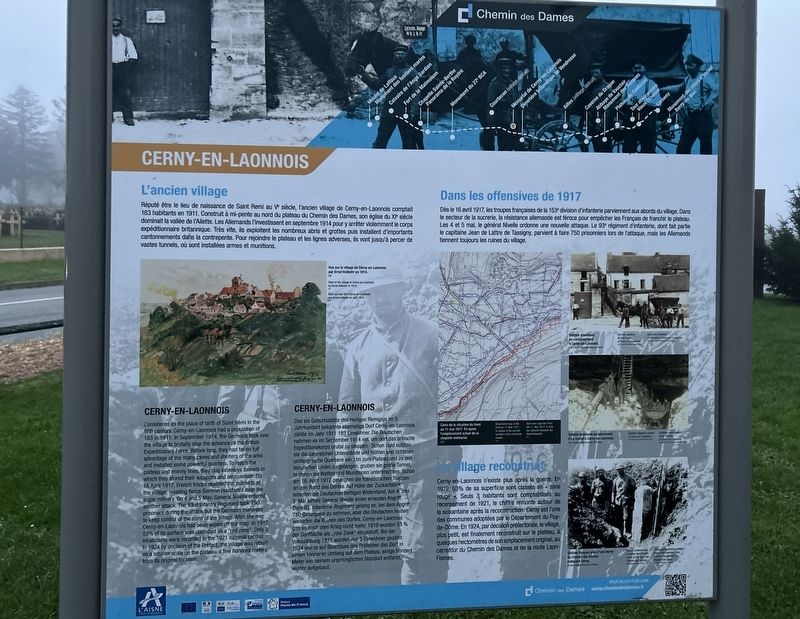
L'ancien village
Réputé être le lieu de naissance de Saint Remi au Ve siècle, l'ancien village de Cerny-en-Laonnois comptait 183 habitants en 1911. Construit à mi-pente au nord du plateau du Chemin des Dames, son église du XIe siècle dominait la vallée de l'Ailette. Les Allemands l'investissent en septembre 1914 pour y arrêter violemment le corps expéditionnaire britannique. Très vite, ils exploitent les nombreux abris et grottes puis installent d'importants cantonnements dahs la contrepente. Pour rejoindre le plateau et les lignes adverses, ils vont jusqu'à percer de vastes tunnels, où sont installées armes et munitions.
Dans les offensives de 1917
Dès le 16 avril 1917, les troupes françaises de la 153° division d'infanterie parviennent aux abords du village. Dans le secteur de la sucrerie, la résistance allemande est féroce pour empêcher les Français de franchir le plateau. Les 4 et 5 mai, le général Nivelle ordonne une nouvelle attaque. Le 93% régiment d'infanterie, dont fait partie le capitaine Jean de Lattre de Tassigny, parvient à faire 750 prisonniers lors de l'attaque, mais les Allemands tiennent toujours
this page online
La village reconstruit
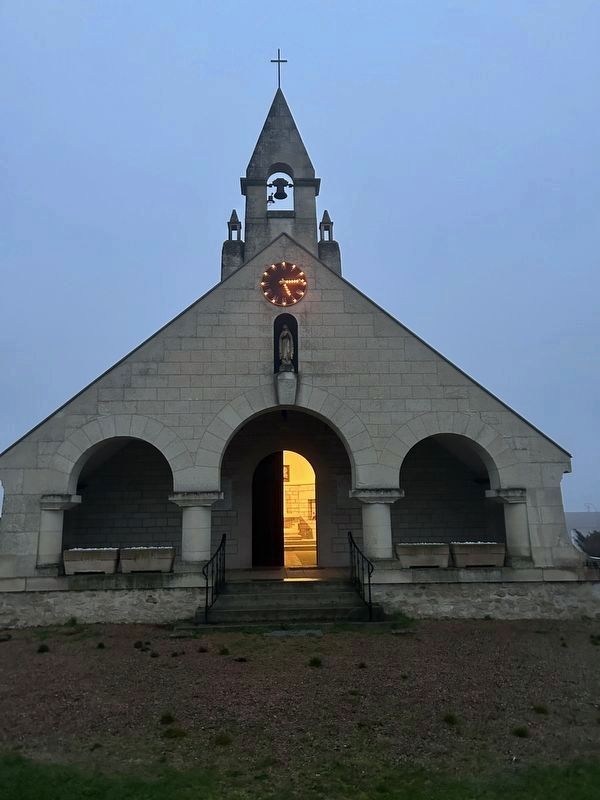
Cerny-en-Laonnois n'existe plus après la guerre. En 1919, 53% de sa superficie sont classés en « zone rouge ». Seuls 3 habitants sont comptabilisés au recensement de 1921, le chiffre remonte autour de la soixantaine après la reconstruction. Cerny est l'une des communes adoptées par le Département du Puy-de-Dôme. En 1924, par décision préfectorale, le village, plus petit, est finalement reconstruit sur le plateau, à quelques hectomètres de son emplacement original, au carrefour du Chemin des Dames et de la route Laon-Fismes.
Légendes des photos
Vue sur le village de Cerny-en-Laonnois par Ernst Vollbehr on 1914. Carte de la situation du front au 11 mai 1917. En jaune l'emplacement actuel de la chapelle-mémorial.
Soldats allemands au cantonnent à Cerny-en-Laonnois.
Soldats employés au percement d'un tunnel à Cerny-en-Laonnois
Soldats français près d'une borne du Chemin des Dames indiquant Cerny.
Considered as the place of birth of Saint Remi in the fifth century, Cerny-en-Laonnois had a population of 183 in 1911. In September 1914, the Germans took
Photographed by Steve Stoessel, November 18, 2024
2. Cerny-en-Laonnois Marker
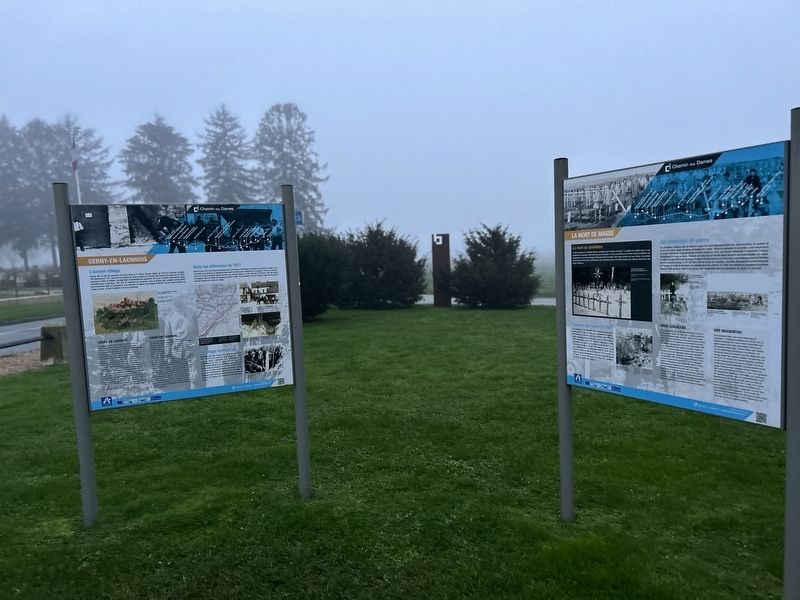
Captions
View of the village of Carny-en-Laonnois by Ernst Vollbehr in 1914/
Situational map of the front on 11 May 1917. Yellow dot indicates location of current memorial chapel.
German soldiers at their base in Cerny-en-Laonnois.
Soldiers digging a tunnel in Cerny-en-Laonnois
French soldiers near a marker indicating the village of Cerny on the Chemin des Dames.
Das
Photographed by Steve Stoessel, November 18, 2024
3. Cerny-en-Laonnois Memorial Chapel
[Bildunterschriften:]
Blick auf das Dorf Cerny-en-Laonnois von Ernst Vollbehr im Jahr 1914. Karte der Lage der Front am 1t. Mai 1917, Gelber Punkt zeigt den Standort der heutigen Gedächtniskapelle.
Deutsche Soldaten in ihrem Stützpunkt in Cerny-en-Laonnois.
Soldaten graben einen Tunnel in Cerny-en-Laonnois.
Französische Soldaten in der Nähe einer Markierung, die das Dorf Cerny am Chemin des Dames anzeigt.
Topics. This historical marker is listed in these topic lists: Settlements & Settlers • War, World I. A significant historical date for this entry is April 16, 1917.
Location. 49° 26.576′ N, 3° 40.024′ E. Marker is near Cerny-en-Laonnois, Hauts-de-France (Upper France), in Aisne. It is at the intersection of Chemin des Dames (Hauts-de-France Route 18cd) and Route 967 on Chemin des Dames. Touch for map. Marker is in this post office area: Cerny-en-Laonnois, Hauts-de-France 02860, France. Touch for directions.

Regionally, it is in the North Atlantic Region, Europe, the European Union, Atlantic Europe, the Schengen Area, Western Europe, a coastal Mediterranean country, and the Western World. Historically, it finds itself in what was once a French colony and also the Roman Empire.
Other nearby markers. At least 8 other markers are within 5 kilometers of this marker, measured as the crow flies: La Mort de Masse (here, next to this marker); Les Britanniques sur le Chemin des Dames (a few steps from this marker); Un Long Chemin de Mémoire (a few steps from this marker); La nécropole nationale de Cerny-en-Laonnois (within shouting distance of this marker); 41ème Bataillon de Chasseurs à Pied (approx. 4.7 kilometers away); Aux morts de la 164e Division (approx. 4.7 kilometers away); A la Gloire du 4 Régiment de Zouaves (approx. 4.7 kilometers away); « Ils N'ont Pas Choisi Leur Sepulture » (approx. 4.8 kilometers away). Touch for a list and map of all markers in Cerny-en-Laonnois.
Credits. This page was last revised on February 7, 2025. It was originally submitted on February 2, 2025, by Steve Stoessel of Niskayuna, New York. This page has been viewed 127 times since then and 14 times this year. Photos: 1, 2. submitted on February 2, 2025, by Steve Stoessel of Niskayuna, New York. 3. submitted on February 7, 2025, by Steve Stoessel of Niskayuna, New York.
