
Alva in Woods County, Oklahoma — The American South (West South Central)
Fine Arts Building
Photographed by Cosmos Mariner, September 8, 2024
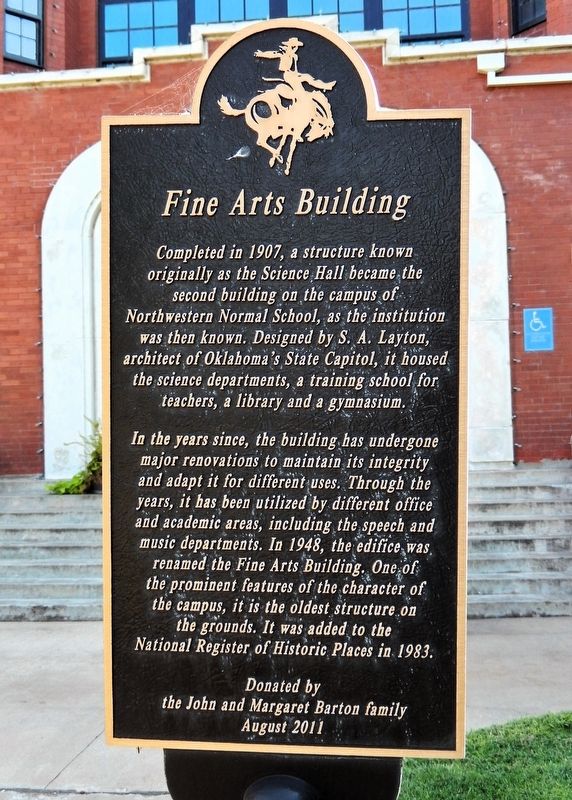
1. Fine Arts Building Marker
Completed in 1907, a structure known originally as the Science Hall became the second building on the campus of Northwestern Normal School, as the institution was then known. Designed by S. A. Layton, architect of Oklahoma’s State Capitol, it housed the science departments, a training school for teachers, a library and a gymnasium.
In the years since, the building has undergone major renovations to maintain its integrity and adapt it for different uses. Through the years, it has been utilized by different office and academic areas, including the speech and music departments. In 1948, the edifice was renamed the Fine Arts Building. One of the prominent features of the character of the campus, it is the oldest structure on the grounds. It was added to the National Register of Historic Places in 1983.
the John and Margaret Barton family
August 2011
Erected 2011.
Topics and series. This historical marker is listed in these topic lists: Architecture • Education • Notable Buildings. In addition, it is included in the National Register of Historic Places (NRHP) series list. A significant historical year for this entry is 1907.
Location. 36° 47.819′ N,
this page online

Regionally, this marker is in the American South, specifically on the prairies, and on the Southern Plains. Globally, it is in North America, the Western Hemisphere, the Western World, and the Anglosphere. Historically, it finds itself in what was once the territory of the Mississippian Culture, the Louisiana Purchase, and Cherokee Outlet.
Other nearby markers. At least 8 other markers are within walking distance of this marker: J. W. Martin Library (within shouting distance of this marker); ΦΛΧ Commemorates Veterans of Foreign Wars from Northwestern State College (within shouting distance of this marker);
Photographed by Cosmos Mariner, September 8, 2024
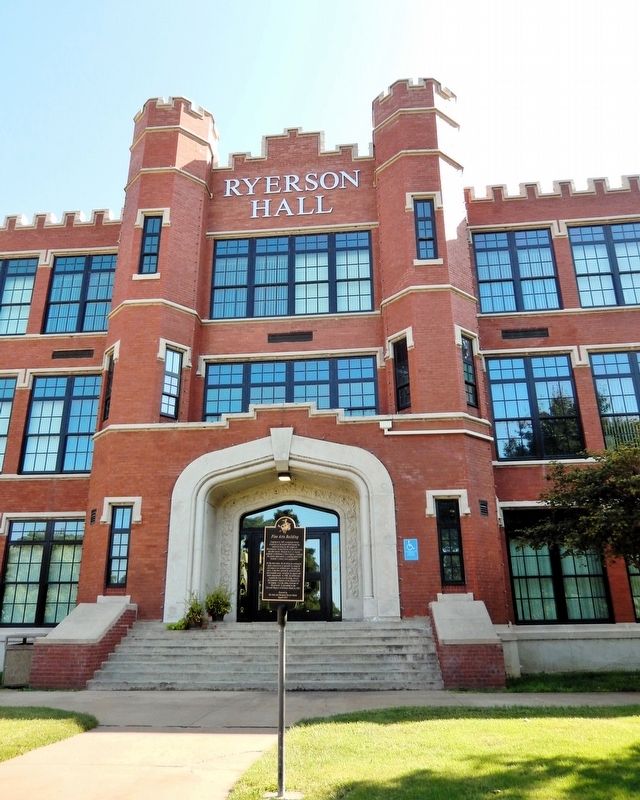
2. Fine Arts Building Marker
Looking south; the Fine Arts Building north/front entrance is in the background.
Regarding Fine Arts Building. National Register of Historic Places № 83002141.
From the National Register Nomination prepared by Kenneth M. Hopkins and Mary Ann Anders, 8/1982:
The Science Hall is the oldest remaining building on the campus of Northwestern Oklahoma State University. The cornerstone was set in December 1906 and the building was completed during the following year. It contained a library, a gymnasium, and a lecture hall with a capacity of three hundred students. Another feature highlighted in the school catalog was the absence of any interior heating plant that might cause a fire; the building was heated from a separate facility (built in 1908).
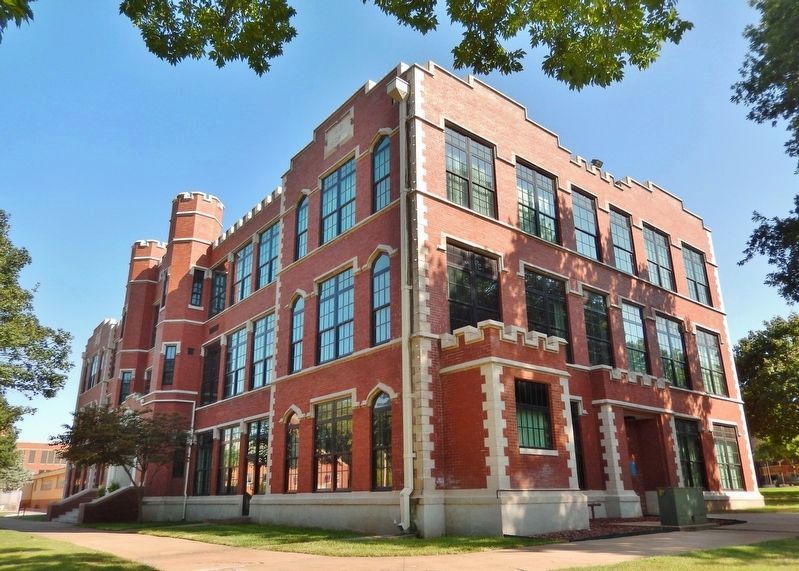
Solomon Andrew Layton, the architect, was destined to become one of themost important and influential architects of Oklahoma's history. From 1902 to 1943 Layton designed more than 100 public, educational, and commercial buildings, including the state capital.Photographed by Cosmos Mariner, September 8, 20243. Fine Arts Building/Ryerson Hall (northwest elevation)
The Science Hall, one of Layton's early works, has served a variety of purposes. Originally, it housed the departments of Agriculture, Geography, Physics, Chemistry, Zoology, Botany, and Domestic Science. When the administration building (the only structure on campus which predated the Science Hall) burned in the 1930's, it also provided offices for the various school officials and records keeper.
Also see . . .
1. Science Hall/Fine Arts Building/Ryerson Hall (Wikipedia).
Excerpt: Science Hall is a historic building at Northwestern Oklahoma State University and is also known as the Fine Arts Building. It was listed on the National Register of Historic Places in 1983. It is the oldest remaining building on the campus and is an "excellent example" of Jacobean Revival architecture.(Submitted on February 6, 2025, by Cosmos Mariner of Cape Canaveral, Florida.)
2. Ryerson Hall dedication marks a tradition of giving (Alva Review-Courier).
Photographed by Cosmos Mariner, September 8, 2024
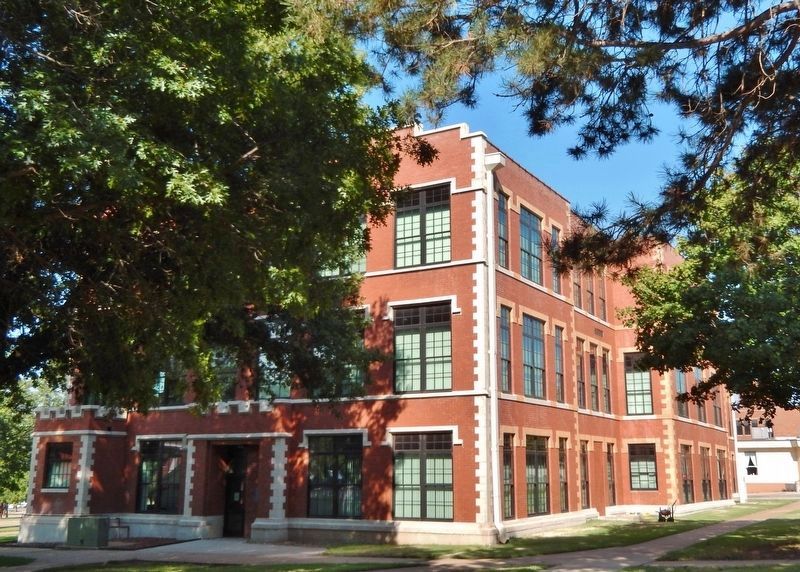
4. Fine Arts Building/Ryerson Hall (southwest elevation)
(By Marione Martin, Nov 17, 2019) Excerpt: On a sunny, breezy Friday noon, Nov. 15, the oldest academic building on the Northwestern Oklahoma State University campus was renamed for longtime benefactors and supporters, the Ryerson family. A dedication ceremony on the front steps of the Fine Arts Building marked the occasion, culminating in the unveiling of the Ryerson Hall name on the front. The structure was remodeled in 1938, 1947 and in the 1970s. It eventually became known as the Fine Arts Building.(Submitted on February 6, 2025, by Cosmos Mariner of Cape Canaveral, Florida.)
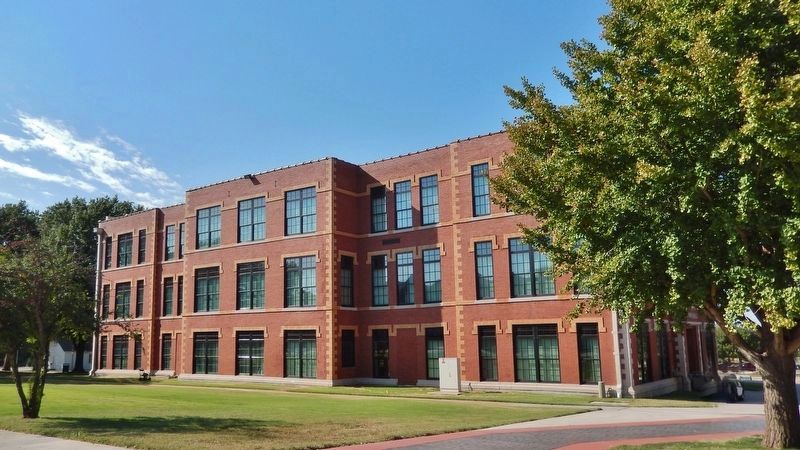
Photographed by Cosmos Mariner, September 8, 2024
5. Fine Arts Building/Ryerson Hall (southeast elevation)
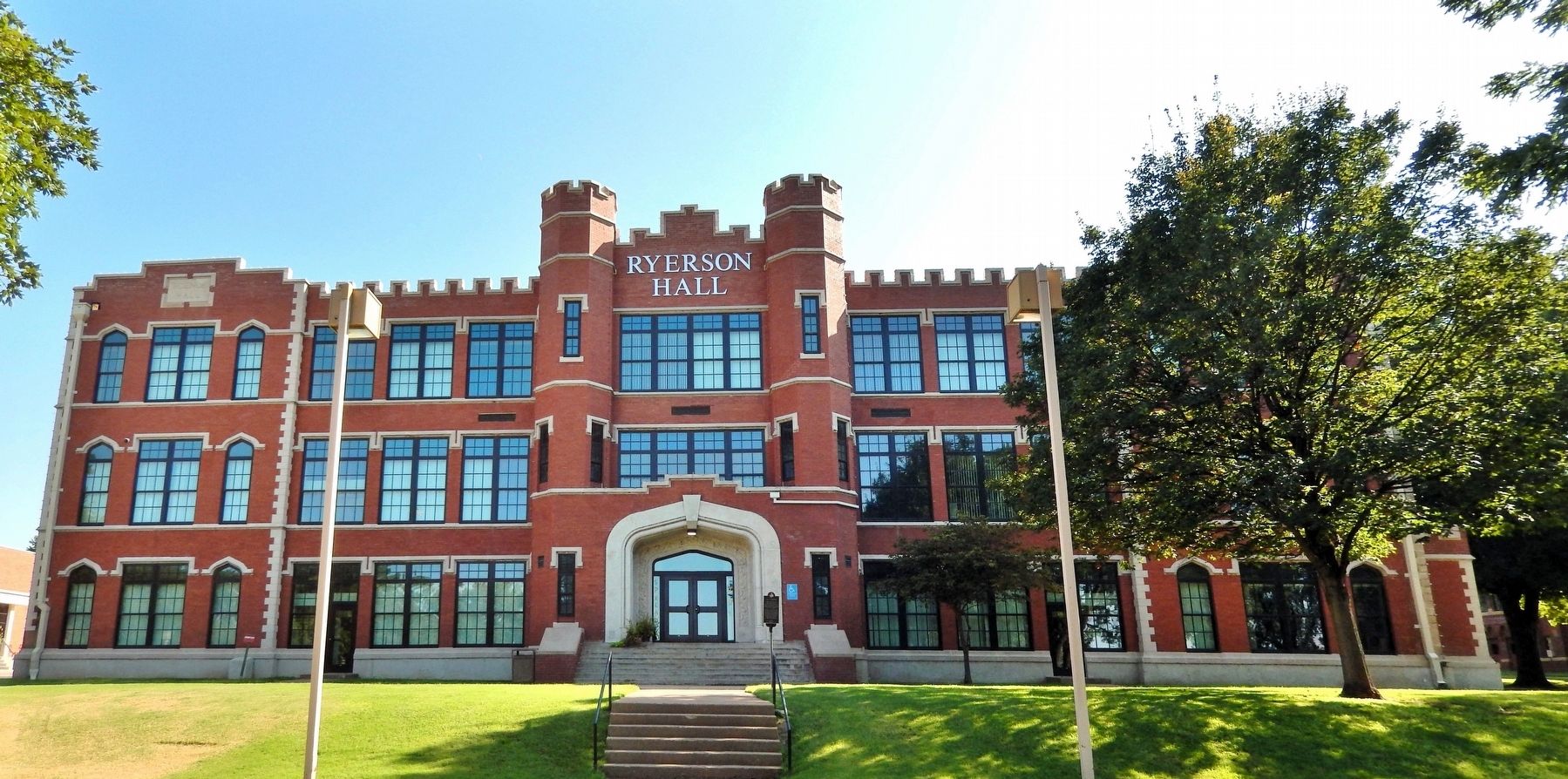
Photographed by Cosmos Mariner, September 8, 2024
6. Fine Arts Building/Ryerson Hall (front/north elevation)
From the National Register Nomination: Situated near the middle of the university campus, the Science Hall is a three-story building of red brick construction. It is seventy-two feet wide and one hundred and forty-six feet long. It is of a Jacobean Revival styling with a tower on either side of the main entranceway and crenellation along the roof line. The windows are rectangular and in bands rather than Early Gothic Revival arches and have continuous sills and labels of white stone. White stone stringcourses and quoins on the corners also add to the modest ornamentation. The main entranceway is a recessed pointed arch also of white stone. Two other outside doors are on either end of the building. The building remains exactly at it appeared in the earliest photographs, there having been no exterior alterations or additions.
Credits. This page was last revised on February 7, 2025. It was originally submitted on February 4, 2025, by Cosmos Mariner of Cape Canaveral, Florida. This page has been viewed 140 times since then and 12 times this year. Photos: 1, 2, 3. submitted on February 6, 2025, by Cosmos Mariner of Cape Canaveral, Florida. 4, 5. submitted on February 7, 2025, by Cosmos Mariner of Cape Canaveral, Florida. 6. submitted on February 6, 2025, by Cosmos Mariner of Cape Canaveral, Florida.
