Wilmington in New Hanover County, North Carolina — The American South (South Atlantic)
Wallace-Vanlandingham House
1916
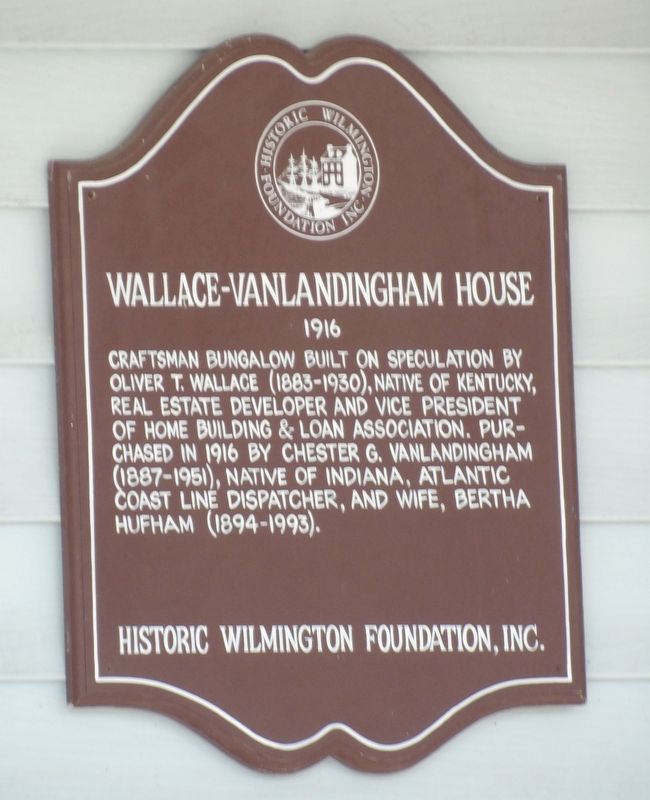
Photographed by Duane and Tracy Marsteller, November 24, 2024
1. Wallace-Vanlandingham House Marker
Erected by Historic Wilmington Foundation, Inc.
Topics and series. This historical marker is listed in these topic lists: Architecture • Industry & Commerce • Railroads & Streetcars. In addition, it is included in the National Register of Historic Places (NRHP), and the North Carolina, Historic Wilmington Foundation series lists. A significant historical year for this entry is 1916.
Location. 34° 14.164′ N, 77° 55.573′ W. Marker is in Wilmington, North Carolina, in New Hanover County. It is on Wrightsville Avenue east of South 17th Street, on the left when traveling east. Touch for map. Marker is at or near this postal address: 1719 Wrightsville Ave, Wilmington NC 28403, United States of America. Touch for directions.

Regionally, this marker is in the Coastal Plain and on the Cape Fear Coast.
this page online
Other nearby markers. At least 8 other markers are within walking distance of this marker: Blitchington-Smith House (within shouting distance of this marker); Lacy-Hunnicutt House (within shouting distance of this marker); Freeman-Peders House (within shouting distance of this marker); Muse-Winn House (about 300 feet away, measured in a direct line); Woodcock House (about 300 feet away); Fire Station No. 5 (about 300 feet away); Hudson-Hall House (about 400 feet away); Foltz-Gibson (about 400 feet away). Touch for a list and map of all markers in Wilmington.
Regarding Wallace-Vanlandingham House. Oliver Terrell Wallace began development of Brookwood, a 'streetcar suburb' on the then-eastern
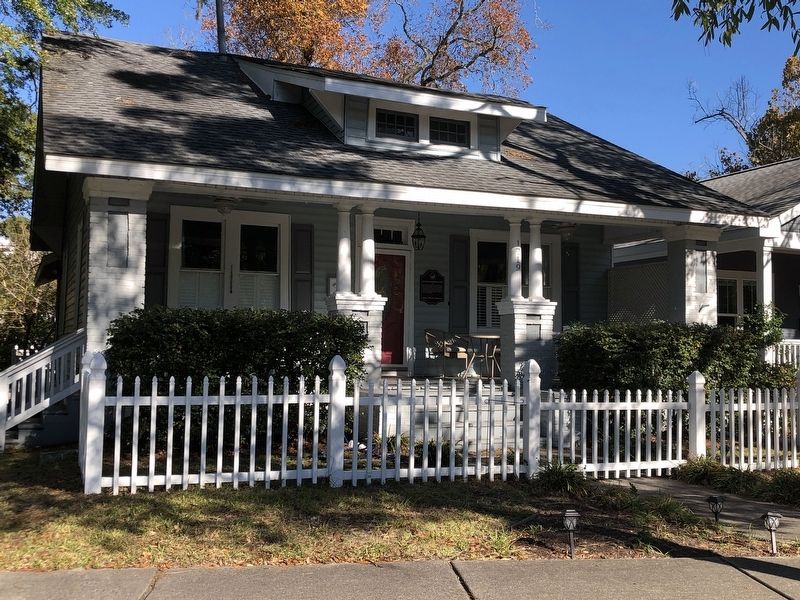
Photographed by Duane and Tracy Marsteller, November 25, 2024
2. Wallace-Vanlandingham House Marker
Chester Glenn Vanlandingham was a Carolina Beach city alderman and a charter member of Temple Baptist Church, where he served on the first board of deacons. He retired from Atlantic Coast Line Railroad in 1941. His second wife, Bertha Hufham Vanlandingham, was a teacher and administrator in New Hanover County public schools for 38 years. She retired as the principal of Water Park Elementary School.
Also see . . . Carolina Place Historic District (PDF). National Register of Historic Places nomination for the district, which includes this site (listed as the James-Thomas House for two later tenants) as a contributing property and was listed in 1992. (Prepared by Allison H. Black and David R. Black; via National Archives) (Submitted on February 14, 2025, by Duane and Tracy Marsteller of Murfreesboro, Tennessee.)
Credits. This page was last revised on February 14, 2025. It was originally submitted on February 14, 2025, by Duane and Tracy Marsteller of Murfreesboro, Tennessee. This page has been viewed 177 times since then and 55 times this year. Photos: 1, 2. submitted on February 14, 2025, by Duane and Tracy Marsteller of Murfreesboro, Tennessee.
