
Wilmington in New Hanover County, North Carolina — The American South (South Atlantic)
Patterson House
1922
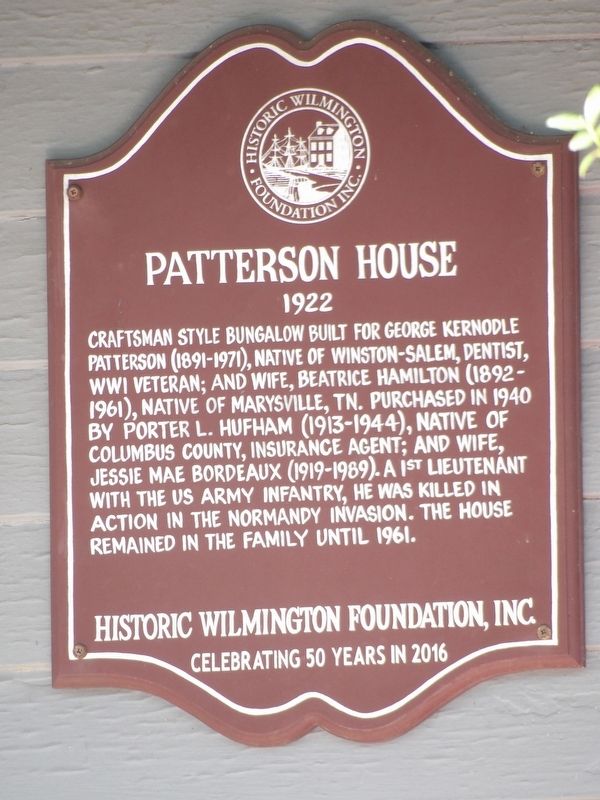
Photographed by Duane and Tracy Marsteller, November 24, 2024
1. Patterson House Marker
Erected by Historic Wilmington Foundation, Inc.
Topics and series. This historical marker is listed in these topic lists: Architecture • War, World II. In addition, it is included in the National Register of Historic Places (NRHP), and the North Carolina, Historic Wilmington Foundation series lists. A significant historical year for this entry is 1922.
Location. 34° 14.063′ N, 77° 55.389′ W. Marker is in Wilmington, North Carolina, in New Hanover County. It is on Creecy Avenue east of Wrightsville Avenue, on the left when traveling east. Touch for map. Marker is at or near this postal address: 1913 Creecy Ave, Wilmington NC 28403, United States of America.
this page online

Regionally, this marker is in North Carolina’s Coastal Plain and on the Cape Fear Coast. It is also in the American South, specifically in the Upper South, in the Tidewater, and on the Eastern Seaboard. Globally, it is in the North Atlantic Region, North America, the Western Hemisphere, the Western World, and the Anglosphere. Historically, it finds itself in what was once the territory of the Mississippian Culture, one of the original Thirteen Colonies, one of the Confederate States of America, and the Antebellum South.
Other nearby markers. At least 8 other markers are within walking distance of this marker: Reese House (about 300 feet away, measured in a direct line); Pickard-Newboles House (about 400 feet away); Hall-Tolar House (about 400 feet away); Piner House (about 500 feet away); Tolar-Bowles House (about 600 feet away); Browne House (about 600 feet away); Gillette House (about 600 feet away); McCord House (about 600 feet away). Touch for a list and map of all markers in Wilmington.
Regarding Patterson House. George Kernodle Patterson earned his dental degree from the University
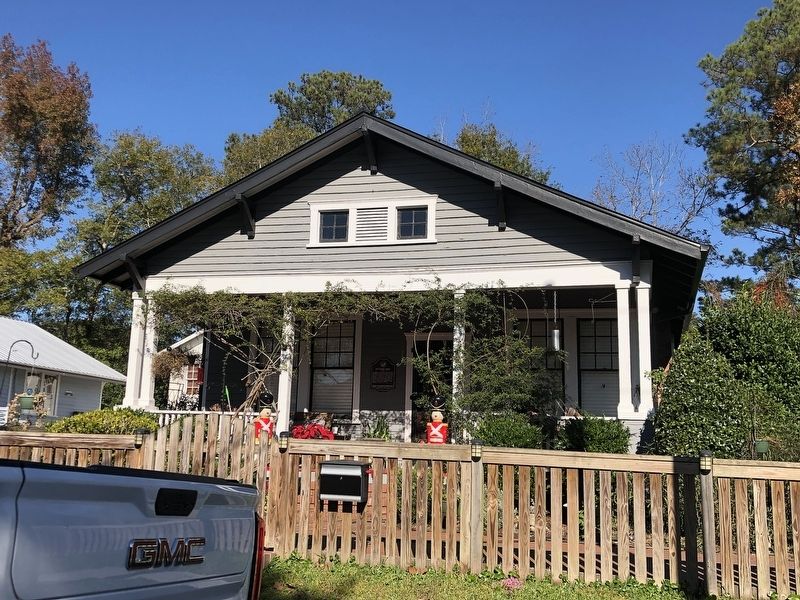
Photographed by Duane and Tracy Marsteller, November 25, 2024
2. Patterson House Marker
Porter Lee Hufham was among 248 Wilmington men killed or missing in action during World War II. He is buried in Wilmington National Cemetery.
Also see . . .
1. Patterson House (PDF). Research report has more details about the house, its owners and its occupants. (Prepared in 2016; via Port City Architecture collection, New Hanover County Public Library) (Submitted on February 14, 2025, by Duane and Tracy Marsteller of Murfreesboro, Tennessee.)
2. Carolina Place Historic District (PDF). National Register of Historic Places nomination for the district, which includes this site as a contributing property and was listed in 1992. (Prepared by Allison H. Black and David R. Black; via National Archives) (Submitted on February 14, 2025, by Duane and Tracy Marsteller of Murfreesboro, Tennessee.)
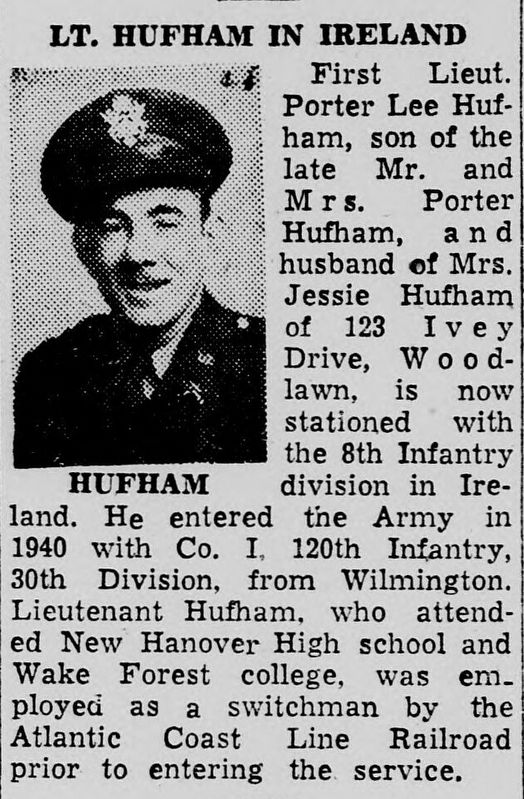
Photographed by Duane and Tracy Marsteller
3. Lt. Porter Lee Hufham
Appeared in the Jan. 20, 1944 edition of the Wilmington Star. (via DigitalNC)
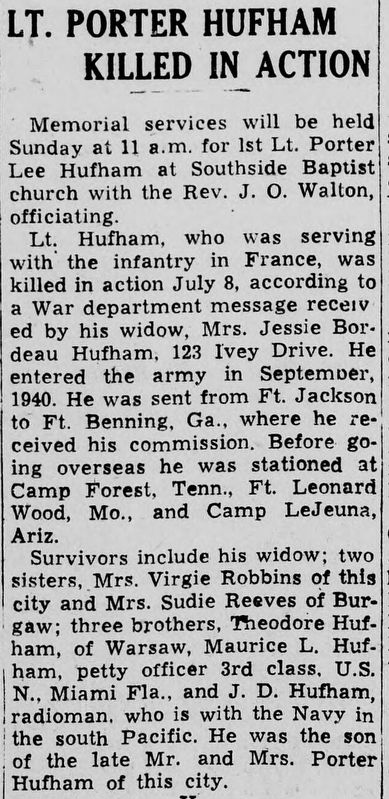
Photographed by Duane and Tracy Marsteller
4. Lt. Porter Lee Hufham obituary
Appeared in the Aug. 5, 1944 edition of the Wilmington Star. (via DigitalNC)
Credits. This page was last revised on February 15, 2025. It was originally submitted on February 14, 2025, by Duane and Tracy Marsteller of Murfreesboro, Tennessee. This page has been viewed 147 times since then and 25 times this year. Photos: 1, 2. submitted on February 14, 2025, by Duane and Tracy Marsteller of Murfreesboro, Tennessee. 3, 4. submitted on February 15, 2025, by Duane and Tracy Marsteller of Murfreesboro, Tennessee.
