
Charlotte center city in Mecklenburg County, North Carolina — The American South (South Atlantic)
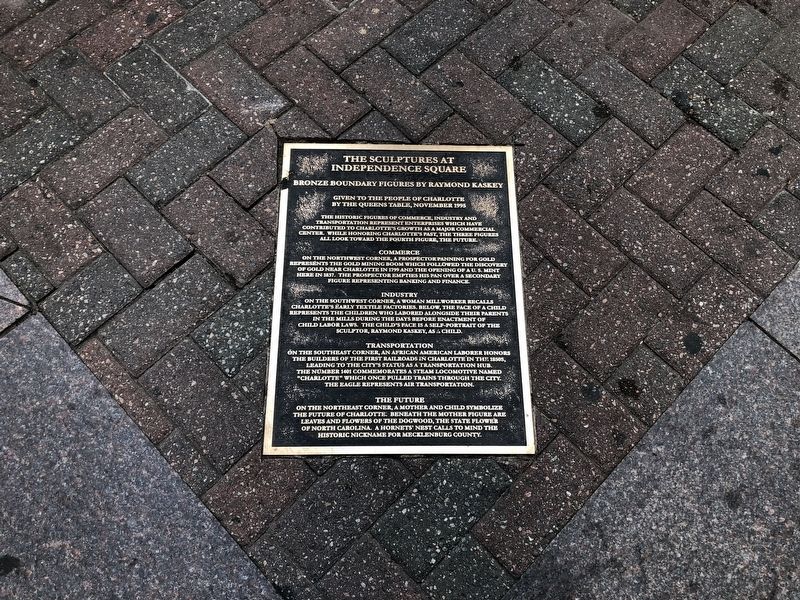
The Sculptures at Independence Square
Bronze Boundary Figures by Raymond Kaskey
| — | Given to the people of Charlotte by the Queens Table, November 1995 | — |

Photographed by Mark Parker, June 13, 2024
1. The Sculptures at Independence Square Marker
Closeup shot of marker text
The historic figures of Commerce, Industry and Transportation represent enterprises which have contributed to Charlotte's growth as a major commercial center. While honoring Charlotte's past, the three figures all look toward the fourth figure, the Future.
Commerce
On the Northwest corner, a prospector panning for gold represents the gold mining boom which followed the discovery of gold near Charlotte in 1799 and the opening of a U.S. Mint here in 1837. The prospector empties his pan over a secondary figure representing banking and finance.
Industry
On the Southwest corner, a woman millworker recalls Charlotte's early textile factories. Below, the face of a child represents the children who labored alongside their parents in the mills during the days before enactment of child labor laws. The child's face is a self-portrait of the sculptor, Raymond Kaskey, as a child.
Transportation
On the Southeast corner, an African American laborer honors the builders of the first railroads in Charlotte in the 1850s, leading to the city's status as a transportation hub. The number 1041 commemorates a steam locomotive named
this page online
The Future
On the Northeast corner, a mother and child symbolize the future of Charlotte. Beneath the mother figure are leaves and flowers of the dogwood, the state flower of North Carolina. A hornet's nest calls to mind the historic nickname for Mecklenburg County.
Topics. This historical marker is listed in these topic lists: Industry & Commerce • Railroads & Streetcars. A significant historical year for this entry is 1799.
Location. 35° 13.631′ N, 80° 50.578′ W. Marker is in Charlotte, North Carolina, in Mecklenburg County. It is in Charlotte center city. It is at the intersection of North Tryon Street and East Trade Street, on the right when traveling north on North Tryon Street. Touch for map. Marker is in this post office area: Charlotte NC 28202, United States of America. Touch for directions.

Regionally, this marker is in North Carolina’s Piedmont. It is also in the American South and specifically in the Upper South. Globally, it is in North America, the Western Hemisphere, the Western World, and the Anglosphere.
Photographed by Devry Becker Jones (CC0), June 17, 2021
2. The Sculptures at Independence Square Marker
Other nearby markers. At least 8 other markers are within walking distance of this marker: Nearby History (a few steps from this marker); Independence Square (a few steps from this marker); Nathanael Greene (within shouting distance of this marker); Home of Col. Thomas Polk (within shouting distance of this marker); Mecklenburg Declaration of Independence (within shouting distance of this marker); Mecklenburg Resolves (within shouting distance of this marker); a different marker also named Mecklenburg Declaration of Independence (within shouting distance of this marker); Thomas Polk Park (within shouting distance of this marker). Touch for a list and map of all markers in Charlotte.
More about this marker. The plaque describing the sculptures was installed March 23, 2011 as the result of a suggestion by Russ Ford, a volunteer tour guide for Visit Charlotte, a function of the Charlotte Regional Visitors Authority. Prior to that
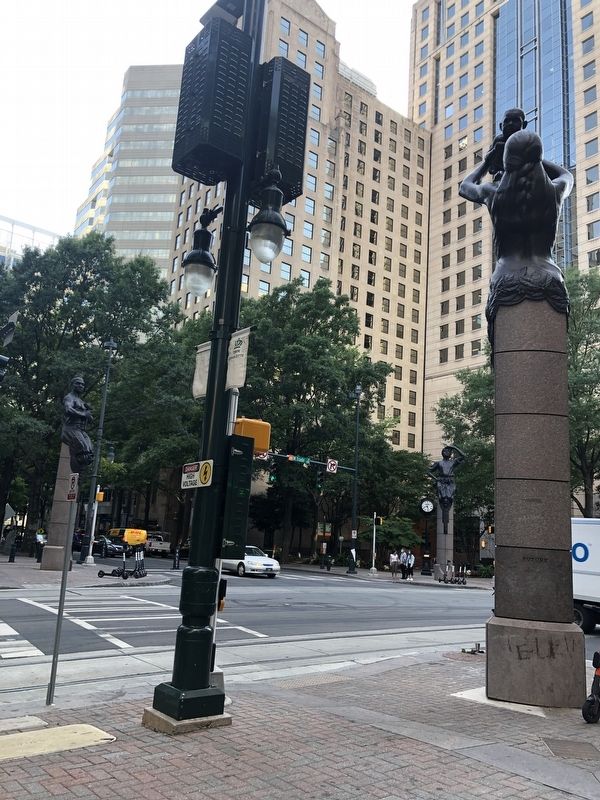
Also see . . . Sculpture on the Square. NCPedia entry of the development and descriptions of the four sculptures at Independence Square
The intersection of Trade and Tryon Streets, considered to be the historical crossing of Indian trade paths, later became the City Center and the basis for the division of Charlotte into blocks and neighborhood wards. The intersection received the name "Independence Square" from the so-called Mecklenburg Declaration of Independence reportedly signed at Charlotte on May 20, 1775.(Submitted on June 19, 2024, by Mark Parker of Hickory, North Carolina.)
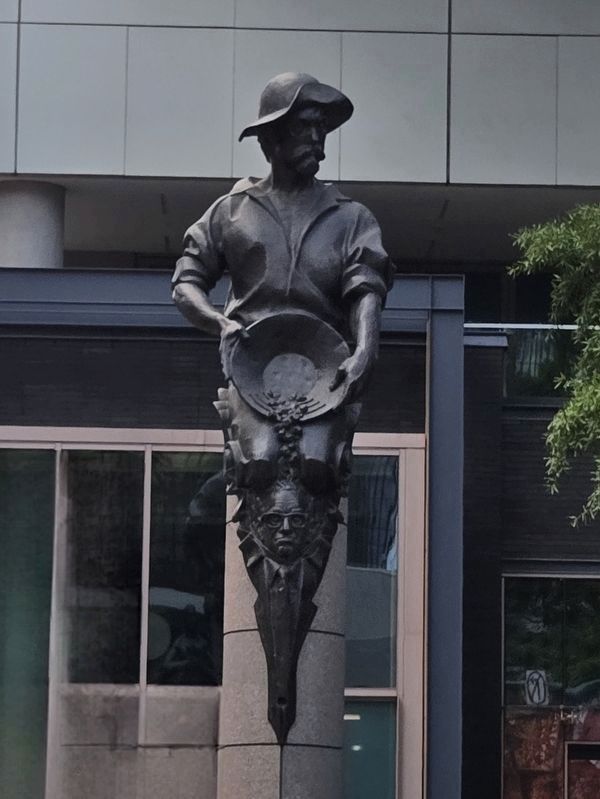
Photographed by Mark Parker, June 13, 2024
4. Commerce Sculpture
Northwest corner of Trade and Tryon Streets
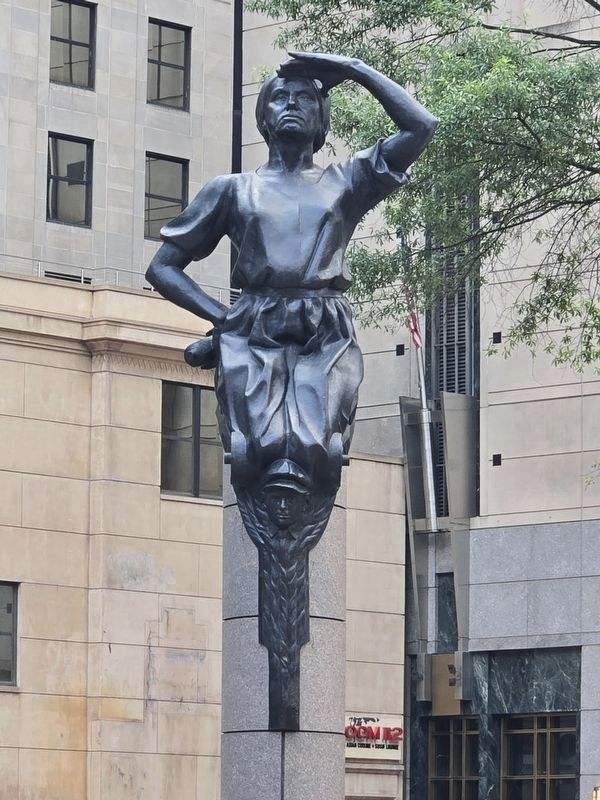
Photographed by Mark Parker, June 13, 2024
5. Industry Sculpture
Southwest corner of Trade and Tryon Streets
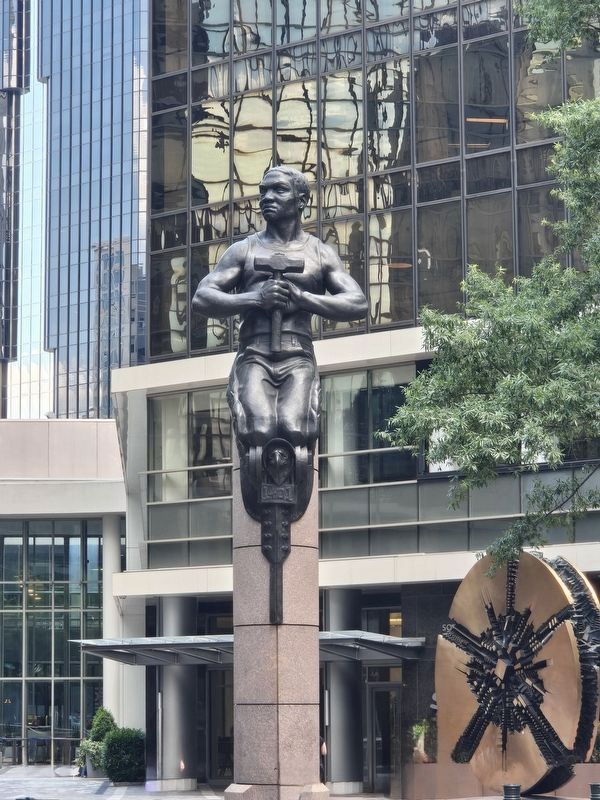
Photographed by Mark Parker, June 13, 2024
6. Transportation Sculpture
Southeast corner of Trade and Tryon Streets

Photographed by Mark Parker, June 13, 2024
7. The Future Sculpture
Northeast corner of Trade and Tryon Streets
Credits. This page was last revised on February 3, 2026. It was originally submitted on June 21, 2021. This page has been viewed 1,783 times since then and 207 times this year. Last updated on February 15, 2025. Photos: 1. submitted on June 19, 2024, by Mark Parker of Hickory, North Carolina. 2, 3. submitted on June 21, 2021, by Devry Becker Jones of Washington, District of Columbia. 4, 5. submitted on June 19, 2024, by Mark Parker of Hickory, North Carolina. 6, 7. submitted on June 20, 2024, by Mark Parker of Hickory, North Carolina. • J. Makali Bruton was the editor who published this page.
