
Valdese in Burke County, North Carolina — The American South (South Atlantic)
Beckwith School
| — | Waldensian Trail of Faith | — |
Photographed by Mark Parker, March 2, 2025
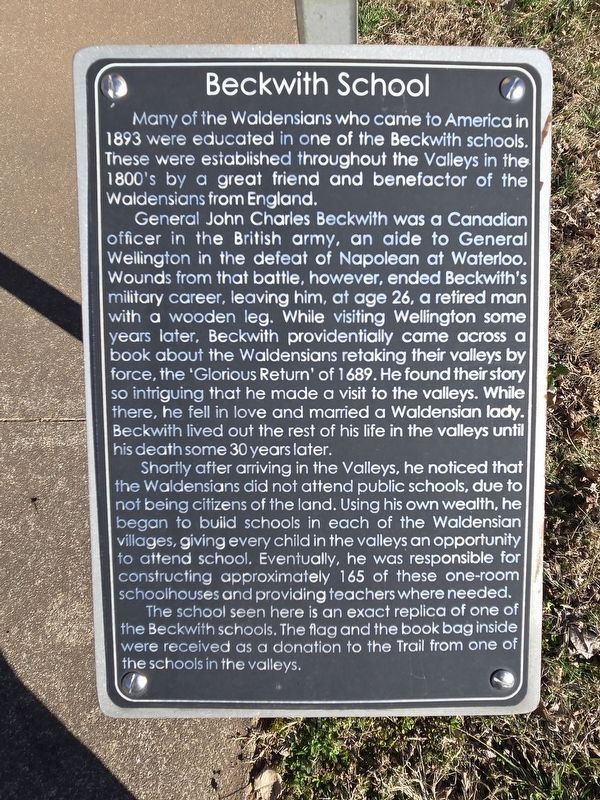
1. Beckwith School Marker
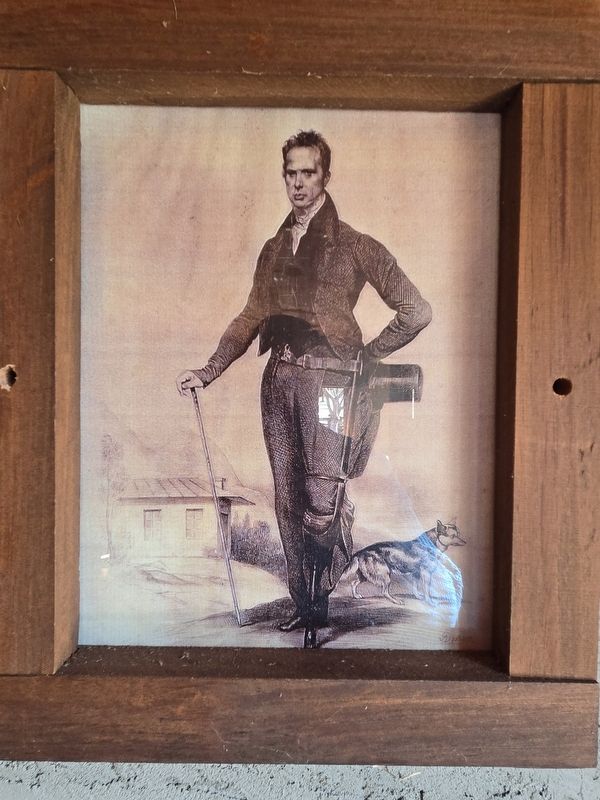
General John Charles Beckwith was a Canadian officer in the British army, an aide to General Wellington in the defeat of Napolean at Waterloo. Wounds from that battle, however, ended Beckwith's military career, leaving him, at age 26, a retired man with a wooden leg. While visiting Wellington some years later, Beckwith providentially came across a book about the Waldensians retaking their valleys by force, the 'Glorious Return' of 1689. He found their story so intriguing that he made a visit to the valleys. While there, he fell in love and married a Waldensian lady. Beckwith lived out the rest of his life in the valleys until his death some 30 years later.
Shortly after arriving in the Valleys, he noticed that the Waldensians did not attend public schools, due to not being citizens of the land. Using his own wealth, he began to build schools in each of the Waldensian villages, giving every child
this page online
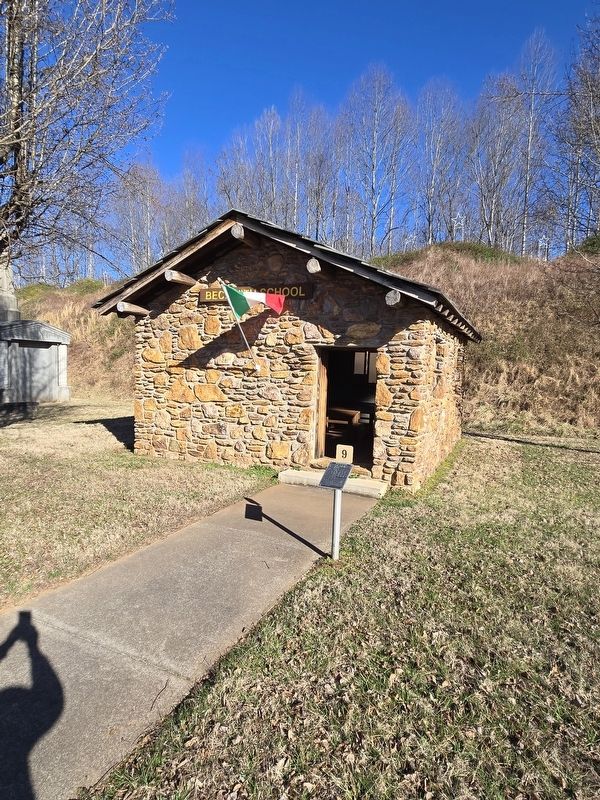
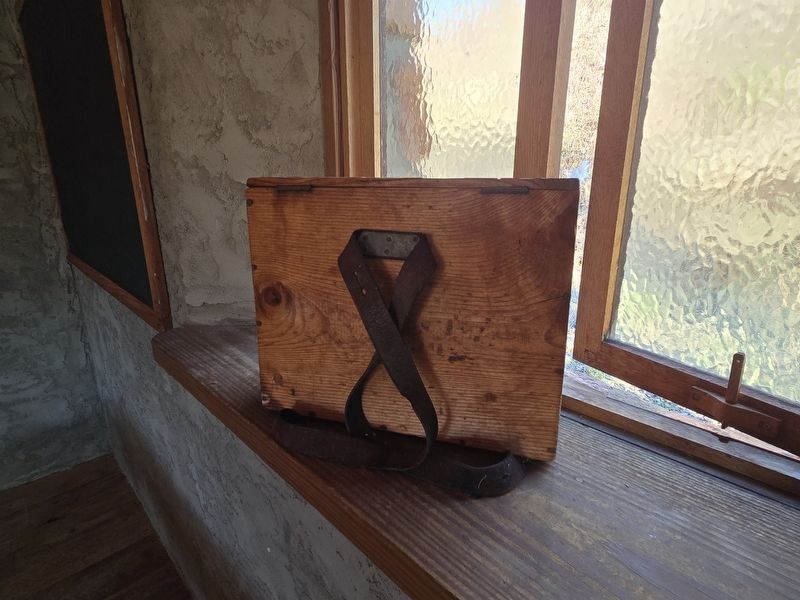
The school seen here is an exact replica of one of the Beckwith schools. The flag and the book bag inside were received as a donation to the Trail from one of the schools in the valleys. (Marker Number 9.)
Topics. This historical marker is listed in these topic lists: Charity & Public Work • Education • Religion & Religious Structures.
Location. 35° 44.865′ N, 81° 34.054′ W. Marker is in Valdese, North Carolina, in Burke County. It can be reached from the intersection of Church Street Northwest and Lincoln Avenue Northwest, on the right when traveling north. Location of the replica Beckwith School and marker is the Waldensian Trail of Faith Museum. Touch for map. Marker is at or near this postal address: 401 Church Street Northwest, Valdese NC 28690, United States of America. Touch for directions.

Regionally, this marker is in North Carolina’s Mountains. It is also in the American South,
Photographed by Mark Parker, March 2, 2025
2. Beckwith School and Marker. The flag was donated from a Beckwith School in Italy.
Other nearby markers. At least 8 other markers are within walking distance of this marker: Hay Rake (here, next to this marker); Edict of Emancipation - 1848 (a few steps from this marker); Mower (a few steps from this marker); Mill Stone (a few steps from this marker); Hay Baler (a few steps from this marker); The Tron House (a few steps from this marker); Monument at Sibaud (a few steps from this marker); Trail to Exile (within shouting distance of this marker). Touch for a list and map of all markers in Valdese.
Also see . . . Charles Beckwith. By Peter Meadows, originally featured in the Winter 2012 edition of the Waldensian Review.
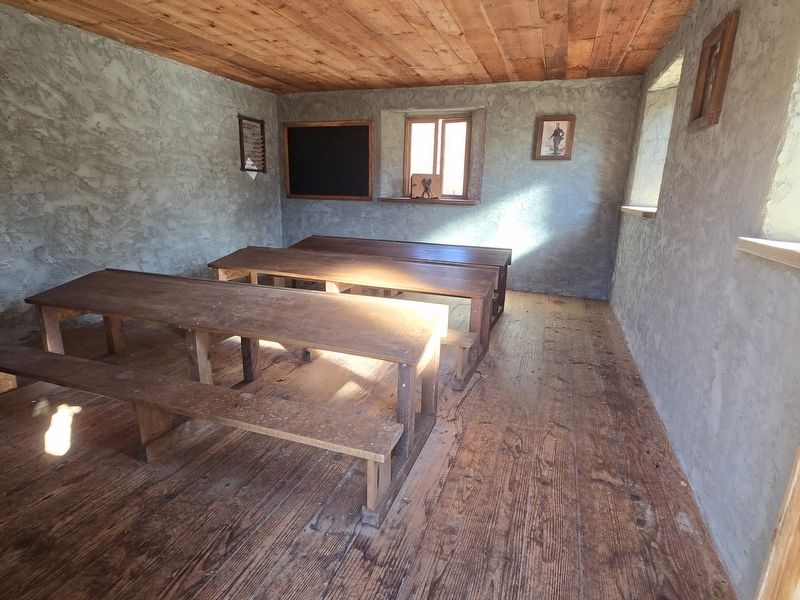
150 years ago Major-General John Charles Beckwith was buried in the cemetery of Torre Pellice, the(Submitted on March 6, 2025, by Mark Parker of Hickory, North Carolina.)Waldensian capital. He was 72. He was survived by his wife, Caroline, whom he had married in 1850 when aged 60, and by his only child, Charlotte, who was born six months after his death. Thousands of Waldensians accompanied his coffin and contributed to the cost of his monument. How had Beckwith, born in Halifax, Nova Scotia, who had campaigned through Spain and France in the Napoleonic Wars, fought at the Battle of Waterloo and lost a leg, come to be so honoured in Torre Pellice at his death in 1862?Photographed by Mark Parker, March 2, 20253. Beckwith School interior
Photographed by Mark Parker, March 2, 2025
4. Book bag (referenced in the marker) donated from a Beckwith School in Italy
Photographed by Mark Parker, March 2, 2025
5. Framed portrait of Charles Beckwith in the replica Beckwith School
Photographed by Mark Parker, March 2, 2025
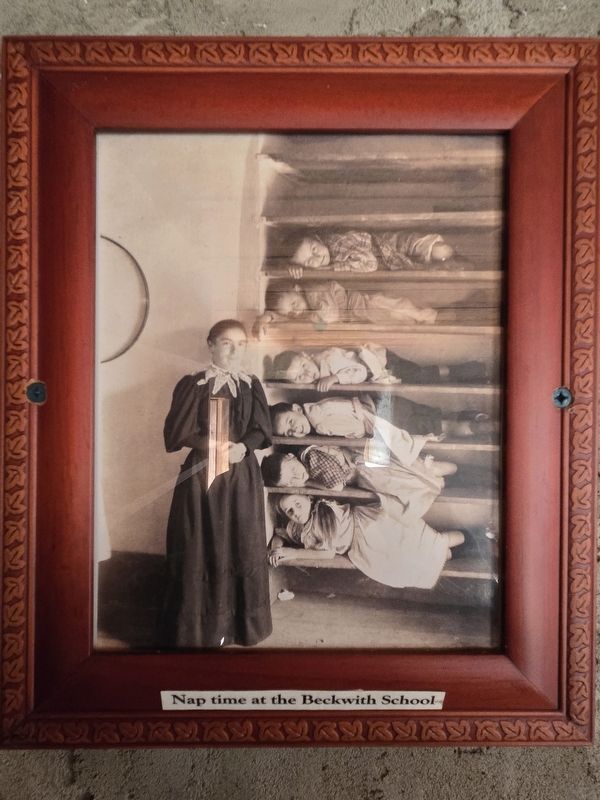
6. Framed portrait of "Nap Time at the Beckwith School"
Credits. This page was last revised on March 22, 2025. It was originally submitted on March 6, 2025, by Mark Parker of Hickory, North Carolina. This page has been viewed 164 times since then and 25 times this year. Photos: 1, 2, 3, 4, 5, 6. submitted on March 6, 2025, by Mark Parker of Hickory, North Carolina. • Bernard Fisher was the editor who published this page.
