Zonnebeke in West-Vlaanderen, Flanders, Belgium — Northwestern Europe
Shelter Baby Elephant
1917-1918
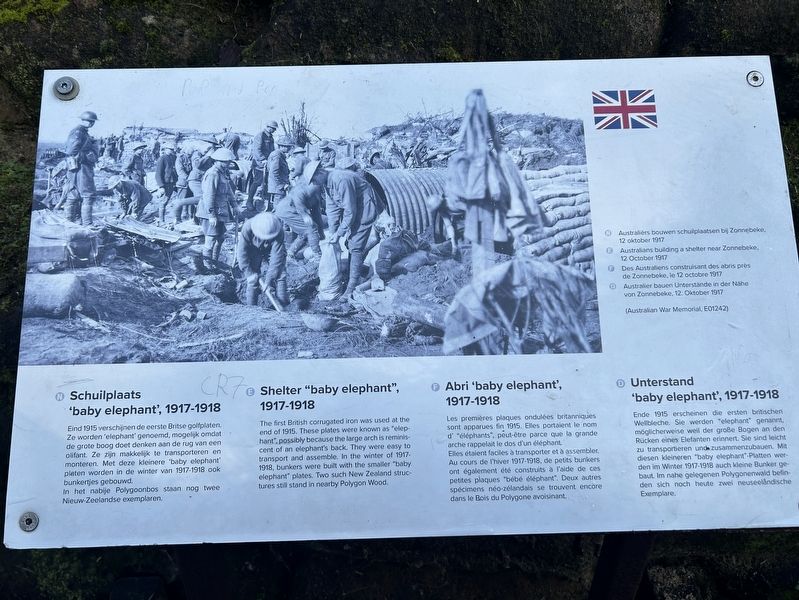
Photographed by Steve Stoessel, November 13, 2024
1. Shelter Baby Elephant Marker
 Shelter "baby elephant",
1917-1918
Shelter "baby elephant",
1917-1918The first British corrugated iron was used at the end of 1915. These plates were known as "elephant", possibly because the large arch is reminiscent of an elephant's back. They were easy to transport and assemble. In the winter of 1917-1918, bunkers were built with the smaller "baby elephant" plates. Two such New Zealand structures still stand in nearby Polygon Wood.
Eind 1915 verschijnen de eerste Britse golfplaten. Ze worden 'elephant' genoemd, mogelijk omdat de grote boog doet denken aan de rug van een olifant. Ze zijn makkelijk te transporteren en monteren. Met deze kleinere 'baby elephant' platen worden in de winter van 1917-1918 ook bunkertjes gebouwd. In het nabije Polygoonbos staan nog twee Nieuw-Zeelandse exemplaren.
Les premières plaques ondulées britanniques sont apparues fin 1915. Elles portaient le nom d' "éléphants", péut-être parce que la grande arche rappelait le dos d'un éléphant. Elles étaient faciles à transporter et à assembler. Au cours de l'hiver 1917-1918, de petits bunkers
this page online
Ende 1915 erscheinen die ersten britischen Wellbleche. Sie werden "elephant" genannt, möglicherweise weil der große Bogen an den Rücken eines Elefanten erinnert. Sie sind leicht zu transportieren und zusammenzubauen. Mit diesen kleineren "baby elephant"-Platten werden im Winter 1917-1918 auch kleine Bunker gebaut. Im nahe gelegenen Polygonenwald befinden sich noch heute zwei neuseeländische Exemplare.
[Photo Caption]
Australians building a shelter near Zonnebeke, 12 October 1917
Topics. This historical marker is listed in this topic list: War, World I. A significant historical date for this entry is October 12, 1917.
Location. 50° 52.203′ N, 2° 59.29′ E. Marker is in Zonnebeke, Vlaanderen (Flanders), in West-Vlaanderen. It can be reached from Berten Pilstraat. Marker is on the Passchendaele Museum grounds. Touch for map. Marker is at or near this postal address: Berten Pilstraat 5, Zonnebeke, Vlaanderen 8980, Belgium. Touch for directions.

Regionally,
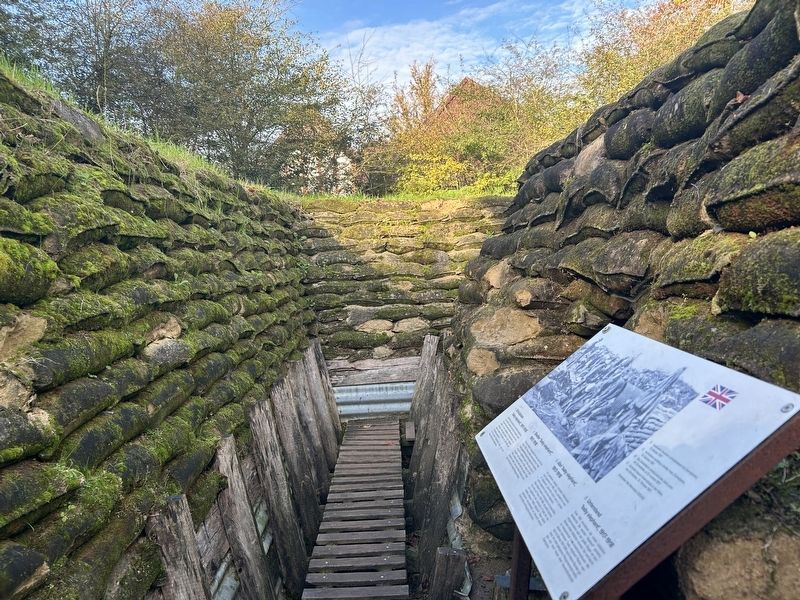
Photographed by Steve Stoessel, November 13, 2024
2. Shelter Baby Elephant Marker
Other nearby markers. At least 8 other markers are within walking distance of this marker: Fire Trench (here, next to this marker); Narrow-gauge Railways (a few steps from this marker); Communication Trench (a few steps from this marker); Model Trench System (a few steps from this marker); American Temporary Shelter (a few steps from this marker); a different marker also named Communication Trench (a few steps from this marker); a different marker also named Communication Trench (within shouting distance of this marker); a different marker also named Fire Trench (within shouting distance of this marker). Touch for a list and map of all markers in Zonnebeke.
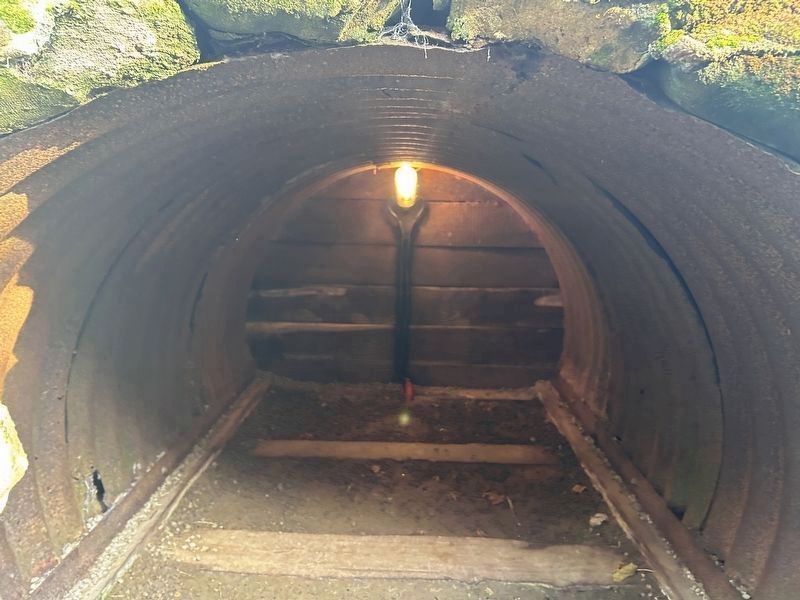
Photographed by Steve Stoessel, November 13, 2024
3. Baby Elephant Shelter
Credits. This page was last revised on March 11, 2025. It was originally submitted on March 8, 2025, by Steve Stoessel of Niskayuna, New York. This page has been viewed 95 times since then and 13 times this year. Photos: 1, 2. submitted on March 8, 2025, by Steve Stoessel of Niskayuna, New York. 3. submitted on March 11, 2025, by Steve Stoessel of Niskayuna, New York.
