Durango in La Plata County, Colorado — The American Mountains (Southwest)
Electric Revolution
Photographed by Cosmos Mariner, July 25, 2024
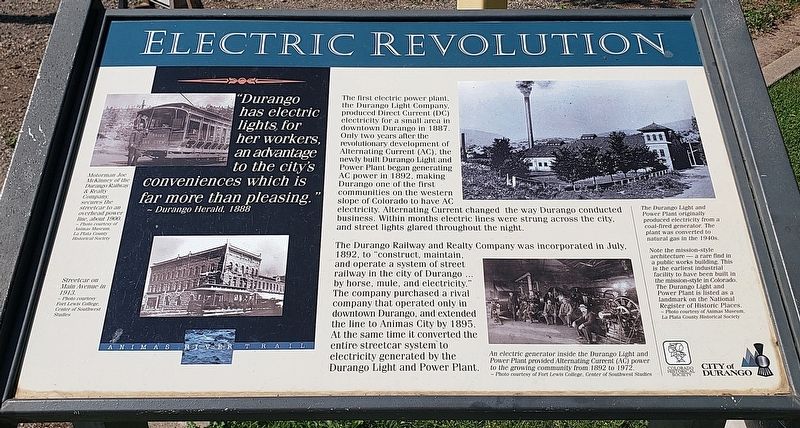
1. Electric Revolution Marker
“Durango has electric lights for her workers, an advantage to the city’s conveniences which is far more than pleasing.” ~Durango Herald, 1888
The first electric power plant, the Durango Light Company, produced Direct Current (DC) electricity for a small area in downtown Durango in 1887. Only two years after the revolutionary development of Alternating Current (AC), the newly built Durango Light and Power Plant began generating AC power in 1892, making Durango one of the first communities on the western slope of Colorado to have AC electricity. Alternating Current changed the way Durango conducted business. Within months electric lines were strung across the city, and street lights glared throughout the night.
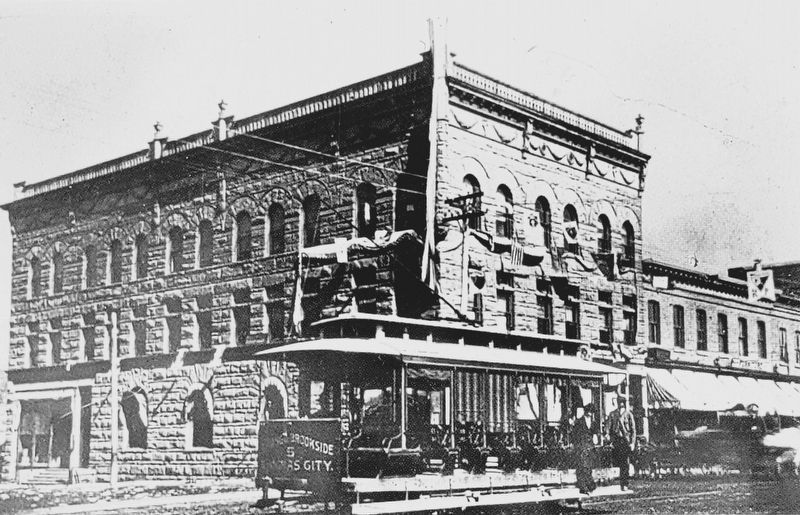
The Durango Railway and Realty Company was incorporated in 1892, to “construct, maintain, and operate a system of street railway in the city of Durango… by horse, mule, and electricity.” The company purchased a rival company that operated only in downtown Durango, and extended the line to Animas City by 1895. At the same time it converted the entire streetcar system to electricity generated by the Durango Light and
this page online
Erected by City of Durango and Colorado Historical Society.
Topics and series. This historical marker is listed in these topic lists: Architecture • Industry & Commerce • Notable Buildings • Railroads & Streetcars. In addition, it is included in the National Register of Historic Places (NRHP) series list. A significant historical year for this entry is 1892.
Location. 37° 16.742′ N, 107° 52.806′ W. Marker is in Durango, Colorado, in La Plata County. It can be reached from West 14th Street just west of Camino Del Rio (U.S. 550). The marker is located on the Animas River Trail, near the northwest corner of the old powerhouse. Touch for map. Marker is at or near this postal address: 1333 Camino Del Rio, Durango CO 81301, United States of America. Touch for directions.

Regionally, this marker is in the American Mountain West and at the Four Corners. Globally, it is in North America, the Rocky Mountains, the Western Hemisphere, the Western World, and the Anglosphere. Historically, it finds itself in what was once the territory of the Ancestral Puebloans.
Other nearby markers. At least 8 other markers
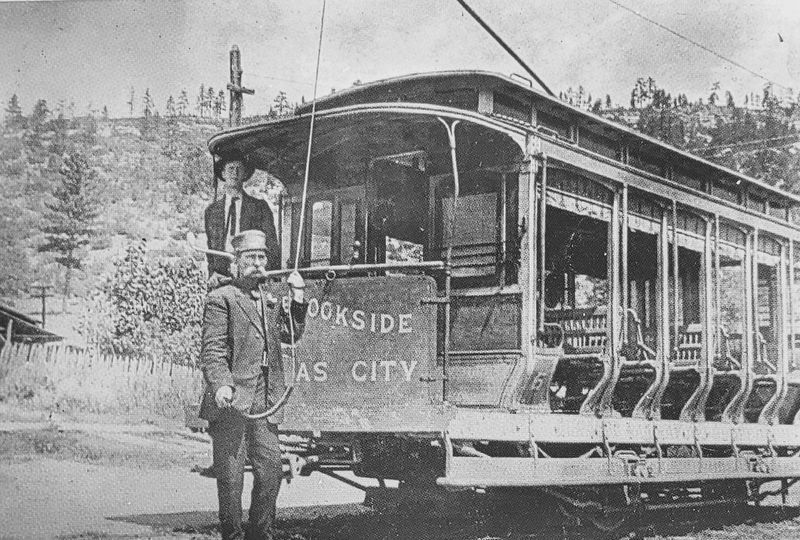
Animas Museum, La Plata County Historical Society
2. Marker detail: Streetcar
Motorman Joe McKinney of the Durango Railway & Realty Company, secures the streetcar to an overhead power line, about 1900.
Regarding Electric Revolution. The Durango Light and Power Plant is listed in the National Register of Historic Places, № 83001323, as Colorado Ute Power Plant. It is also listed in the Colorado Register of Historic Properties, Site Number 5LP.1146.
From the National Register Nomination prepared by Marjorie J. Wells, 2/28/1980:
The Colorado Ute Power Plant is significant for its association with the development of power for the San Juan mining district and the city of Durango in the late nineteenth and early twentieth centuries. It is also significant as the earliest example of mission architecture in the Stateand as a rare example of mission found on an industrial building.Courtesy Fort Lewis College, Center of Southwest Studies3. Marker detail: Streetcar on Main Avenue in 1913
In 1893, the building was completed, and the move was made from the 7th Street location to the new steam plant. Expansion and improvements continued until 1906 when daytime service was inaugurated for the first time. Major modification and enlargements took place in 1916 and 1917 when General Electric Turbine sets were added. In 1946-47, the old boilers were converted to gas. The heyday of the plant came in the 1960’s when its biggest user was the Vandium Corporation of America mill south of Durango. But when the uranium mill closed, it forced a major cutback, and by 1972, the plant was deemed impractical to keep in operation.
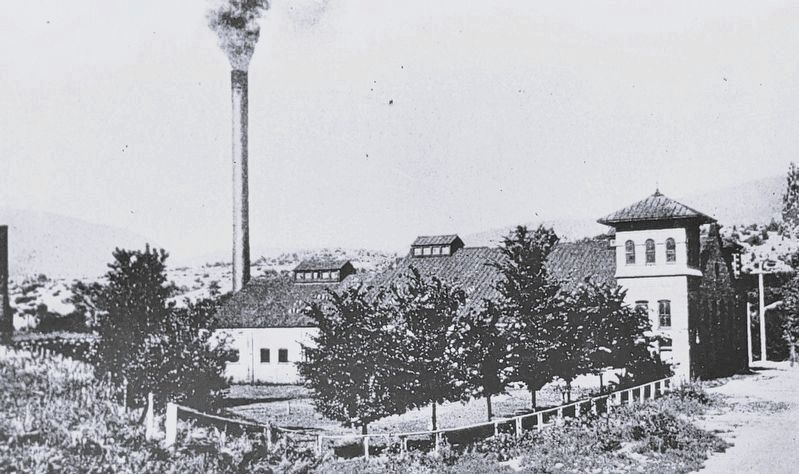
According to Marcus Whiffen, A. Page Brown's California Building, designed for the 1893 Columbian Exposition in Chicago, was the earliest building designed in the mission style. Although a long way from Chicago in both distance and sophistication, Durango appears to be the location of Colorado's earliest mission building, the Colorado Ute Power Plant. Whereas mission became a very popular form of domestic and public architecture in Colorado duringits heyday, it is rarely found on industrial buildings.Animas Museum, La Plata County Historical Society4. Marker detail: The Durango Power PlantThe Durango Power Plant originally produced electricity from a coal-fired generator. The plant was converted to natural gas in the 1940s.Note the mission-style architecture — a rare find in a public works building. This is the earliest industrial facility to have been built in the mission-style in Colorado. The Durango Light and Power Plant is listed as a landmark on the National Register of Historic Places.
Also see . . . Colorado Ute Power Plant (History Colorado).
Excerpt: Constructed in 1893, the two-story stuccoed building is the earliest known example of Mission style architecture in the state, as well as a rare example of the utilization of the style in an industrial application.(Submitted on March 16, 2025, by Cosmos Mariner of Cape Canaveral, Florida.)
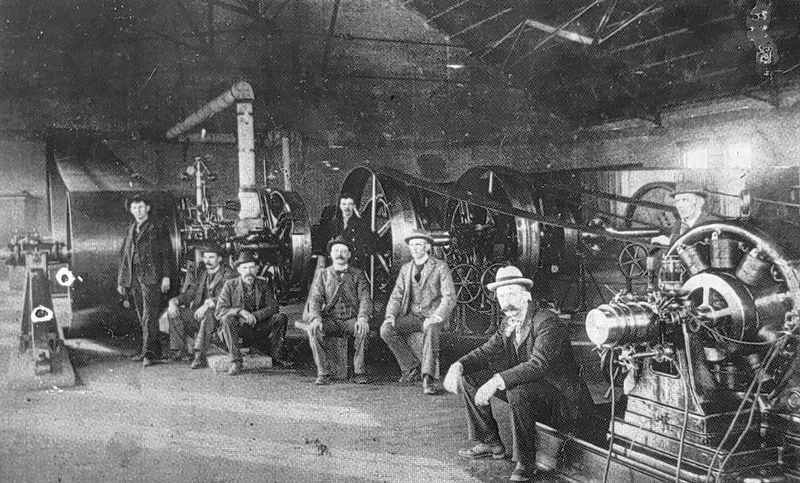
Courtesy Fort Lewis College, Center of Southwest Studies
5. Marker detail: Durango Light and Power Plant Generator
An electric generator inside the Durango Light and Power Plant provided Alternating Current (AC) power to the growing community from 1892 to 1972.
Photographed by Cosmos Mariner, July 25, 2024
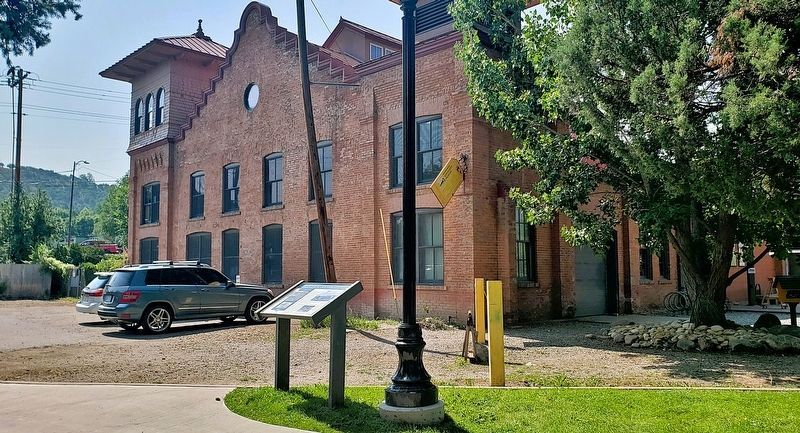
6. Electric Revolution Marker
Looking southeast from the Animas River Trail. The historic Durango Light and Power Plant is in the background.
Photographed by Cosmos Mariner, July 25, 2024
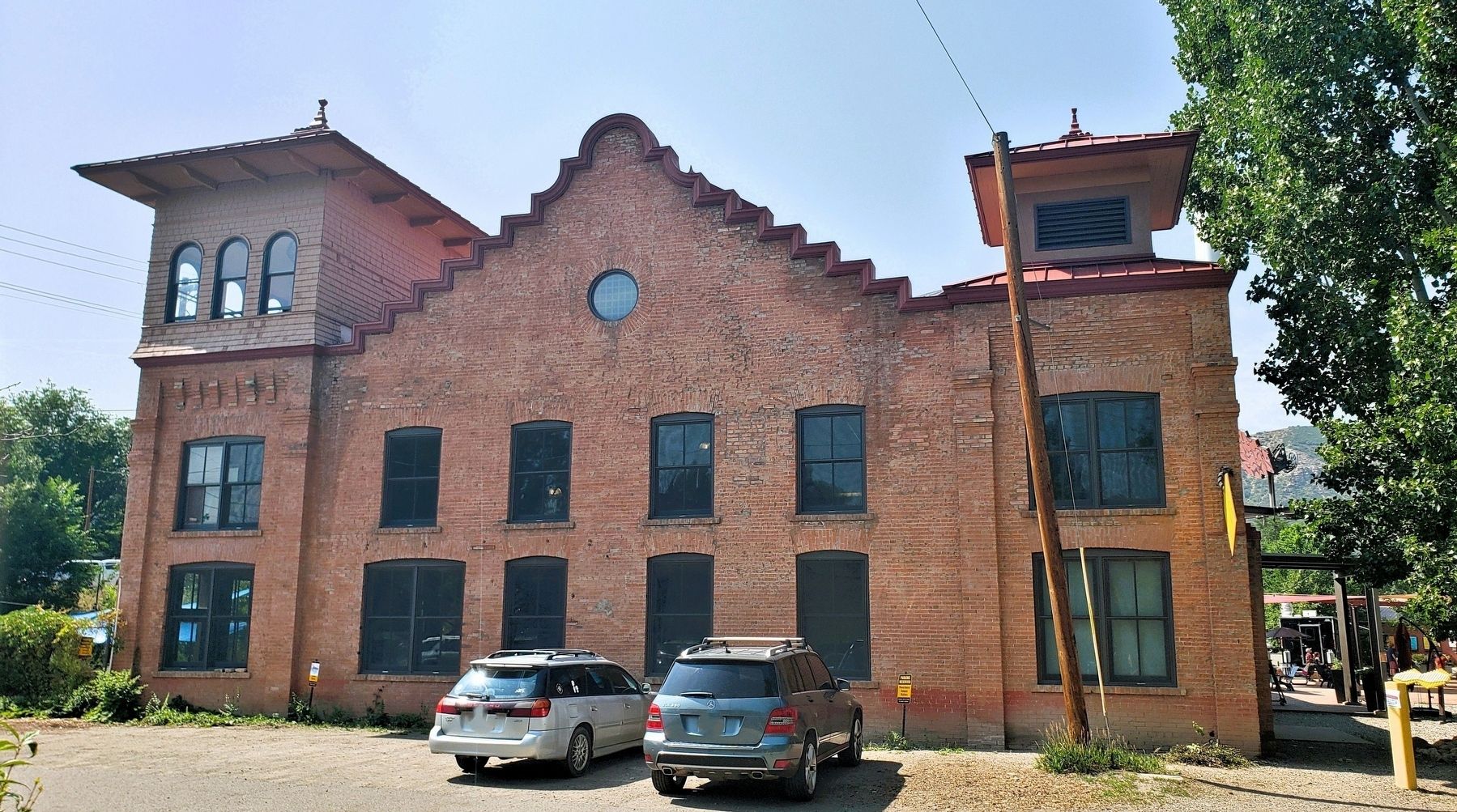
7. Historic Durango Light & Power Plant / Colorado Ute Power Plant (north elevation)
From the National Register Nomination: The Colorado Ute Power Plant is a large two story Mission Style structure. Although primarily one space, the structure appears much higher due to its stepped gable to the north flanked by a bell tower rising to the height of the main roof ridge line and a smaller non-functional representation of a bell tower. These two elements, the stepped parapet and towers, strongly distinguish the north facade. The other sides are simple masonry with a stucco finish and many rectilinear windows. Pilasters occur at regular intervals on each side of the building. The main bell tower at the northeast corner of the structure has a pyramidal roof with a finial. A series of three arched windows occur on each side of the shingled tower. The large open eaves are supported by simple brackets.
Credits. This page was last revised on June 30, 2026. It was originally submitted on March 11, 2025, by Cosmos Mariner of Cape Canaveral, Florida. This page has been viewed 288 times since then and 123 times this year. Photos: 1, 2, 3, 4, 5, 6, 7. submitted on March 16, 2025, by Cosmos Mariner of Cape Canaveral, Florida.
