Pocatello in Bannock County, Idaho — The American West (Mountains)
Trinity Episcopal Church
Photographed by Cosmos Mariner, July 8, 2024
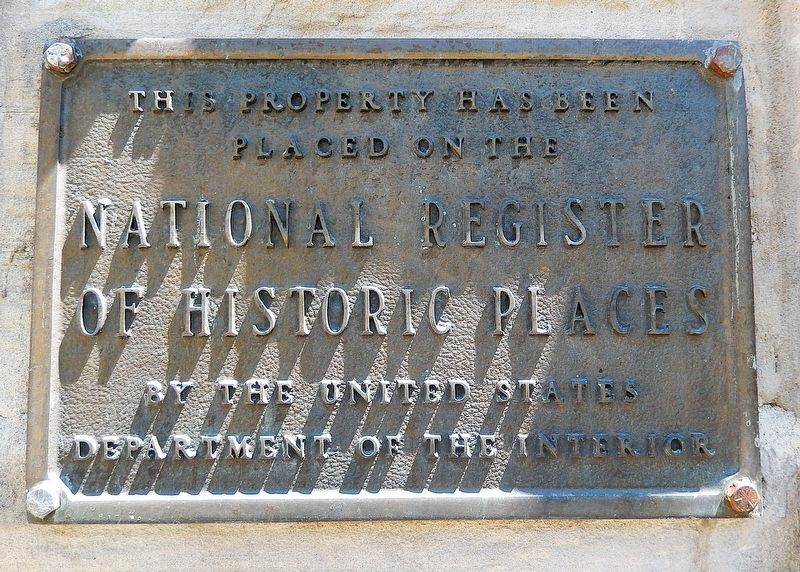
1. Trinity Episcopal Church Marker
National Register of Historic Places
by the United States Department of the Interior
Topics and series. This historical marker is listed in these topic lists: Architecture • Notable Buildings • Religion & Religious Structures. In addition, it is included in the National Register of Historic Places (NRHP) series list. A significant historical year for this entry is 1897.
Location. 42° 51.776′ N, 112° 27.188′ W. Marker is in Pocatello, Idaho, in Bannock County. It is at the intersection of North Arthur Avenue and West Lander Street, on the left when traveling south on North Arthur Avenue. The marker is mounted at eye-level on the southwest/front facade of the church, facing North Arthur Avenue. Touch for map. Marker is at or near this postal address: 248 North Arthur Avenue, Pocatello ID 83204, United States of America. Touch for directions.

Regionally, this marker is in Bear River Country. It is also in the American Mountain West. Globally, it is in North America, the Western Hemisphere, the Western World, and the Anglosphere.
Other nearby markers. At least 8 other markers
this page online
Regarding Trinity Episcopal Church. National Register of Historic Places № 78001045.
From the National Register Nomination prepared by Don J, Hibbard, 11/2/1977:
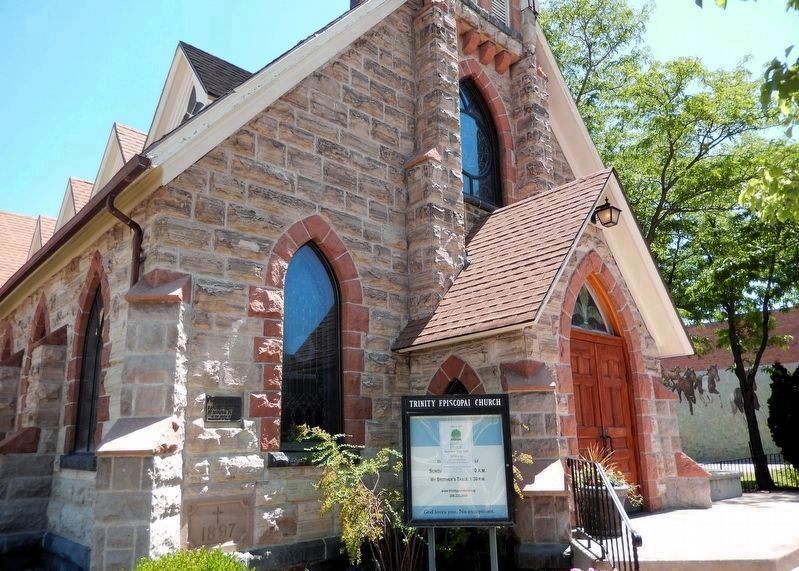
The Trinity Episcopal Church is architecturally significant as a good example of a Gothic parish church rendered in stone, complete with buttresses, lancet windows, and Gothic arched portals. It is constructed of white rusticated sandstone with "Red Idaho Rock" trim, both of which were quarried on the Fort Hall Indian Reservation.Architect W. Y. Van Winkle of Hailey reportedly designed this building after an English parish church in Lancashire. It was the first
stone Episcopal Church in Idaho and one of the few nineteenth Century stone churches in the state. Its fine galvanized iron ceiling is also a rarity and worthy of preservation, as are the stained-glass windows.Photographed by Cosmos Mariner, July 8, 20242. Trinity Episcopal Church MarkerThe marker is mounted at eye-level near the north/left edge of the front/southwest façade.
Related markers. Click here for a list of markers that are related to this marker.
Also see . . . Trinity Episcopal Church — Our History.
Excerpt: At the time that Trinity Episcopal Church was organized, Pocatello was not yet a city and consisted of one short street, which was later named Harrison Avenue. On September 29, 1889, when a small group of Episcopalians organized Trinity, the land that Pocatello sat on was still owned by the Shoshone Bannock tribes.(Submitted on March 13, 2025, by Cosmos Mariner of Cape Canaveral, Florida.)In 1897 the architectural firm of Mooney and Johnson won the bid to build the church. The architectural plans cost $120. The building cost $3,912. The old church was moved to the back of the lot and the excavation for the new church began. In July of 1900 the lot next to the church was purchased and the old church was moved to that location. Today, at over 125 years of age, this same church building continues to be one of the finest in Idaho,
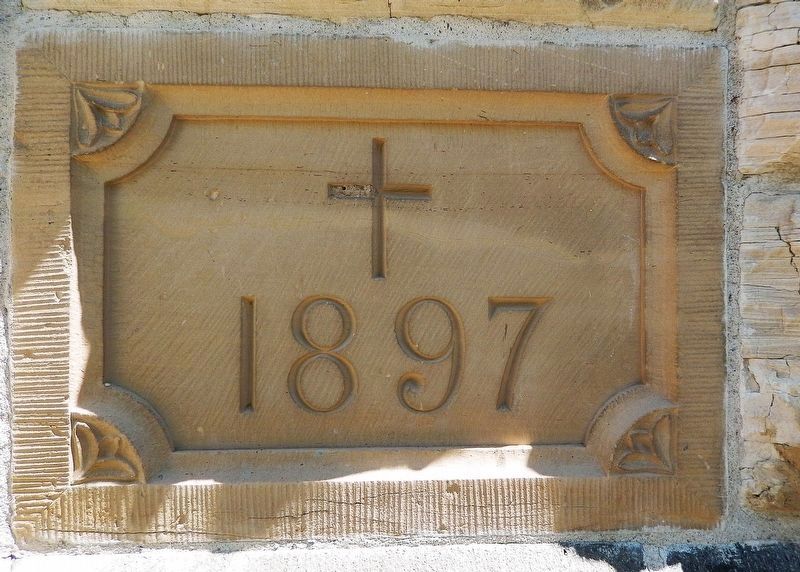
and one of the most beautiful. It is listed in the National Register of Historic Places in recognition of its significance in Idaho’s history.Photographed by Cosmos Mariner, July 8, 20243. Trinity Episcopal Church CornerstoneThe cornerstone is located at ground level, directly below the historical marker.
Photographed by Cosmos Mariner, July 8, 2024
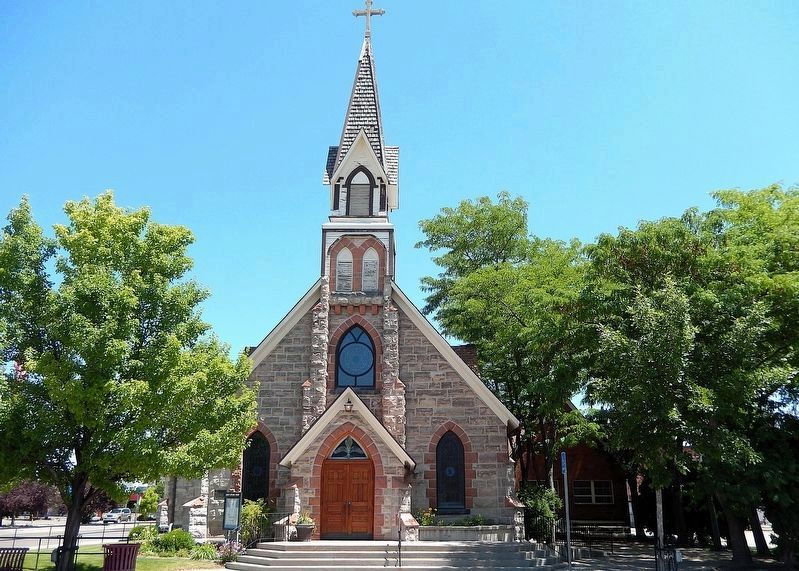
4. Trinity Episcopal Church (southwest/front entrance)
From the National Register Nomination: The building is distinguished by an L-shaped plan and a 92' clapboard bell tower with spire. The tower, which was originally shingled, rises from two buttress-like piers which frame a fine stained-glass window.
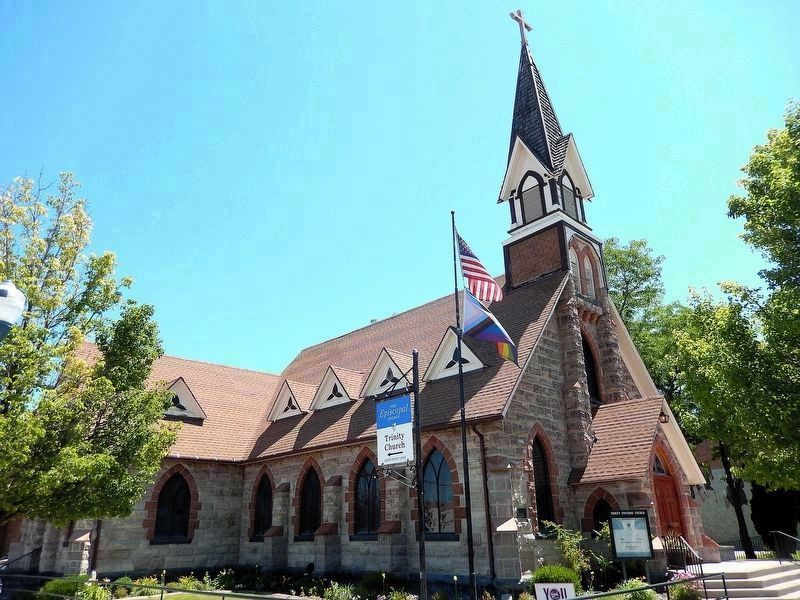
Photographed by Cosmos Mariner, July 8, 2024
5. Trinity Episcopal Church (west elevation)
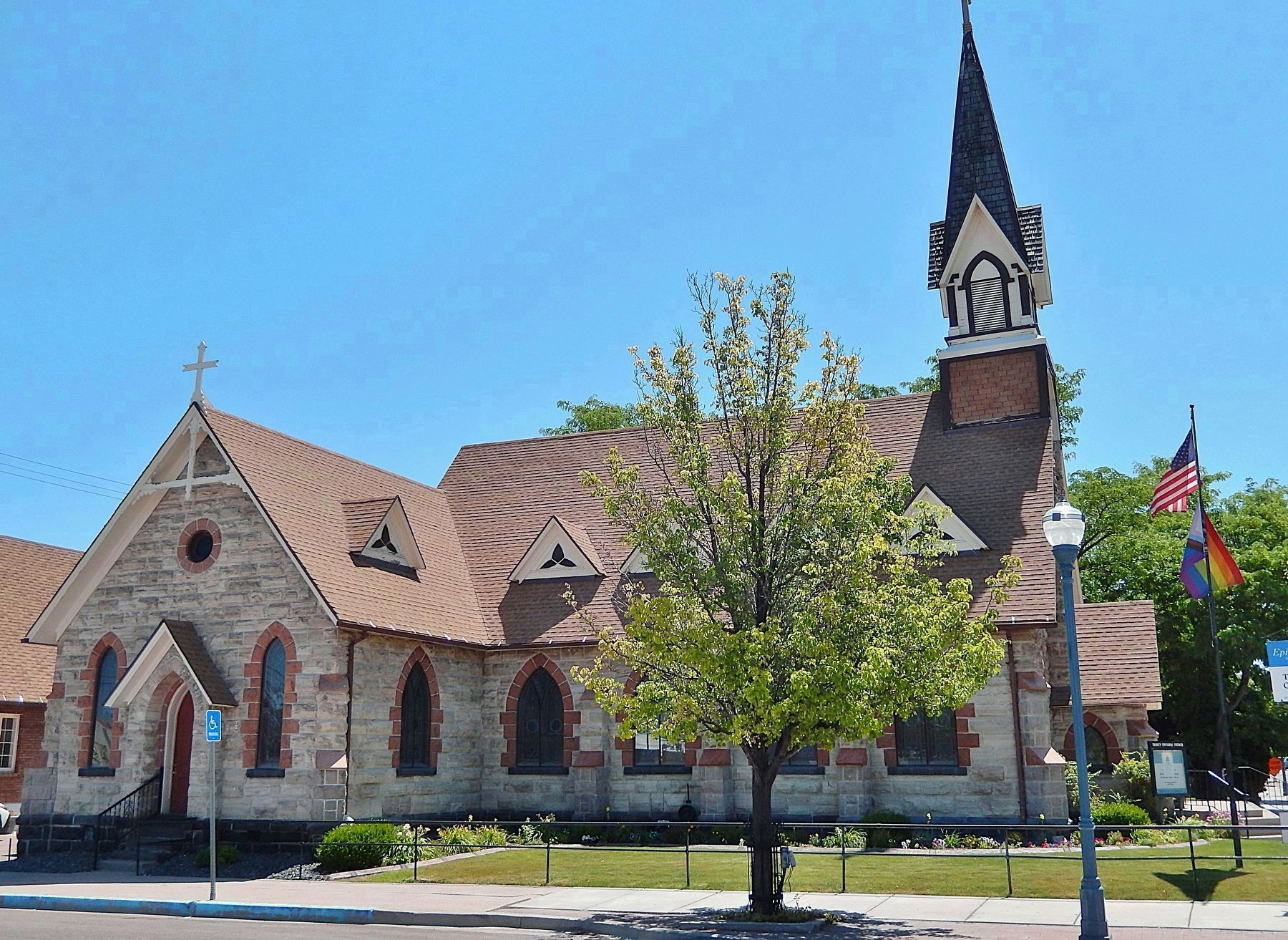
Photographed by Cosmos Mariner, July 8, 2024
6. Trinity Episcopal Church (northwest elevation)
From the National Register Nomination: The dormers have trefoil-stained glass windows and the gable of the wing has a stick ornament. The Gothic interior has oak furnishings and embossed galvanized iron ceiling panels from Ohio. The stained glass was purchased from Wells Brothers of Chicago. There is an open beam ceiling.
Credits. This page was last revised on March 14, 2025. It was originally submitted on March 11, 2025, by Cosmos Mariner of Cape Canaveral, Florida. This page has been viewed 158 times since then and 31 times this year. Photos: 1, 2, 3, 4, 5, 6. submitted on March 13, 2025, by Cosmos Mariner of Cape Canaveral, Florida.
