Okeechobee in Okeechobee County, Florida — The American South (South Atlantic)
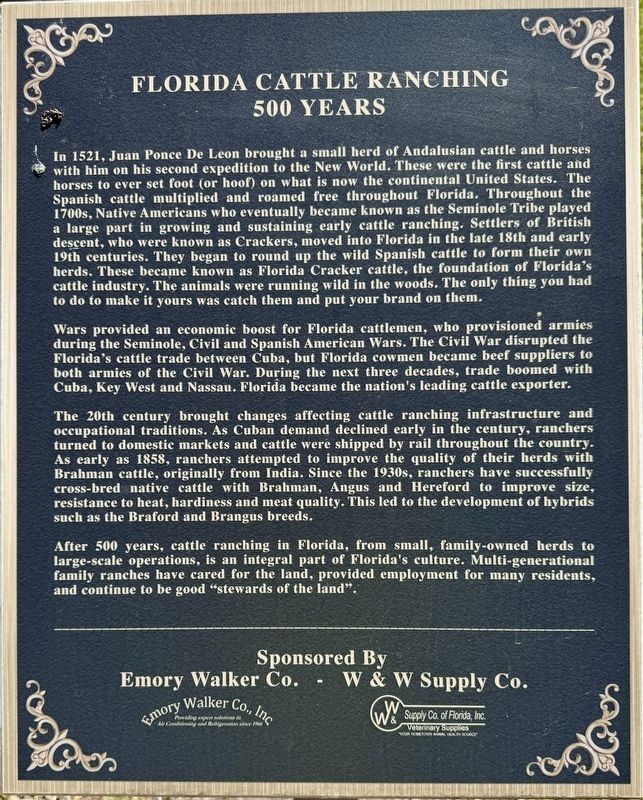
Florida Cattle Ranching
500 Years
| — | Cattleman’s Square | — |
Photographed by Brandon D Cross
1. Florida Cattle Ranching Marker
Wars provided an economic boost for Florida cattlemen, who provisioned armies during the Seminole, Civil and Spanish American Wars. The Civil War disrupted the Florida's cattle trade between Cuba, but Florida cowmen became beef suppliers to both armies
this page online
The 20th century brought changes affecting cattle ranching infrastructure and occupational traditions. As Cuban demand declined early in the century, ranchers turned to domestic markets and cattle were shipped by rail throughout the country. As early as 1858, ranchers attempted to improve the quality of their herds with Brahman cattle, originally from India. Since the 1930s, ranchers have successfully cross-bred native cattle with Brahman, Angus and Hereford to improve size, resistance to heat, hardiness and meat quality. This led to the development of hybrids such as the Braford and Brangus breeds.
After 500 years, cattle ranching in Florida, from small, family-owned herds to large-scale operations, is an integral part of Florida's culture. Multi-generational family ranches have cared for the land, provided employment for many residents, and continue to be good "stewards of the land".
Erected by Emory Walker Co. and W&W Supply Co.
Topics. This historical marker is listed
Photographed by Brandon D Cross
2. Florida Cattle Ranching Marker
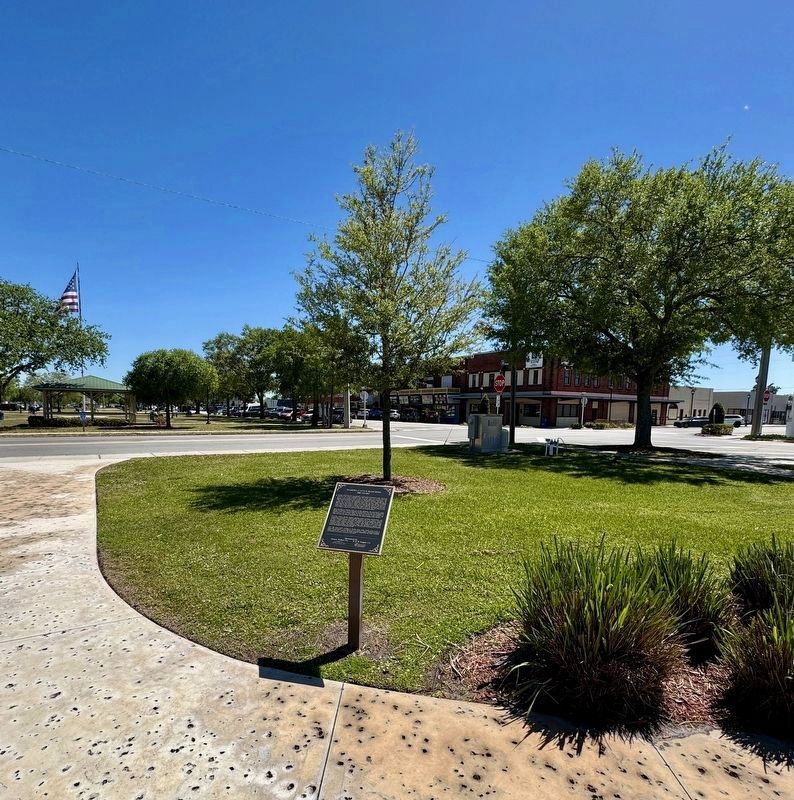
Location. 27° 14.611′ N, 80° 50.078′ W. Marker is in Okeechobee, Florida, in Okeechobee County. It can be reached from the intersection of 5SW Park Street and SW 6th Avenue, on the right when traveling east. The marker is located within Cattleman’s Square. Touch for map. Marker is at or near this postal address: 517 SW Park Street, Okeechobee FL 34972, United States of America. Touch for directions.

Regionally, this marker is in Central Florida. It is also in the American South. Globally, it is in the North Atlantic Region, North America, a Gulf of Mexico state, the Western Hemisphere, the Western World, and the Anglosphere. Historically, it finds itself in what was once New Spain, the territory of the Mississippian Culture, one of the Confederate States of America, and the Antebellum South.
Other nearby markers. At least 8 other markers are within walking distance of this marker: Historic Role of Seminole Cattle Ranching (here, next to this marker); Rollins Ranch (a few steps from this
Photographed by Brandon D Cross, March 22, 2025
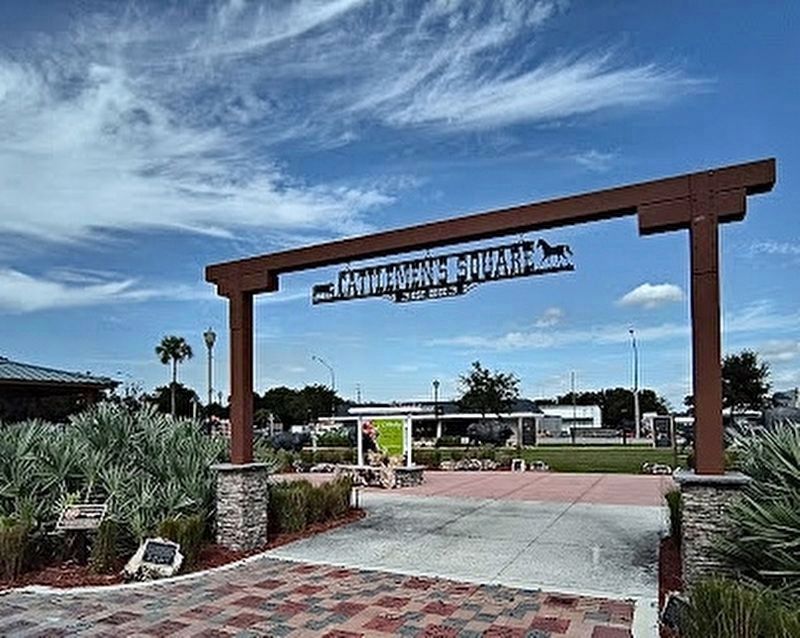
3. Cattleman’s Square Entrance
Also see . . . Cattleman’s Square. (Submitted on March 22, 2025, by Brandon D Cross of Flagler Beach, Florida.)
Photographed by Brandon D Cross
4. Cattleman’s Square
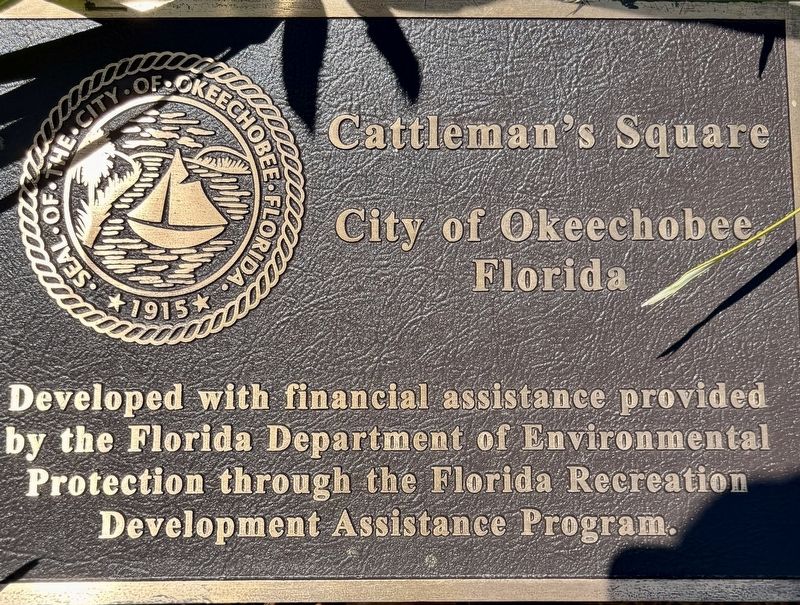
Developed with financial assistance provided by the Florida Department of Environmental Protection through the Florida Recreation
Development Assistance Program.
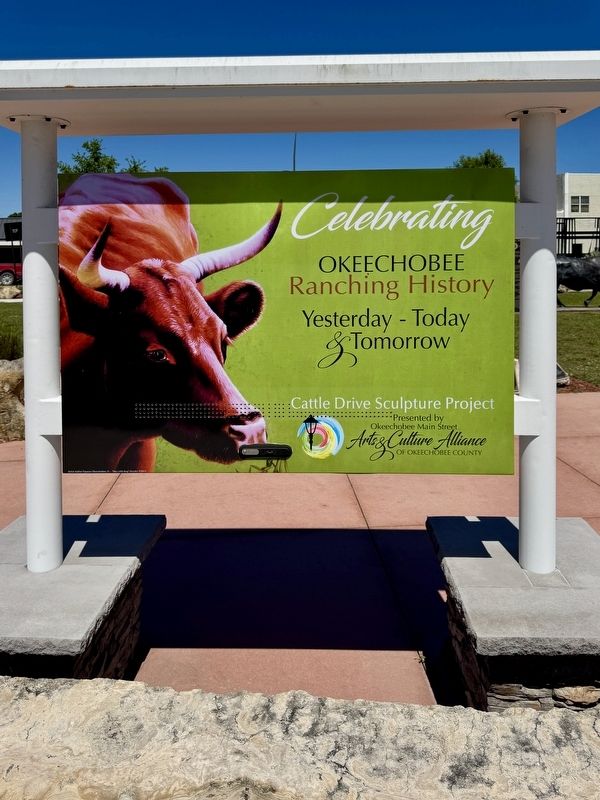
Photographed by Brandon D Cross
5. Celebrating Okeechobee Ranching History
Credits. This page was last revised on March 23, 2025. It was originally submitted on March 22, 2025, by Brandon D Cross of Flagler Beach, Florida. This page has been viewed 209 times since then and 48 times this year. Photos: 1, 2, 3, 4, 5. submitted on March 22, 2025, by Brandon D Cross of Flagler Beach, Florida. • Andrew Ruppenstein was the editor who published this page.
