
Binnenstad Hoorn , North Holland, Netherlands — Northwestern Europe
Burgerweeshuis
⎯⎯⎯
Orphanage
| — | Rijksmonument | — |

Photographed by Andrew Ruppenstein, March 22, 2025
1. Burgerweeshuis / Orphanage Marker

Erected by Gemeente Hoorn, ANWB. (Marker Number 16037/010.)
Topics. This historical marker is listed in these topic lists: Charity & Public Work • Religion & Religious Structures. A significant historical year for this entry is 1408.
Location. 52° 38.516′ N, 5° 3.621′ E. Marker is in Hoorn, Noord-Holland (North Holland). It is in Binnenstad Hoorn. It is on Korte Achterstraat, on the right when traveling north. Touch for map. Marker is at or near this postal address: Korte Achterstraat 4, Hoorn, Noord-Holland 1621 GA, Netherlands. Touch for directions.

Regionally, it is in Europe, the European Union, Atlantic Europe, the Benelux Low Countries, the Schengen Area, Western Europe, and the Western
this page online
Other nearby markers. At least 8 other markers are within walking distance of this marker: Graaf van Bossu (a few steps from this marker); Hoorn WWII Memorial (within shouting distance of this marker); Nieuwstraat 18 (about 90 meters away, measured in a direct line); Kloosterpoort / “Convent” Gate (1607) (about 90 meters away); Doelengebouw / Shooting Guild Buildings (about 90 meters away); Admiraliteitspoortje / Admiralty Gate (1607) (about 120 meters away); Lutherse Kerk / Lutheran Church (about 150 meters away); Ramen / “Frames” (about 180 meters away). Touch for a list and map of all markers in Hoorn.
Also see . . . Burgerweeshuis en Mariakapel (ErfgoedHoorn.nl). The QR code leads to a short history of the orphanage plus six pictures. Excerpt (in translation):
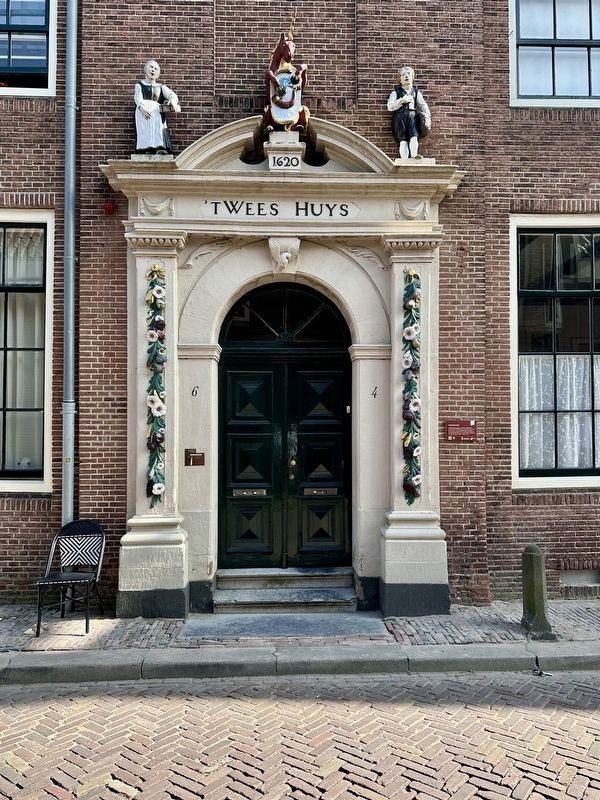
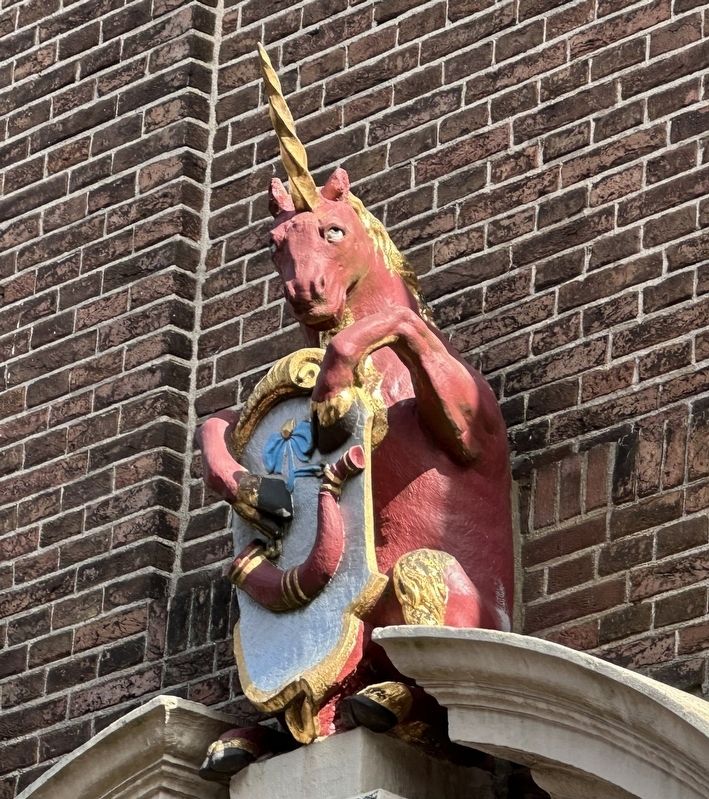
This monumental complex consists of the former Burgerweeshuis and the former Mariakapel, which together enclose an inner garden. From 1574 to 1958, the orphans of Hoorn lived here. They were the children of Hoorn parents who could go here. Children of non-citizens were handed over to the poor orphanage. The name poorhouse sounds worse than it turned out to be in practice. Children in an orphanage were always assured of clean clothes and good food. Children in poor families, on(Submitted on March 26, 2025.)the other hand, often lived in less positive circumstances.Photographed by Andrew Ruppenstein, March 22, 20252. Burgerweeshuis / Orphanage Marker - wide viewThe city’s coat of arms, a shield with a horn held by a unicorn, stands above the door.
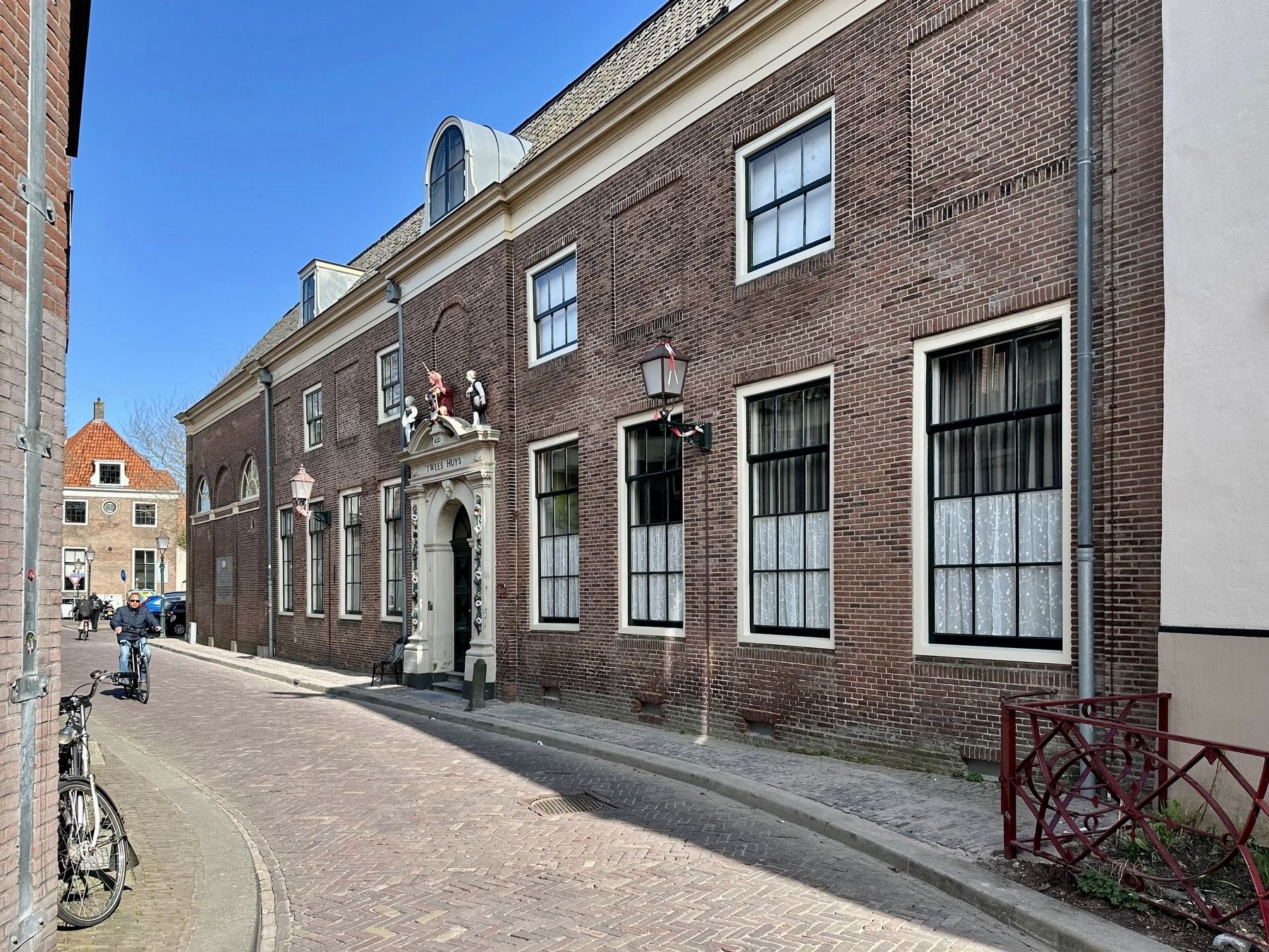
The oldest parts of this building date from 1508, when a stone chapel was built. More than five centuries later, the complex has of course undergone several transformations. The main building, for example, was renovated in 1729 and was then given its strict and typically 18th-century appearance. The gate was preserved during this renovation. You can see, among other things, the coat of arms of Hoorn and the statues of the orphans.
Photographed by Andrew Ruppenstein, March 22, 2025
3. Coat of arms of Hoorn with unicorn
Photographed by Andrew Ruppenstein, March 22, 2025
4. Burgerweeshuis / Orphanage and marker
Credits. This page was last revised on March 26, 2025. It was originally submitted on March 26, 2025, by Andrew Ruppenstein of Lamorinda, California. This page has been viewed 140 times since then and 24 times this year. Photos: 1, 2, 3, 4. submitted on March 26, 2025, by Andrew Ruppenstein of Lamorinda, California.
