
Binnenstad Hoorn , North Holland, Netherlands — Northwestern Europe
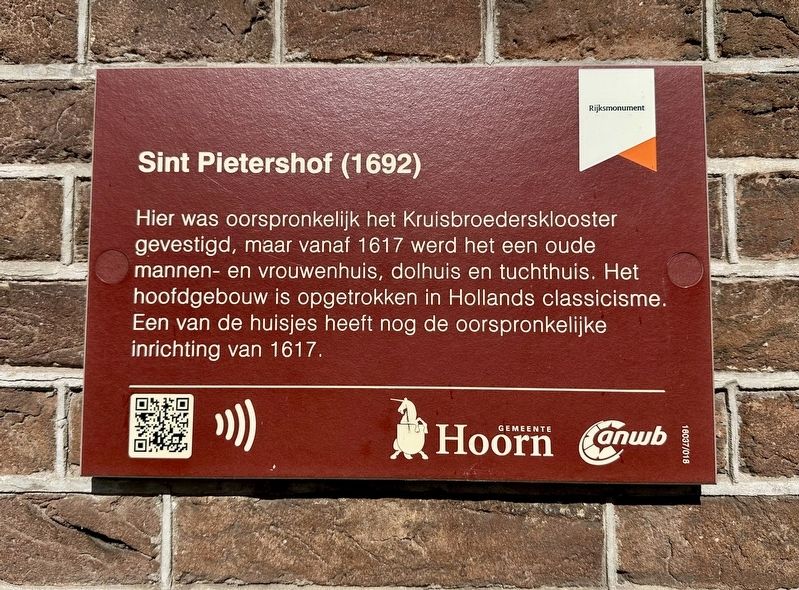
Sint Pietershof (1692)
| — | Rijksmonument | — |
Photographed by Andrew Ruppenstein, March 22, 2025
1. Sint Pietershof (1692) Marker

(The Brothers of the Cross monastery was originally located here, but from 1617 it became an old men's and women's home, madhouse, and a house of correction. The main building is built in Dutch classicist style. One of the apartments still has the original furnishing from 1617.)
Erected by Gemeente Hoorn, ANWB. (Marker Number 16037/018.)
Topics. This historical marker is listed in these topic lists: Charity & Public Work • Religion & Religious Structures. A significant historical year for this entry is 1617.
Location. 52° 38.58′ N, 5° 3.416′ E. Marker is in Hoorn, Noord-Holland (North Holland). It is in Binnenstad Hoorn. It is at the intersection of Dal and Spoorstraat, on the right when traveling west on Dal. Touch for map. Marker is at or near this postal address: Dal 9, Hoorn, Noord-Holland 1621 HP, Netherlands. Touch for directions.

Regionally,
this page online
Other nearby markers. At least 8 other markers are within walking distance of this marker: Claes Stapelhofje / Claes Stapel Almshouse (about 90 meters away, measured in a direct line); Ramen 34 (about 90 meters away); Ramen 1-3 (about 180 meters away); Ramen / “Frames” (about 180 meters away); Lutherse Kerk / Lutheran Church (about 180 meters away); Doelengebouw / Shooting Guild Buildings (about 210 meters away); Graaf van Bossu (approx. 0.2 kilometers away); Hoorn WWII Memorial (approx. 0.3 kilometers away). Touch for a list and map of all markers in Hoorn.
Also see . . . Sint Pietershof (ErfgoedHoorn.nl, in Dutch). The QR code on the marker leads to a page with more information and five picture. Excerpt:
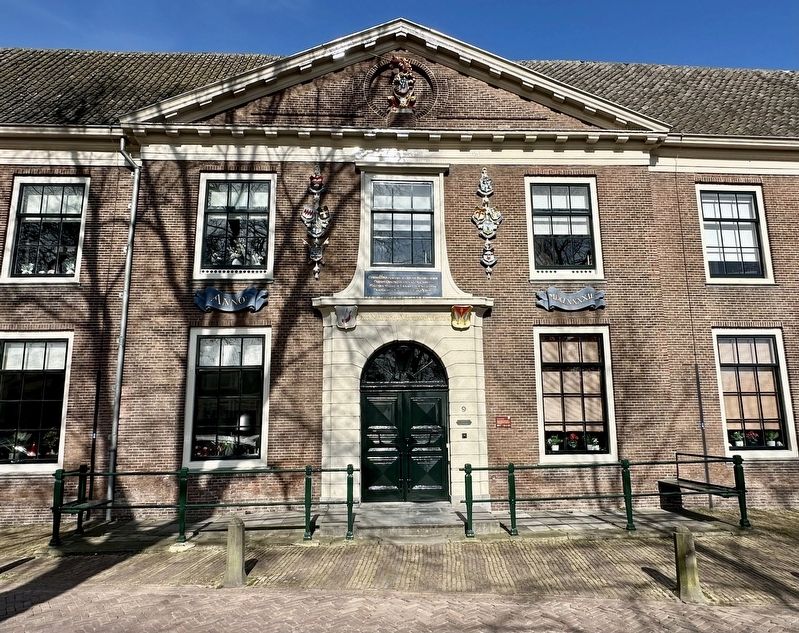
In the 17th century, prosperity increased in Hoorn. As a result, new residents from outside the city came to the city and there was considerable population growth. This had many consequences. For example,(Submitted on March 28, 2025.)the desire arose to establish a new institution for the indigent insane. In 1617, the new accommodation was completed on the foundations of the former Kruisherenklooster. An old men's house and a correctional or workhouse for beggars were also housed in the new building.Photographed by Andrew Ruppenstein, March 22, 20252. Sint Pietershof (1692) Marker - wide view
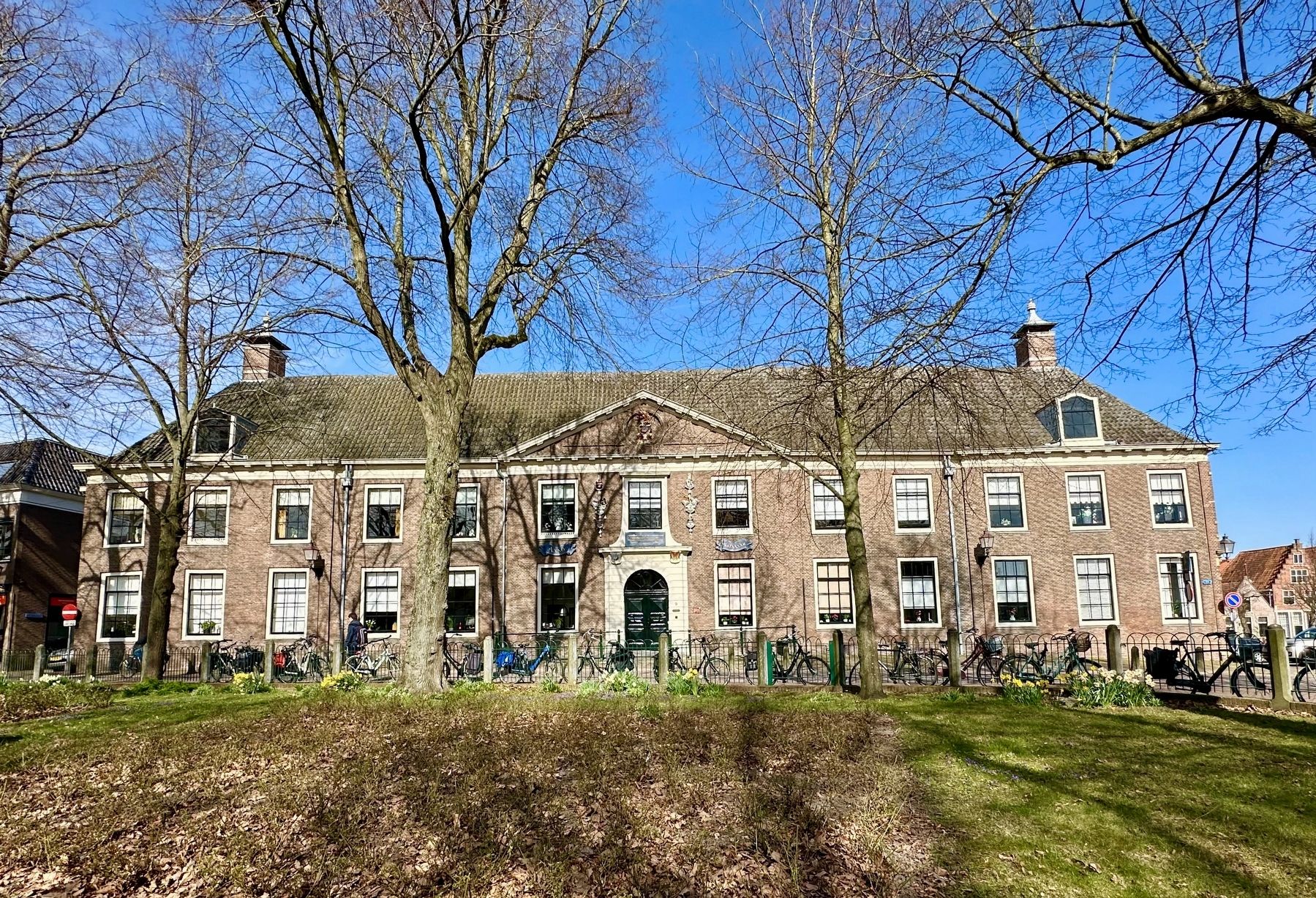
The facades were designed in the then popular Dutch classicist style. They are symmetrically constructed with central entrances or gates. Apart from the gates, the facades have been kept fairly sober. The complex consisted of, among other things, a chapel or church, wings with various homes, a kitchen and a dining room. The wings enclosed two courtyards where the gardens and the bleaching area were.
Given the long and turbulent construction history, many parts have been renovated and changed. To make the history of the building visible, the interior of one of the houses has been restored to its original state of 1617.
Photographed by Andrew Ruppenstein, March 22, 2025
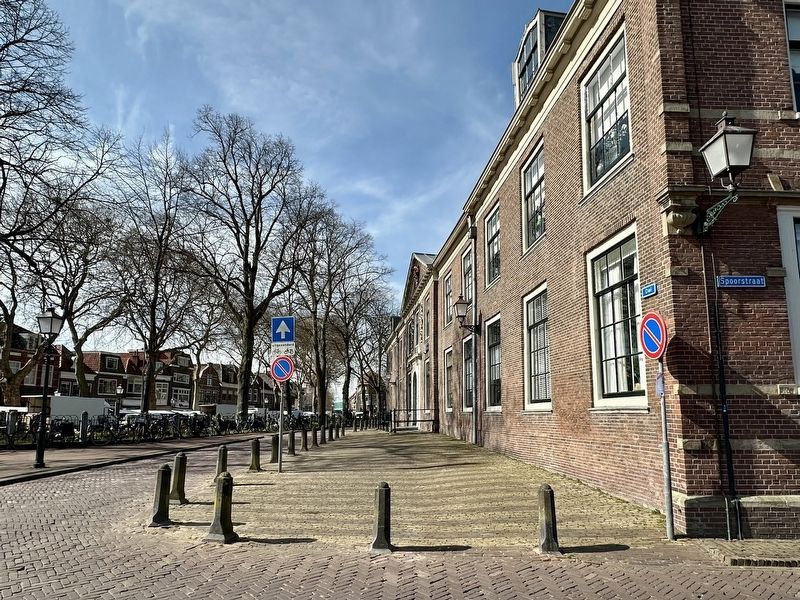
3. Sint Pietershof - side view
Photographed by Andrew Ruppenstein, March 22, 2025
4. Sint Pietershof - wider view
Credits. This page was last revised on March 28, 2025. It was originally submitted on March 28, 2025, by Andrew Ruppenstein of Lamorinda, California. This page has been viewed 79 times since then and 5 times this year. Photos: 1, 2, 3, 4. submitted on March 28, 2025, by Andrew Ruppenstein of Lamorinda, California.
